Bleach to Developer Ratio: Perfect Hair Lightening Mix

Getting the bleach to developer ratio right can make or break your hair lightening results. I know how confusing it feels when you’re staring at powder and liquid, wondering if you mixed enough or too much.
In this guide, I’ll walk you through the correct ratios, explain why they matter for your hair’s health, and show you exactly how to mix for an even, controlled lift.
You’ll learn what bleach and developer actually do, which ratios work for different hair types, how to choose the right developer volume, and common mixing mistakes to avoid.
Let’s get your hair lighter without the damage.
What Is Bleach and Developer in Hair Coloring?
Understanding these two ingredients helps you control your lightening results and protect your hair.
Hair bleach contains alkaline agents that break down melanin, the pigment that gives your hair its natural color.
It removes both natural color and artificial dye gradually. The bleach powder alone can’t do anything. It needs an activator to start working.
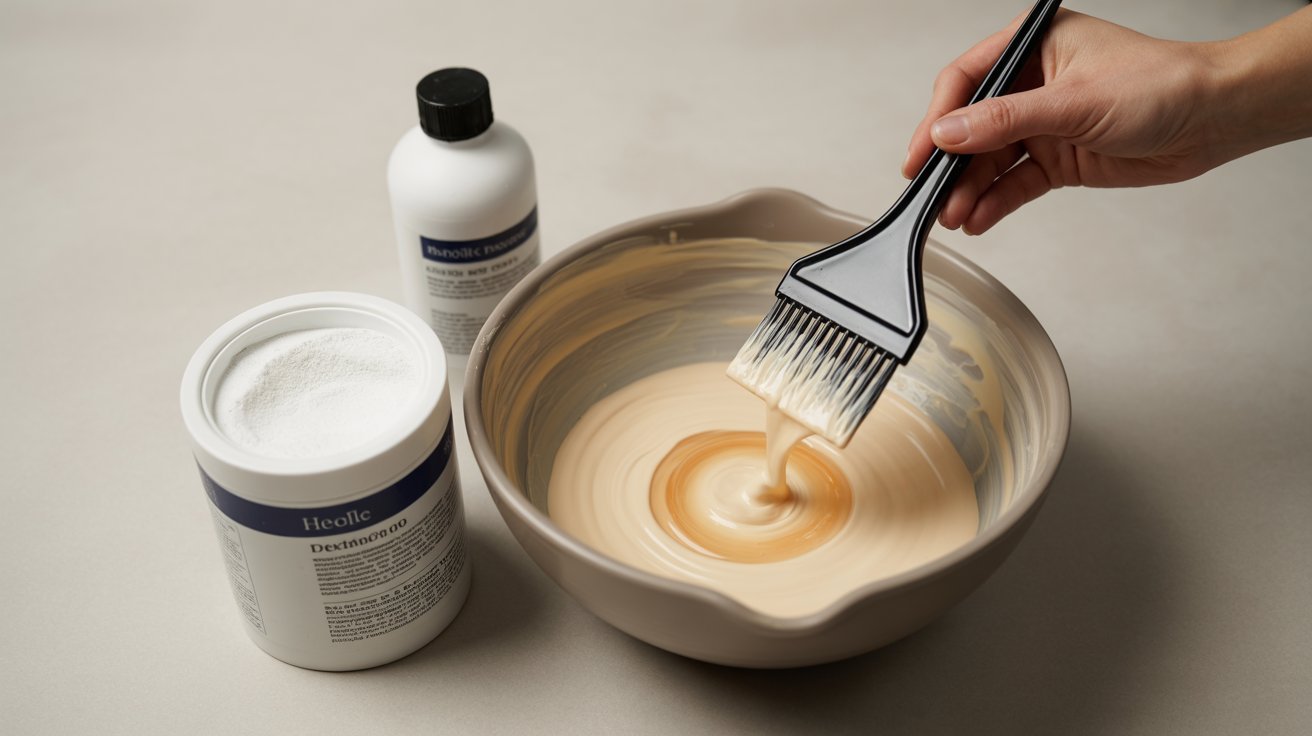
The developer contains hydrogen peroxide, which activates the bleach powder. It creates a chemical reaction that allows bleach to penetrate your hair and opens up your hair cuticle so bleach can break down pigment.
Why the Bleach to Developer Ratio Is So Important?
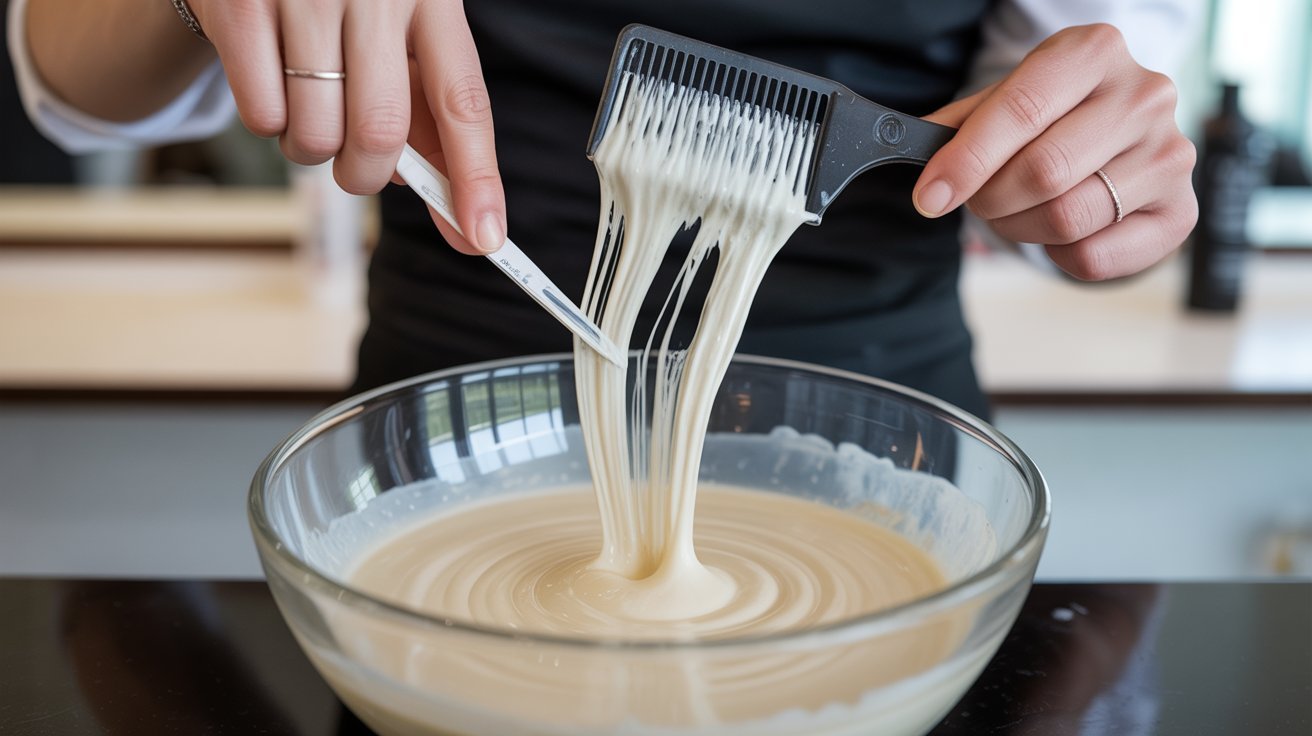
The ratio you use directly affects how your hair lightens and how healthy it stays during the process. The right ratio gives you predictable, controlled lighting.
You can watch your hair lift evenly from root to tip. Too much developer makes the mixture weak and watery, causing uneven lifting.
Too little developer creates a thick paste that dries out fast and stops working early. A balanced ratio lifts at a steady pace you can monitor.
Wrong ratios either rush the process or slow it down unpredictably. Your hair pays the price when ratios go wrong.
Too much bleach without enough developer causes severe dryness and breakage. Wrong ratios also irritate your scalp, causing burns, tingles, or red patches. Getting the ratio right protects you from all of this.
The Correct Bleach to Developer Ratio Explained
Most bleaching situations call for a 1:2 ratio, but understanding when to adjust matters. The standard 1:2 ratio means one part bleach powder mixed with two parts developer.
For example, 30 grams of bleach needs 60 grams of developer. This ratio works best for most hair types and stays workable for 30 to 45 minutes.
It balances lifting power with safety. A 1:1 ratio means equal parts bleach and developer. This creates a thicker mixture that works faster but dries out quickly and increases damage risk.
Most people should stick with 1:2 unless they have specific experience with stronger ratios.
Choosing the Right Developer Volume With the Correct Ratio
Developer volume controls how much your hair lifts, and you pair it with the right ratio.
Using 20 Volume Developer
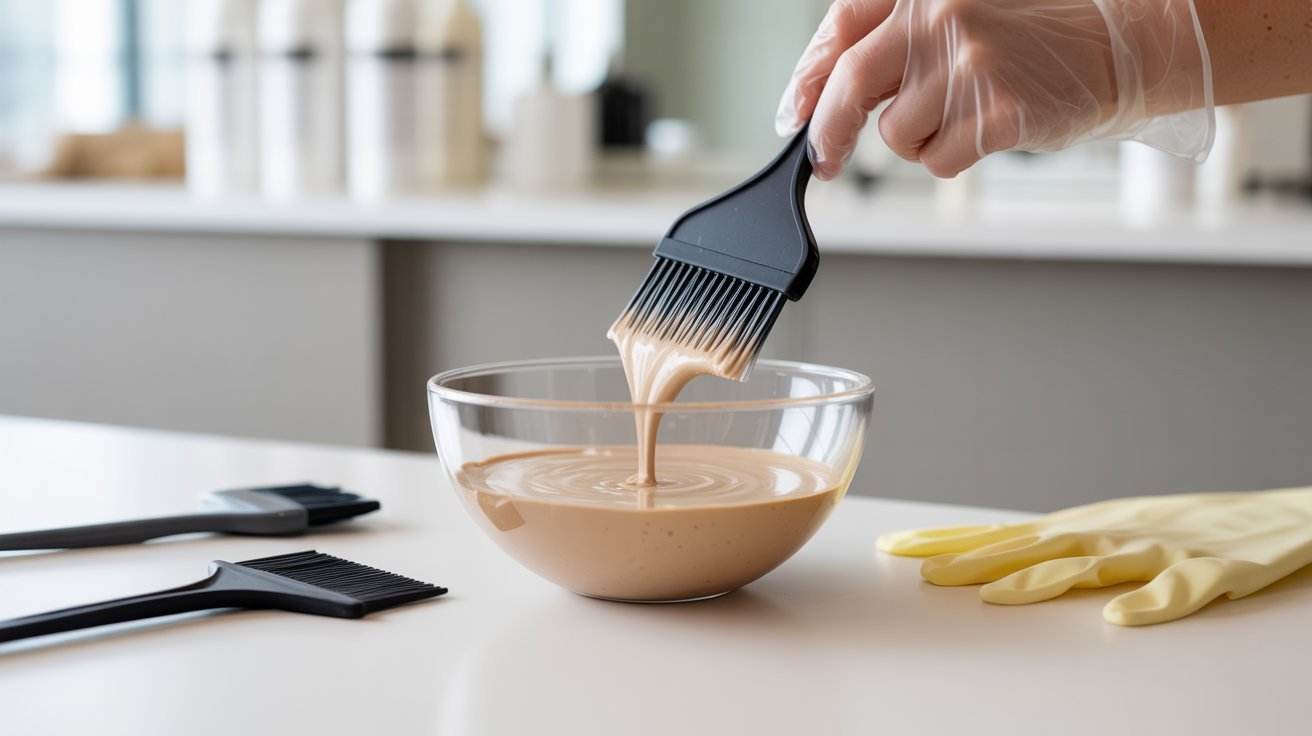
This developer opens your cuticle gently. It’s the safest choice for beginners and for hair that’s already been processed.
Twenty volume works well for root touch-ups. Your scalp area is more sensitive, so gentler lifting prevents burning.
You can lift dark blonde to light brown hair about two levels with 20 volume. It won’t get you to platinum, but it gives you controlled lighting.
Mix 20 volumes with bleach at a 1:2 ratio. This combination minimizes damage while still showing visible results.
Using 30 Volume Developer
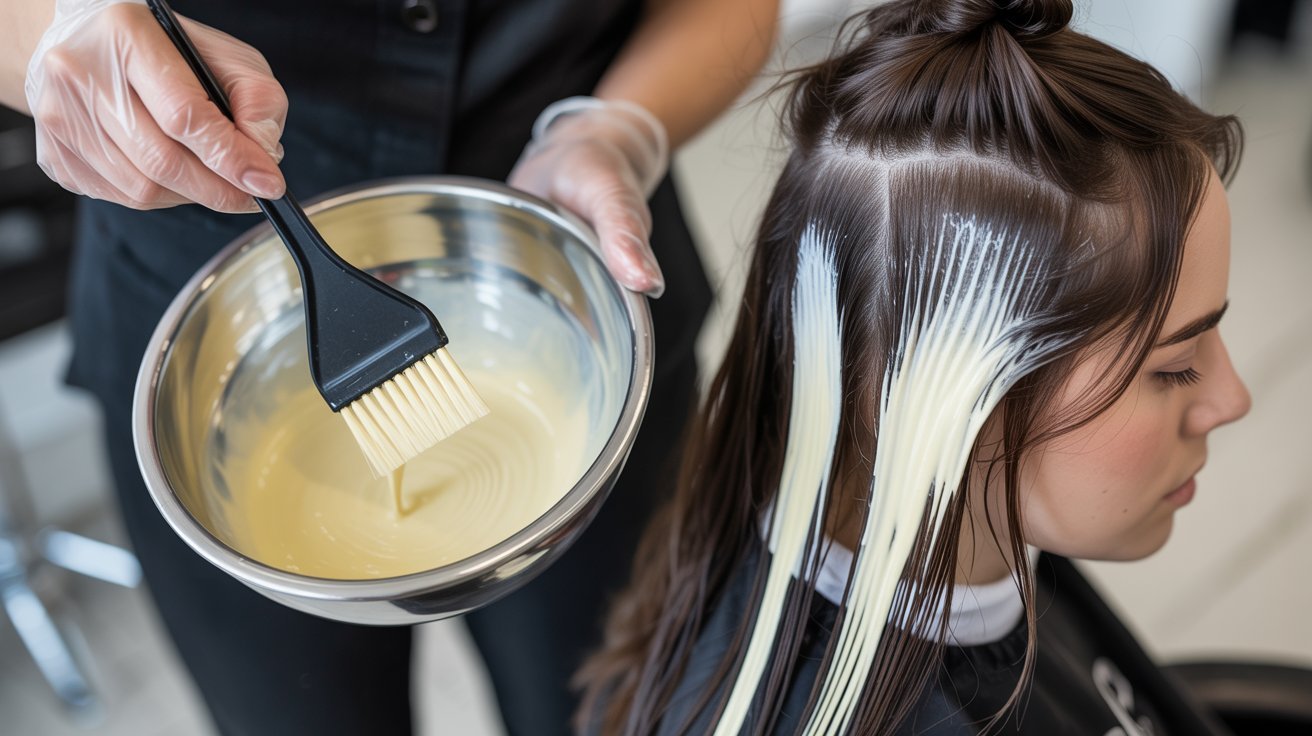
Thirty volume opens the cuticle wider and lifts more dramatically. It’s better for darker hair that needs serious lightening.
If you have dark brown or black hair and want to go several shades lighter, 30 volume gets you there faster. This volume also works for mid-lengths and ends.
Still use the 1:2 ratio with 30 volumes. The volume itself provides the strength, so you don’t need to change the ratio.
How to Mix Bleach and Developer Properly
Accurate measuring prevents most mixing problems before they start. Digital scales give you the most precise measurements.
Weigh your bleach powder first, then add exactly twice that weight in developer. If you’re using scoops, make sure each scoop is level and consistent.
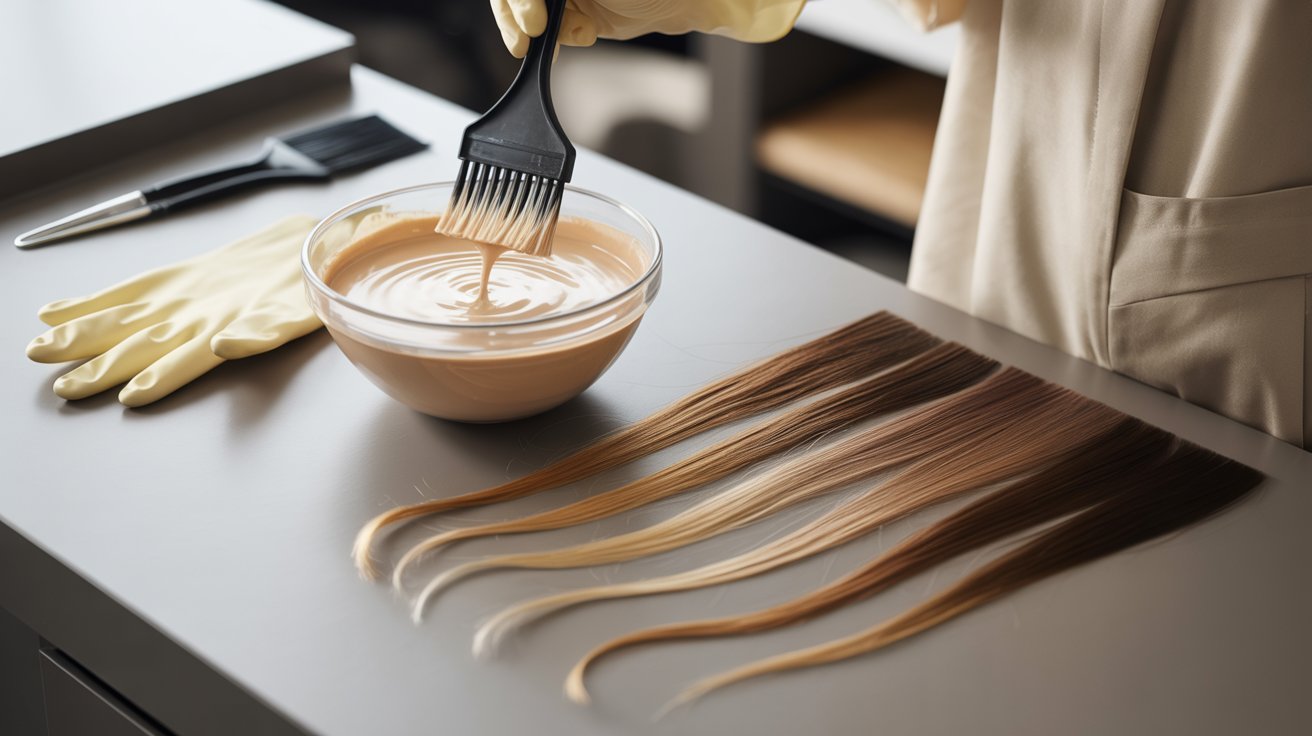
Eyeballing causes problems every time and throws off your whole application. Your mixture should look like thick pancake batter or yogurt.
It holds its shape but spreads smoothly when you apply it. Too runny means not enough bleach. Too thick means not enough developers.
Get the creamy texture right and your application becomes much easier.
Bleach to Developer Ratio for Different Hair Situations
Your hair’s history and condition determine which approach works best.
|
Hair Type |
Ratio |
Developer |
Key Tips |
|
Virgin Hair |
1:2 |
20 volume |
Lifts easily and predictably. One session often works well since there’s no previous color to remove. |
|
Previously Colored Hair |
1:2 |
20 volume |
Needs patience, not stronger ratios. May require two or three sessions spaced weeks apart. Consider color remover first. |
|
Dark or Resistant Hair |
1:2 |
30 volume |
Use higher volume but keep the same ratio. Plan for 45 to 60 minutes processing time. Watch carefully as lifting happens suddenly. |
Common Bleach to Developer Mixing Mistakes
These errors show up constantly, even with experienced people. When you add extra developers thinking it’ll make bleach work better, you actually weaken the mixture.
Your hair lifts slowly or unevenly, and some areas might not lift at all. The runny consistency makes application messy.
Bleach drips down your neck and doesn’t stay where you put it. Not enough developers prevent proper activation.
Your mixture becomes dry and clumpy, making it hard to spread through your hair evenly. The paste dries out before processing finishes.
Dried bleach stops working, leaving you with partial lifting and increased damage risk from concentrated clumps.
Safety Tips When Mixing Bleach and Developer
Testing and monitoring prevent most bleaching disasters.
- Always test a small hidden section before doing your whole head. Mix a tiny amount with your planned ratio and developer volume, apply it to a strand near your nape, and watch how fast it lifts.
- Patch test your scalp for allergic reactions by applying a small amount of mixture behind your ear and waiting 24 hours before proceeding with full application.
- Check the color level every 10 minutes during processing instead of relying only on timers. Your hair tells you when to rinse, not the clock.
- Compare your hair’s lightness to your goal shade as you monitor. Different hair types lift at different speeds, so what takes 30 minutes for one person might take 45 for another.
- Stop processing when you reach the right color level, not when the timer goes off. Going by time alone causes over-processing and leaves bleach on too long.
Conclusion
I’ve learned through my own bleaching experiences that getting the bleach to developer ratio right makes everything else easier.
When you mix it correctly, your hair lifts evenly without unnecessary damage. Start with the 1:2 ratio and 20 volume developer if you’re new to this.
Take your time measuring, test a strand first, and watch your hair instead of the clock. Your hair will thank you for the care.
What’s your biggest concern about mixing bleach? Drop a comment below and let me know how your lightning goes.
Frequently Asked Questions
Can I reuse leftover bleach mixture?
No, you can’t reuse mixed bleach. Once you combine bleach and developer, the chemical reaction starts immediately. The mixture loses its lifting power within an hour and becomes useless for lightening hair.
What happens if I use a 1:3 bleach to developer ratio?
A 1:3 ratio makes your mixture too weak and runny. The bleach gets over-diluted and won’t lift your hair properly. You’ll end up with patchy, uneven results or barely any lightening at all.
Do I need to adjust the ratio for different bleach brands?
Most bleach brands work with the standard 1:2 ratio. Always check your specific product instructions first. Some professional formulas might recommend slight adjustments, but 1:2 works for nearly all brands.
How do I know if my consistency is right?
Your mixture should look like thick yogurt or pancake batter. It should hold its shape on your brush but spread smoothly when applied. If it drips easily, add more bleach powder.
Can I mix bleach and developer ahead of time?
Never mix bleach ahead of time. The chemical reaction begins immediately when you combine them. Mix only what you need right before application to ensure the bleach stays active and effective.