Chin Implant Types: Find the Best Option for You


Looking into chin implant types can feel overwhelming. I get it. You want clear answers, not confusing medical jargon.
This guide breaks down everything you need to know about materials, shapes, and sizes.
You’ll learn which option fits your face best. I’ll walk you through silicone, Gore-Tex, and Medpor implants, plus different shapes like angular or smooth designs. We’ll cover standard and custom sizes too.
By the end, you’ll feel confident talking to your surgeon. Trust comes from understanding your choices, and that’s exactly what I’m here to help you do.
Let’s make this simple.
What is a Chin Implant?

A chin implant helps people improve their facial profile. This surgical option works for both appearance goals and medical needs.
This procedure adds volume to a small or recessed chin. The implant sits beneath your skin and gives your lower face more definition.
Your profile looks stronger, and your jawline appears more balanced. Surgeons place these implants through a small cut, either under your chin or inside your mouth.
Many people choose chin implants to improve how their face looks. If your chin sits too far back, an implant can balance your features. Others need this surgery after an injury or a birth condition.
Reconstructive cases help fix asymmetry or damage from accidents. Both reasons are valid, and your surgeon will help you understand which applies to you.
Chin Implant Types by Material
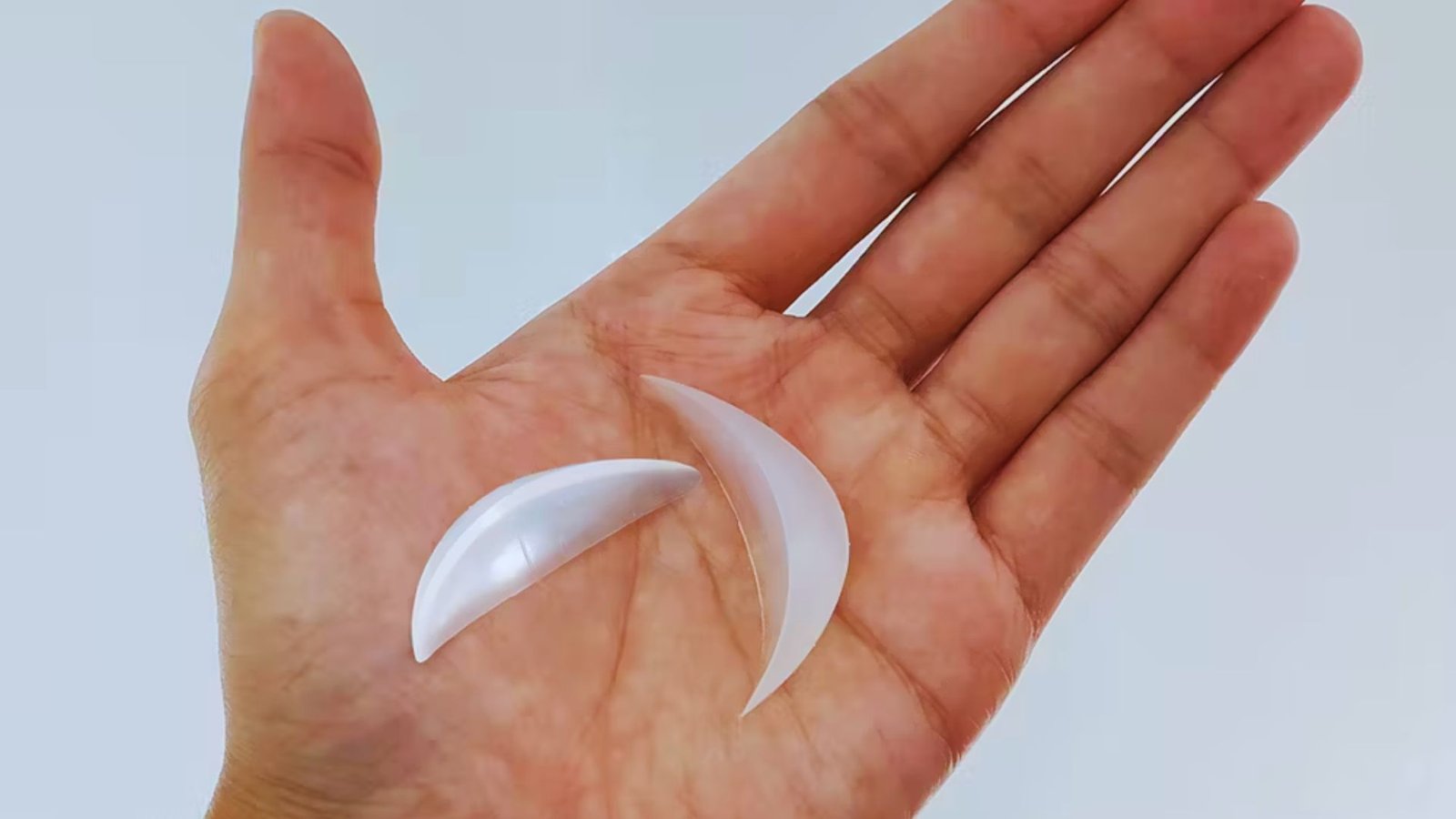
The material matters because it affects how the implant feels and how your body reacts to it.
Silicone Implants
Silicone is the most common choice. These implants are solid but flexible, which makes them comfortable. If you ever change your mind, your surgeon can remove them easily.
They have low complication rates and work well for most patients. Surgeons prefer silicone because it’s safe for long-term use.
Gore-Tex Implants
Gore-Tex has tiny pores throughout the material. Your tissue grows into these spaces over time. This creates a strong bond, but removal becomes harder later.
Fewer surgeons use Gore-Tex now because of this concern. If you might want the implant removed someday, this may not be your best choice.
Medpor Implants
Medpor works similarly to Gore-Tex. It’s strong and integrates with your facial tissue. Once placed, these implants rarely come out. Your tissue grows around them, making them part of your face.
This permanence works for some patients, but not everyone. Talk to your surgeon about whether you want something removable or permanent.
Chin Implant Types by Shape

Shape changes how your chin looks from the front and side.
Angular or Chiseled
An angular implant creates sharp, defined lines. Your jaw looks stronger and more structured. Men often prefer this style because it gives a masculine appearance.
The edges are more pronounced, and the overall look is bold.
Smooth or Feminine
A smooth implant offers softer curves. Your chin looks natural and subtle. Women often choose this style, but anyone can wear it.
The goal is balance, not drama. These implants blend with your face instead of standing out.
Winged vs Tapered Designs
Winged implants stretch along your jawline. They add width and definition beyond just your chin. This style works if you want more jaw presence overall.
Tapered implants focus on the center of your chin. They blend smoothly with your face and look more natural. Your surgeon will help you pick based on your facial structure.
Chin Implant Types by Size
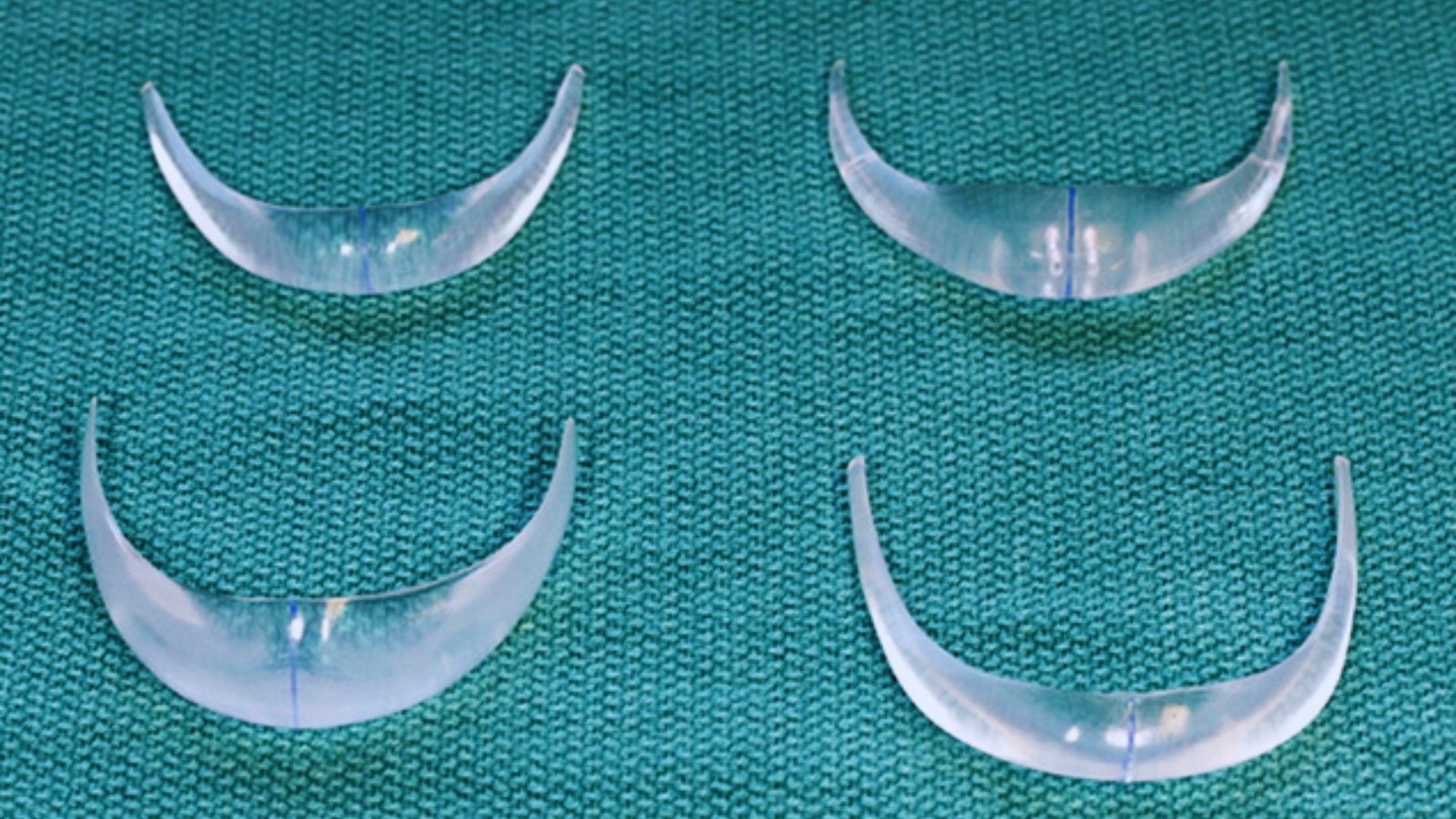
Size affects proportion and how noticeable the change will be.
Standard Sizes
Implants come in five standard sizes: Extra-small, small, medium, large, and extra-large. Your surgeon measures your face and considers your goals. A larger size gives more projection.
A smaller size creates a subtle improvement. Most patients choose medium or large for visible but natural results.
Custom Chin Implants
Custom implants are made just for you. Your surgeon uses CT scans to design the perfect fit. Patients with severe asymmetry or very weak chins benefit most.
These are the “Rolls-Royce” options. They cost more but deliver precise results. If standard sizes won’t work for your face, custom is the way to go.
Alternatives to Chin Implants

Not everyone wants surgery. Here are two other options.
Dermal Fillers
Fillers are injections that add volume under your skin. They’re temporary and don’t require surgery. You’ll see results immediately, but they fade after several months.
This works for people who want to try the look before committing. Fillers are quick, but you’ll need regular appointments to maintain results.
Fat Grafting
Fat grafting takes fat from one part of your body and injects it into your chin. It’s less invasive than implants but more involved than fillers.
Results last longer than fillers because the fat becomes part of your tissue. Some of the fat gets absorbed by your body, so you might need a second session.
Choosing the Right Chin Implant
Your face is different from everyone else’s. Here’s how to find your best option.
Your bone structure matters most. A surgeon will look at your chin, jaw, and overall face shape. Do you want an angular look or something softer?
Think about whether you want a removable implant or something permanent. Your lifestyle and recovery time also play a role in this decision.
A board-certified facial plastic surgeon should evaluate your face. They’ll use imaging software to show you potential results. This helps you see different implant types before making a choice.
Your surgeon will recommend materials, shapes, and sizes based on your anatomy. Never skip this step. It’s how you get results you’ll love.
Recovery and Risks
Every surgery comes with a healing period and possible complications.
- Expect swelling and bruising for the first week or two. You’ll need to eat soft foods and avoid intense activity.
- Most people return to work within a week. Full healing takes several weeks, but you’ll see your new profile fairly quickly.
- Follow your surgeon’s instructions to speed up recovery and reduce complications.
- Infection, bleeding, scarring, nerve injury, and implant shifting can happen. These risks are small when you choose an experienced surgeon.
- Talk to your doctor about warning signs to watch for during recovery. Proper surgical care reduces complications significantly.
Conclusion
After years of looking at my profile in photos, I finally understand why chin implant types matter so much. The right material, shape, and size can completely change how balanced your face looks.
You now know the difference between silicone, Gore-Tex, and Medpor. You’ve seen how angular vs smooth shapes create different results.
Schedule a consultation with a board-certified surgeon to see which option fits your face. Your confidence is worth it.
Frequently Asked Questions
What chin implant material is safest?
Silicone implants are considered the safest option. They have low complication rates and can be removed if needed. Most surgeons recommend them for long-term use.
How long do chin implants last?
Chin implants are permanent and don’t need replacement. Silicone implants can last a lifetime without issues. Some materials integrate with tissue and become part of your face.
Can I remove my chin implant later?
Silicone implants are easy to remove if you change your mind. Gore-Tex and Medpor integrate with tissue, making removal much harder. Discuss this with your surgeon before choosing a material.
How much projection will I get from an implant?
Standard sizes range from subtle to dramatic changes. Your surgeon will show you projections based on measurements. Custom implants offer the most precise control over how much your chin moves forward.
What’s the recovery time for chin implant surgery?
Most patients need one to two weeks for initial recovery. Swelling decreases significantly in the first week. Full healing takes several weeks, but you can return to normal activities fairly quickly.