Blackheads vs Whiteheads: Key Differences Explained

Have you ever noticed those pesky dark spots or little white bumps on your nose and wondered what they really are?
I get it, dealing with acne can be frustrating. Blackheads and whiteheads are two of the most common skin issues we face, and trust me, understanding the difference between them is a game-changer.
Once you know what you’re dealing with, treating and preventing them becomes so much easier.
Let me walk you through what sets these two apart and how you can tackle them.
What Are Blackheads and Whiteheads?

Before we get into the differences, let’s talk about what these actually are. Both are types of clogged pores, but they look and behave differently.
Blackheads (Open Comedones)
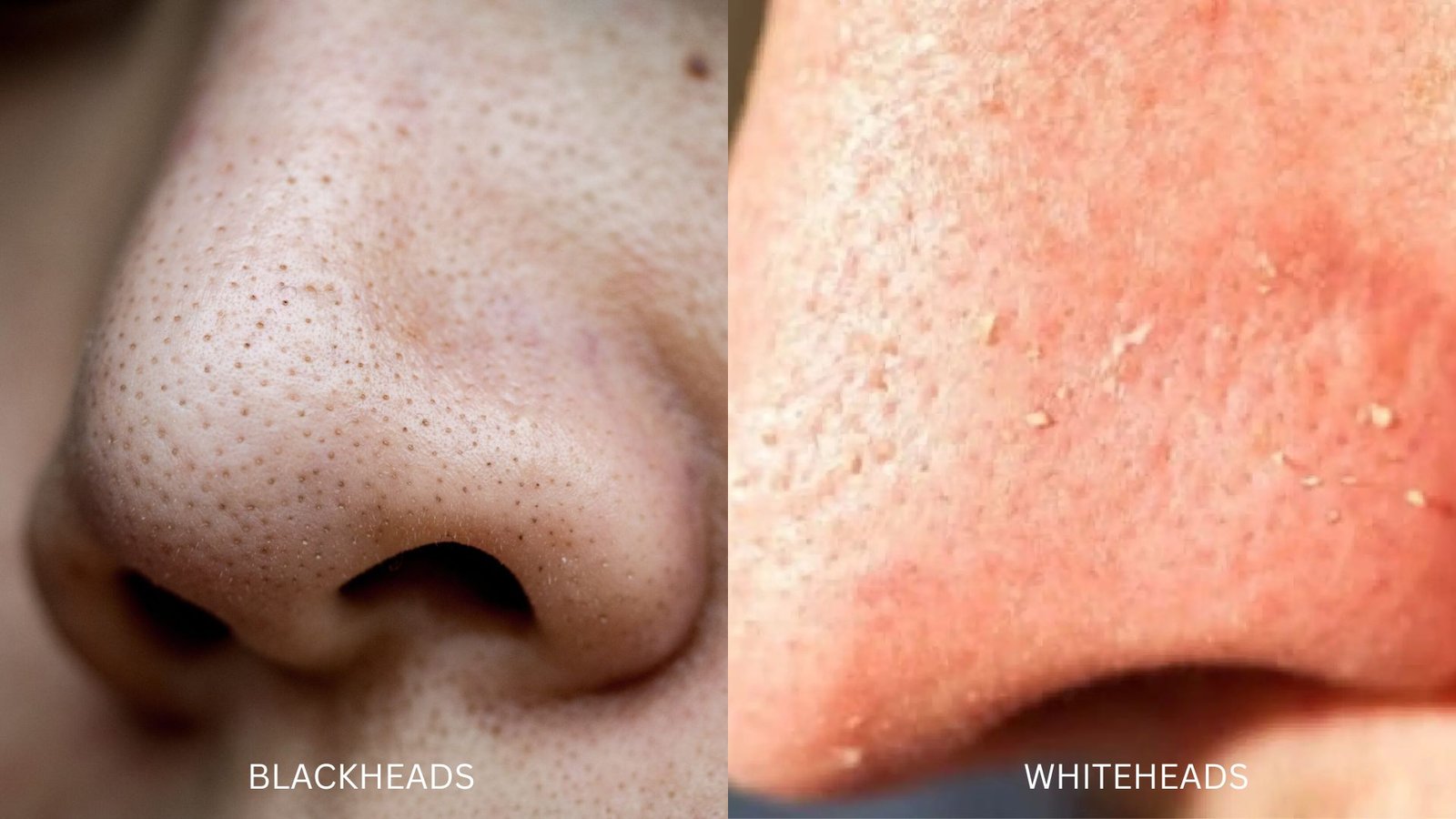
You know those tiny dark spots that pop up on your skin? Those are blackheads. They happen when your pores get clogged with a mix of oil, dead skin cells, and a protein called melanin.
The pore stays open at the surface, and when this mixture hits the air, it oxidizes and turns dark. That’s why they look black or grayish.
You’ll usually find blackheads on your nose, chin, and forehead. But they can also show up on your back and chest.
Whiteheads (Closed Comedones)
Whiteheads are a bit different. They’re small bumps that look white or flesh-colored. Unlike blackheads, the pore is completely closed at the surface.
Oil and dead skin cells get trapped underneath, but since there’s no air exposure, they stay light in color.
These little bumps commonly appear on your face, neck, chest, back, and upper arms.
Key Visual Differences
Here’s the quick way to tell them apart:
- Blackheads: have an open pore with a dark tip. The darkness comes from oxidation when the clogged material meets air.
- Whiteheads: have a closed pore and stay lighter in color. Since oxygen can’t reach the trapped material, it doesn’t darken.
Comparison Table for Blackheads vs Whiteheads
Let’s have a better understanding for their differences:
|
Feature |
Blackheads |
Whiteheads |
|
Appearance |
Dark bumps |
White/flesh-colored bumps |
|
Pore Type |
Open |
Closed |
|
Cause of Color |
Oxidation from air |
No air exposure |
|
Common Locations |
Nose, forehead, chin, back |
Face, neck, chest, back |
|
Treatment |
Cleansers, salicylic acid, retinoids |
Cleansers, salicylic acid, retinoids |
Causes of Blackheads and Whiteheads

So what actually causes these annoying bumps to form? Let’s break it down.
Core Causes
At the root of it all, three main things are happening in your skin:
Your skin produces oil (called sebum) to keep itself moisturized. But sometimes it makes too much. When that happens, your pores can’t handle all the excess oil.
Dead skin cells build up on your skin’s surface. Normally, they shed naturally, but sometimes they stick around and mix with that extra oil.
Bacteria called Propionibacterium acnes live on your skin. When oil and dead cells clog your pores, this bacteria can make things worse.
Contributing Factors
Beyond these core causes, several other things can trigger blackheads and whiteheads:
- Hormones play a big role: During your teen years, before your period, or when you’re stressed out, your hormones can go haywire. This often leads to more oil production.
- Your lifestyle matters too: What you eat, how much you sleep, and your stress levels all affect your skin. Not getting enough rest or dealing with constant stress can make breakouts more likely.
- Your skincare products might be part of the problem: Some makeup and moisturizers contain ingredients that clog pores. These are called comedogenic ingredients, and they can make blackheads and whiteheads worse.
How Blackheads and Whiteheads Form
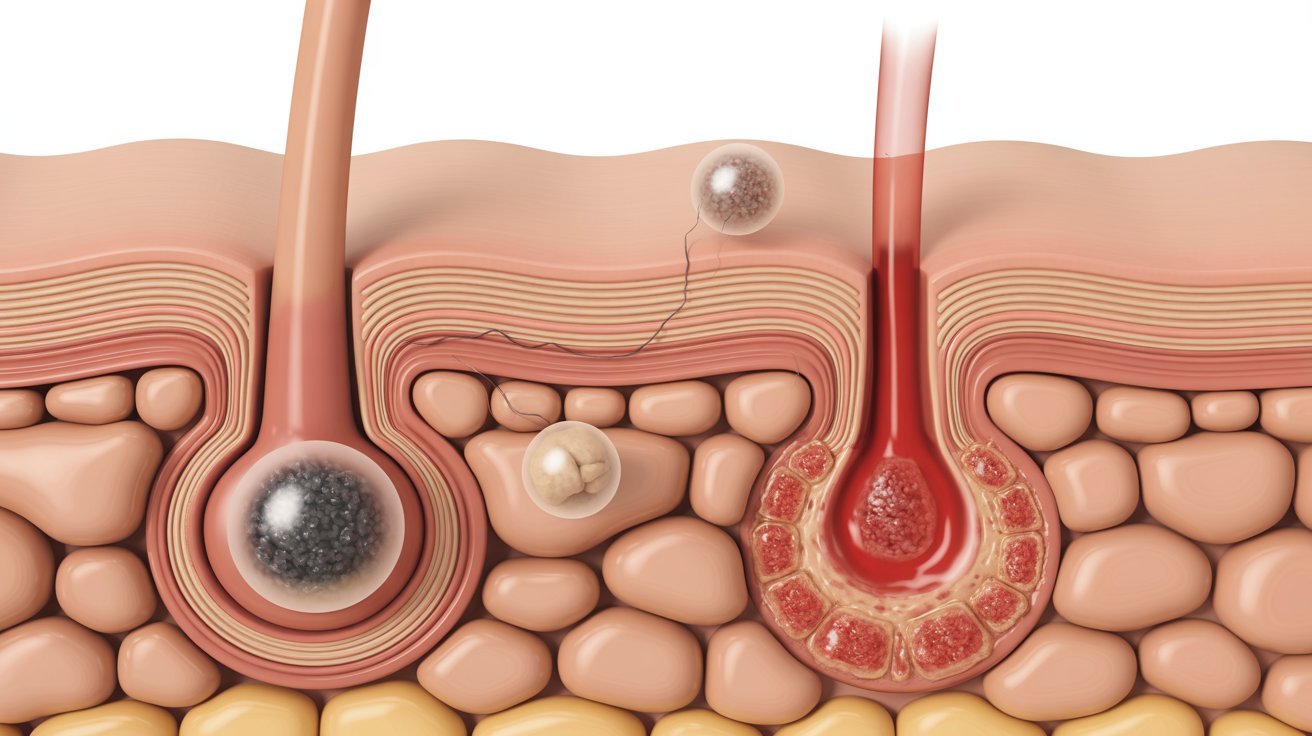
Understanding how these bumps form can help you prevent them. It all comes down to your pores and what happens inside them.
The Role of Pore Size
Your pore size actually affects what type of acne you get.
If you have larger pores, you’re more likely to get blackheads. These pores stay open at the surface, which lets air in. That’s why the clogged material inside turns dark.
Smaller pores tend to close up at the surface when they get clogged. This creates whiteheads. Since air can’t get in, the trapped oil and dead skin cells stay light in color.
Progression to Inflammatory Acne
Here’s something important to know. Both blackheads and whiteheads can turn into something worse if you’re not careful.
When bacteria gets into your clogged pores, your body sends white blood cells to fight it off. This creates inflammation. That’s when your blackhead or whitehead can turn into a red, swollen pimple.
In some cases, it might even become a painful cyst that sits deep under your skin.
Treatment Options for Blackheads and Whiteheads

Good news: you have plenty of options to treat these pesky bumps. Let’s go through what works.
Over-the-Counter Solutions
You don’t always need a prescription to clear up your skin. Many drugstore products work really well.
Cleansers and exfoliators help remove excess oil and dead skin cells from your pores. Using them regularly can prevent new blackheads and whiteheads from forming.
Look for products with these ingredients:
- Salicylic acid: This ingredient gets deep into your pores and breaks down the oil and dead skin cells that cause clogs.
- Benzoyl peroxide: It kills acne-causing bacteria and helps reduce inflammation.
- Retinol: This speeds up skin cell turnover, which means dead cells don’t stick around long enough to clog your pores.
Prescription Treatments
If over-the-counter products aren’t cutting it, a dermatologist can prescribe stronger options.
Retinoids like tretinoin or isotretinoin work great for severe acne. They’re more powerful than drugstore retinol and can really clear up stubborn cases.
Your doctor might prescribe topical or oral antibiotics to control the bacteria in your pores. These work best when combined with other treatments.
For acne caused by hormones, hormonal therapies can help balance things out from the inside.
Safety Tips
Here’s what you need to remember when treating your skin:
Don’t pick or squeeze your blackheads and whiteheads. I know it’s tempting, but this can lead to scarring and make things worse.
Always follow the instructions on your products. More isn’t better when it comes to acne treatments.
Stick with a consistent routine. Your skin needs time to adjust and show results, usually around 6 to 8 weeks.
Prevention and Daily Skincare Tips
The best way to deal with blackheads and whiteheads is to stop them before they start. Here’s how to keep your skin clear:
- Start with the basics. Use a gentle cleanser, a light moisturizer, and sunscreen every day. Apply targeted treatments only on problem areas instead of your whole face.
- Wash your face the right way. Use lukewarm water and avoid scrubbing too hard, which can irritate your skin. Clean your face twice a day and always after you sweat.
- Pick the right products. Look for labels that say “non-comedogenic” on your skincare, makeup, and even hair products. These won’t clog your pores.
- Balance your skin’s oil production. Ingredients like niacinamide work well to control oil and calm redness. They help keep your pores from getting clogged in the first place.
- Stay consistent. Your skin responds best to regular care. Stick with your routine for at least a few weeks to see real results.
When to See a Dermatologist
Sometimes you need professional help, and that’s okay. If your blackheads and whiteheads aren’t getting better with over-the-counter products, it’s time to see a dermatologist.
You should also make an appointment if your acne becomes severe, keeps coming back, or starts looking red and inflamed.
A dermatologist can look at your specific skin type and create a treatment plan that works for you. They have access to stronger medications and can help prevent scarring before it happens.
Conclusion
Now you know the real difference between blackheads and whiteheads. Blackheads have open pores that turn dark when exposed to air, while whiteheads stay closed and light colored.
Both come from clogged pores, but understanding what makes them different helps you treat them better.
Focus on prevention with a good daily routine and choose products that won’t clog your pores. If things get worse or nothing seems to work, don’t hesitate to see a dermatologist.
Your skin deserves proper care, and with the right approach, you can keep it clear and healthy.
Frequently Asked Questions
Can I pop blackheads and whiteheads at home?
No, don’t pop them. Squeezing can cause scarring, push bacteria deeper, and make the problem worse. See a professional instead.
How long does it take to get rid of blackheads and whiteheads?
Most treatments take 6 to 8 weeks to show results. Be patient and stick with your routine for the best outcome.
Are blackheads and whiteheads caused by dirty skin?
Not really. They form from excess oil, dead skin cells, and bacteria, not just dirt. Hormones and genetics matter too.
Can diet affect blackheads and whiteheads?
Yes, foods high in sugar and dairy might trigger more oil production. A balanced diet with water helps keep skin healthier.
Do blackheads and whiteheads go away on their own?
Sometimes, but it takes time. A good skincare routine with proper products clears them faster and prevents new ones from forming.