Steam Room Benefits for Skin: Face, Acne, Pores, and Hydration


A steam room is a heated, enclosed room that uses moist heat to raise skin temperature and increase sweating. Steam room benefits for skin come mainly from humidity, warmth, sweat production, and temporary blood vessel widening near the skin surface.
Steam rooms differ from dry saunas because steam rooms use moist heat, while saunas use dry heat. This difference matters for facial skin, acne-prone skin, sensitive skin, eczema, rosacea, and dry skin because heat and humidity affect the skin barrier in different ways.
Dermatology sources advise caution for people with sensitive skin, eczema, rosacea, and inflammatory skin conditions because heat and steam aggravate some skin types. Cleveland Clinic notes that facial steaming helps some people, but it irritates sensitive or eczema-prone skin in certain cases.
What Are the Main Steam Room Benefits for Skin?
Steam room benefits for skin are temporary moisture support, softer surface buildup, increased skin blood flow, and easier post-steam cleansing. A steam room uses warm, humid air rather than dry heat. The skin responds through sweating, surface softening, and blood vessel widening.

The main skin benefit comes from humidity. Warm moisture softens the stratum corneum, which is the outer skin layer. Softer surface cells make cleansing easier after the session. This process does not replace exfoliation, acne treatment, sunscreen, or moisturizer.
Steam room benefits for skin also include temporary skin plumping. Humid air adds water to the skin surface for a short period. Low humidity and low temperature reduce skin barrier function, according to Engebretsen et al. in a 2016 review on environmental humidity and skin barrier function. This supports the logic that moist environments affect skin comfort and barrier behavior.
Steam room heat also increases circulation at the skin surface. A 2018 review in Evidence Based Complementary and Alternative Medicine states that sauna bathing produces physiological effects through short term heat exposure, including increased skin temperature and circulation changes. The evidence is stronger for dry sauna research than steam room specific skin outcomes, so steam room skin claims need careful wording.
How Does a Steam Room Help Facial Skin?
A steam room helps the skin by softening oil, sweat, and dead skin cell buildup on the skin's surface. The benefit is most relevant before gentle cleansing. Steam does not open and close pores because pores do not have muscles that perform that action.
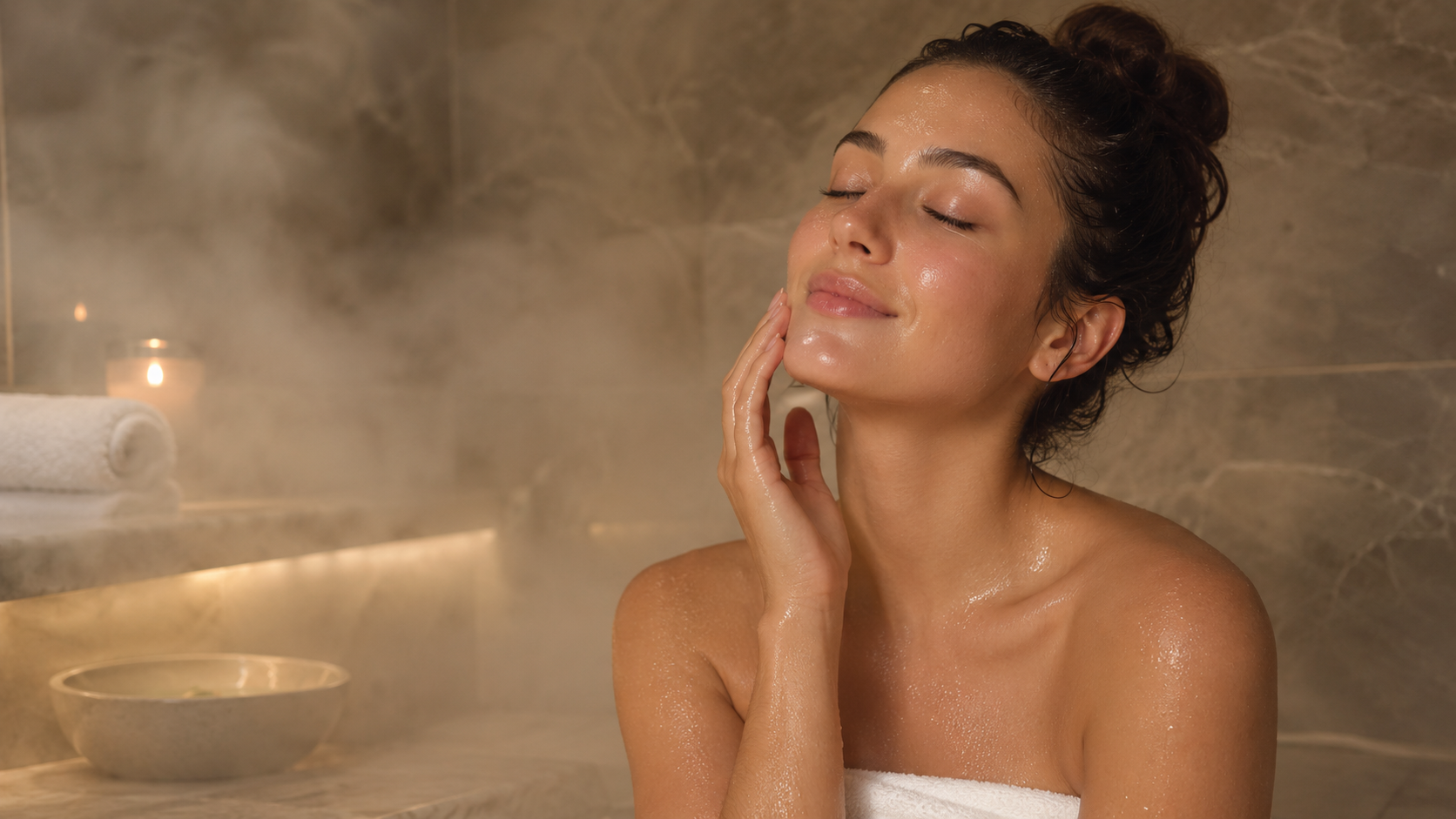
Facial skin reacts quickly to steam because the face has many sebaceous glands and visible blood vessels. Heat brings more blood flow to the surface. Cleveland Clinic notes that facial steaming increases surface blood flow, but the same heat worsens redness in people with rosacea or broken capillaries.
Steam room benefits for facial skin depend on what happens after the session. Sweat, sunscreen, makeup, and sebum remain on the skin after sweating. A gentle cleanser removes these materials better than aggressive scrubbing. Scrubbing after steam increases irritation risk.
The best facial skin routine has 4 steps. Cleanse before steam, limit exposure, rinse after steam, and moisturize after the face cools. This sequence supports the barrier and reduces residue from sweat.
Steam room use also has limits for facial skin pigmentation. Heat is a trigger for some redness and pigment prone conditions. The American Academy of Dermatology advises people with rosacea to identify and avoid personal triggers, including heat related triggers.
Does a Steam Room Help Acne Prone Skin?
A steam room helps acne prone skin only as a cleansing support step. Steam does not treat acne. Acne develops when hair follicles become clogged with oil and dead skin cells, with inflammation and bacterial activity involved, according to the American Academy of Dermatology's acne guideline summary.
Steam softens surface debris, but acne involves deeper follicular processes. A steam room does not replace benzoyl peroxide, salicylic acid, topical retinoids, prescription medicine, or dermatologist directed care. The benefit is limited to loosening sweat and oil before cleansing.
Acne prone skin also has a risk from steam. Heat increases sweating. Sweat mixed with oil, makeup, sunscreen, and tight clothing increases congestion in some people. Warm humid environments also contribute to heat rash when sweat ducts become blocked.
Mayo Clinic explains that heat rash occurs when sweat pores or sweat ducts become blocked, leading to small fluid filled bumps, inflamed bumps, itching, or prickling. This risk matters for acne prone users because bumps from heat rash and acne can appear together.
Steam room benefits for skin with acne are highest when the user follows 5 controls. Remove makeup first. Avoid occlusive oils before steam. Keep the session short. Rinse sweat afterwards. Use a non-comedogenic moisturiser after cooling.
What Are the Sauna vs Steam Room Skin Benefits?
Sauna vs steam room skin benefits differ because saunas use dry heat and steam rooms use humid heat. A sauna produces intense dry warmth. A steam room produces warm moisture. Skin hydration, sweat evaporation, and comfort differ between the 2 environments.

A steam room supports short-term surface hydration better than a dry sauna because humid air slows water evaporation from the skin surface. Dry sauna heat creates heavier evaporation and may leave some users feeling tighter or drier after the session.
Dry sauna research has more clinical evidence than steam room research. Hussain and Cohen’s 2018 review states that sauna bathing has potential health benefits, but higher-quality evidence is still needed for some claimed effects and adverse event frequency.
Steam rooms and saunas share heat risks. Cleveland Clinic identifies dehydration as a major sauna risk and recommends water before and after heat exposure. The same hydration principle applies to steam rooms because sweating still removes body water.
How Often Should You Use a Steam Room for Skin?
Use a steam room for skin 1 to 3 times per week when skin tolerates heat without redness, itching, breakouts, or tightness. Start with 5 to 10 minutes per session. Increase only when skin remains calm for 24 hours.
Frequency matters because skin benefits from brief exposure and reacts poorly to excess heat. Long and continuous water exposure damages skin barrier function, with hot water being more harmful, according to Herrero Fernandez et al. in a 2022 study on water exposure and temperature changes.
Steam room benefits for skin require recovery time. The skin barrier needs lipids and water balance after sweating. Moisturizer after steam helps reduce tightness. A bland moisturizer with glycerin, ceramides, or petrolatum works better than fragranced products for sensitive skin.
A safe weekly routine has 3 rules. Keep steam brief. Cleanse sweat away. Moisturize after cooling. These rules apply to facial skin, body skin, and acne prone areas such as the chest, shoulders, and back.
People with rosacea, melasma, eczema, heat rash history, or chronic acne need stricter limits. The American Academy of Dermatology states that rosacea triggers vary by person, and trigger avoidance helps reduce flares. Heat is a common trigger category for many rosacea patients.
What Are the Skin Risks of Steam Room Use?
The main skin risks of steam room use are redness, dehydration, irritation, heat rash, acne worsening, rosacea flares, and fungal exposure in shared humid spaces. These risks increase with long sessions, poor hygiene, and sensitive skin conditions.
Heat worsens redness because warm exposure dilates surface blood vessels. Cleveland Clinic warns that people prone to redness, rosacea, or broken capillaries should avoid facial steaming because heat brings more blood flow to the skin surface.
Heat rash is another steam room risk. StatPearls defines miliaria as a common skin condition caused by blockage of eccrine sweat glands and ducts, which causes sweat backflow into the skin and rash formation.
Steam rooms also create hygiene concerns because warm humid environments support microorganisms on wet surfaces. Users reduce exposure by wearing sandals, sitting on a clean towel, avoiding shaving immediately before steam, and showering after the session.
The detox claim needs correction. Sweating cools the body. Sweating is not the main toxin removal system. Cleveland Clinic states that sweat is mostly water with small amounts of sodium, chloride, and other substances, while the liver and kidneys perform the main toxin removal work.
FAQs About Steam Room Benefits for Skin
Is a steam room good for skin every day?
A steam room is not ideal for skin every day. Daily heat and sweating increase irritation, dehydration, and heat rash risk. Use 1 to 3 sessions weekly when skin tolerates steam well.
Does a steam room remove toxins from skin?
A steam room does not detox the skin in a medical sense. Sweat mainly cools the body. The liver and kidneys handle most toxin removal, according to Cleveland Clinic.
Should you wash your face before or after a steam room?
Wash the face before and after a steam room. Pre steam cleansing removes makeup and sunscreen. Post steam cleansing removes sweat, oil, and loosened residue from the skin surface.
Is it safe to use a home steam room with sensitive skin?
When you use a home steam room, it is important to know that steam room use is not safe for every sensitive skin type. Conditions like rosacea, broken capillaries, sunburn, active irritation, eczema flare, and a history of heat rash can increase the chance of redness and stinging.
Does a steam room hydrate dry skin?
A steam room gives dry skin temporary surface hydration. The effect lasts longer when the user applies moisturizer after cooling. Long heat exposure reverses the benefit by increasing water loss and irritation.
Can a steam room make acne worse?
A steam room can make acne worse when sweat, oil, sunscreen, or makeup stays on the skin. Acne prone users need short sessions, clean skin before steam, and gentle cleansing afterwards.
What should you put on your skin after a steam room?
Apply a gentle moisturizer after a steam room. Use fragrance-free formulas with glycerin, ceramides, or petrolatum. Avoid acids, retinoids, and scrubs immediately after steam when skin feels warm.
Summary
Steam room benefits for skin are real but limited. Humid heat softens surface buildup, supports temporary hydration, and increases skin surface circulation. The benefits work best when steam is brief and followed by cleansing and moisturizer.
Steam room use is not acne treatment, detox therapy, or a cure for skin disease. People with rosacea, heat rash, eczema flares, chronic acne, or facial redness need caution. For persistent skin symptoms, a dermatologist gives safer guidance than repeated heat exposure.