Why Personalized Gifts Take the Guesswork Out of Your Holiday List

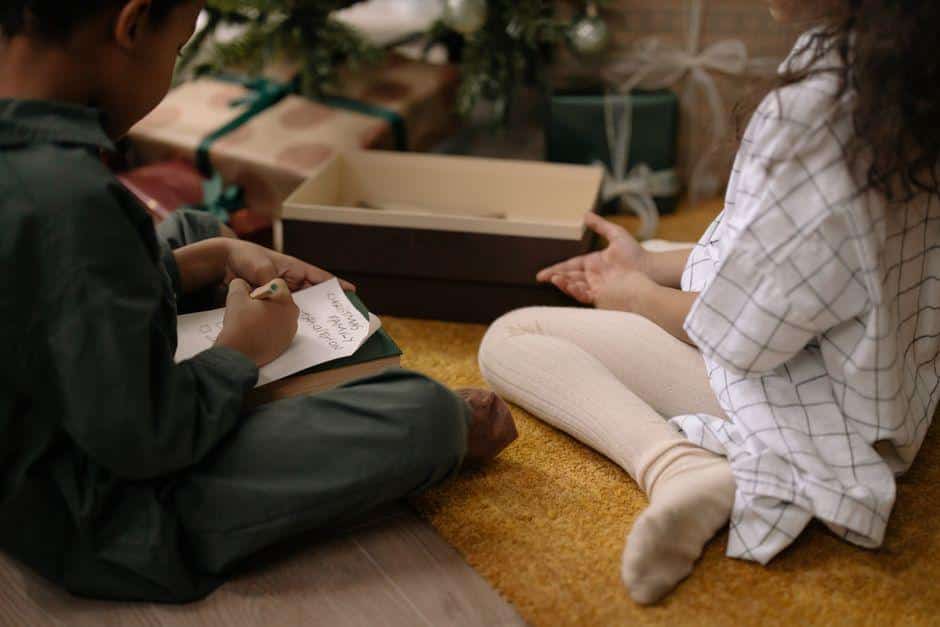
By the second week of December, gift anxiety stops being about money and starts being about choice. You stand in front of endless options for every single person on your list, and none of them feel specific enough to hand over with confidence. A personalized gift skips that problem: it carries the thought for you, so you don’t have to keep searching to prove you were paying attention.
Why Gifting Feels Stressful
Most holiday gift stress comes down to decision fatigue. Open any gift guide and you’ll find fifty candles, forty mugs, and thirty tote bags – all pleasant, all interchangeable, all telling you nothing about which one belongs with your sister versus your coworker. A longer list of options just makes every choice feel arbitrary, because nothing on the list was made with one specific person in mind.
Underneath that is a second, quieter fear: getting it wrong. Wrong here doesn’t mean a returned sweater. It means handing over a gift that says you didn’t really think about the person receiving it. That fear sends people back to the store three times in one week – there is plenty to buy, and no confidence that any of it says the right thing.
Why a Personalized Gift Shortcuts the Stress
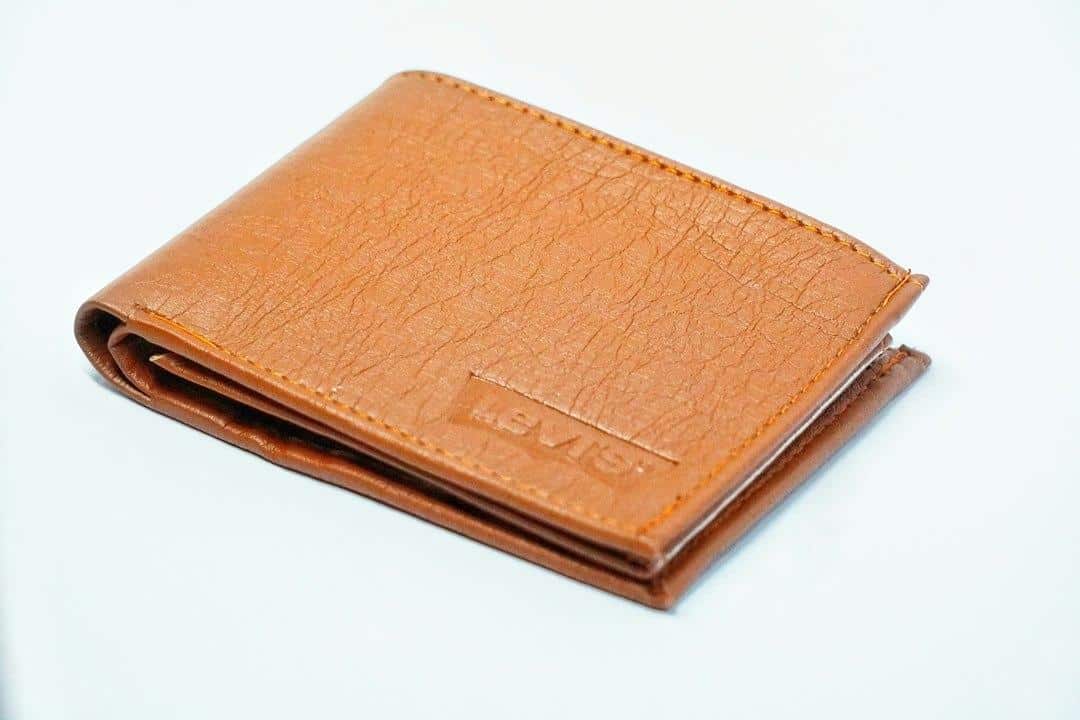
A personalized gift shortcuts choice overload by removing the choice itself. Once a name, initials, or a specific detail goes on a wallet, a bag, or a set of glasses, that gift stops being a candidate for anyone else on your list – and it stops needing to compete with forty near-identical alternatives.
- It can’t be regifted. Once someone’s initials are on a leather wallet or an engraved flask, it belongs to them and no one else, so there’s no polite way to pass it along later.
- It says you thought of them specifically. A gift with a name or initials on it tells the recipient you picked this for them, not for “a woman in her thirties” or “someone who likes coffee.”
- It works across ages and tastes. A monogrammed leather bag works for a twenty-five-year-old and a sixty-five-year-old the same way, because initials don’t depend on taste – they mark whose it is.
How to Personalize Well
The rule that trips people up most is simple: the initials belong to the recipient, not to you. If you’re monogramming a leather tote for your mother-in-law, her initials go on it, not yours, even if you’re the one giving the gift and even if you share a last name.
When all three letters are the same size, the order is first, middle, last – Sarah Anne Miller reads S.A.M. On formal pieces with a larger center letter, the order changes: first initial, then the last initial enlarged in the center, then the middle – S, big M, A. Most engravers and embroiderers will follow whichever convention you give them; the mistake to avoid is mixing the two.
For most modern gifts, two initials work better than three. A first and last initial on a wallet or a passport holder reads clean and doesn’t require you to know someone’s middle name, which you often don’t for a colleague or a new in-law. Save the full three-letter monogram for people you know well – a mother, a sister, a close friend – where getting every letter right isn’t a guessing game.
Skip the full monogram entirely when you’re not certain of the spelling, the order, or whether the recipient even likes monograms on their things. A single letter or a first name spelled out avoids the risk of a mistake she has to point out to you after she’s already unwrapped it.
Good makers handle this part properly: clean stamping, correct spacing, and enough proofing that a spelling mistake never makes it onto the leather or the metal.
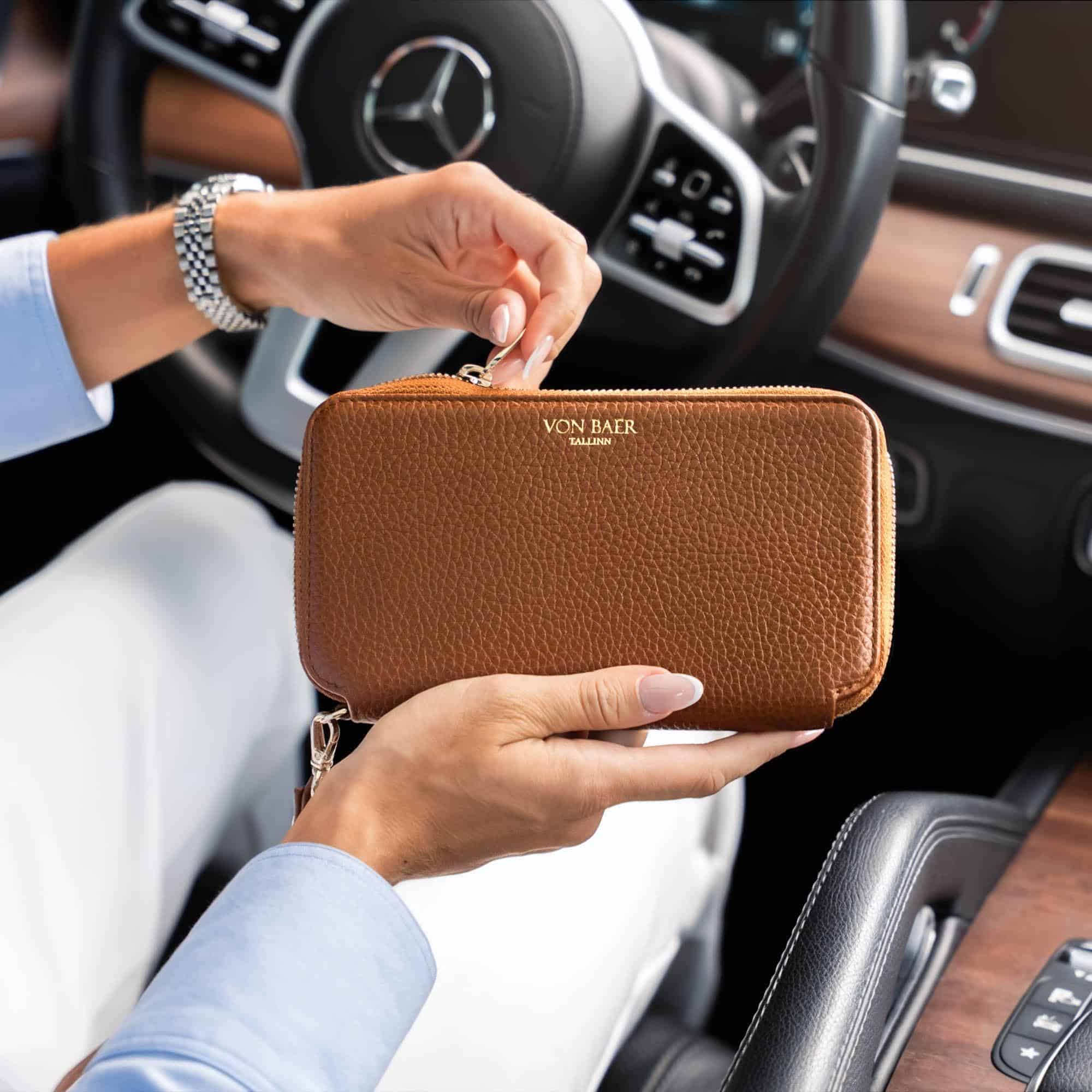
Von Baer is a good example of a leather goods brand that makes high-quality personalized gifts: they hand-emboss the recipient’s initials onto wallets, card holders, and small leather goods, and it’s included in the price. Hand-embossed leather is the obvious starting point – it costs a few times what a printed novelty version would – and their full personalized gift guide has more good options.
Once you’ve settled on initials and order, the personalizing itself is a short, sequential job:
- Confirm the recipient’s full name and preferred initial order before you place the order, since this is the one mistake you can’t take back once it’s stamped or engraved.
- Choose a material that takes personalization cleanly, such as leather, metal, or tightly woven cotton.
- Decide between two initials and a full three-letter monogram based on how well you know the recipient.
- Order early enough that a proofing correction doesn’t turn into a missed delivery date.
Who It Works For
Personalization pays off most with the hardest people on your list to shop for: the ones where a generic gift feels like you didn’t try, but where you also don’t know them well enough to buy something highly specific.
- The friend who has everything. She’s already bought herself the nice candle and the good blanket, so initials on a leather card holder give her the thing she’d never buy for herself.
- The in-laws. You don’t know their taste well enough to guess at style, but a monogrammed wallet or scarf lets you give something considered without pretending you know exactly what they’d pick off a shelf.
- The colleague you know a little. You’re not close enough for a personal gift, but a name or initials on something practical, like a leather luggage tag, comes across as thoughtful without feeling intimate.
What to Personalize
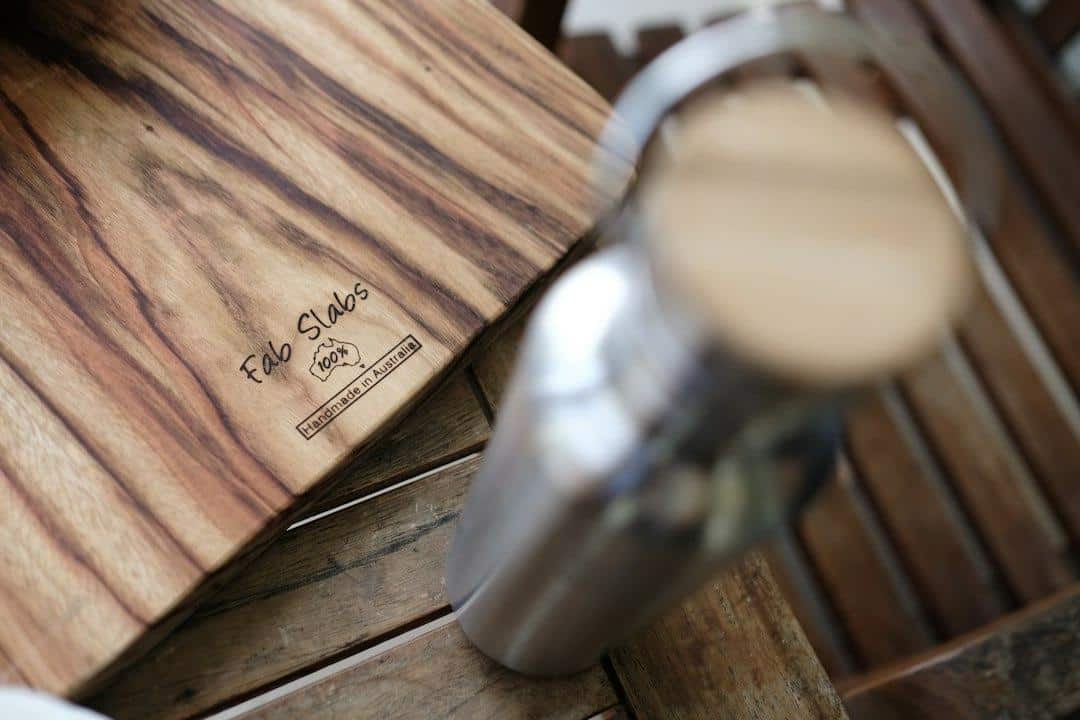
Not every surface takes personalization well, and the difference matters more than it looks. Personalization that lasts is worked into the material, not printed on top of it. Initials pressed into leather, letters engraved into metal, or a monogram embroidered into cotton become part of the material itself, so they last as long as the object does – nothing to rub off, fade, or peel.
Printed personalization sits on the surface instead of in it. A name printed on a mug or a phone case sits on top of a coating, and that coating scratches, fades in the dishwasher, or peels at the corners within a year – and the personal touch goes with it.
Open a gift with initials set into leather, and the person opening it sees their own name on something built to be used daily – so they reach for it instead of the plain version sitting in the same drawer. A personalized wallet gets carried. An engraved water bottle goes in the gym bag every day. A plain equivalent gets set aside because nothing about it says it belongs to anyone in particular.
The psychology is simple: a personalized gift signals time and attention. Research on gift exchanges finds the connection benefit lands mostly on you, the giver – putting visible thought into a gift deepened givers’ own sense of closeness to the person receiving it (source). Anyone can buy a leather wallet. Choosing to have someone’s initials pressed into it means you thought about that person specifically, checked the spelling, and decided they were worth the extra step. The recipient reads all of that in a few seconds, without you having to say a word of it.
When Personalization Isn’t the Right Call
Personalization works because it’s permanent, and permanent is exactly what makes it wrong for certain gifts. A gift card is the honest choice for a teenager whose taste changes every few months – putting initials on a case for a phone he’ll swap out by spring wastes the effort and locks him into something he never asked to have his name on. The same logic applies to anything you suspect might get exchanged: a jacket in a size you’re not sure of, a bag in a color you’re guessing at. Put a name or initials on something and the recipient can’t take it back to the store, so save personalization for gifts you’re confident about, and give a plain gift card when you’re not.
Frequently Asked Questions
What is a good personalized gift?
A good personalized gift is one the recipient will use daily, in a material that takes personalization well – a leather wallet, an engraved metal water bottle, an embroidered robe – with initials or a name added in a size and placement that doesn’t overwhelm the object itself.
Is it too late to order personalized gifts before Christmas?
That depends on the maker’s production time, since engraving, stamping, and embroidery all take longer than shipping a pre-made item off a shelf. Order personalized gifts as early in December as you can, and check the specific cutoff date before you assume there’s still time.
Whose initials go on a personalized gift?
The recipient’s initials go on the gift, not the giver’s, even for gifts given by a spouse, a parent, or anyone who shares the recipient’s last name.
The Short Version
Put the recipient’s initials on the gift – her initials, in the right order. Choose a material that takes them permanently, and order early enough for a proofing round. Do those three things and the hardest part of December shopping is already handled.