A full week of eating on Wegovy (that doesn’t feel like a diet)

If you’ve just started Wegovy, or you’re thinking about it, one of the most practical things you can have is a real-world week of food to refer to. Not a clinical handout. Not a calorie spreadsheet. Just a week of actual meals that work well on semaglutide without making you feel like you’ve signed up for a punishment.
This week is built around the dietary principles in Voy’s Wegovy diet plan, developed by their clinical nutrition team for semaglutide users. Their full guide covers the nutritional framework in detail. What follows is that framework in practice: seven days of meals with the reasoning behind the choices, side-effect management baked in, and no food groups removed.
For eligible patients, supervised Wegovy prescribing through Voy includes specialist prescribing and clinical nutrition support throughout treatment.
The framework: what eating on Wegovy actually requires
Wegovy reduces appetite substantially. That’s the point. But it also means you need to be deliberate about hitting your protein and fibre targets even when you don’t feel very hungry, because eating less without thinking about what you’re eating can lead to nutritional gaps that affect energy, muscle, and how you feel.
Protein: the non-negotiable
During active weight loss, the American Journal of Clinical Nutrition recommends 1.2 to 1.6g of protein per kilogram of body weight per day to preserve lean muscle mass. At a lower protein intake, weight loss includes a higher proportion of muscle rather than fat. This matters practically because muscle mass drives your resting metabolic rate: losing it slows the rate at which you burn calories when at rest.
A 2024 systematic review in Clinical Nutrition ESPEN confirmed that protein intake exceeding 1.3g/kg/day during weight loss is associated with preserved muscle mass, while intake below 1.0g/kg/day carries significantly higher risk of muscle loss. For a 75kg adult, that means roughly 90 to 120g of protein a day. On Wegovy, where your appetite is significantly reduced, you need to build meals that reliably deliver protein even in smaller portions.
Fibre: the second priority
The NHS recommends 30g of dietary fibre per day for adults, based on evidence linking adequate fibre intake to lower risk of cardiovascular disease, type 2 diabetes, and colorectal cancer. The British Nutrition Foundation notes that most UK adults currently consume only around 20g per day. Fibre matters on Wegovy for two specific reasons: it supports the fullness signals the medication is already amplifying, and it directly reduces the risk of constipation, which is one of the most common Wegovy side effects particularly in the early weeks.
The plate model
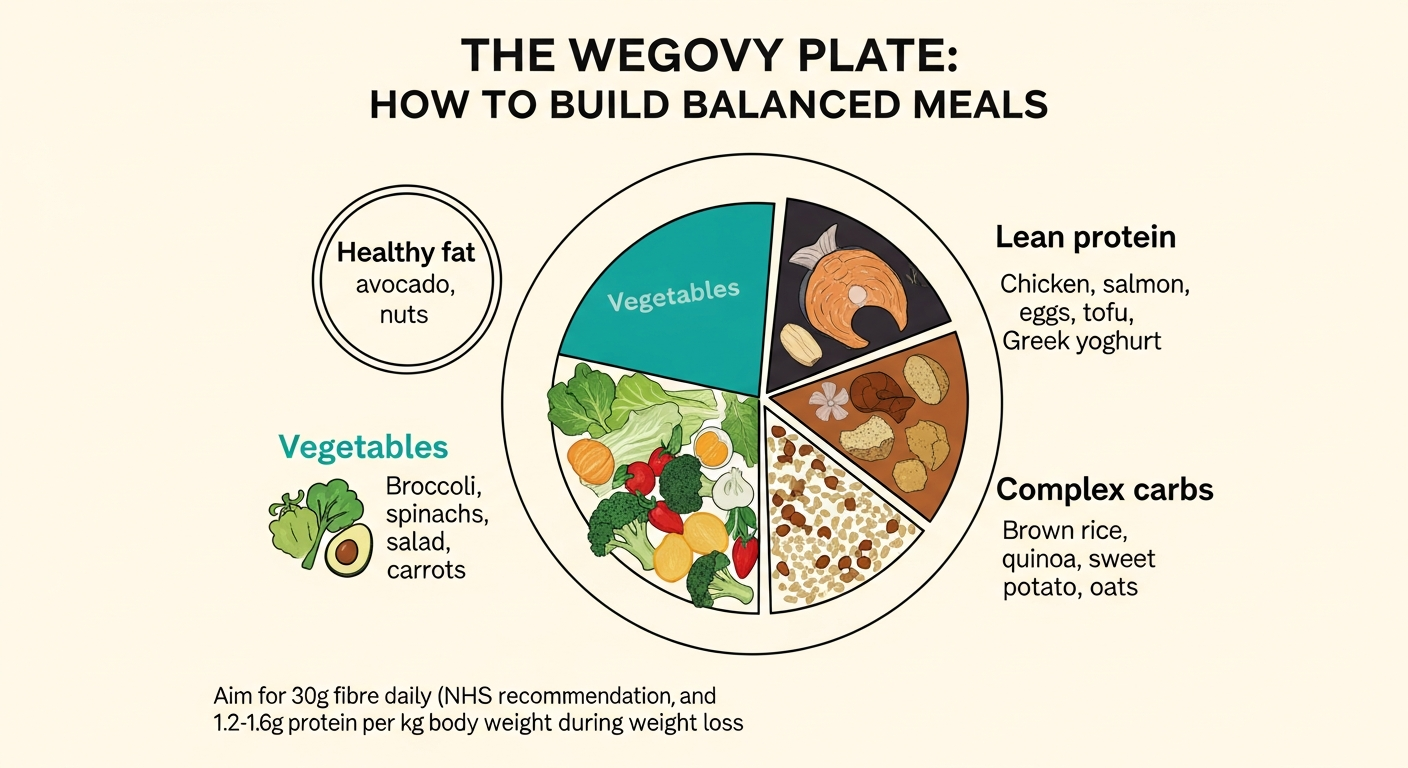
The Voy dietary framework uses a balanced plate structure:
- Half the plate: non-starchy vegetables. Broccoli, spinach, peppers, salad, carrots, courgette.
- A quarter: lean protein. Chicken, salmon, eggs, tofu, lentils, Greek yoghurt.
- A quarter: complex carbohydrates. Brown rice, quinoa, sweet potato, oats, wholegrain bread.
- A small portion: healthy fat. A tablespoon of olive oil, a quarter avocado, a small handful of nuts.
A note on portions and appetite
On Wegovy, many people find they genuinely cannot eat the portion sizes they were used to. This is normal and expected. The British Heart Foundation notes that GLP-1 medications slow gastric emptying and reduce appetite, meaning people feel full sooner and stay full longer. The portions in this plan are designed to work with that reduced appetite: they are not large, they are nutrient-dense, and they can be adjusted down if needed. If you cannot finish a meal, prioritise the protein portion first, then the vegetables.
Calorie targets will vary depending on your starting weight, height, and activity level. As a general guide, a deficit of 400 to 600 calories below your total daily energy expenditure (TDEE) supports steady weight loss without excessive restriction. Most people find this happens naturally on Wegovy without needing to count.
The full week
MondayBreakfastGreek yoghurt (200g, full-fat) with a handful of berries and a tablespoon of ground flaxseeds. One soft-boiled egg on the side. LunchLarge salad: mixed leaves, cucumber, cherry tomatoes, half a tin of chickpeas, a quarter avocado, lemon and olive oil dressing. Wholegrain pitta on the side. DinnerBaked salmon fillet with roasted broccoli, sweet potato wedges (small portion), and a squeeze of lemon. No sauce needed. Snack if neededA small handful of almonds or a piece of fruit. Protein focusGreek yoghurt + egg at breakfast, chickpeas at lunch, salmon at dinner. Estimated 90-100g protein. Fibre focusFlaxseeds, chickpeas, sweet potato, broccoli. Aiming for 28-32g. |
TuesdayBreakfastPorridge made with oats and semi-skimmed milk, topped with a sliced banana and a tablespoon of almond butter. LunchLentil soup (homemade or tinned lentil and vegetable) with a slice of wholegrain bread. Sprinkle of feta if appetite allows. DinnerChicken thigh (skinless, oven-baked) with roasted peppers, onions and courgette, served over brown rice. Fresh herbs and a drizzle of olive oil. Snack if neededLow-fat cottage cheese (80g) with a few oatcakes. Protein focusOats and almond butter at breakfast, lentils at lunch, chicken at dinner. Estimated 85-100g protein. Fibre focusOats, banana, lentils, wholegrain bread, brown rice, roasted vegetables. Aiming for 30g+. |
WednesdayBreakfastTwo scrambled eggs on one slice of wholemeal toast, with a handful of spinach wilted in the pan. A small glass of skimmed milk or plant milk. LunchTuna and bean salad: tinned tuna, butter beans, red onion, celery, lemon juice, olive oil. Served on a bed of rocket. DinnerTofu stir-fry: firm tofu cubed and pan-fried in sesame oil, with tenderstem broccoli, snap peas, and a light soy and ginger sauce. Served with a small portion of noodles or brown rice. Snack if neededA small pot of Greek yoghurt. Protein focusEggs at breakfast, tuna and beans at lunch, tofu at dinner. Estimated 90-105g protein. Fibre focusWholemeal bread, spinach, butter beans, rocket, broccoli, snap peas. Aiming for 28-32g. |
ThursdayBreakfastOvernight oats: 50g oats soaked overnight in milk, topped in the morning with chia seeds, mixed berries, and a drizzle of honey. LunchHomemade or shop-bought vegetable and chicken soup with a wholegrain roll. A piece of fruit. DinnerBaked cod fillet with a side of roasted cherry tomatoes, green beans, and a small portion of new potatoes. Simple seasoning. Snack if neededA small handful of walnuts and a piece of fruit. Protein focusOats and chia at breakfast, chicken soup at lunch, cod at dinner. Estimated 85-100g protein. Fibre focusOats, chia seeds, berries, vegetables, new potatoes (with skins). Aiming for 28-32g. |
FridayBreakfastSmoothie: a small banana, a large handful of spinach, a tablespoon of protein powder or Greek yoghurt, almond milk, and a few frozen berries. LunchWholegrain wrap with hummus, sliced chicken or falafel, mixed leaves, grated carrot, and a few sliced peppers. Eat half if appetite is low, save the rest. DinnerTurkey or lean mince bolognese with courgetti or a mix of courgetti and a small amount of wholegrain pasta. Tomato-based sauce with lentils added if possible. Snack if neededCarrot sticks with hummus. Protein focusGreek yoghurt or protein at breakfast, chicken at lunch, mince at dinner. Estimated 90-110g protein. Fibre focusSpinach, banana, carrot, wrap, lentils in bolognese, courgetti. Aiming for 28-32g. |
SaturdayBreakfastWeekend eggs: poached eggs on one slice of sourdough, with smoked salmon, sliced avocado, and a squeeze of lemon. Take your time. LunchLarge mixed bean and quinoa bowl with cucumber, tomatoes, a small amount of feta, olive oil, and plenty of fresh herbs. Leftover roasted vegetables welcome. DinnerLean lamb or chicken shish-style kebab: grilled meat or halloumi with a large salad, wholemeal pitta, and yoghurt-based sauce. Light on the bread if appetite is low. Snack if neededA couple of squares of dark chocolate and a small handful of mixed nuts. Protein focusEggs and salmon at breakfast, quinoa and feta at lunch, grilled meat or halloumi at dinner. Estimated 90-110g protein. Fibre focusSourdough, beans, quinoa, salad vegetables, pitta. Aiming for 28-32g. |
SundayBreakfastPorridge with nut butter, sliced pear, and a sprinkle of pumpkin seeds. LunchSimple lentil dahl with a small portion of brown rice or wholegrain naan, and steamed spinach on the side. DinnerA lighter plate because Sunday dinner portions are often larger than necessary on Wegovy. Roast chicken with plenty of roasted vegetables and a small amount of roast potato. Skip the gravy if it makes you feel heavy. Snack if neededGreek yoghurt with a teaspoon of honey. Protein focusOats and nut butter at breakfast, lentils at lunch, chicken at dinner. Estimated 85-100g protein. Fibre focusPumpkin seeds, lentils, brown rice, spinach, roasted vegetables. Aiming for 28-32g. |
Side effect management through food
Dietary choices have a direct effect on how common Wegovy side effects are managed. Smaller meals, low-fat foods, adequate hydration, and specific foods for nausea all reduce side effects during the dose-escalation period.
Side effects from Wegovy are most common in the first few weeks and after dose increases. Published supervised cohort data shows nausea declining from 35% to 8% and constipation from 33% to 10% over 12 months, reflecting adaptation over time rather than a sustained problem. Food choices are the most immediate tool for managing these during the adjustment period.
If you have nausea
Stick to plain, lower-fat foods: porridge, plain toast, bananas, plain crackers, rice. Avoid fatty, greasy, or heavily spiced meals immediately after your injection, when gastric emptying is most affected. Eat smaller amounts more frequently rather than one or two large meals. Ginger tea can help settle nausea for some people.
If you have constipation
Constipation is a direct result of slowed gastric emptying. The most effective dietary responses are increasing fluid intake, increasing fibre particularly soluble fibre from oats, lentils, and fruit, and adding prunes or a small glass of prune juice. The British Dietetic Association recommends increasing fibre gradually rather than suddenly to avoid bloating, which applies equally when Wegovy is affecting digestion.
If you have indigestion or reflux
Avoid lying down immediately after eating. Avoid acidic foods like citrus and tomatoes if they are triggering symptoms. Porridge, bananas, and plain soups are easy on the stomach. Carbonated drinks, including sparkling water and diet drinks, can worsen bloating and reflux for some people.
“ |
NHS. How to get more fibre into your diet. nhs.uk/live-well/eat-well/digestive-health/how-to-get-more-fibre-into-your-diet/ British Nutrition Foundation. nutrition.org.uk/nutritional-information/fibre/ |
What to drink
Water is the best daily choice on Wegovy. The Voy Wegovy diet plan recommends 6 to 8 glasses of water a day. Adequate hydration directly reduces constipation risk by supporting the movement of fibre through the digestive system. Herbal teas count toward fluid intake. Mint-infused water works well for people who find plain water boring.
Alcohol is recommended only in moderation, and not at all in the first few weeks or after dose increases. When Wegovy is slowing your digestion, alcohol is processed differently and is more likely to cause nausea. If you drink, opt for lower-calorie options and alternate with water.
Avoid or limit carbonated drinks, including diet versions. The carbonation worsens bloating and reflux for many people on GLP-1 medications, and artificial sweeteners in diet drinks may affect hunger cues and cravings.
Quick reference
Daily targets on Wegovy
- Protein: 1.2 to 1.6g per kg body weight. For a 75kg adult: 90 to 120g per day. Evidence base: American Journal of Clinical Nutrition.
- Fibre: 30g per day. UK government recommendation via SACN/NHS.
- Water: 6 to 8 glasses per day.
- Meals: 3 balanced meals using the plate model. Snack if needed but prioritise nutrients over volume.
Foods to prioritise
- Protein: chicken, salmon, eggs, Greek yoghurt, lentils, chickpeas, tofu, cottage cheese.
- Fibre: oats, broccoli, lentils, beans, berries, flaxseeds, chia seeds, wholegrain bread, sweet potato.
- Healthy fats: olive oil, avocado, nuts, oily fish.
- Hydration: water, herbal tea, plain drinks.
Foods to moderate or avoid
- Fried and fatty foods: sit heavily and worsen nausea, especially early in treatment.
- Ultra-processed snacks: crisps, sugary drinks, fast food. Calorie-dense, low nutrition, low satiety.
- Alcohol: particularly in first weeks and after dose increases.
- Carbonated drinks: can worsen bloating and reflux.
- Refined carbs: white bread, white pasta. Cause blood sugar spikes and earlier return of hunger.