PDRN: Why “Salmon DNA” Is 2026’s Biggest Skincare Trend

At some point, customers may feel like their skincare routines have hit a ceiling. The moisturizer may be good, the SPF may be consistent, the serums may be doing their job, yet the skin might still look like it is maintaining rather than actually improving. That frustration is part of what is driving one of the biggest ingredient conversations of 2026.
The PDRN skincare trend in the Philippines and elsewhere in the world has taken hold across beauty communities for good reason. It has a clinical history long enough to take seriously, and a growing range of formats—including the vegan kind—has made it more accessible than ever. Here is what it actually does, why it blew up, what customers should know before trying it, and how beauty brands can approach it.
What Is PDRN? The Facts
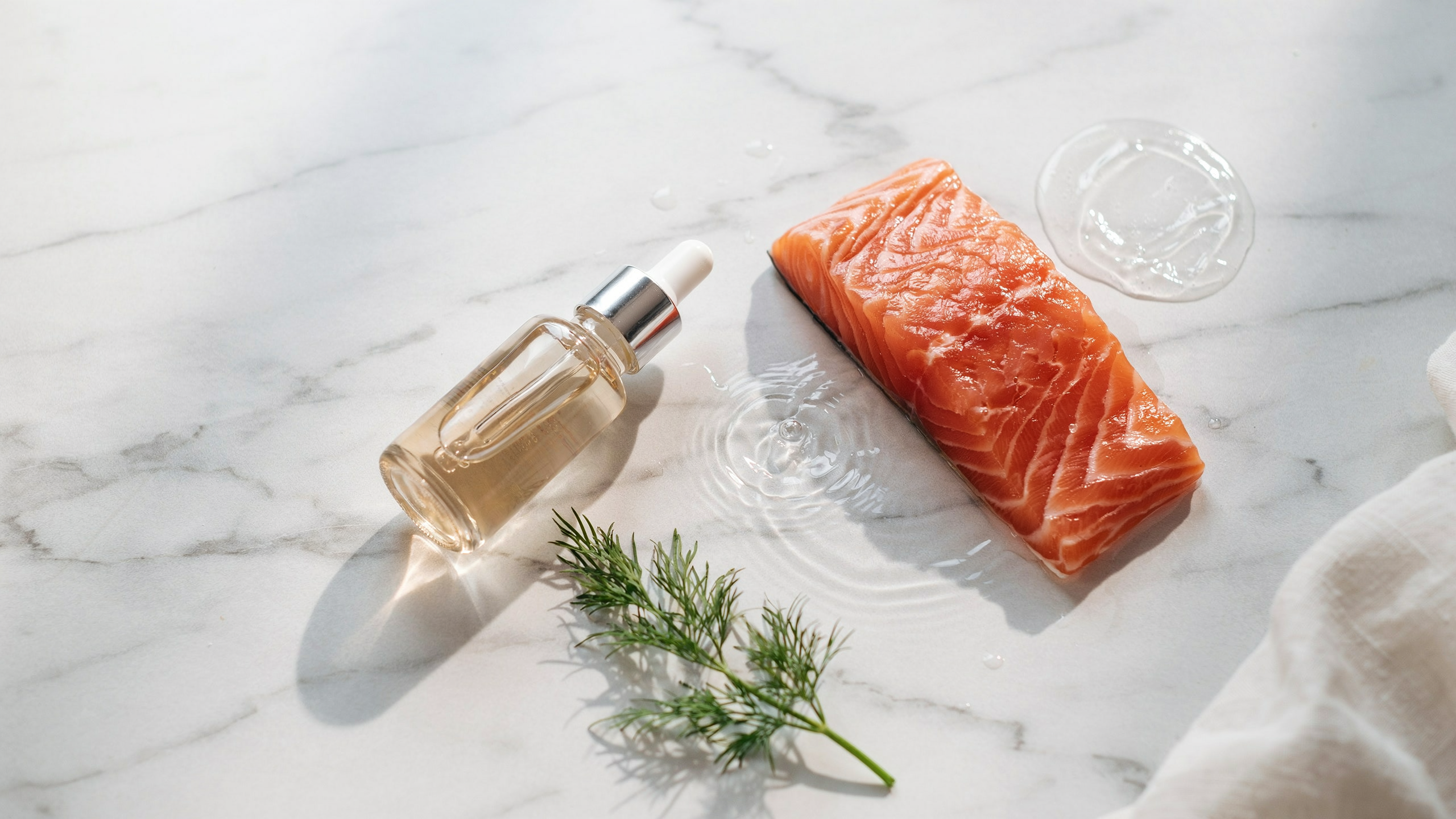
PDRN stands for polydeoxyribonucleotide, a bioactive compound sourced from salmon sperm cell DNA. Though some may find such an ingredient surprising by its very definition, the biology behind it is genuinely interesting, and the numbers back up why it deserves attention: search interest in the ingredient climbed over 1,400% between 2024 and 2025.
The reason is not hard to trace. PDRN binds to specific receptors in the skin that trigger the body’s own repair response. Collagen production picks up, inflammation settles down, and skin tissue starts rebuilding at a faster rate than it would on its own. It works at the cellular level, not the surface, which is exactly why it spent decades in hospitals before anyone thought to put it in a serum.
Wound care specialists and surgeons were using PDRN in post-surgical recovery long before the beauty industry noticed it. That clinical track record is the reason aesthetics practitioners eventually adopted it for skin booster treatments, and it is the same reason consumers started paying attention when it arrived in topical form. Unlike a lot of trending ingredients that show up with bold claims and thin evidence, PDRN has actual research behind it.
Why Did PDRN Blow Up So Fast?
South Korea had a head start. PDRN injectables, or micro-doses of the compound delivered directly into the dermis, have been a standard offering at Korean aesthetic clinics for years. As K-beauty’s influence on Southeast Asian skincare continued to grow, it was only a matter of time before countries like the Philippines caught up. Local clinics began adding PDRN skin booster treatments to their menus, and that exposure sent curious consumers online to understand exactly what they were using on their skin.
The Philippine market was already primed for it. Filipino beauty consumers have long been drawn to science-backed actives, skin-brightening innovations, and anything with visible, measurable results. PDRN fit that profile well, so once clinic clients started talking about it, the retail curiosity followed quickly. And by 2026, that curiosity had become demand; the ingredient had moved off clinic menus and onto retail shelves, and brands were racing to meet it.
What About the Vegan Version?
Animal sourcing is where PDRN loses some people, and fairly so. The “salmon sperm DNA” label is not exactly an easy sell for consumers who prioritize ethical beauty. Formulators have responded with biofermented polynucleotides and plant-derived compounds that work through the same cellular renewal pathways, just without the animal origins.
The terminology varies by brand—bio-polynucleotides, plant-based renewal complexes, fermented nucleotide fractions—but the mechanism is broadly the same. Clinical evidence for these alternatives is still catching up to traditional PDRN, though early data looks promising. What matters is that the market is ready for them; ethical sourcing has moved from a niche preference to a genuine purchase driver, and these formulations sit squarely in that space.
For the Philippines, where conscious beauty is growing steadily among younger urban consumers, this matters. It means the regenerative skincare story that PDRN introduced is becoming accessible to a wider audience, without asking anyone to choose between efficacy and their values.
What Determines a Good PDRN or PDRN-Inspired Product?
PDRN’s molecular size is worth understanding before spending on a topical product. The compound does not penetrate the skin barrier easily on its own, so a cream and a clinical injectable are delivering very different amounts of the active to where it actually needs to go. Products that address this honestly tend to use encapsulation or liposomal delivery systems; others are formulated to pair with microneedling, which handles the penetration problem mechanically.
Concentration disclosure is also worth checking. Reputable formulations are specific about the amount of PDRN present in the formula. A brand leading with PDRN as its hero ingredient but hiding behind vague terminology often uses it in amounts too low to make a real difference. Pairing PDRN with hyaluronic acid, peptides, or niacinamide also tends to produce more visible results than PDRN alone, so a well-rounded formulation is usually a better sign than one built around a single star ingredient.
Is This Trend Here to Stay?
Consumers are sharper than the trend cycle gives them credit for; they can tell when an ingredient has substance behind it and when it is just occupying shelf space until the next one arrives. PDRN has lasted this long in clinical settings because it earned its reputation, not because it photographs well or carries a compelling origin story. The fact that plant-based alternatives are now maturing alongside it also suggests the science is driving the conversation, not the other way around.
Whatever format it eventually takes on, the underlying idea that skin can be actively supported in rebuilding itself is one worth holding onto, long after the trend headlines move on.