Is Developer Bleach? Complete Hair Bleach Guide

Is developer bleach? This is one of the most common questions I get from people new to hair lightening. The short answer is no.
They are two different things, but they work together. I have seen many people make mistakes by mixing up the two or using the wrong strength.
In this guide, I will break down what developer and bleach are, how to pick the right developer strength, and how to use them the right way.
I will also cover mistakes to avoid. I have years of experience in hair care, and I am here to give you clear, honest answers.
Understanding Developer and Bleach
Knowing the difference between developer and bleach is the first step to getting better results.
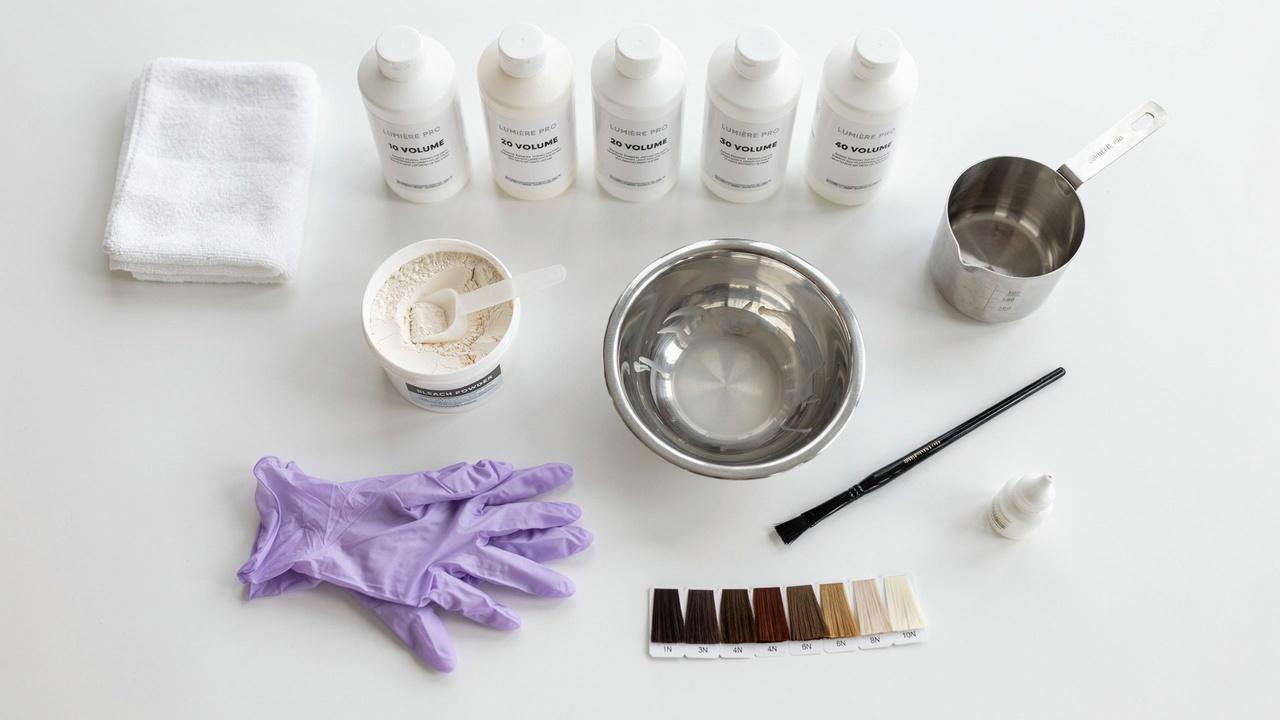
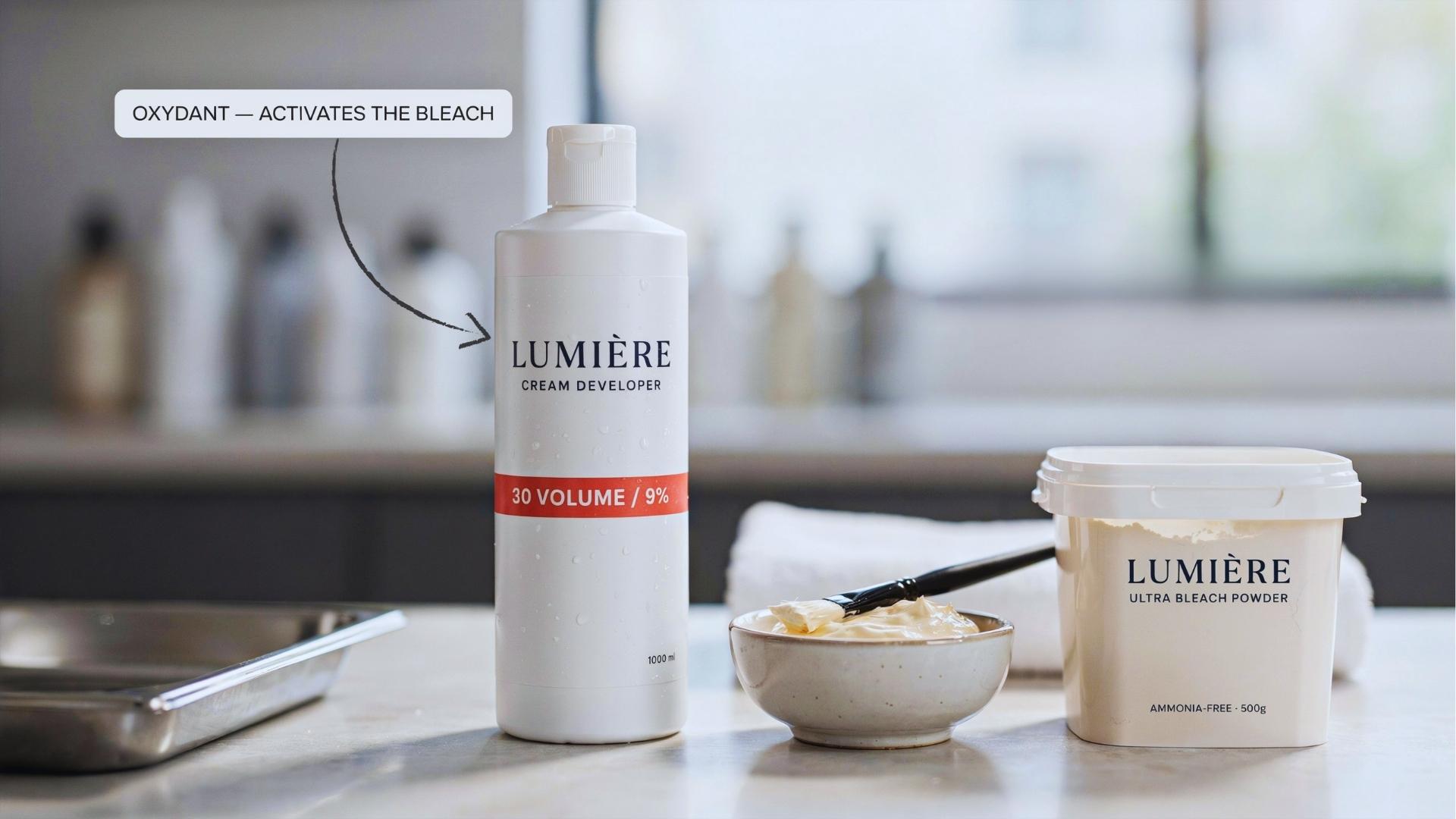
The developer is a hydrogen peroxide solution that opens the hair cuticle so bleach can work inside the strand. It comes in strengths of 10, 20, 30, and 40 volume.
Bleach is a powder or cream that breaks down melanin, the pigment that gives hair its color. On its own, bleach does nothing. It needs developers to activate.
When you mix the two, a chemical reaction begins. The developer opens the cuticle, and the bleach enters the strand to remove color.
The developer's strength controls how fast and how much lightning happens.
How to Choose the Right Developer Strength for Bleach
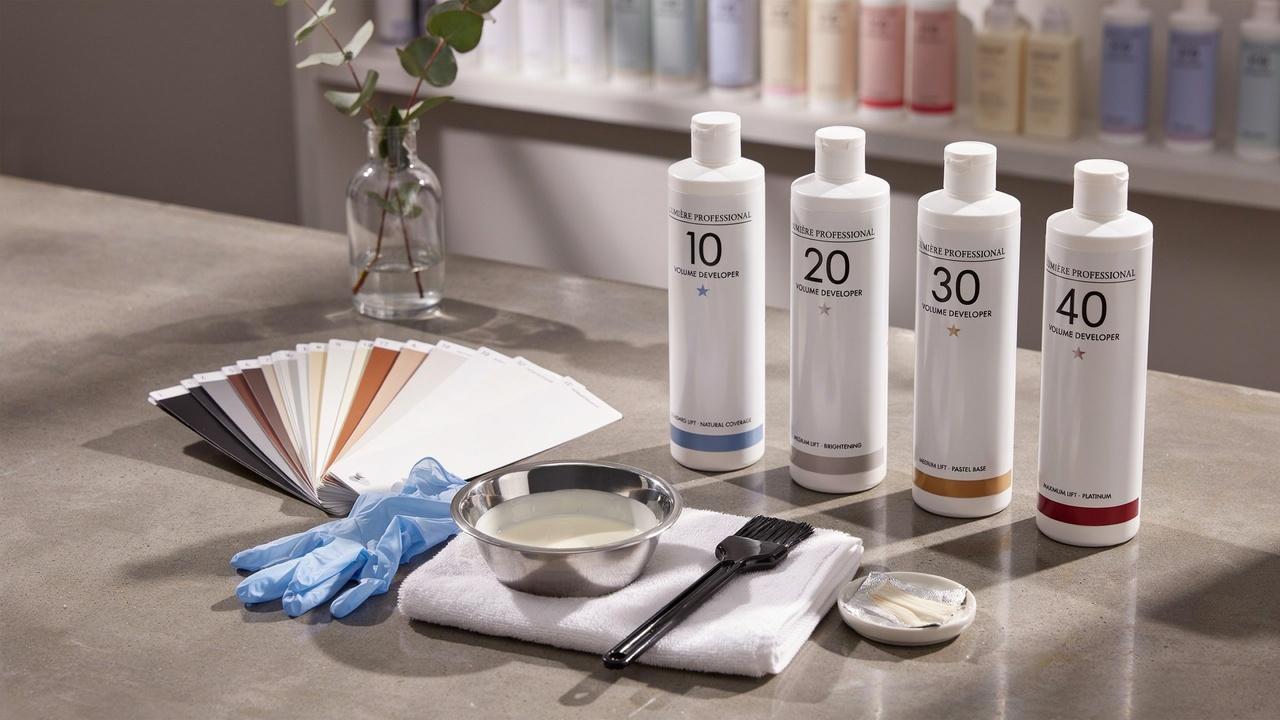
Picking the right developer strength depends on your hair type, condition, and how light you want to go.
What Do 10, 20, 30, and 40 Volume Developers Mean?
Volume refers to the percentage of hydrogen peroxide.
- 10 Volume (3%): Very gentle. Lifts about 1 level. Good for toning or very minor lightening.
- 20 Volume (6%): Standard strength. Lifts 1 to 2 levels. Works for most basic bleaching.
- 30 Volume (9%): Stronger. Lifts 2 to 3 levels. Used for darker hair that needs more lift.
- 40 Volume (12%): Very strong. Lifts 3 to 4 levels. High risk of damage. Not recommended for beginners.
Choosing Based on Hair Condition
Always check your hair condition before bleaching. Dry, weak, or damaged hair needs a lower volume developer.
Using a strong developer on already weak hair leads to breakage and more damage. 10 or 20 volume is the safer choice in most cases. Take time to assess your hair before you start.
Virgin Hair vs. Color-Treated Hair
Virgin hair has never been colored, so it is usually stronger and can handle 20 or 30 volume developers.
Color-treated hair has already gone through chemical processing and is more fragile. Stick to 10 or 20 volumes to lower the risk of damage.
Pushing too strong on treated hair can cause serious breakage.
How Hair Texture and Density Affect Your Choice
Fine hair lifts faster, so a lower developer volume works better on it. Thick or coarse hair may need 30 volume to get the same level of lift.
Dense hair also takes longer to process evenly. Matching the developer to your texture helps you get more consistent results with less damage.
Does a Bond Builder Change the Developer You Need?
A bond builder like Olaplex protects the hair during bleaching, but it does not change which developer strength you should use.
You still choose your developer based on your hair condition and the lift you want. Add the bond builder to the mix after making that decision.
It reduces damage but does not replace good developer judgment.
How to Use Developer With Bleach Correctly

Correct mixing and timing are key to safe, effective bleaching.
Mixing Developer and Bleach Properly
Most bleach products recommend a 1:2 ratio, which means one part bleach to two parts developer. Always read the label on your specific product before mixing.
Use a non-metal bowl and stir until the mixture is completely smooth with no lumps. Apply it to your hair right away and do not let it sit in the bowl before use.
Why Processing Time Matters
Processing time is how long you leave bleach on your hair, and it matters more than most people think. Most bleach should not stay on longer than 50 minutes.
Check your hair every 10 minutes to see how the lift is progressing. As soon as your hair reaches the level of lift you want, rinse it out immediately to avoid over-processing.
Should You Increase Developers During Application?
No, do not add more developer to bleach that is already on your hair. It does not make the process faster or safer.
Adding more developer mid-application causes uneven results and puts extra stress on your hair. Stick to the amount you mixed at the start and let it work as intended.
When to Reapply Fresh Bleach Instead of Using a Stronger Developer
If your hair did not lift enough after one session, resist the urge to go stronger right away. Give your hair at least one to two weeks to recover and be in a deep condition during that time.
After your hair has regained some strength, do a second session using fresh bleach. Use the same developer strength or go slightly stronger only if your hair is in good condition.
Common Developer Mistakes That Can Damage Your Hair
Small mistakes with developers can lead to serious damage. Here's what to avoid.
Using a Developer That Is Too Strong
Using 40 volume when 20 volume would work is a common error. Higher volume means more hydrogen peroxide.
That means more stress on your hair. It can cause breakage, dryness, and scalp burns.
Using a Developer That Is Too Weak
10 volume on very dark, thick hair will not do much. You'll waste time and product without real results. Match the developer to what your hair actually needs.
Applying the Same Developer on Every Section
Not all sections of your hair are the same. The ends may be more processed than the roots. Roots are closer to heat from your scalp and lift faster. Use a lower developer on fragile ends.
Leaving Bleach on for Too Long
Bleach does not keep working better the longer it sits. After a certain point, it just damages your hair without adding more lift.
Always follow the recommended time and check your hair regularly.
Tips for Safe and Effective Hair Bleaching
Following these steps helps protect your hair while still getting good results.
- Start with the lowest effective developer strength. If 20 volumes can do the job, don't jump to 30. Less is safer.
- Match the developer to your hair type and condition. Fine, dry, or color-treated hair needs a gentler approach.
- Perform a strand test before full application. Test on a small hidden section first. This shows how your hair responds before you commit to the full head.
- Mix fresh bleach when more processing is needed. Never rely on old or dried-out bleach. Fresh mix equals better results.
- Monitor processing time closely to avoid over-processing. Check every 10 minutes. Don't walk away and forget.
- Deep-condition hair after bleaching to restore moisture. Bleach strips moisture. Use a deep conditioning mask right after to help repair the hair.
Conclusion
So, is developer bleach? No and knowing the difference really matters. After trying different strengths on my own hair, I learned the hard way that more is not always better.
The right developer depends on your hair type, condition, and goals. Start gentle, do a strand test, and always take care of your hair after bleaching.
I hope this guide saves you from some of the mistakes I made. Have questions or tips of your own? Drop them in the comments I'd love to hear from you!
Frequently Asked Questions
Can I Use a Developer Alone to Lighten My Hair?
No, developers alone will not lighten your hair much. It needs bleach powder to break down the hair's pigment effectively.
What Happens if I Use a 40 Volume Developer on Fine Hair?
Fine hair is fragile and can break easily with 40 volume. It causes excessive damage, dryness, and even hair loss in some cases.
How Long Should I Leave Bleach on My Hair?
Most bleach formulas should not stay on longer than 50 minutes. Check your hair every 10 minutes and rinse as soon as you reach the desired lift.
Can I Mix Different Developer Volumes Together?
Yes, you can mix two volumes to get a strength in between. For example, mixing 20 and 30 volume gives roughly 25 volume, which is a middle-ground option.
How Soon Can I Bleach My Hair Again After One Session?
It is best to wait at least two weeks between bleach sessions. Use this time to deep condition and restore strength to your hair before bleaching again.