Reading Skincare Labels Like a Foodie (And Men’s Natural Skincare)

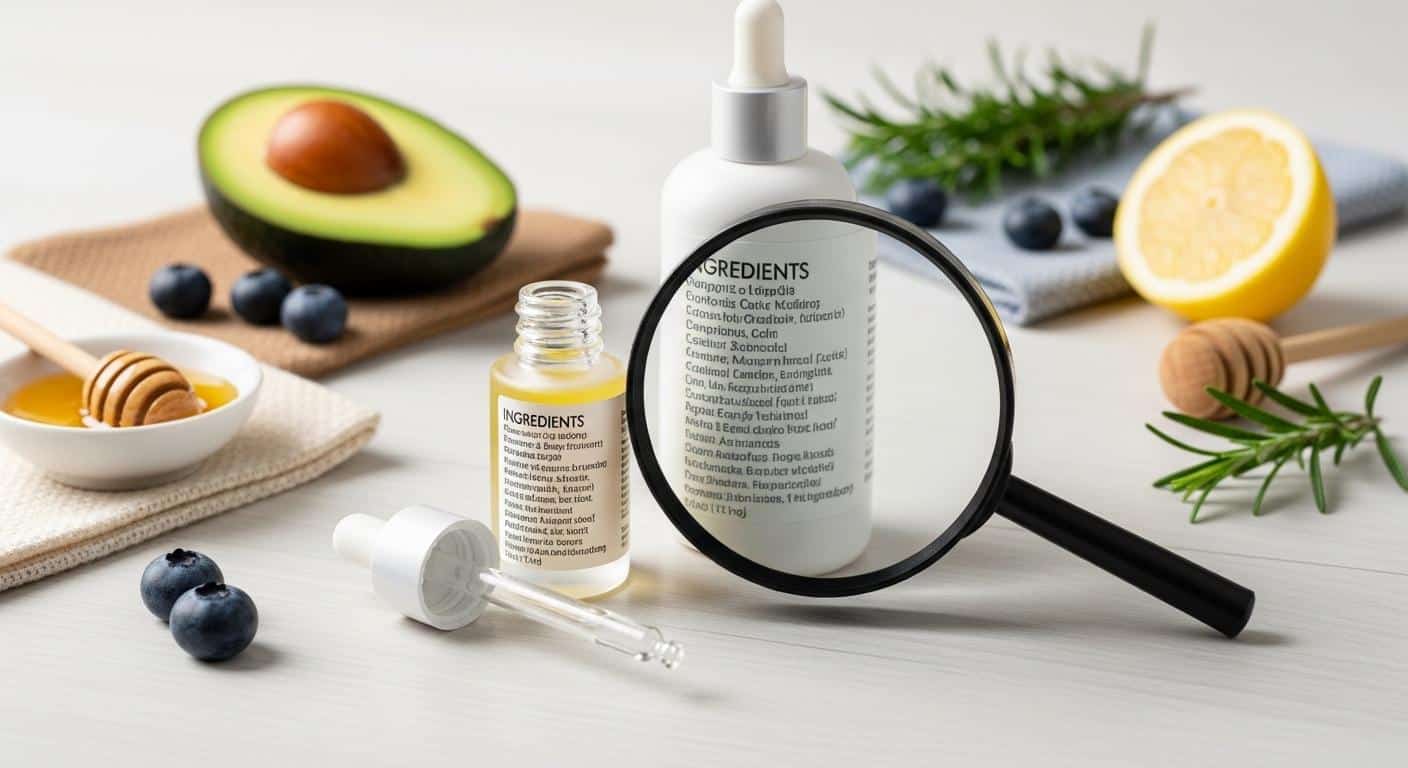
If you're the kind of person who flips a food package over to read the ingredient list before it goes in your cart, you already understand the fundamentals of clean skincare. The logic is exactly the same: fewer ingredients, recognizable sources, nothing you'd need a chemistry degree to decode.
It's a mindset that's been central to the natural beauty conversation for years. And recently, it's started showing up in an unexpected place: men's skincare.
The Ingredient-First Approach
The foodie approach to beauty is simple. You wouldn't load up on ultra-processed food and expect to feel great, so why would you slather synthetic-laden products on your skin every single day and expect different results? Skin is absorbent. What you put on it matters.
This is the exact philosophy driving the rise of men's natural skincare. Men who are new to taking care of their skin tend to approach it the way they'd approach a nutrition label: they want short ingredient lists, recognizable sources, and products that actually do something. That instinct, it turns out, leads them straight to some of the most time-tested ingredients in skincare history.
Ingredients Worth Knowing
If you love the idea of knowing exactly what's in your skincare the way you know what's in your food, these are the ingredients worth paying attention to, whether you're shopping for yourself or someone else.
Grass-fed beef tallow might raise an eyebrow if you've never come across it before, but it has a genuinely impressive track record. It's been used as a skin conditioner across cultures for centuries, and modern skincare is rediscovering why. The fatty acid composition of tallow closely mirrors that of the skin's own sebum, making it a naturally compatible moisturizing ingredient. It absorbs well, supports the skin's natural barrier, and doesn't require synthetic stabilizers to stay shelf-stable. Think of it like the whole-food version of a moisturizer, nothing added that doesn't need to be there.
Bakuchiol is another one to know. It comes from the babchi plant and has gained real traction as a plant-derived ingredient that supports smoother, more even-looking skin over time. It's a natural alternative for people who want visible texture improvement without relying on synthetic compounds.
Botanical oils like rosehip, sea buckthorn, argan, and acai round out the natural skincare pantry beautifully. Rich in vitamins and essential fatty acids, these oils bring antioxidant properties and deep conditioning benefits to formulas. They're the olive oil of skincare, nutrient-dense, multifunctional, and rooted in centuries of traditional use.
What Men Got Right (That We Can All Borrow)
When men approach skincare for the first time without years of product conditioning behind them, they often land on something surprisingly wise: keep it simple. Cleanser, serum, moisturizer. Three steps, quality ingredients, done.
That kind of disciplined minimalism is something clean beauty lovers can appreciate. It's easy to accumulate an ever-growing shelf of products, each promising something different. But a routine built around a small number of genuinely good ingredients will almost always outperform one built around a dozen mediocre ones.
The men's natural skincare conversation has pushed ingredient transparency front and center in a category that wasn't always known for it. And as more brands respond by shortening their ingredient lists and reaching back toward traditional, food-grade sources, the whole skincare world benefits.
The Bigger Picture
Clean beauty has always been about asking better questions. What's actually in this? Where did it come from? Does my skin actually need it?
Those questions don't belong to any one demographic. They belong to anyone who wants to feel good about what they're putting on their body, morning and night. The foodie approach to skincare isn't a trend. It's just common sense with a good ingredient list to back it up.