How Often Should You Use a Tanning Bed: Guide


Thinking about how often you should use a tanning bed? You are not alone. A lot of people jump in without a real plan and end up with burned, sore skin instead of the color they were hoping for.
I have been there myself. Too many sessions in one week left my skin red and irritated instead of glowing.
This article covers safe tanning frequency, skin type schedules, how to build a base tan, and warning signs to watch for.
We also look at long-term risks and smarter options. With personal experience and solid research behind this guide, you will walk away with a clear, simple plan.
How Often Should You Use a Tanning Bed for Safe Results

Getting the frequency right is what separates a healthy glow from damaged skin.
How often you use a tanning bed matters more than most people think. Going too often damages your skin.
Going too little means slow or no results. A tanning bed works by exposing your skin to UVA and UVB rays, which trigger melanin production.
But your skin needs recovery time between sessions. Skipping that window does not speed up your results.
It only raises the risk of burns and long-term skin problems. Most professionals recommend no more than 2 to 3 sessions per week with at least 48 hours between each visit.
How Often Should You Use a Tanning Bed Per Week

Your session count per week depends entirely on where you are in your tanning process.
Beginner Tanning Bed Schedule (First 1-2 Weeks)
Start with no more than 2 sessions per week and keep each one between 5 to 7 minutes. Do not increase time or frequency until your skin handles it without any redness.
Recommended Sessions for Building a Base Tan
After the first two weeks, move to 3 sessions per week spaced at least 48 hours apart. Stick with this for 2 to 4 weeks until you reach your target color.
Maintenance Phase: Reducing to 1 Session Per Week
Once your base tan is set, 1 session per week is all you need to keep it. Extra sessions at this stage only add risk without adding more color.
Why 2-3 Sessions Per Week Is the Common Standard
The 2 to 3 session standard gives your skin the 48-hour minimum recovery time it needs between visits. Going beyond this consistently puts you at a much higher risk for burns and long-term UV damage.
How Often Should You Use a Tanning Bed a Week Based on Skin Type

Your skin type changes everything about how often you should be tanning.
Type I-II Skin: Very Limited or No UV Exposure
This skin type burns easily and rarely tans, making tanning beds the highest risk for this group.
Most dermatologists advise against them entirely, but if used, sessions should be under 5 minutes and no more than once per week.
Type III-IV Skin: Moderate Weekly Sessions
This group handles the standard 2 to 3 sessions per week well and sees the most consistent results. Color appears faster and lasts longer, but the 48-hour recovery window still applies.
Type V-VI Skin: Lower Risk but Still Controlled Use
This skin type has more natural melanin and rarely burns, but UV damage still builds up silently over time. Controlled use of 1 to 2 sessions per week is still the responsible approach.
How Skin Type Impacts Tanning Speed and Sensitivity
Fairer skin needs fewer sessions and more time between visits, while darker skin may see very little visible change at all.
Sensitivity also shifts with age, medications, and health conditions, so always adjust your schedule accordingly.
Risks of Frequent Tanning Bed Use

Every extra session adds more UV damage to your skin than most people realize.
Premature Skin Aging and Collagen Breakdown
UV radiation breaks down collagen and elastin, the proteins that keep skin firm and smooth. This leads to wrinkles, sagging, and rough texture appearing far earlier than they should.
Increased Risk of Skin Cancer
Using tanning beds before age 35 raises melanoma risk by more than 50 percent, and the risk increases with every additional session over a lifetime.
Melanoma is the most dangerous form of skin cancer and can be life-threatening if not caught early.
Eye Damage from UV Exposure
UV rays can cause cataracts, corneal burns, and lasting vision problems without proper eye protection.
Closing your eyes is not enough since regular eyelids do not block UV rays at a meaningful level.
Why Dermatologists Recommend Limiting UV Tanning
There is no medically recognized safe level of UV tanning, and even limited use contributes to long-term skin damage.
The professional advice is to keep frequency low, keep sessions short, and get regular skin checks.
Safer Alternatives to Tanning Beds

Getting a great glow without UV exposure is completely possible and far better for your skin long term.
Spray Tanning vs UV Tanning Beds
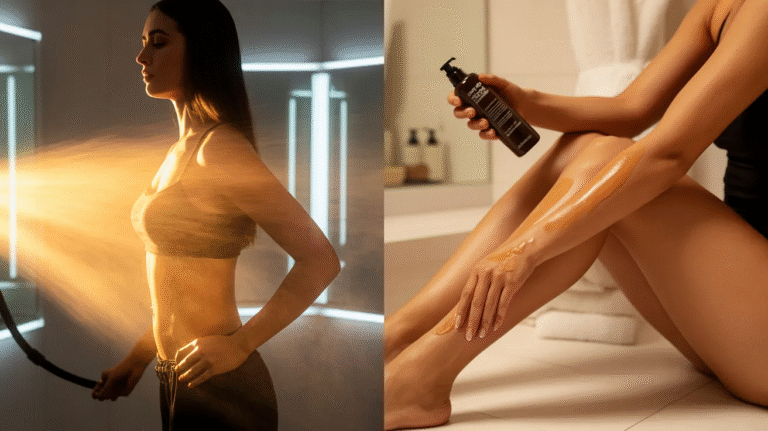
Spray tanning uses DHA to create a tanned look on the skin's surface with no UV exposure and no cancer risk. Color lasts 5 to 10 days and fades evenly with proper skin care.
Self-Tanning Lotions and At-Home Options
Self-tanning lotions, mousses, and drops use the same DHA technology and let you control color depth at home. They work best on exfoliated, moisturized skin and are affordable and safe for all skin types.
UV-Free Tanning Benefits for Skin Health
UV-free tanning means no collagen breakdown, no DNA damage, and no added cancer risk. You can also maintain color year-round without building up a lifetime of UV exposure.
Choosing Long-Term Safe Glow Solutions
Rotating between self-tanners, gradual tanning moisturizers, and bronzing products keeps your color looking consistent. Staying on top of skin prep and hydration gives you the best and most lasting results.
Tips for Safe Tanning Bed Use
Follow these simple tips to protect your skin every time you tan.
- Always start with the shortest session time for your skin type and increase slowly only if there is no redness or irritation.
- Never skip UV-blocking goggles inside the tanning bed, every single time without exception.
- Keep sessions consistent but limited and never add extra visits to speed up results.
- Moisturize before and after every session to support your skin through the recovery process.
- Stop tanning immediately if you notice redness, peeling, or soreness and give your skin at least a week to recover.
Conclusion
Understanding how often you should use a tanning bed makes a real difference for your skin.
I learned that the hard way after overdoing it early on and dealing with irritated, peeling skin instead of a clean glow.
The right schedule, proper recovery time, and knowing your skin type are what actually get you results.
Start slow, stay consistent, and listen to your skin at every step. If this guide helped you, share it with someone who needs it or drop your questions in the comments below.
I would love to hear how your tanning routine is going.
Frequently Asked Questions
How often should you use a tanning bed safely?
No more than 2 to 3 sessions per week with at least 48 hours between each visit. This gives your skin enough time to recover and build melanin properly.
How often should you use a tanning bed per week for a base tan?
Stick to 2 to 3 sessions per week over 2 to 4 weeks during the base tan building phase. Always keep sessions spaced out and avoid back-to-back days.
How often should you use a tanning bed a week if you are a beginner?
Beginners should start with no more than 2 short sessions per week during the first one to two weeks. Only increase frequency once your skin shows no redness or irritation.
How often should you use a tanning bed without damaging your skin?
Keep sessions to 2 to 3 times per week with proper spacing and short durations. Watch for redness, peeling, or soreness as signs that you need to cut back.
How many sessions do you need to see visible results?
Most people see visible color after 3 to 5 sessions. A full base tan typically develops over 2 to 4 weeks depending on skin type and bed strength.