How Does Icing Your Face Help Reduce Puffiness & Breakouts?


Rubbing ice on the face is trending everywhere right now. Social media is full of videos calling it a quick fix, and many well-known faces say they use it before makeup or events. With so much buzz, it is easy to believe it works for everyone.
The idea is simple and tempting. Ice costs nothing, takes only a few minutes, and often shows quick visual changes. While it is not a cure for all skin concerns, research does support certain short-term effects like reduced puffiness, calmer breakouts smaller smaller-looking pores, and improved blood flow.
This guide explains what icing your face truly does and what it cannot do. It also covers safe ways to use ice since wrong methods can harm the skin. You will learn when ice helps, when it doesn’t, and who should skip it to avoid irritation.
How Does Icing Your Face Work? (The Science Behind It)
Ice works on your skin through basic biology, not magic. Cold therapy, or cryotherapy, has long been used for injuries, and the same principles help your face by reducing inflammation and swelling.
When ice touches your skin, blood vessels constrict, slowing inflammatory mediators like prostaglandins and cytokines. This immediate response reduces puffiness while stimulating the lymphatic system to remove excess fluid.
As your skin warms afterward, blood flow increases, enhancing oxygen delivery and helping skincare products penetrate deeper. Dermatologists use similar principles in cryofacials, which studies show can improve skin tone and temporarily reduce swelling.
Proven Benefits of Icing Your Face
Now, let’s get into what ice actually does for your skin. These benefits are backed by dermatologists and research, not just influencer claims. Some work immediately. Others need consistency.
1. Reduces Puffiness and Under-Eye Bags
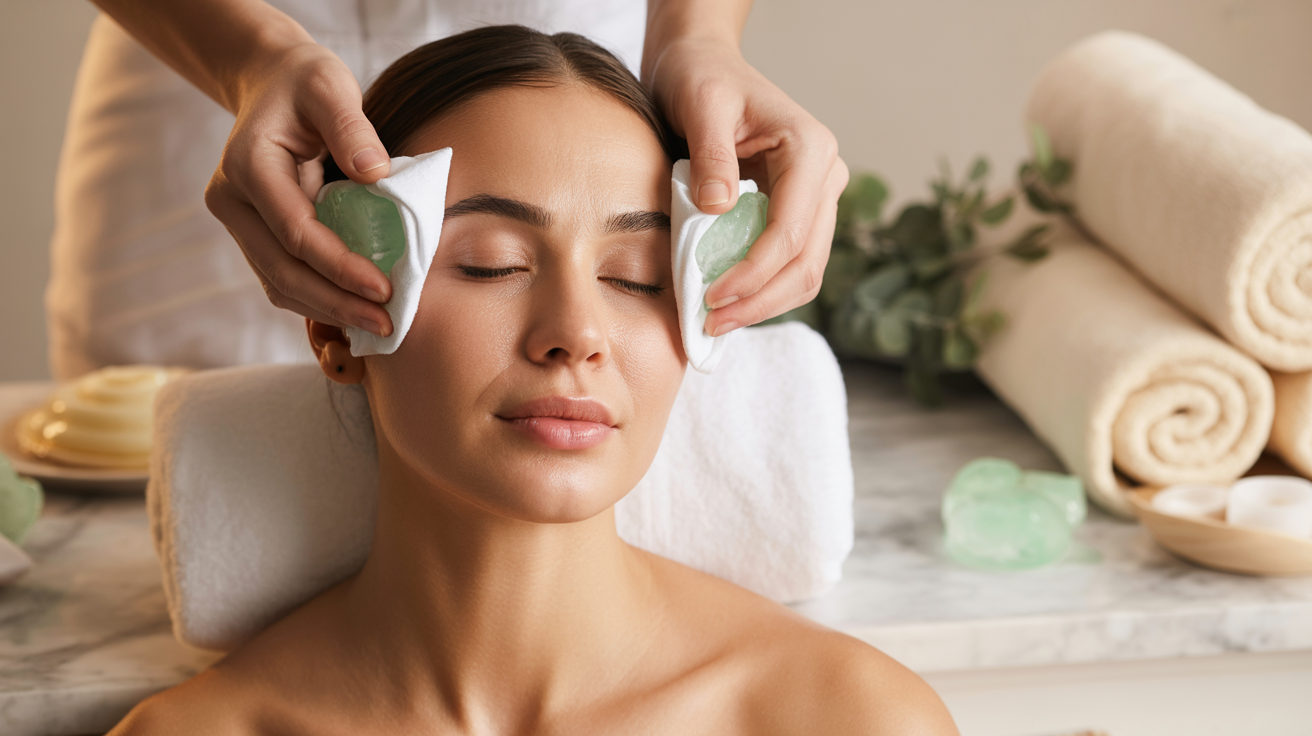
Cold therapy visibly reduces under-eye puffiness by constricting blood vessels and stimulating lymphatic drainage. Swelling decreases almost immediately, giving a refreshed look.
For best results, use chilled spoons, ice globes, or ice wrapped in gauze for a few seconds each morning. Alternatives like caffeine ice cubes or chamomile compresses also help, providing quick, temporary relief for tired eyes.
2. Calms Redness and Inflammation
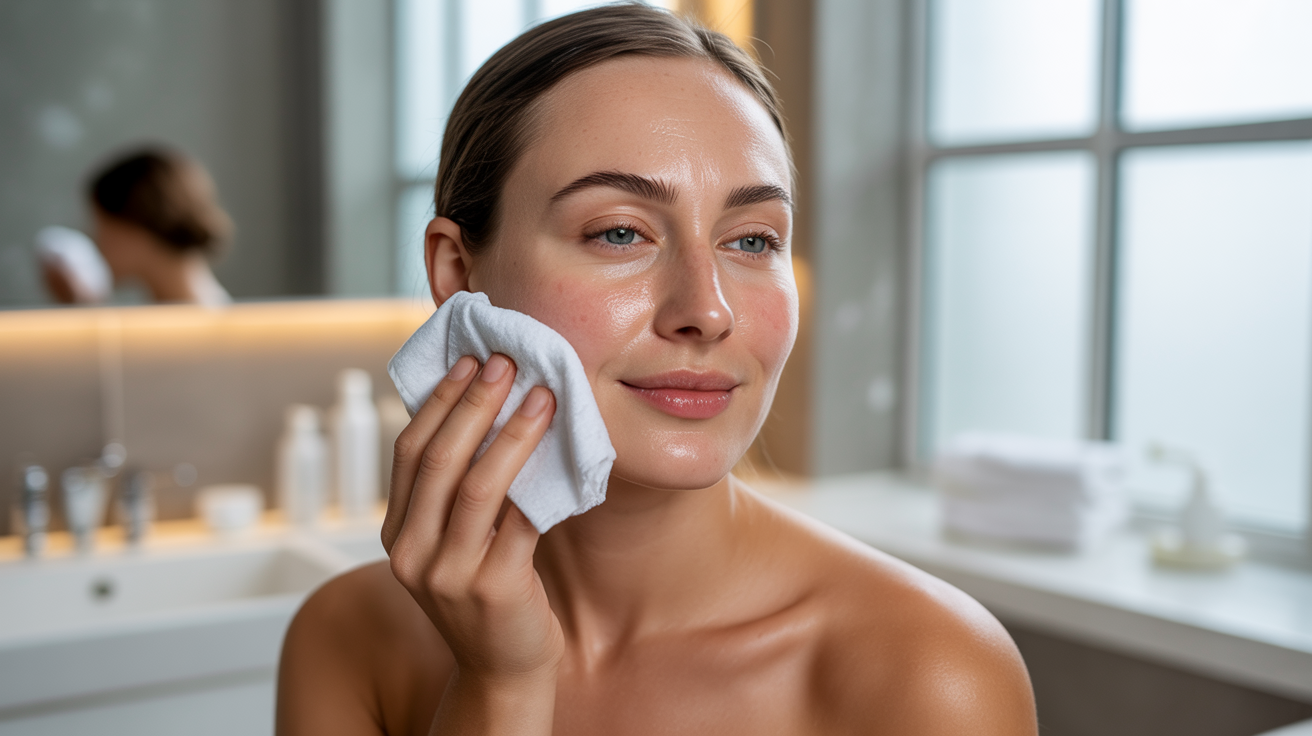
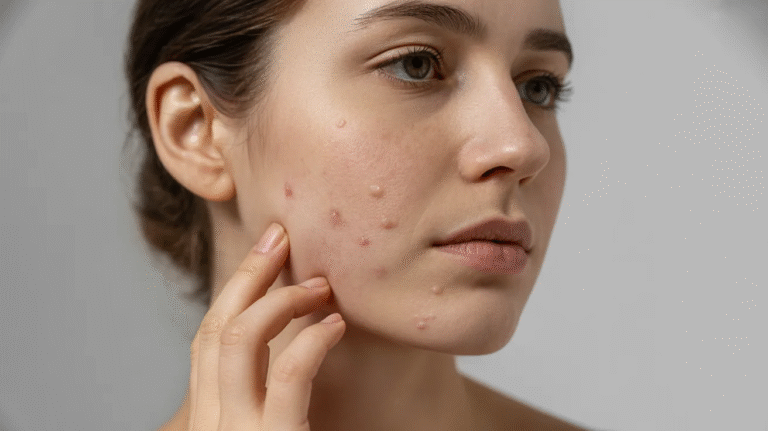
Ice helps calm inflammation by slowing inflammatory mediators, making it useful after acne flare-ups or sun exposure. It reduces redness and swelling, making blemishes less noticeable and more comfortable.
For cystic acne, alternate ice with a warm compress for several cycles to stimulate circulation and support healing.
For rosacea or severe redness, apply ice to the roof of your mouth instead of directly on the skin to constrict facial blood vessels safely.
3. Temporarily Tightens Pores (Shrinks Appearance)
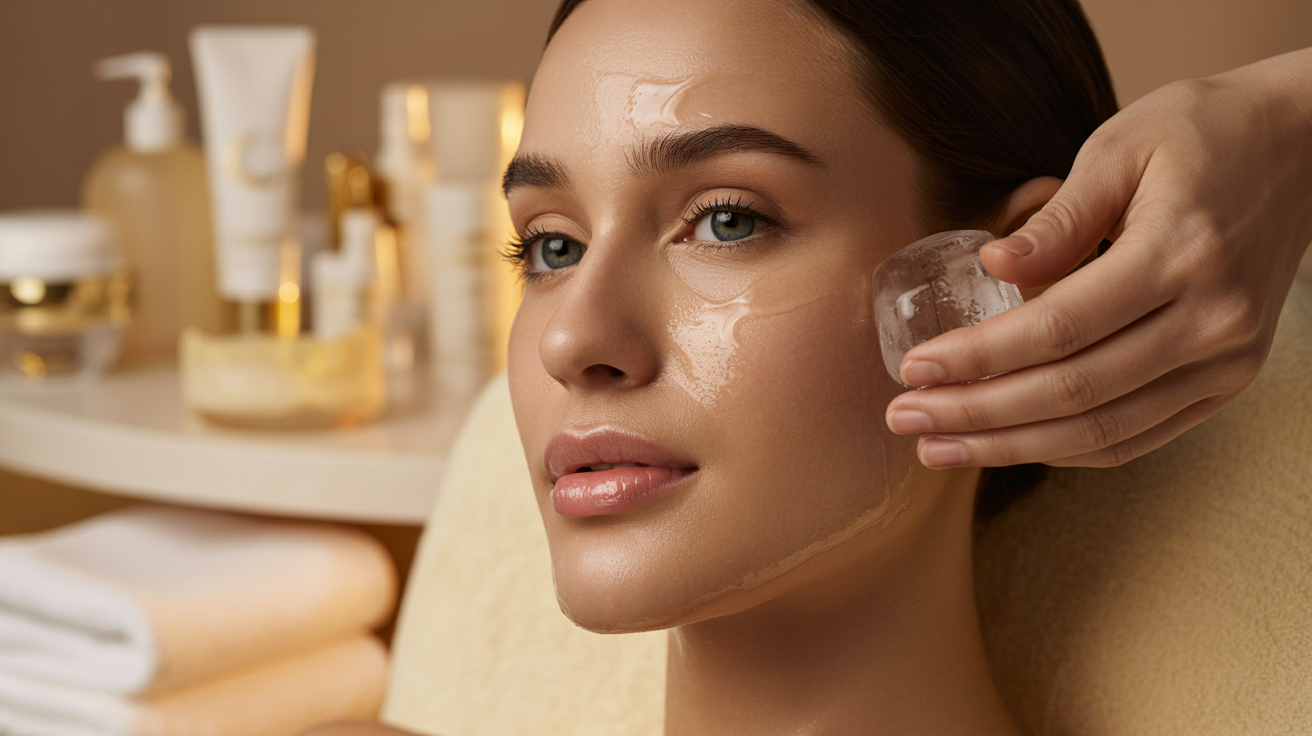
Ice doesn’t permanently close pores since they have no muscles to open or shut. Cold exposure temporarily constricts surrounding skin, making pores look smaller and smoother.
This effect creates a tighter appearance and works well as a quick makeup primer. The results fade after a few hours, and ice won’t control long-term oil production, but it’s useful for temporary improvement.
4. Helps With Acne Treatment
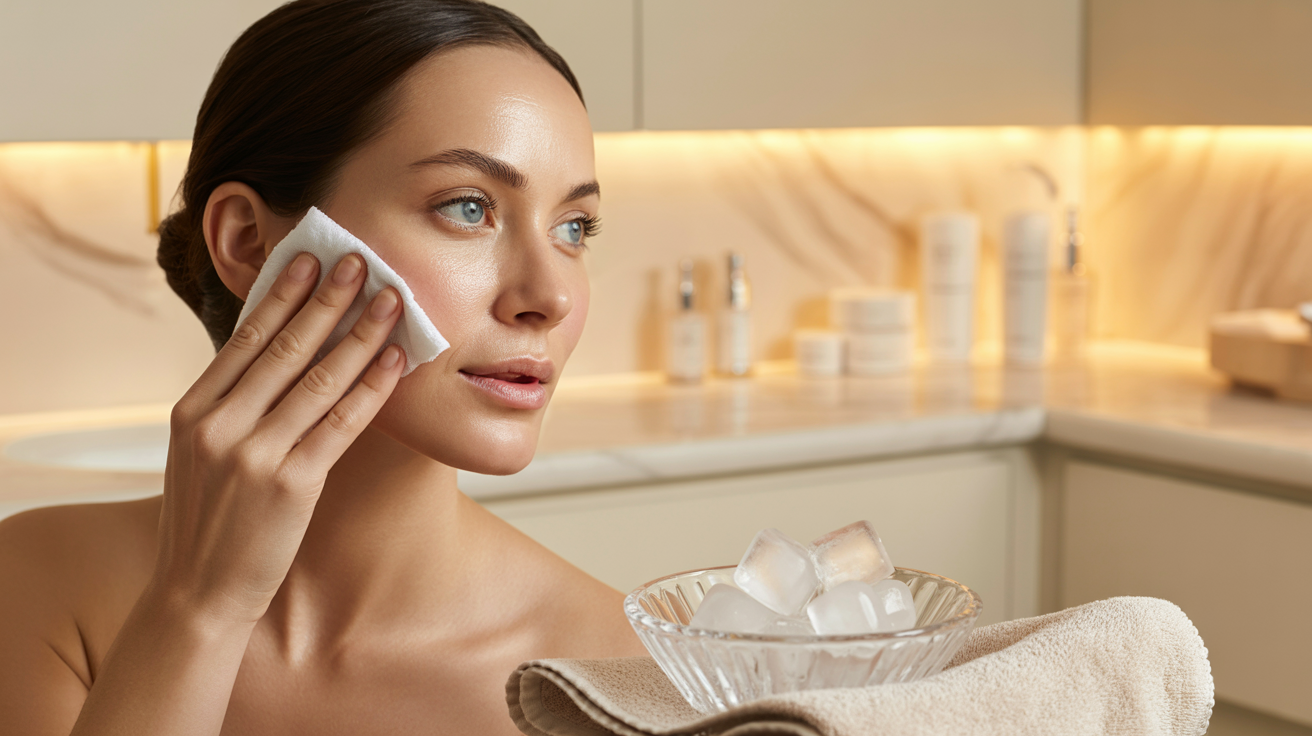
Ice helps reduce inflammation from acne by cooling the skin, temporarily shrinking pores, and calming oil production. It’s especially useful as a spot treatment for swollen, painful pimples.
Remember, ice doesn’t address the root causes of acne, like hormones or bacteria. Use it alongside your regular acne routine to soothe inflammation while your treatments tackle the underlying issues.
5. Boosts Natural Glow and Radiance
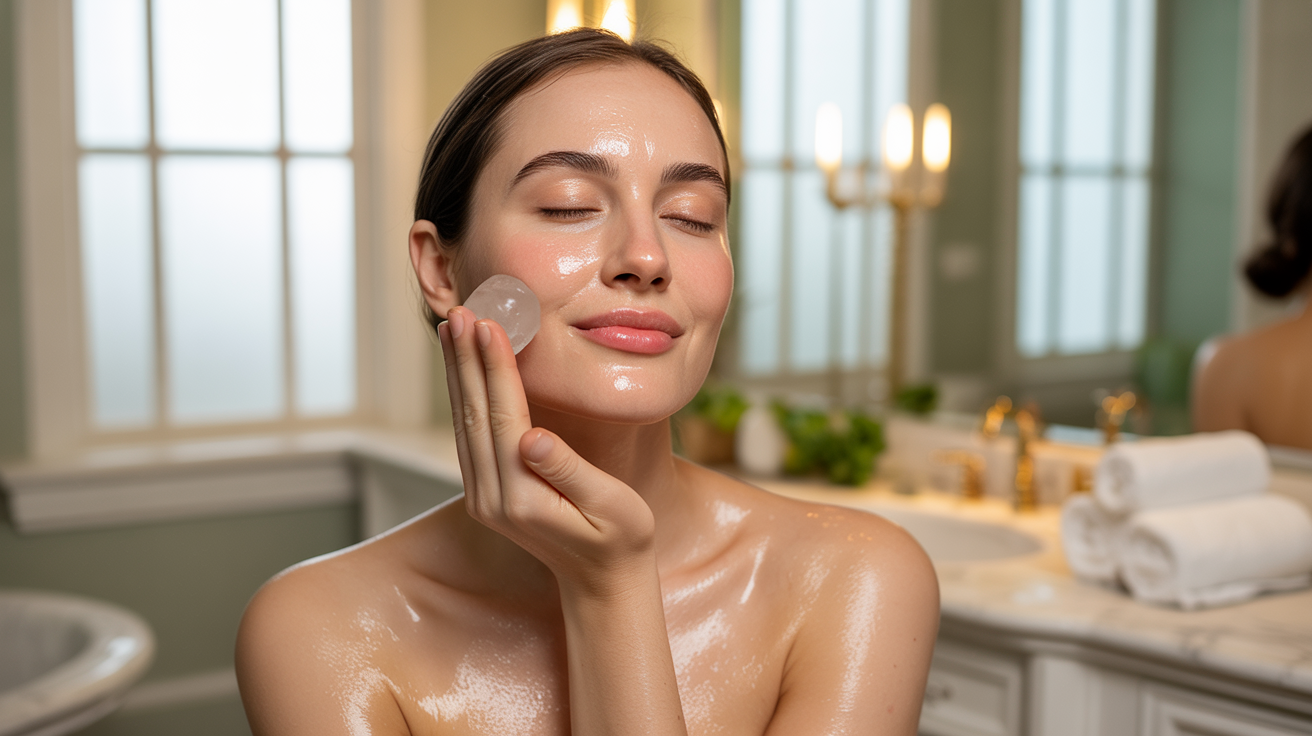
Ice boosts circulation and oxygen flow, giving your skin an instant, fresh glow. This temperature shift makes your complexion look more vibrant and awake.
Celebrities and makeup artists use ice for natural radiance and as a primer. It’s especially effective in the morning to reduce puffiness and create a dewy, youthful appearance.
6. Improves Product Absorption
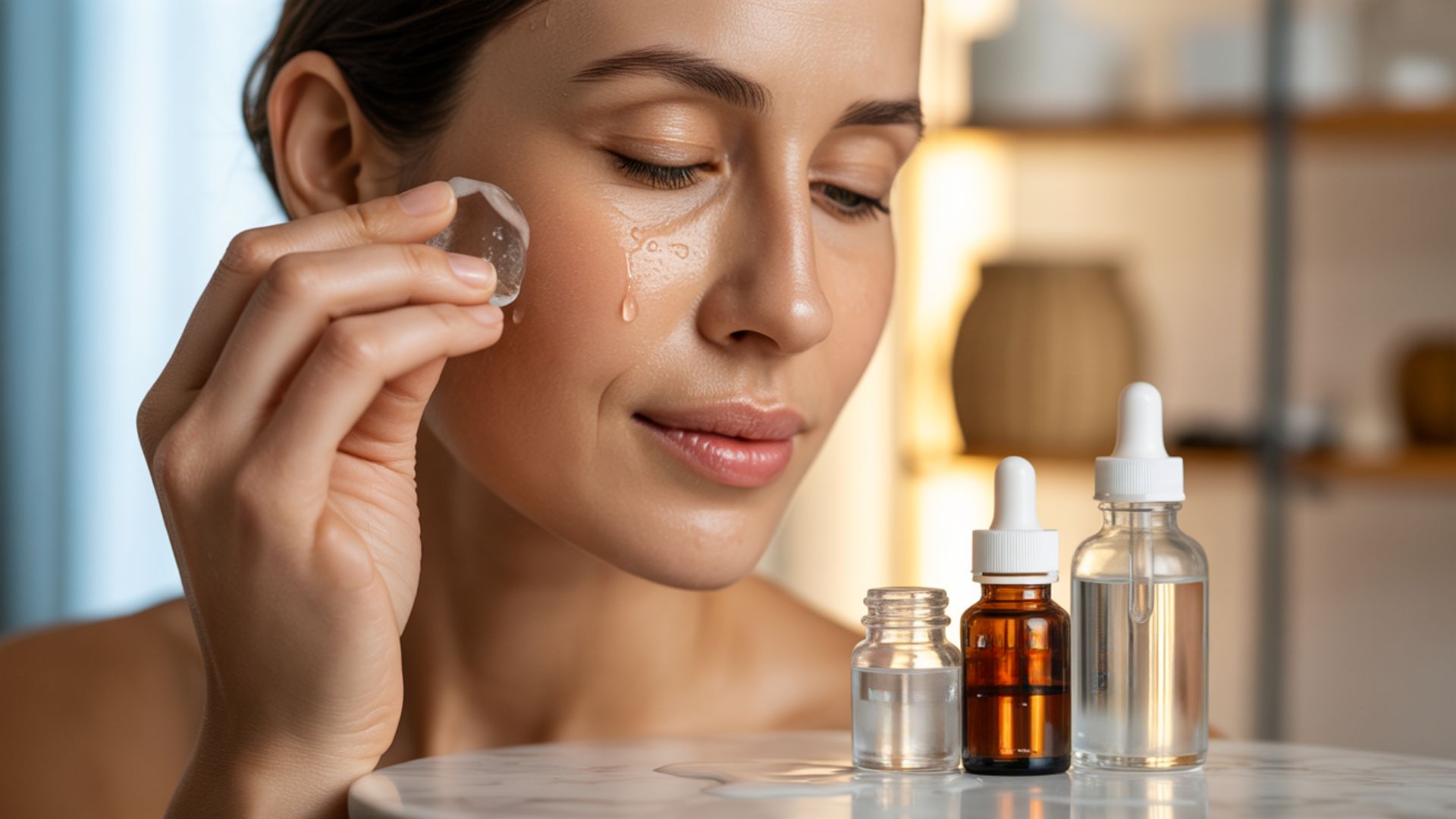
Cooling your skin with ice temporarily tightens it, and as it warms, blood flow increases. This “pulling effect” helps active ingredients penetrate deeper for better results.
For best results, ice your face for a few minutes, wait briefly, then apply serums like hyaluronic acid and vitamin C. This sequence locks in hydration, boosts glow, and improves the effectiveness of your entire skincare routine.
7. Sculpts and Contours Face
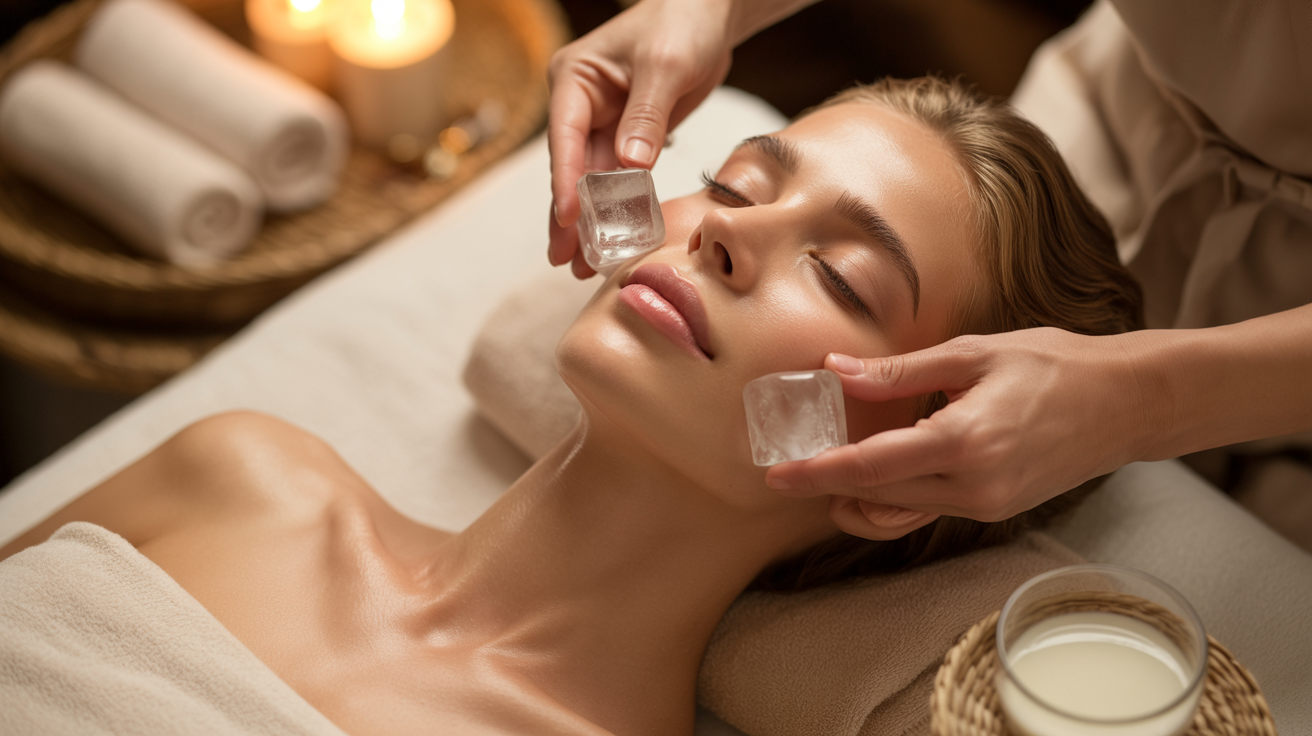
Ice can give a temporary firming and contouring effect, a technique often used by celebrity facialists. Moving a frozen cube along the jawline, cheekbones, under-eyes, and forehead helps sculpt and lift the face.
For best results, repeat the massage for about five minutes to improve cheekbone definition. Alternatively, a face cloth soaked in ice and milk provides added benefits from vitamin A and lactic acid while cooling and firming the skin.
8. Soothes Sunburn and Skin Irritation
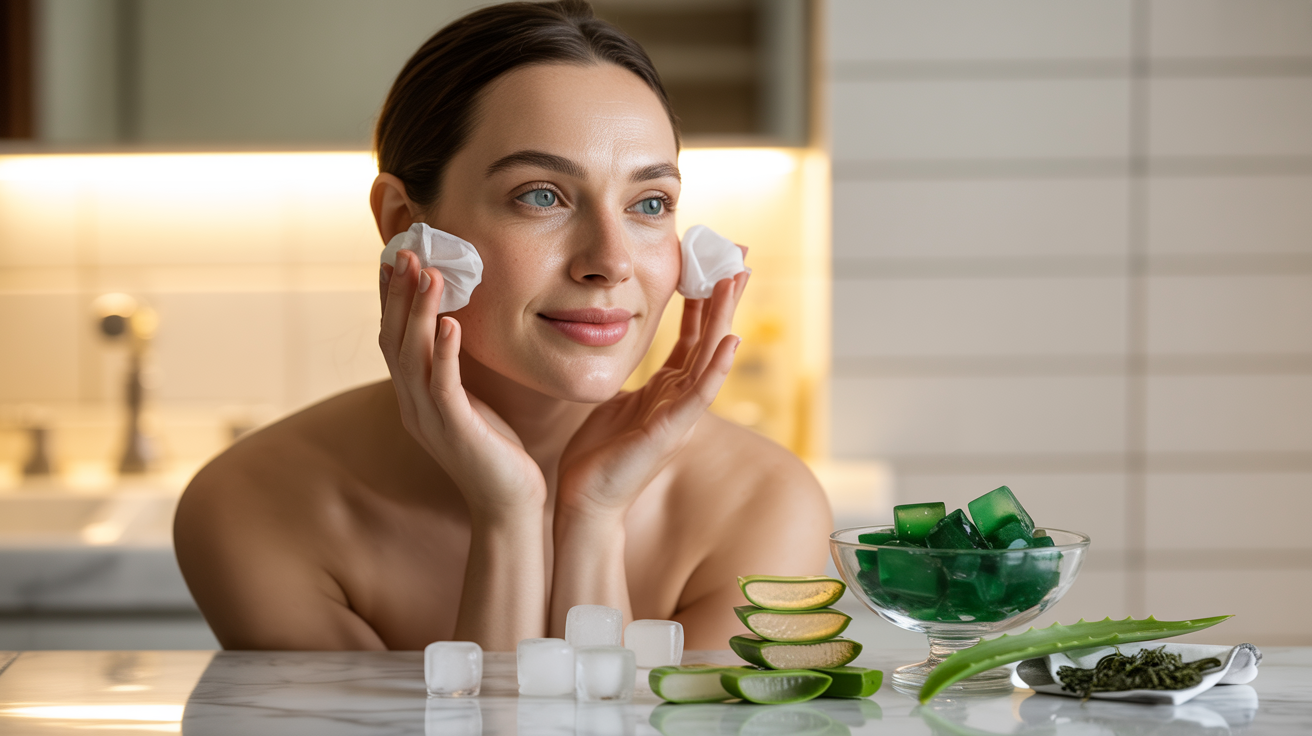
Ice soothes the burning sensation from sunburn, easing pain and reducing inflammation. Always wrap ice cubes in a soft cloth to avoid direct contact, which can worsen the damage.
For added benefits, try freezing aloe vera or green tea cubes. They combine cooling with antioxidants, providing hydration while making the recovery process more comfortable and helping minimize peeling.
9. Prepares Skin Before Makeup
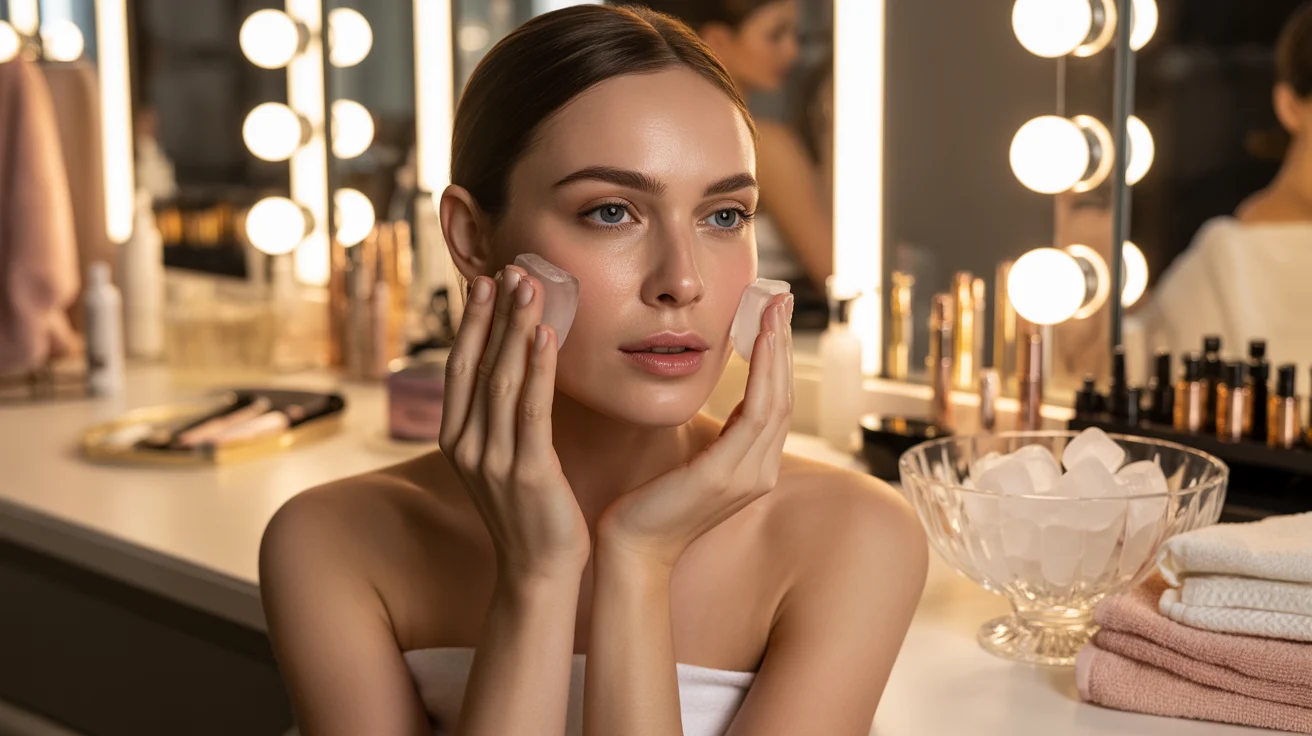
Makeup artists love using ice to prep the skin. It tightens pores and reduces oiliness, creating a smoother canvas for foundation.
Icing also helps makeup last longer by controlling sebum. Foundation glides on effortlessly, concealer stays put, and powders set beautifully for a flawless finish.
10. Temporarily Minimizes Fine Lines and Wrinkles
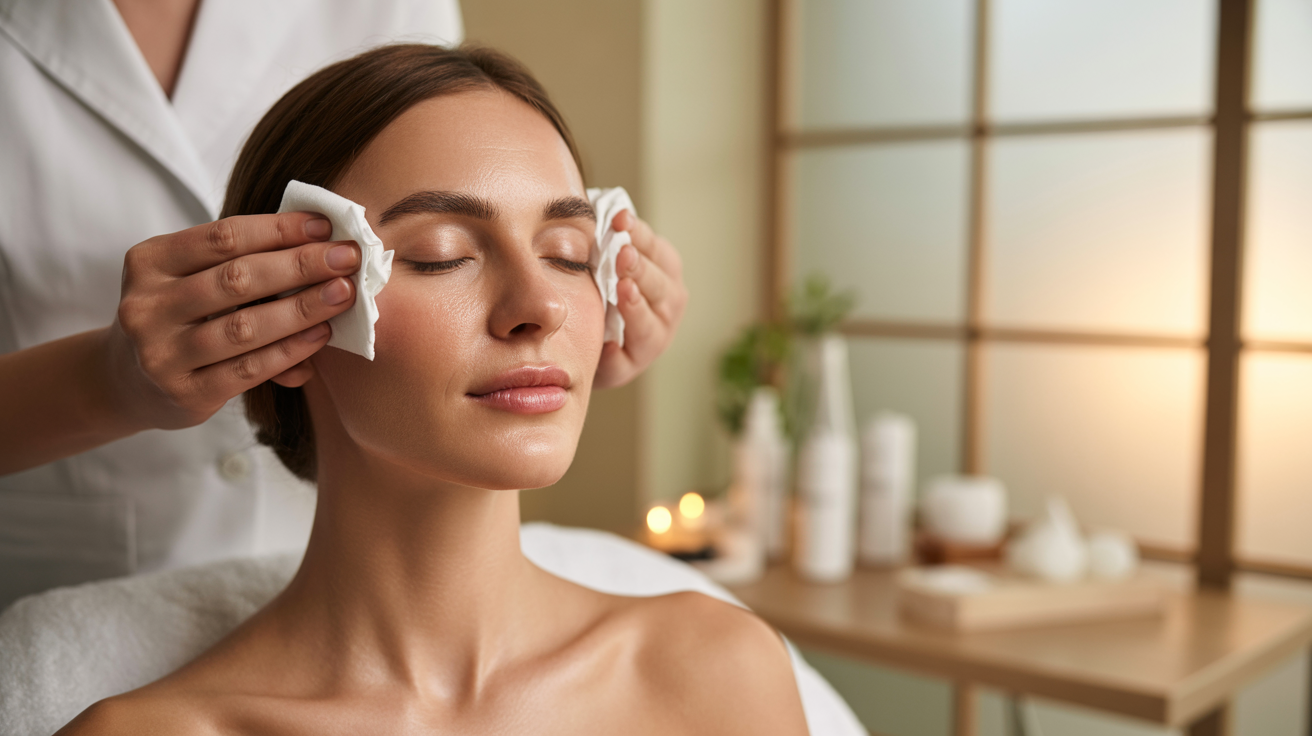
Cold therapy can temporarily smooth fine lines, especially around the eyes. It offers a quick visual improvement for a refreshed appearance.
However, ice cannot rebuild collagen or reverse aging permanently. Use it as a complement to your long-term anti-aging routine with retinol, sunscreen, and proper skincare.
11. Reduces Oil Production for Matte Finish

Ice can help control excess sebum by temporarily slowing oil gland activity. The cooling effect signals your skin to produce less oil, giving a matte, shine-free finish.
This is especially useful for oily or combination skin. Ice your T-zone in the morning after cleansing and before moisturizer to create a smoother base and keep oil under control for hours.
How to Apply Ice on Your Face Safely?
Technique matters more than you think. Done wrong, ice causes ice burns, broken capillaries, and irritation. Done right, you get all the benefits with zero side effects.
Preparation Steps
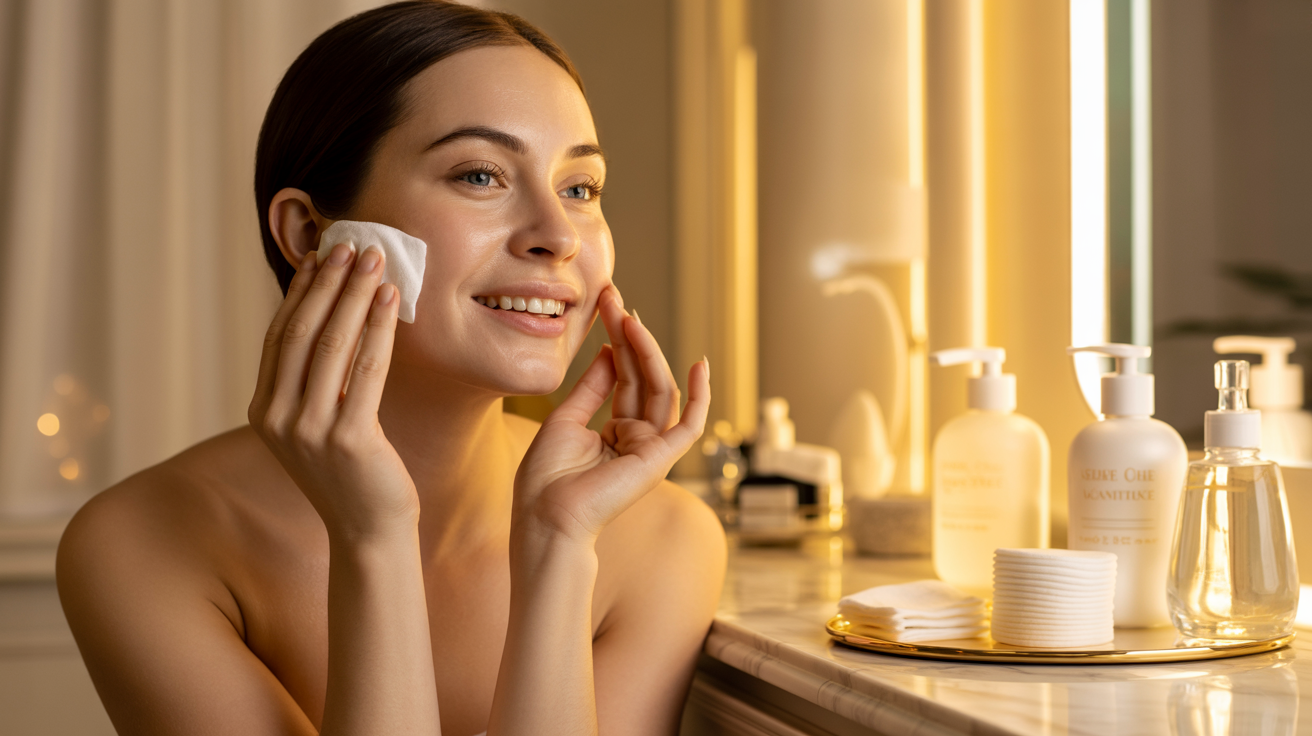
Always cleanse your face first. Use a gentle cleanser to remove all dirt, makeup, and oil. Applying ice to unclean skin traps impurities and causes breakouts.
Wash your hands with soap and running water, too. You’re touching your face, so clean hands matter. This prevents transferring bacteria.
Wrapping the Ice Properly

Never apply ice directly to bare skin. Direct contact can cause ice burns or frostbite, making this the biggest mistake people make.
Always wrap ice cubes in a thin cotton cloth, muslin, or even a paper towel. Using a barrier protects your skin, prevents irritation, and keeps the application comfortable while catching melting water.
Application Technique

Gently glide the wrapped ice in circular motions across your face. Keep it moving continuously and avoid pressing hard or holding it in one spot.
Cover the forehead, cheeks, chin, jawline, nose, under-eye area, and around the mouth, spending 10 to 15 seconds per area. For under-eyes, slide from inner corners up toward the brow to follow lymphatic drainage for best results.
Timing and Duration

Keep each ice session to 5 to 10 minutes maximum. Longer exposure doesn’t improve results and increases the risk of skin damage. Stop when the area feels very cold.
For frequency, once daily works for most people, or 3 to 4 times per week. Avoid leaving a cold compress in one spot, as too much icing can cause dryness, sensitivity, and irritation.
Post-Icing Care
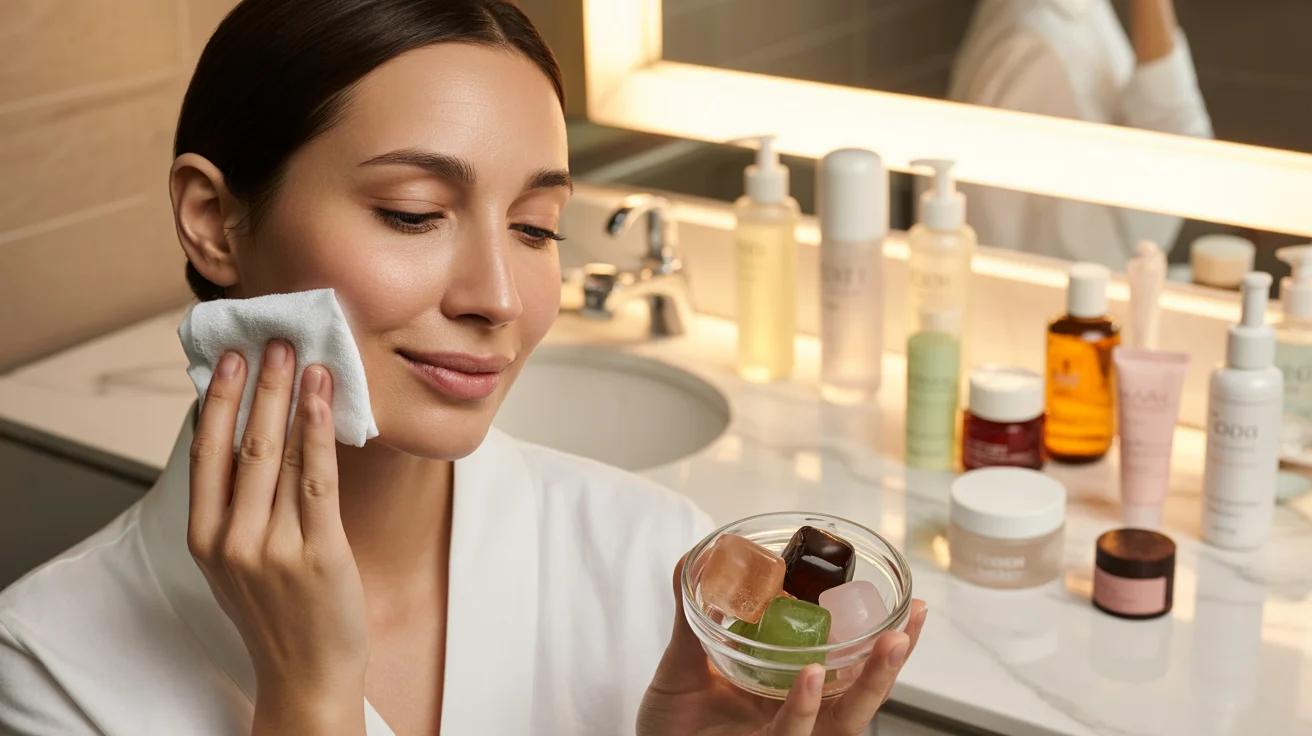
Apply moisturizer immediately after icing to prevent dryness from the cold. Your skin is more receptive, so follow up with toner, serum, and eye cream as usual for maximum absorption.
You can also improve your icing routine with specialty cubes. Try rosehip seed tea for vitamin C, green tea for antioxidants, coffee for under-eye de-puffing, chamomile for soothing, aloe for sunburn, or milk for gentle exfoliation and added nutrients.
Common Myths About Icing Your Face
Social media spreads a lot of misinformation about ice. Let’s separate facts from fiction. Knowing what ice can’t do is as important as knowing what it can.
- Ice won’t permanently shrink pores: Cold makes pores appear smaller temporarily, but it cannot tighten them or control oil long-term.
- Ice cannot eliminate wrinkles: It only temporarily plumps skin. Long-term anti-aging requires retinol, sunscreen, and peptides.
- Ice isn’t suitable for all redness: Avoid icing severe redness, rosacea, eczema, or very sensitive skin, as it can worsen inflammation.
- Ice cannot treat dark spots: Hyperpigmentation needs targeted ingredients like vitamin C, niacinamide, or professional treatments.
- More icing doesn’t mean better results: Limit sessions to 5–10 minutes, once daily or a few times weekly, to avoid dryness and irritation.
Risks, Side Effects, and Precautions
Ice can cause real damage if used incorrectly. These aren’t minor inconveniences. They’re actual skin injuries. Take these warnings seriously.
Potential Side Effects
Direct contact with ice can cause burns or frostbite, making a barrier crucial. Severe damage can be permanent, so never skip this step. Other side effects include redness, stinging, and irritation, especially on sensitive or dry skin.
Over-icing strips natural oils, leading to dryness, sensitivity, and a weakened skin barrier. It can also worsen conditions like rosacea or eczema. Avoid icing right after strong actives like retinol or chemical exfoliants, as the cold can alter absorption and trigger irritation.
Who Should Avoid Icing
Not everyone should ice their face. Certain skin types and conditions make it risky, so it’s important to know if you fall into these categories. People with very sensitive skin, diagnosed with rosacea, eczema, or a compromised skin barrier, should skip icing.
Other cases to avoid include cold urticaria, open wounds, severe active acne, damaged capillaries, recent facial procedures, or using strong topical medications without consulting a dermatologist. When in doubt, check with a professional to prevent potential skin damage.
Safety Precautions
Always use a barrier between your skin and ice, keeping total session time under 10 minutes. Move the ice gently and briefly across your face to reduce the risk of broken capillaries. Be especially careful around the eyes, using very light pressure on the sensitive eyelid skin.
Stop immediately if you feel pain, excessive redness, burning, or any discomfort. Avoid icing right after applying strong active ingredients, and never exfoliate sunburned skin. Let it heal naturally first.
Conclusion
The benefits of icing your face are real when you understand what it can and cannot do. Ice can reduce puffiness, calm active breakouts, make pores look smaller for a short time, and give skin a refreshed look. These effects happen because cold helps reduce swelling and boosts blood flow.
These results are temporary, not long-term solutions. Facial icing works best as a quick support step alongside your regular skin care routine. Always wrap the ice, limit sessions to a few minutes, and avoid this method if you have rosacea or very sensitive skin.
You now know how to use ice safely and what results to expect without relying on social media trends. Share your experience with facial icing in the comments or read more science-based skin care guides for proven advice.
Frequently Asked Questions
What are the main benefits of icing the face?
The main benefits include reducing puffiness and under-eye bags, calming redness and inflammation from acne, temporarily shrinking pore appearance, boosting natural glow through increased circulation, improving product absorption, and soothing sunburn. Ice also works as a makeup primer by tightening skin and controlling oil for smoother application.
Does icing the face really shrink pores?
Icing temporarily makes pores appear smaller by constricting surrounding skin tissue, but it doesn’t permanently close or shrink them. Pores don’t have muscles to open or close. The tightening effect lasts briefly, making it a good quick fix before makeup application, but not a permanent solution for enlarged pores.
How long should I ice my face?
Ice your face for 5-10 minutes maximum, once daily or 3-4 times weekly. Move the ice continuously in circular motions, spending 10-15 seconds per area. Never leave ice in one spot too long or exceed 10 minutes total, as this can cause ice burns, irritation, or damage to your skin barrier.
Can icing face help with acne?
Yes, icing can help inflamed acne by reducing redness, swelling, and pain through constricting blood vessels. However, it won’t treat the root cause like bacteria or a hormonal imbalance. Use it as a spot treatment for active breakouts alongside your regular acne skincare routine for best results.
Is it safe to put ice directly on the face?
No, never apply ice directly to bare skin. Always wrap ice cubes in a thin cotton cloth, paper towel, or use specialized ice rollers. Direct contact causes ice burns, frostbite, irritation, and can damage your skin barrier. Those with rosacea, eczema, or very sensitive skin should avoid icing completely.