Benign Skin Growths: Types, Causes & Symptoms


I've had a small bump on my arm for years, and for the longest time, I had no idea what it was.
Like many people, I assumed the worst. But after speaking with a dermatologist, I learned it was just benign skin growth, completely harmless.
Benign skin growths are more common than most people think. They show up on the face, neck, arms, and all over the body.
In this article, I'll cover what they are, what causes them, and the most common types. I'll also explain when you should see a doctor and how to keep track of them over time.
What Are Benign Skin Growths?
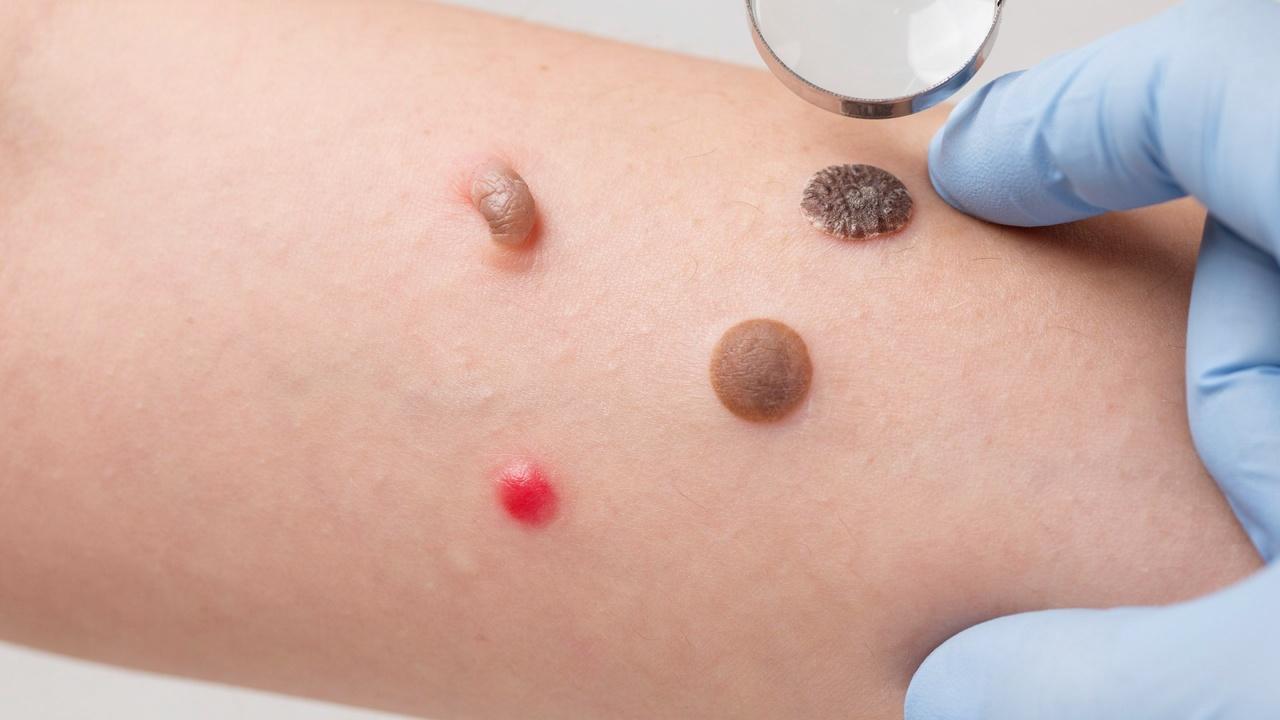
A quick look at what makes a skin growth benign and how to tell it apart from something more serious.
Benign skin growths are noncancerous lumps, bumps, or spots that form on the skin. They do not spread to other parts of the body and are not life-threatening.
Most people develop at least one type during their lifetime. Some are present from birth, while others appear later due to aging, sun exposure, or other factors.
They usually have smooth edges, consistent color, and grow slowly.
Most are painless. While they are generally harmless, any new or changing growth should always be checked by a dermatologist to rule out anything serious.
What Causes Benign Skin Growths?
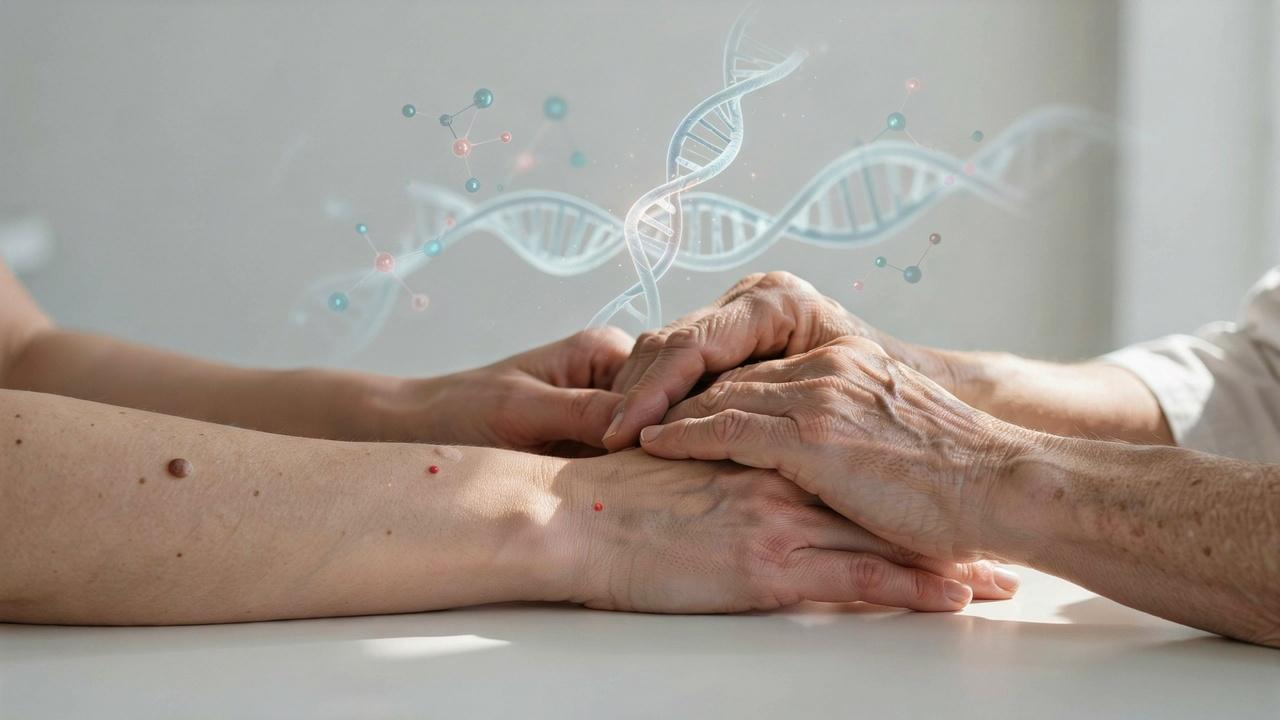
Benign skin growths can form for many reasons from natural aging to sun damage and genetics.
Aging and Natural Skin Changes
As the body ages, skin cells do not regenerate as efficiently. This leads to buildups of dead skin, fatty tissue, or pigment cells.
Seborrheic keratoses and skin tags become more common after age 40.
Aging slows the skin's repair process, making growths more likely to form and stay.
Sun Exposure and UV Damage
Years of sun exposure can trigger the overproduction of pigment-producing cells. This leads to age spots, freckles, and solar lentigines.
UV rays also damage the outer layers of skin over time.
People who spend a lot of time outdoors without sunscreen are at higher risk for developing these types of growths.
Genetics and Family History
Genetics play a large role in many types of benign growths. If your parents had multiple moles, lipomas, or keloids, you may develop them too.
Some conditions that cause multiple benign growths run in families.
Your skin type and genetic makeup can affect how your skin responds to injury, sun, and aging.
Hormonal Changes
Hormones affect how skin cells grow and behave. Pregnancy, puberty, and menopause can all trigger new growths.
Skin tags, for example, are more common during pregnancy. Cherry angiomas tend to appear more frequently during hormonal shifts.
Conditions that affect hormone levels, such as thyroid disorders, may also play a role.
Friction, Injuries, and Infections
Skin tags often form in areas where skin rubs against skin or clothing. This includes the neck, armpits, and groin.
Minor injuries can lead to keloids in people who are prone to them. Certain viral infections, like HPV, can cause warts.
Even clogged pores and blocked hair follicles can result in cysts or milia.
Types of Benign Skin Growths
There are many different types of benign skin growths, and each one looks and feels a little different.
Moles (Nevi)
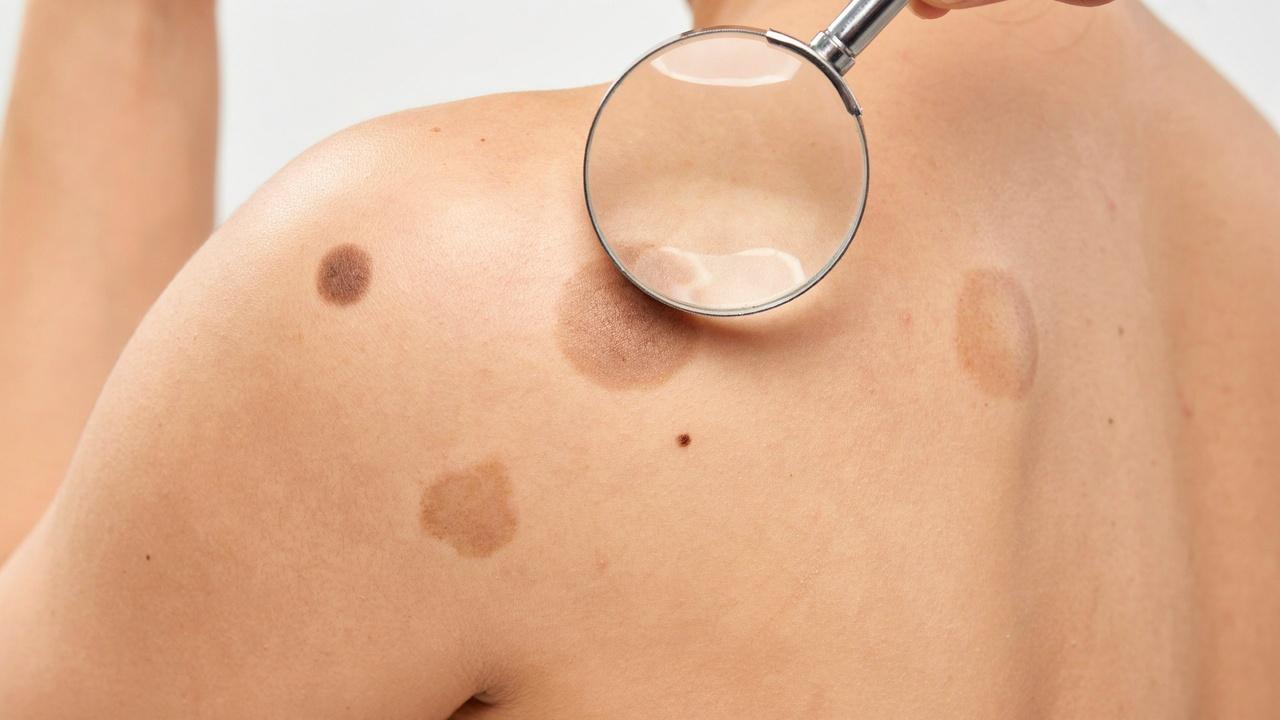
Moles are clusters of pigmented skin cells that are usually brown or black.
They may be flat or raised and can appear anywhere on the body. Most people have between 10 and 40 moles. They are harmless in most cases.
It is important to monitor them for changes in size, shape, or color.
Freckles and Age Spots (Solar Lentigines)

Freckles are small, flat, brown spots caused by concentrated areas of melanin in the skin.
They are most common in fair-skinned people and often appear after sun exposure.
Age spots, also called solar lentigines, look similar but are caused by years of UV damage. They are common on the face, hands, and arms.
Both are harmless but worth monitoring.
Seborrheic Keratoses
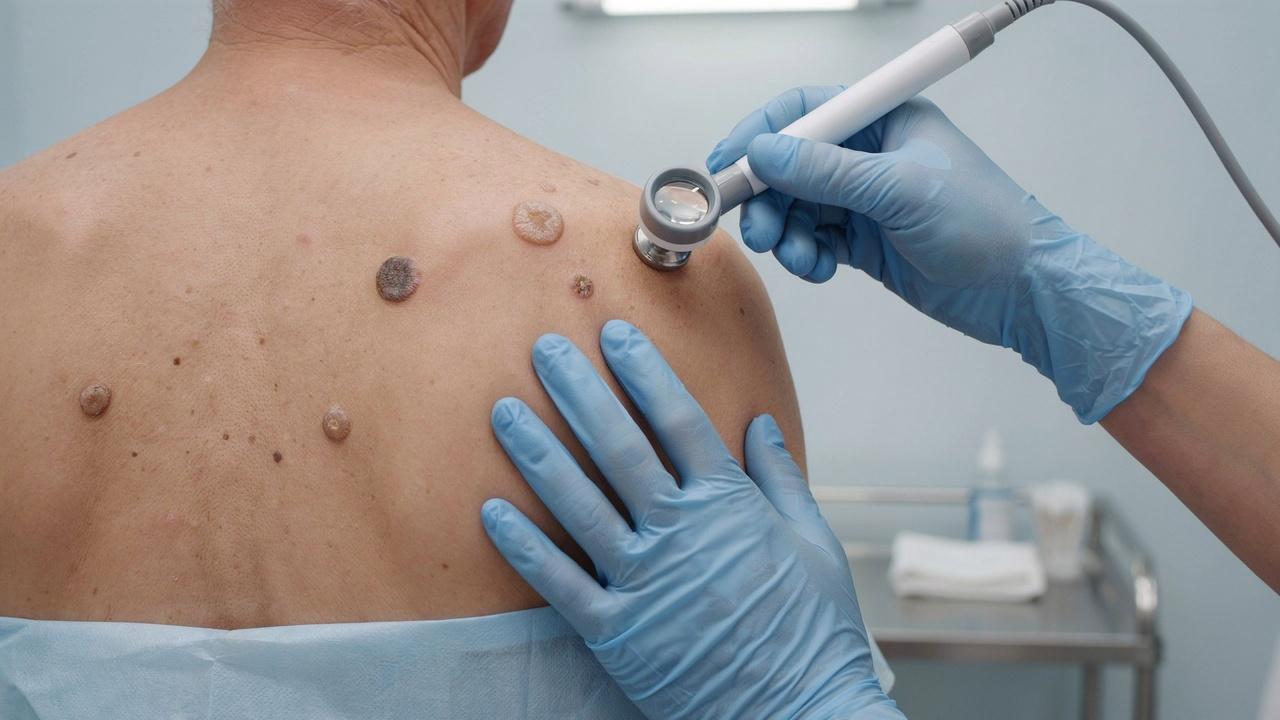
Seborrheic keratoses are waxy, wart-like growths that appear brown, tan, or black on the skin.
They often look like they are stuck on the surface rather than growing from it. They are very common in older adults and can appear anywhere except the palms and soles.
They are completely harmless, though they can sometimes feel itchy. No treatment is needed unless they cause irritation.
Skin Tags (Acrochordons)
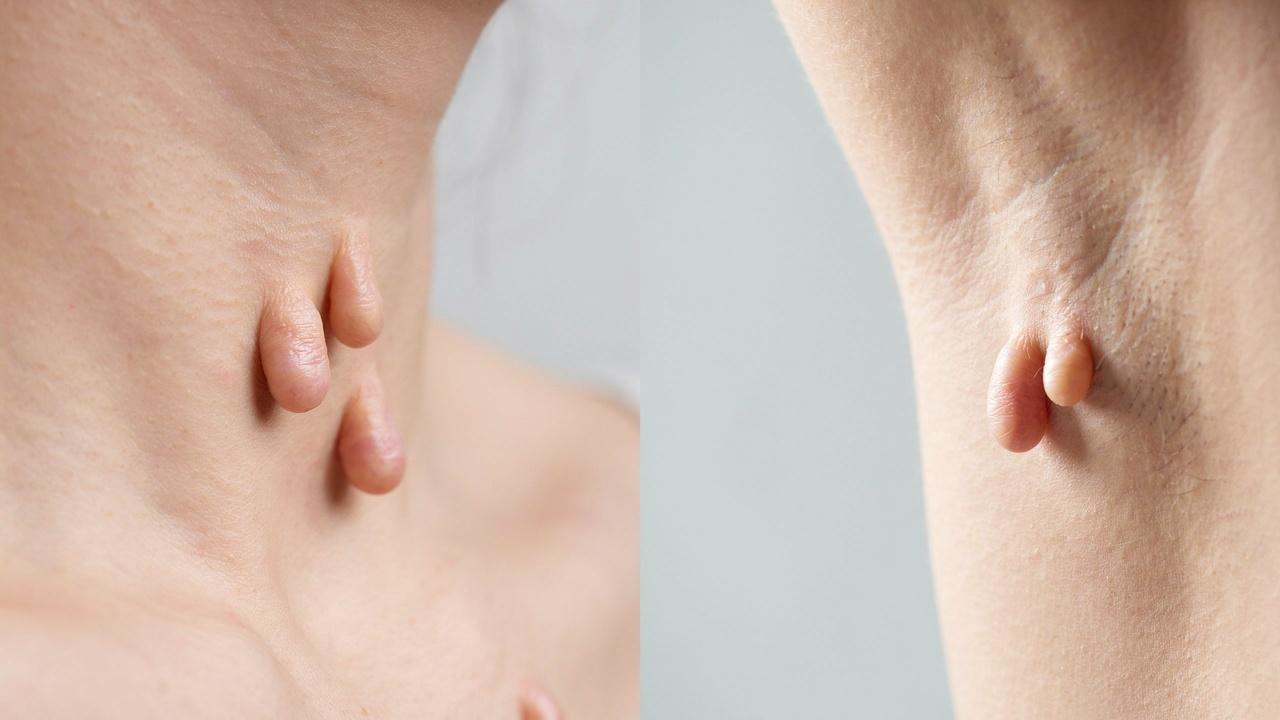
Skin tags are small, soft pieces of skin that hang off the body and are usually flesh-colored.
They form most often in areas where skin folds or rubs together. Common spots include the neck, armpits, eyelids, and groin.
They are harmless and do not cause any health concerns. They may be removed if they catch on clothing or cause irritation.
Lipomas (Fatty Tumors)
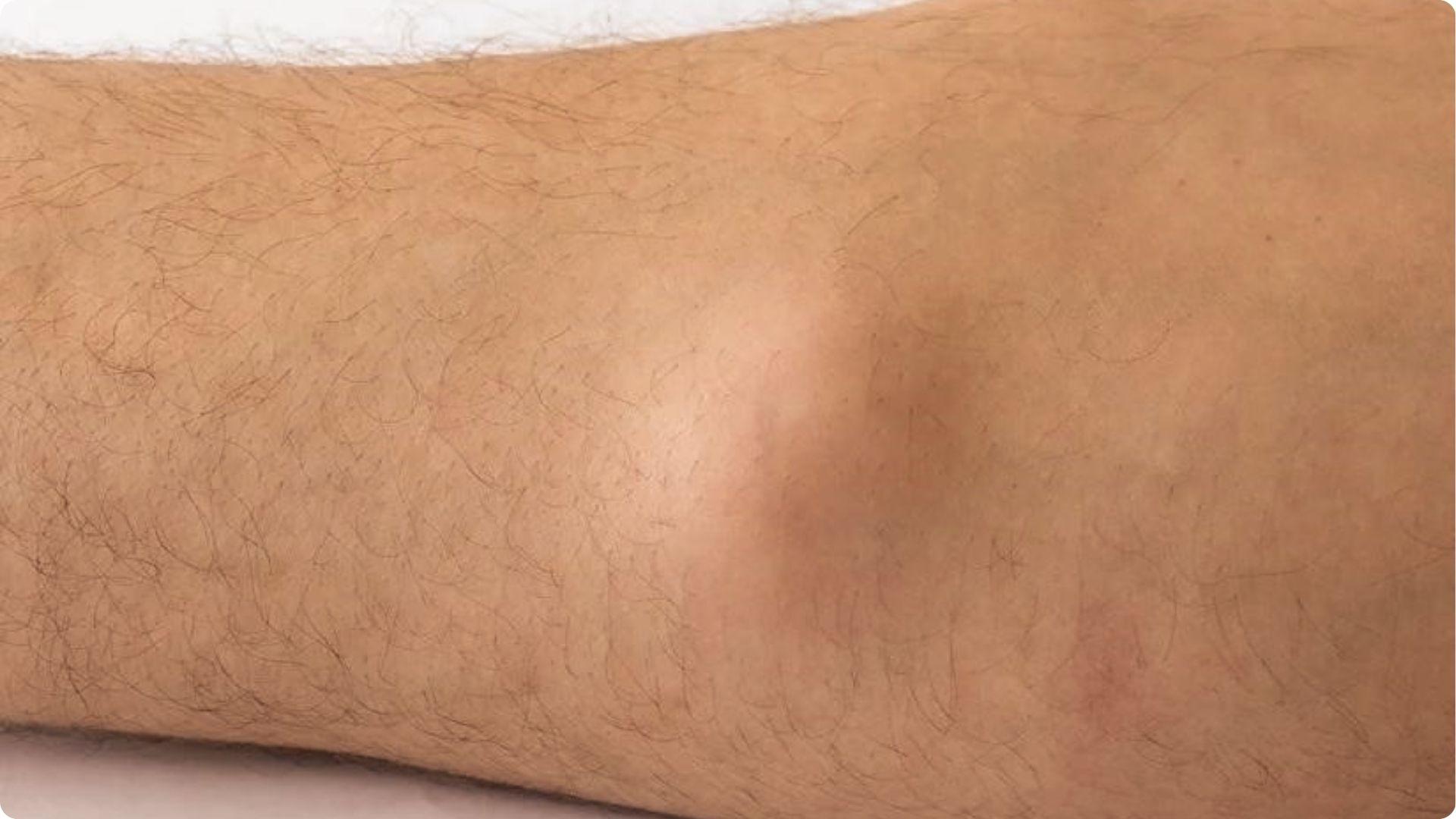
A lipoma is a slow-growing, soft lump of fatty tissue that forms just under the skin.
It moves easily when pressed and is rarely painful to the touch. Lipomas can appear on the neck, shoulders, back, or arms.
They are not cancerous and pose no health risk. Most do not need treatment unless they grow large or cause discomfort.
Epidermoid and Dermoid Cysts
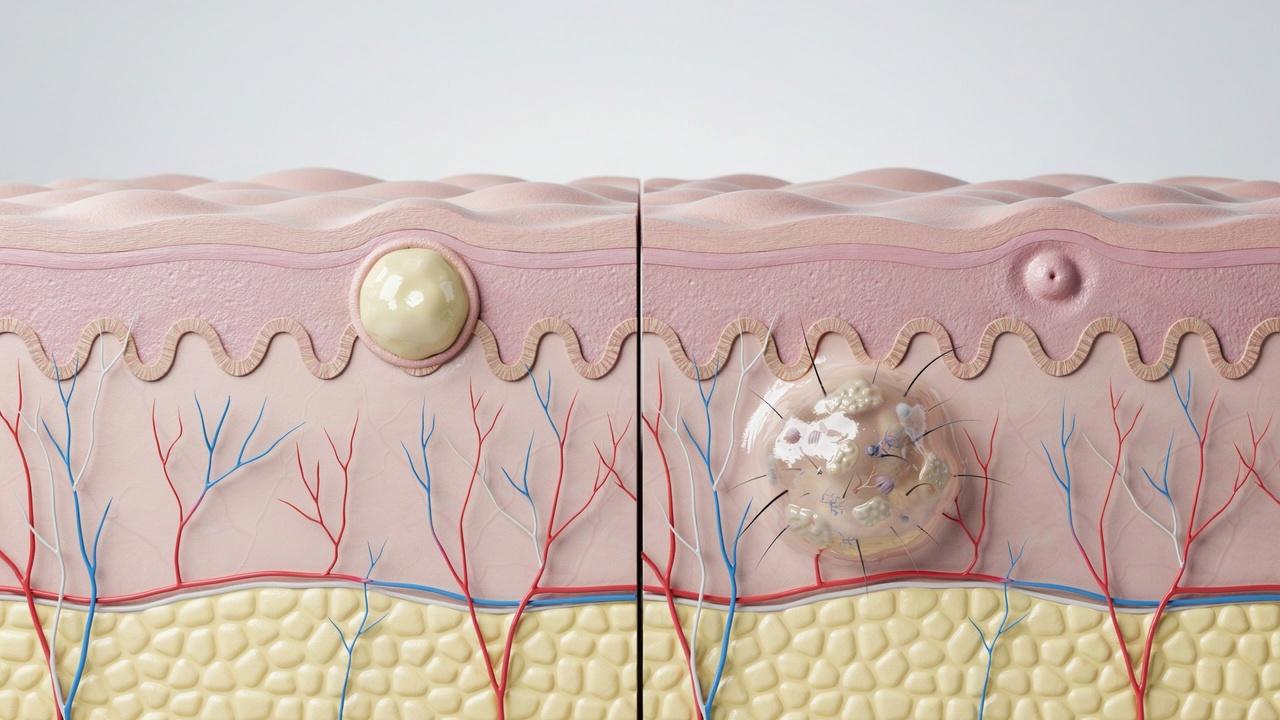
Epidermoid cysts form when skin cells build up under the skin surface and appear as small, round bumps.
They may have a small opening at the top and can sometimes release a white substance.
Dermoid cysts are present from birth and may contain tissue like hair or sweat glands. Neither type is cancerous, but both can become infected if ruptured.
A dermatologist can remove them safely if needed.
Cherry Angiomas
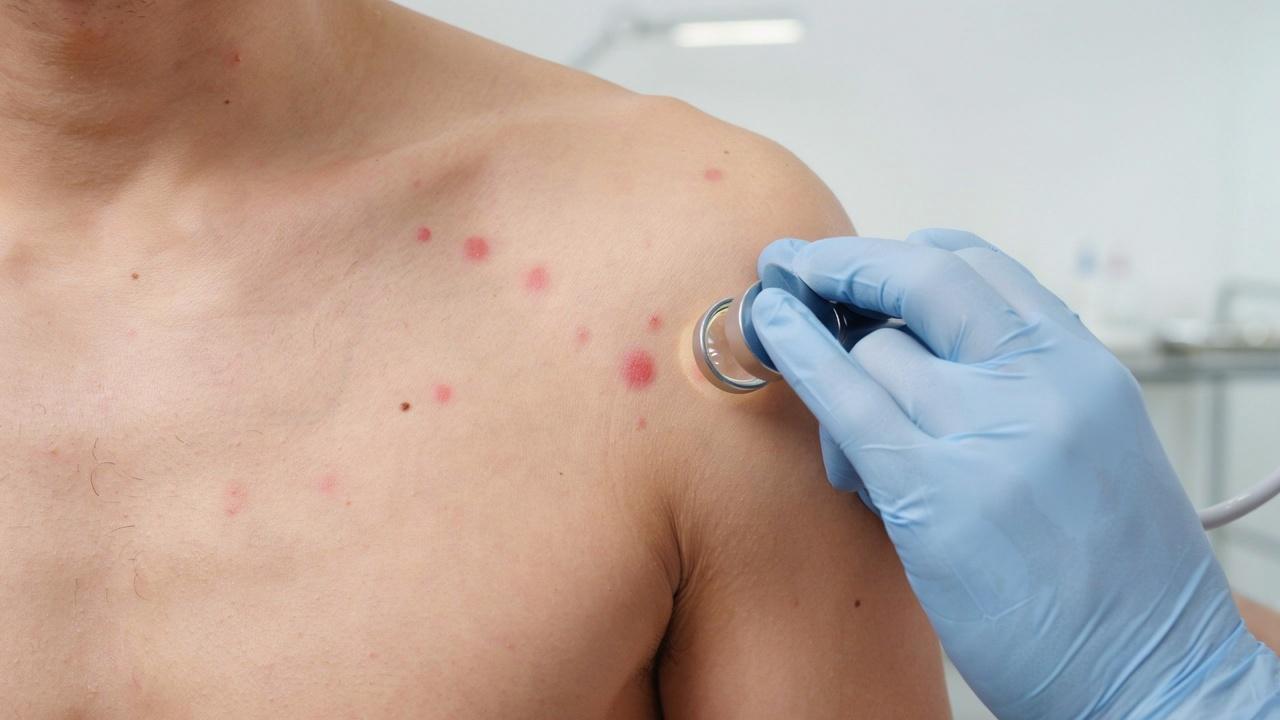
Cherry angiomas are small, bright red spots made up of overgrown blood vessels near the skin surface.
They are very common in adults over 30 and tend to increase in number with age. They appear most often on the torso, arms, and legs.
They are completely harmless and do not require treatment. Removal is only considered if they bleed or cause cosmetic concern.
Dermatofibromas
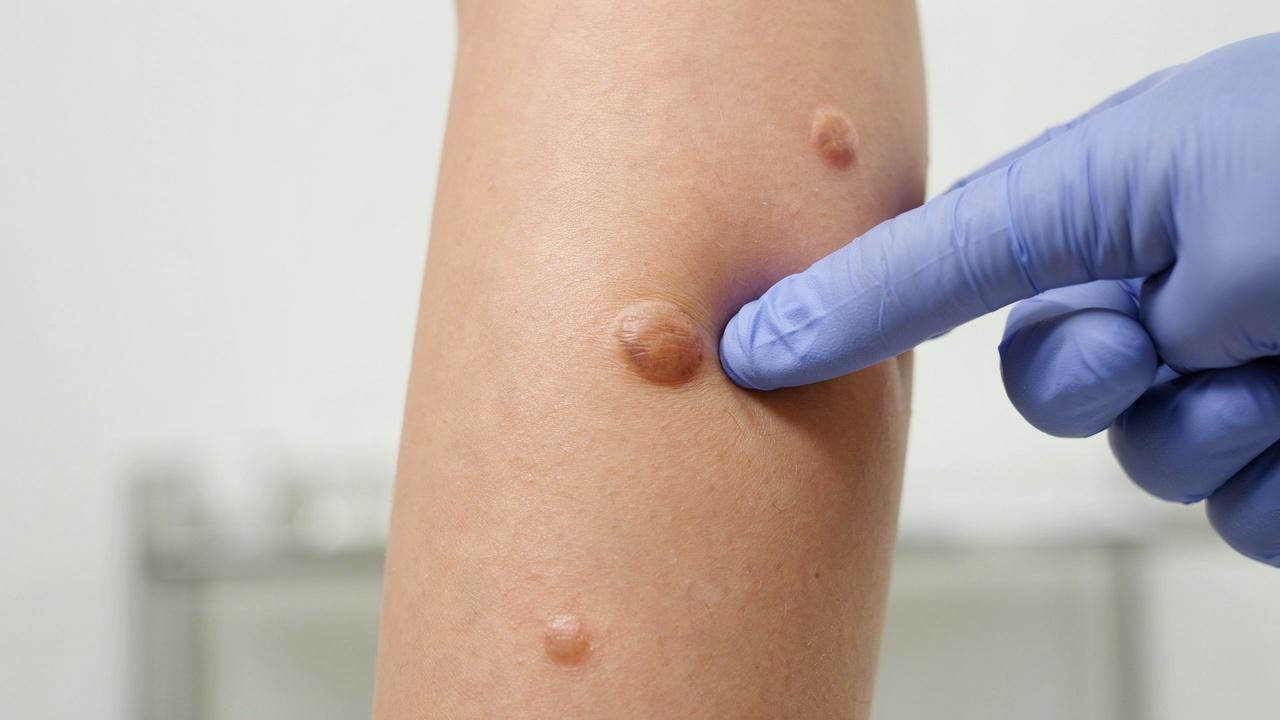
Dermatofibromas are firm, raised bumps that usually appear on the lower legs. They are often brownish in color and may feel slightly tender when touched.
They typically form after minor skin injuries like insect bites or small cuts. They are not dangerous and do not carry any health risks.
Removal is rarely necessary unless they cause ongoing discomfort.
Sebaceous Hyperplasia
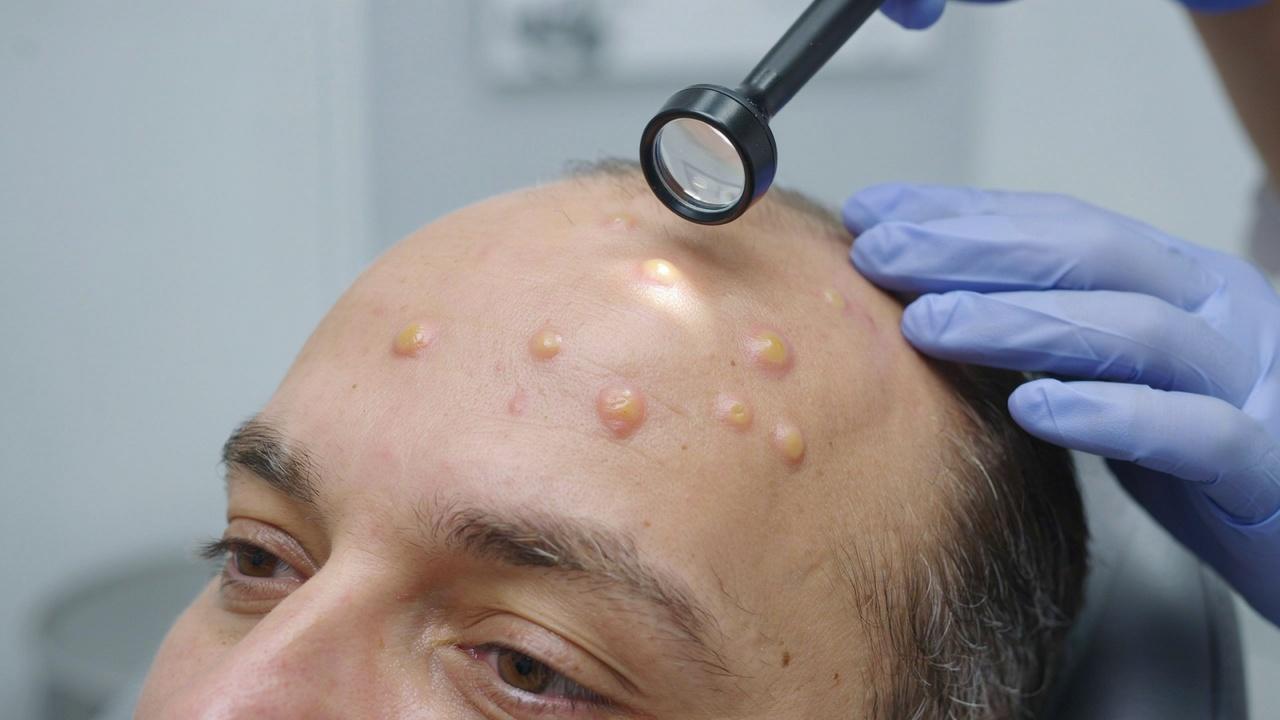
Sebaceous hyperplasia occurs when the oil glands in the skin become enlarged and visible.
It appears as small, yellowish, donut-shaped bumps most often on the face. It is more common in middle-aged and older adults with oily skin.
It is harmless but can sometimes be mistaken for basal cell carcinoma. A dermatologist can confirm the diagnosis if there is any doubt.
Pyogenic Granulomas
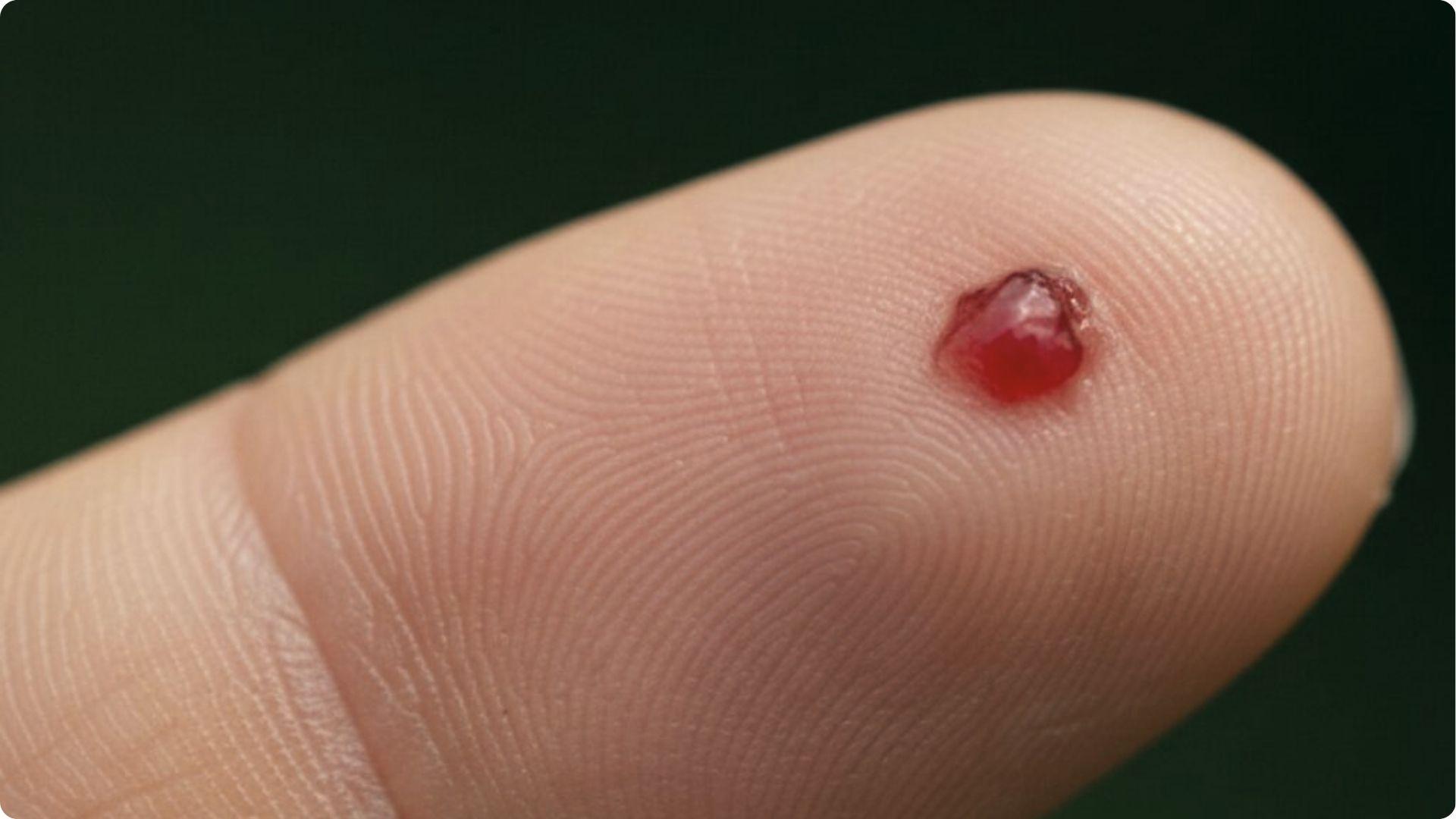
Pyogenic granulomas are small, red, raised growths that bleed easily and grow quickly.
They often appear after a skin injury or during pregnancy due to hormonal changes. They are not cancerous but can cause repeated bleeding if left untreated.
They usually need to be removed by a dermatologist to prevent further issues. Treatment options include laser removal, cauterization, or surgical excision.
Keloids
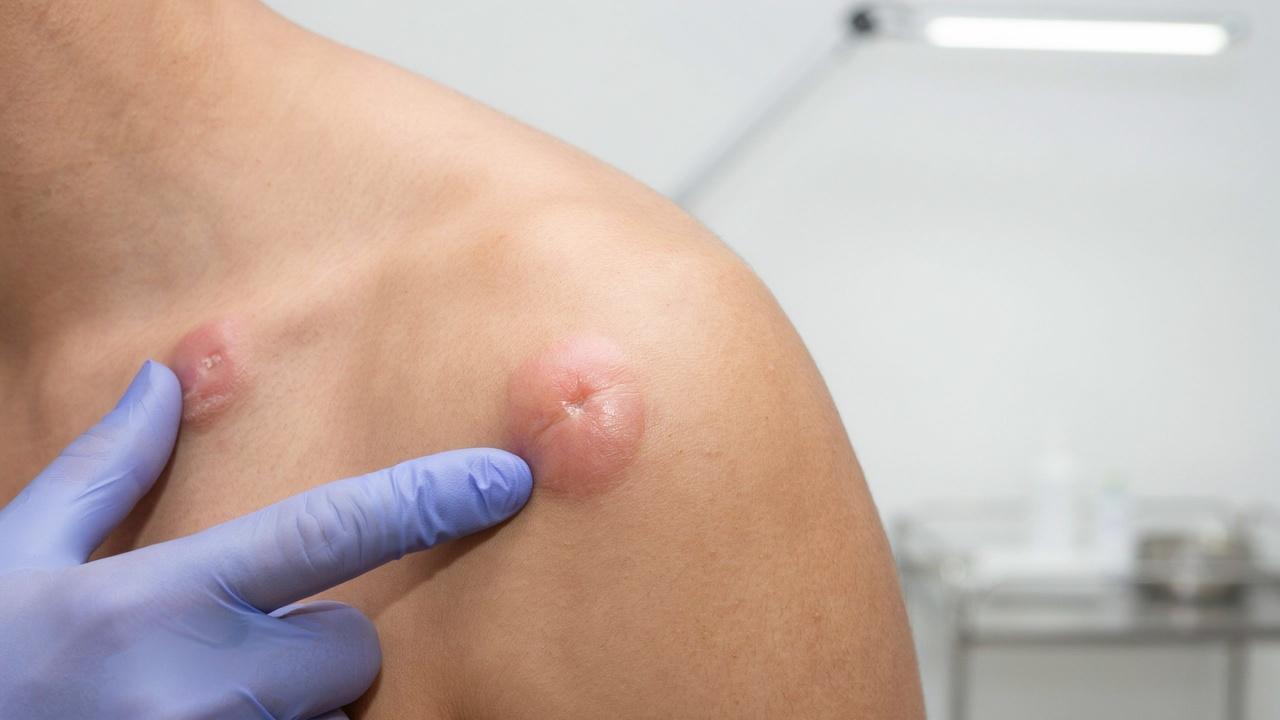
Keloids are thick, raised scars that grow beyond the boundary of the original wound on the skin.
They form when the body overproduces collagen during the healing process. They are more common in people with darker skin tones and can run in families.
Keloids can be itchy, uncomfortable, or tender to the touch. Treatment options include steroid injections, laser therapy, or surgical removal.
Milia
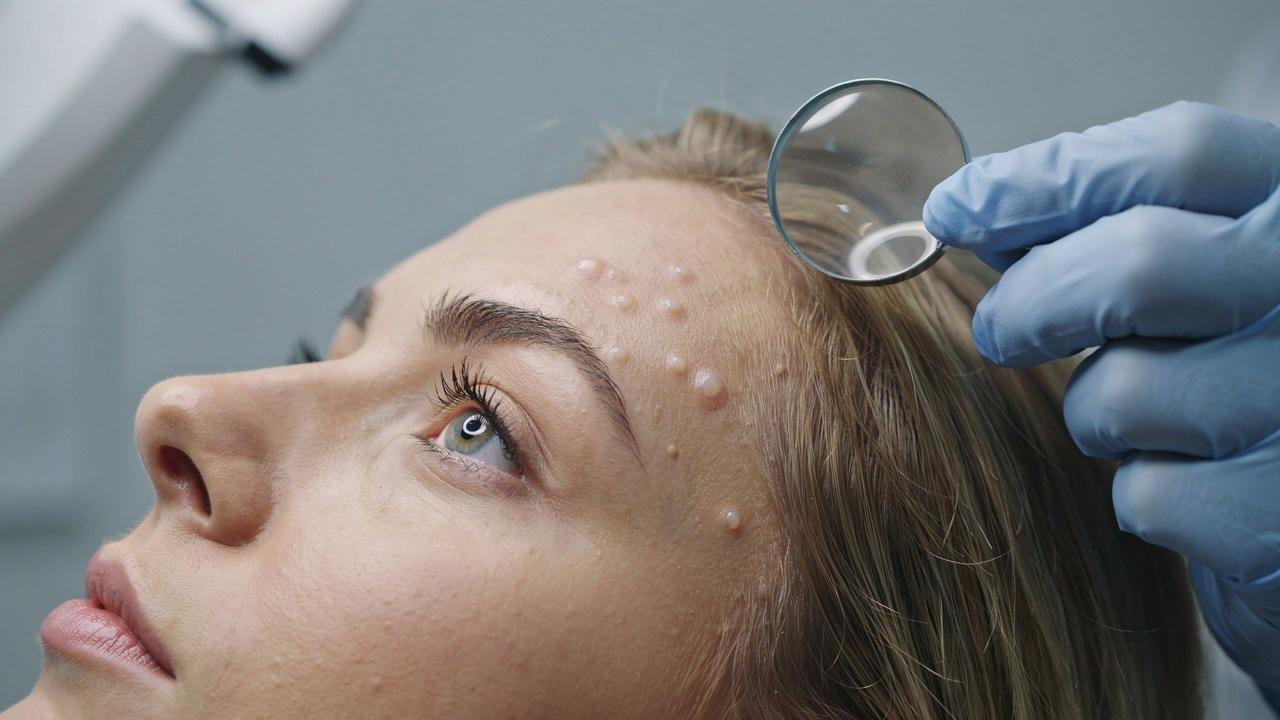
Milia are tiny white cysts that form when dead skin cells get trapped beneath the skin surface. They are common on the face, especially around the eyes and nose.
They are completely harmless and often clear on their own over time. Gentle exfoliation and regular cleansing can help speed up the process.
In some cases, a dermatologist may remove them for cosmetic reasons.
Birthmarks and Hemangiomas
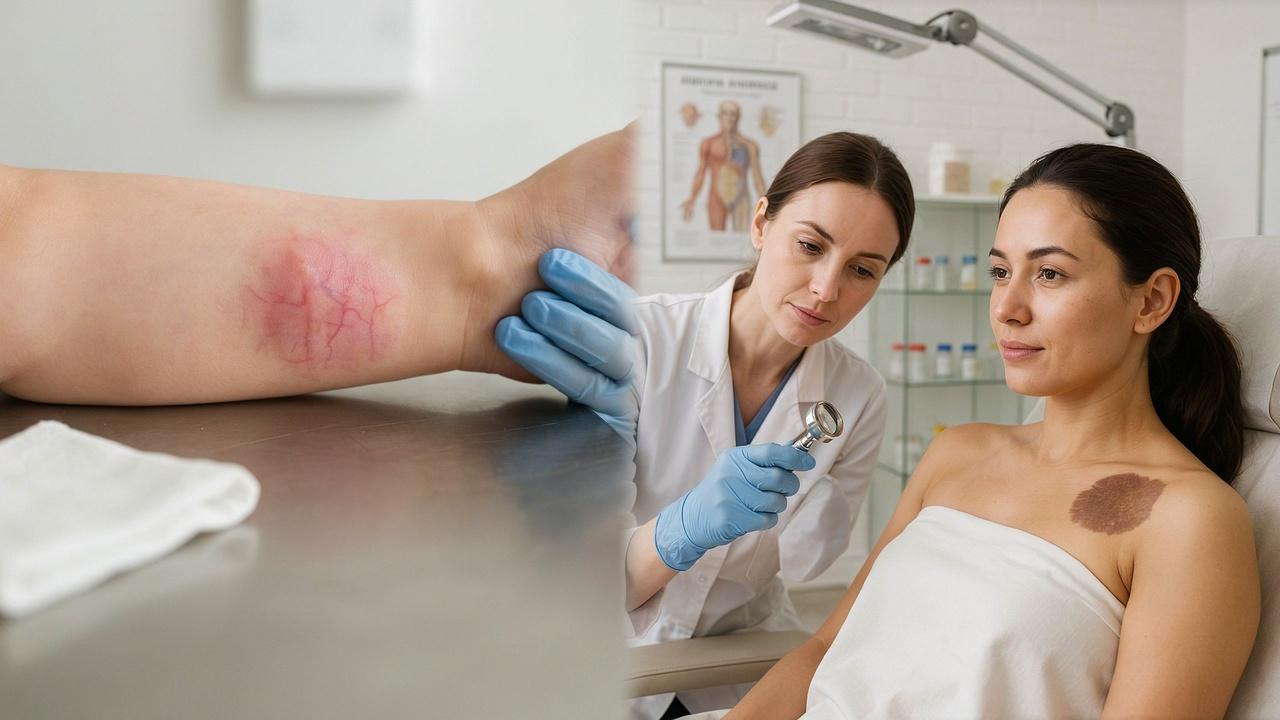
Birthmarks are areas of discolored skin that are present from birth or appear shortly after. They include port-wine stains, café-au-lait spots, and congenital moles.
Hemangiomas are clusters of blood vessels that form raised, red marks on the skin.
Many hemangiomas shrink and fade on their own over time without any treatment. Larger or more visible birthmarks can be treated by a dermatologist if desired.
Common Benign Skin Growths on Face and Body
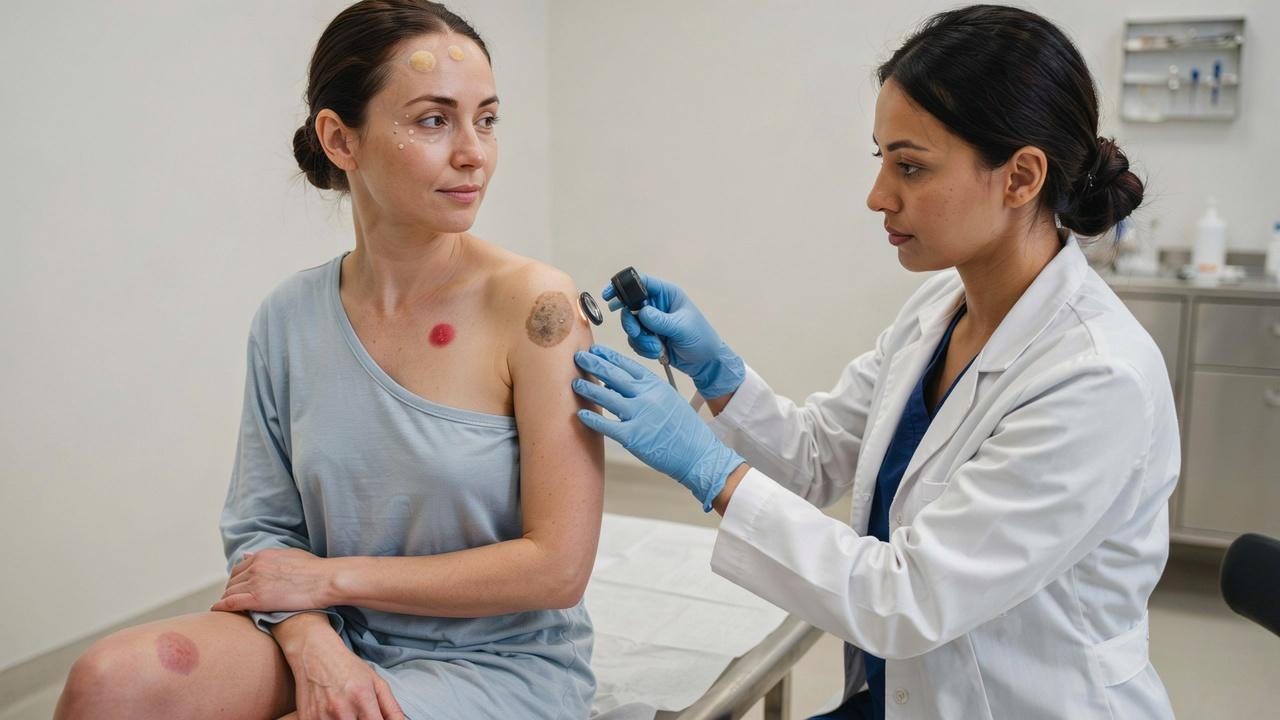
Different types of benign skin growths tend to show up in specific areas of the face and body.
Benign Skin Growths on the Face
The face is one of the most common areas for benign growths. Moles, milia, sebaceous hyperplasia, and seborrheic keratoses often appear here.
Age spots and freckles are also common on the cheeks, nose, and forehead. Sun damage over the years contributes heavily to growth in this area.
Benign Skin Growths on the Neck and Eyelids
The neck and eyelids are frequent sites for skin tags. The thin, folded skin in these areas creates the right conditions for them to form.
Moles and small cysts can also appear on the neck. Milia are especially common around the eyelids and under the eyes.
Benign Skin Growths on the Arms and Legs
Dermatofibromas appear most often on the lower legs. Lipomas are common on the upper arms and shoulders.
Cherry angiomas tend to show up on the arms and trunk. Freckles and age spots are also frequent on sun-exposed arms and hands.
Benign Skin Growths on the Scalp and Trunk
Seborrheic keratoses are very common on the trunk and scalp. Epidermoid cysts often appear on the back and scalp.
Lipomas can also develop along the upper back. These areas tend to accumulate growths with age, especially in people with fair skin or a history of sun exposure.
Which Skin Growths Are Most Common in Adults?
Skin tags, seborrheic keratoses, and moles are among the most frequently seen benign growths in adults.
Cherry angiomas also become increasingly common after age 30. Lipomas and epidermoid cysts are regularly seen in people between 40 and 60.
Most adults will develop at least one of these over their lifetime.
When to See a Dermatologist for Benign Skin Growths

Not every growth needs a doctor visit, but certain signs mean it is time to get it checked out.
A Growth Changes in Size, Shape, or Color
Any mole or lesion that changes over time should be examined. Sudden growth, color shifts from brown to black or red, or irregular borders are warning signs.
The ABCDE rule, which stands for Asymmetry, Border, Color, Diameter, and Evolving, is a helpful tool. If a growth is evolving in any way, see a dermatologist promptly.
The Lesion Bleeds, Itches, or Becomes Painful
A benign growth that starts bleeding without injury or becomes persistently itchy and painful is a concern.
These symptoms may indicate the growth is irritated, infected, or changing. Pyogenic granulomas, for example, bleed easily and usually need removal. Do not ignore these signs.
A New or Rapidly Growing Skin Growth Appears
New growths that appear suddenly and grow quickly over weeks or months should always be checked.
While many are benign, rapid growth can sometimes point to something more serious. A dermatologist can evaluate the growth and decide if a biopsy is needed.
You're Unsure Whether the Growth Is Benign
If you are not sure what a growth is, get it checked. Self-diagnosis is not reliable. Many benign growths look similar to early-stage skin cancers.
A quick visit to a dermatologist can give you peace of mind and rule out anything serious.
Tips for Monitoring and Caring for Benign Skin Growths
A few simple habits can help you stay on top of your skin health and catch any changes early.
- Perform regular skin self-exams once a month. Use a mirror to check hard-to-see areas like the back and scalp. Look for any new growths or changes to existing ones.
- Wear broad-spectrum sunscreen with SPF 30 or higher every day. Sun protection reduces the risk of new pigmented growths forming. Reapply every two hours when outdoors.
- Avoid picking at or scratching skin growths. Breaking the skin can lead to infection or scarring. Some growths, like cysts, can become inflamed if they rupture.
- Keep a written or photo log of your moles and growths. Note their size, color, and location. This makes it easier to spot changes at your next skin check.
- Schedule a routine skin check with a dermatologist at least once a year. More frequent visits may be needed if you have a history of skin issues or a family history of skin cancer.
Conclusion
I know how unsettling it can feel to notice a new bump or spot on your skin. I have been there myself.
The good news is that most benign skin growths are completely harmless. Knowing the types, causes, and warning signs puts you in a much better position to take care of your skin.
Keep an eye on any changes, use sunscreen daily, and do not skip that annual skin check.
If this post helped you, drop a comment below or share it with someone who could use it.
Frequently Asked Questions
Can Benign Skin Growths Become Cancerous?
Most benign skin growths do not turn into cancer. However, some moles can develop into melanoma over time, so regular monitoring and yearly dermatologist visits are important.
Can Benign Skin Growths Go Away on Their Own?
Some can, like hemangiomas in children and milia with regular cleansing. Most benign growths like lipomas and skin tags stay unless medically or cosmetically removed.
Why Do Benign Skin Growths Appear With Age?
As skin ages, cells do not shed and regenerate as efficiently, leading to visible buildups. Hormonal changes and years of sun exposure also trigger growths like skin tags and seborrheic keratoses.
Can I Remove Benign Skin Growth at Home?
Home removal is not recommended as it can cause infection, scarring, and incomplete removal. A dermatologist can remove growths safely using methods like excision, laser, or cryotherapy.
Which Types of Benign Skin Growths Are Most Common?
Moles, skin tags, and seborrheic keratoses are the most commonly seen benign growths in adults. Age spots and cherry angiomas are also very common.