Is Scalp Microneedling Effective for Hair Loss?

Hair-loss treatments face a practical obstacle that is easy to overlook: applying an active ingredient to the scalp doesn’t guarantee that enough of it will reach the intended area. The skin acts as a barrier, which can limit the penetration of topical treatments.
Scalp microneedling is being explored as one way to address this problem. By creating controlled microchannels in the skin, it may support the scalp’s repair response while helping topical products penetrate more effectively. Research suggests that its value may be greatest when it is combined with treatments such as minoxidil, platelet-rich plasma (PRP), or growth-factor solutions.
What happens during scalp microneedling?
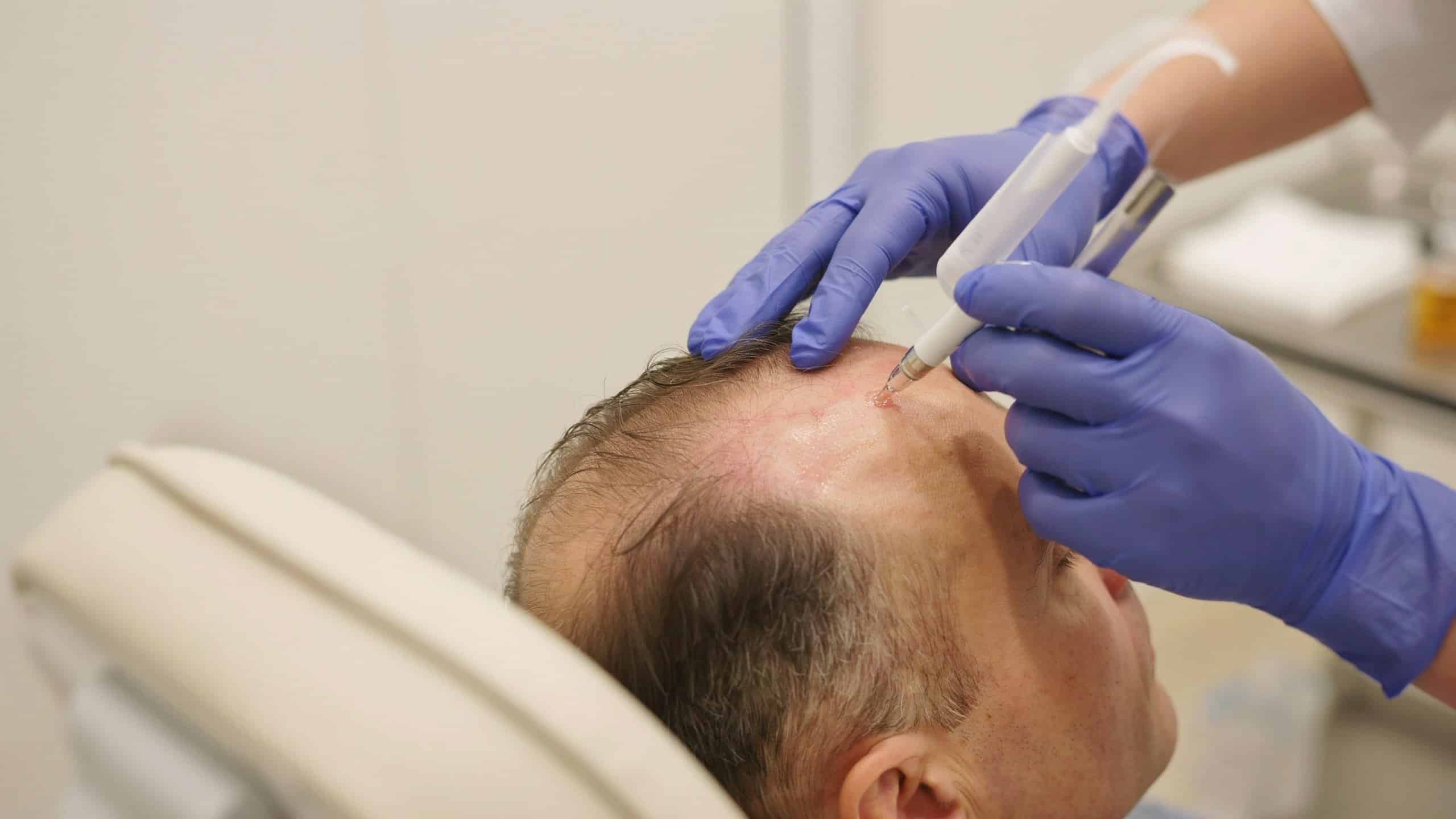
Microneedling uses small, sterile needles to create tiny injuries in the skin. Depending on the treatment, this may be done with a roller, automated pen, derma stamp, or fractional radiofrequency device.
These controlled punctures activate the skin’s natural healing response. Growth factors and cytokines, which act as signalling molecules, are released as the tissue begins repairing itself. This process also initiates the production of collagen and elastin fibers involved in maintaining the skin’s structure, elasticity, and firmness.
Microneedling was initially used for concerns such as wrinkles and atrophic scars associated with severe acne, chickenpox, or injury. According to an article in the Journal of Cosmetic Dermatology, the controlled wounds can disrupt scar tissue and initiate repair mechanisms associated with improvements in scarring, wrinkles, and hypopigmentation.
Its use has since expanded to the scalp. Here, there are two possible advantages: stimulation of local repair processes and improved delivery of products that might otherwise struggle to pass through the skin barrier.
What does the hair-loss evidence show?
A review of research into microneedling for male pattern hair loss included six groups treated with microneedling alone. Two groups experienced significant increases in total hair count, while one reported improvements in hair diameter and density. The other three showed no effect.
Results were more consistent when microneedling was paired with another treatment. Among seven studies comparing microneedling plus 5% minoxidil with 5% minoxidil alone, six found significantly greater increases in hair count in the combination groups. The studies used several types of devices, including rollers, automated pens, and fractional radiofrequency equipment.
Three further studies examined minoxidil combined with proprietary topical products and/or growth factors. These also reported increases in hair count. Studies pairing microneedling with topical or injectable PRP found significant improvements in hair count and diameter across the treatment groups.
Taken together, these findings suggest that microneedling may be more dependable as an adjunct than as a standalone answer. Its microchannels may allow topical products topenetrate the scalp more deeply and be absorbed more effectively. Research involving women with female pattern hair loss has also examined the application of topical growth factors followed by microneedle therapy.
That distinction matters. Microneedling isn’t necessarily replacing an established topical or clinical treatment. Instead, it may help create conditions in which a complementary treatment can work more effectively.
Growth-factor serums and microneedling
Some hair-care systems incorporate microneedling directly into their application protocols. One example is the Advanced Hair System, which pairs its Advanced Hair Serum with a 0.5 mm derma stamp. The stamp creates small channels before the serum is applied, with the aim of improving delivery into the scalp.
The professional microneedling serum contains PTT-6®, an ingredient derived from mesenchymal stem cells harvested from the umbilical-cord lining of red deer. PTT-6® contains more than 3,000 proteins, growth factors, cytokines, and exosomes involved in cellular signaling.
The system is intended to support hair follicles by prolonging the anagen, or active-growth, stage of the hair cycle, stimulating follicle growth and suppressing cell death. Microneedling is therefore a functional part of the protocol rather than an incidental addition.
One case reported in the Journal of Plastic and Reconstructive Surgery involved a patient with Covid-19-related hair loss. A combined regimen of minoxidil, LED light therapy and monthly Advanced Hair System applications was associated with arrested thinning followed by scalp hair regrowth. The researchers proposed the serum as an adjunct to conventional treatment for this type of hair loss.
Because several treatments were used together, the outcome shouldn’t be attributed to microneedling or the serum alone. It does, however, illustrate how microneedling-based protocols may be incorporated into a broader hair-regrowth strategy.
Safety and realistic expectations
Microneedling is considered minimally invasive and generally has few side effects. Mild inflammation and discomfort are common reactions. Bruising, scarring, and skin infection are also possible risks.
Studies have used different devices and combined microneedling with different topical or injectable treatments. Outcomes also vary when the procedure is used alone.
This makes technique and treatment selection important. Although scalp microneedling can be performed at home, the procedure still involves puncturing the skin. Device depth, hygiene, and the suitability of anything applied afterwards should therefore be taken seriously.
For people experiencing unexplained, severe or persistent hair loss, microneedling also shouldn’t become a substitute for identifying the nature of the problem. Male pattern hair loss, female pattern hair loss, alopecia areata and telogen effluvium are distinct concerns, even if they can all result in visible thinning.
Scalp microneedling appears to have a credible role in hair-loss care, particularly as a method of supporting the penetration of minoxidil, PRP, or growth-factor preparations. Used alone, the results have been mixed. Used as part of a carefully chosen combination, the evidence is more encouraging.
The most useful way to view the procedure is not as a guaranteed cure but as a delivery and scalp-stimulation technique that may strengthen a wider treatment plan.