Ultimate Hydration: Why Your Skin Needs More Than Just Water for That “Dewy” Glow


You’ve probably heard it a hundred times: drink more water and your skin will glow. Simple, right? Well… not exactly. Water matters, of course, but healthy, hydrated skin is a little more complicated than carrying around a giant bottle all day. Somewhere between skincare trends, wellness advice, and treatments like the Profhilo skin booster for professionals, the conversation about hydration has shifted.
And honestly, that’s probably a good thing. Because if you’ve ever finished two liters of water and still felt dry, dull, or tight-faced by evening, you’re definitely not imagining things.
The Big Hydration Misunderstanding
For years, hydration advice sounded almost too easy.
Drink water.Get glowing skin.The end.
The problem is that skin doesn’t work like a sponge sitting in a sink. Drinking water supports overall health, yes. Your cells need it. Your organs need it. Everything functions better when you’re properly hydrated.
But skin hydration is influenced by several factors at once. Your skin barrier.
Your environment. Your diet. Hormones. Sleep quality. Stress levels.
The products you apply.
And, increasingly, professional skin treatments.
The first time I learned this, I was honestly surprised. I thought hydration was hydration. Water goes in, glow comes out. Apparently not.
Your Skin Barrier Is Doing More Work Than You Think
Imagine spending all day pouring water into a bucket with tiny holes.
That’s kind of what happens when your skin barrier isn’t functioning properly.
The skin barrier acts as a protective shield that helps retain moisture while keeping irritants out. When it’s damaged, water escapes more easily through a process called transepidermal water loss.
Suddenly, your skin feels:
- Tight
- Rough
- Flaky
- Sensitive
- Less radiant
Even when you’re drinking plenty of water.
According to the American Academy of Dermatology, maintaining the skin barrier is one of the most important factors in preventing dryness and supporting healthy skin appearance.
As dermatologist Dr. Shari Lipner explains:
“The skin barrier helps keep moisture in and irritants out.”
It’s a simple sentence, but it explains a lot.
Why “Dewy” Skin Is About Water Plus Retention
Here’s where things get slightly annoying.
Hydration isn’t only about getting moisture into the skin. It’s also about keeping it there.
Think of it as a two-step process:
- Add hydration.
- Prevent that hydration from escaping.
Many people focus heavily on step one and almost ignore step two.
That’s why ingredients like:
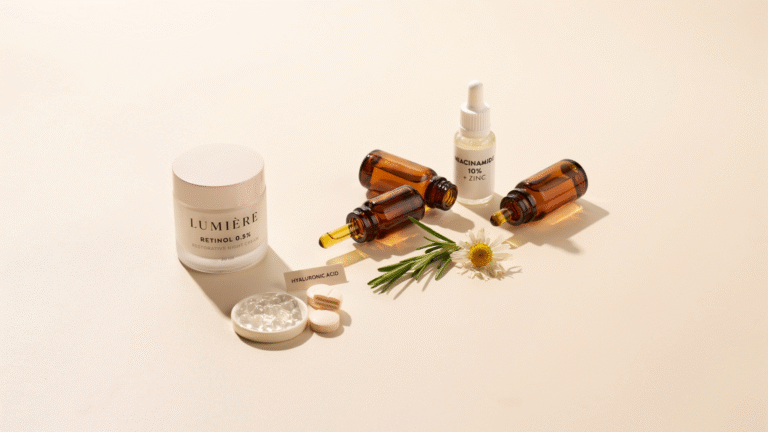
- Hyaluronic acid
- Glycerin
- Ceramides
- Squalane
- Panthenol
have become skincare staples.
Hyaluronic acid, especially, gets talked about constantly online. Sometimes too much, honestly. But there is science behind the hype.
Research published in the Journal of Clinical and Aesthetic Dermatology notes that hyaluronic acid can bind significant amounts of water and improve skin hydration and elasticity when appropriately formulated.
Not magic. Just biology doing its thing.
The Lifestyle Factors Nobody Posts About
Social media loves showing glowing skin.
What it doesn’t show is the boring stuff.
The sleep. The nutrition.
The stress management.
Those pieces matter more than many people realize.
I’ve noticed this personally during busy work periods. My skincare routine stays exactly the same, yet my skin somehow looks tired. Duller. Less alive.
Then I sleep properly for a week and suddenly everything improves.
Coincidence? Probably not.
Research from the University Hospitals Case Medical Center found that poor sleepers showed increased signs of skin aging and slower skin barrier recovery compared to good sleepers.
That finding feels obvious once you hear it, but it’s still easy to overlook.
Foods That Support Hydration
Water-rich foods can contribute to overall hydration while providing nutrients your skin actually uses.
Some good examples include:
- Cucumber
- Watermelon
- Strawberries
- Oranges
- Celery
- Tomatoes
Healthy fats also play a role.
Think:
- Avocados
- Nuts
- Seeds
- Olive oil
- Fatty fish
Your skin barrier relies on lipids to function properly. When dietary intake is consistently poor, skin sometimes reflects that.
Not immediately. But over time…
Professional Treatments Are Changing the Conversation
A few years ago, hydration treatments mostly meant facials and masks.
Now there are injectable options designed specifically to improve skin quality rather than dramatically alter facial features.
This is where treatments like Profhilo have gained attention.
Unlike traditional dermal fillers that add volume to specific areas, Profhilo uses high concentrations of hyaluronic acid to improve overall skin hydration and quality.
The goal isn’t creating larger cheeks or reshaping features.
It’s supporting skin from within.
Dr. Raj Acquilla, a well-known aesthetic physician involved in Profhilo development, has described the treatment as focusing on tissue remodeling and hydration rather than volumization.
That’s an important distinction.
Of course, treatments aren’t necessary for everyone. Some people achieve excellent results through skincare, nutrition, and consistent habits alone.
Still, it’s interesting to see how aesthetic medicine has moved beyond simply “filling wrinkles.”
Pro Tip
If your skin feels dehydrated despite using expensive products, try evaluating your cleanser first.
Seriously.
A harsh cleanser can undermine everything else you’re doing.
Switching to a gentler formula often improves hydration faster than adding three new serums.
Sometimes less really is more.
The Difference Between Dry Skin and Dehydrated Skin
People use these terms interchangeably all the time.
They’re actually different.
Dry Skin
Dry skin lacks oil.
You may notice:
- Flaking
- Rough texture
- Persistent tightness
- Sensitivity
Dehydrated Skin
Dehydrated skin lacks water.
You might experience:
- Dullness
- Fine dehydration lines
- Temporary tightness
- A tired appearance
And yes, you can have oily skin that’s dehydrated.
That confused me the first time I heard it. It sounded contradictory.
But oily and hydrated aren’t automatically the same thing.
The Humidity Problem
Environment matters more than most people expect.
Winter heating systems.
Air conditioning. Air travel. Dry climates.
All of these pull moisture away from the skin.
According to the National Eczema Association, low humidity environments can significantly increase moisture loss from the skin.
Ever noticed your face feeling different after a long flight? Exactly.
It’s not your imagination.
The air inside airplanes is notoriously dry.
When More Products Become the Problem
This might be unpopular, but here we go.
Sometimes the pursuit of hydrated skin becomes excessive.
Ten-step routines.
Five different acids.
Multiple exfoliants.
Three serums layered under two creams.
At some point, your skin may stop thanking you for the effort.
I think many skincare enthusiasts go through this phase. I certainly understand the temptation. Every new product promises brighter, smoother, more hydrated skin.
Then your skin barrier gets irritated and suddenly you’re buying products to fix problems created by other products.
A little frustrating, honestly.
Consistency often beats complexity.
Pro Tip
Look for routines that contain three core elements:
- Gentle cleansing
- Hydrating ingredients
- Barrier-supporting moisturizers
Master those basics before chasing every new trend.
Your wallet will appreciate it too.
What Research Actually Says About Hydration
One of the challenges in skincare is separating evidence from marketing.
Researchers generally agree on several key points:
- Adequate water intake supports overall health.
- Topical moisturizers improve skin hydration.
- Humectants like hyaluronic acid attract water.
- Ceramides help strengthen the skin barrier.
- Sleep quality affects skin recovery and appearance.
- UV exposure accelerates dehydration and skin aging.
Notice what isn’t on that list.
Miracle cures.
Instant transformations.
Secret ingredients nobody has heard of.
Most healthy skin improvements come from consistent habits repeated over months rather than dramatic overnight fixes.
That’s less exciting, perhaps, but more realistic.
Final Thoughts
The idea that glowing skin comes purely from drinking more water sounds appealing because it’s simple. Unfortunately, skin is rarely that simple.
Real hydration happens when multiple pieces work together. Water intake, barrier health, nutrition, sleep, environment, skincare, and sometimes professional treatments all contribute to the bigger picture.
If there’s one takeaway, it’s this: stop thinking about hydration as a single action. Think of it as a system.
Maybe your skin needs more water.
Maybe it needs better moisture retention.
Maybe it needs more sleep, fewer active ingredients, or protection from a dry environment.
The answer is usually somewhere in the middle.
And that coveted dewy glow? It tends to show up when your skin is supported from several directions at once, not when you’re chasing one miracle solution and hoping for the best.