Why Hypoallergenic Jewelry Is Becoming Part of the Modern Beauty Lifestyle


Choosing jewelry used to be purely about aesthetics. Today, for a growing number of shoppers, it’s just as much about what happens to their skin after they put it on.
Hypoallergenic jewelry has shifted from a niche concern into something closer to a daily beauty essential. Nickel allergy is one of the most common forms of contact dermatitis, and peer-reviewed research confirms that metal allergies affect a significant portion of the population. For anyone prone to skin irritation or an allergic reaction after wearing certain pieces, material choice stops being a preference and becomes a practical necessity.
Modern beauty routines have also grown more layered, with serums, SPF, and fragrance all interacting with the accessories people wear throughout the day. Shoppers with sensitive skin now look for jewelry that can keep pace with those routines without causing redness, itching, or discomfort by mid-afternoon. Comfort and wearability carry real weight in purchasing decisions, sitting alongside design and price as factors that shape what people actually reach for. That shift in priorities is exactly what’s pushing hypoallergenic options toward the center of the modern beauty conversation.
Why More Beauty Shoppers Choose Hypoallergenic
The demand for hypoallergenic jewelry isn’t a passing trend. It reflects a genuine change in how people think about what they put on their bodies, not just what they put on their skin.
Nickel allergy and other metal allergies are far more common than many shoppers realize, and for those affected, the wrong piece of jewelry can mean hours of skin irritation or a full-blown allergic reaction. That practical reality has made material awareness a standard part of the shopping process for a growing segment of beauty consumers.
At the same time, the definition of a good accessory has expanded. Style still matters, but so does how a piece feels after a full day of wear, whether it plays nicely with a skincare routine, and whether it can be layered without consequence. Skin confidence has become part of the equation, and hypoallergenic jewelry is increasingly the answer to all of those concerns at once.
What Hypoallergenic Really Means in Jewelry
The word hypoallergenic appears on a surprising number of jewelry listings, but it carries less legal weight than most shoppers assume. Understanding what the term actually signals, and where its limits are, makes it far easier to choose pieces that suit sensitive skin rather than simply hoping for the best.
The Metals Most People Tolerate Best
Some metals sit well with human tissue because they resist corrosion and release very few ions into the skin, a property often described as biocompatible. The materials that consistently perform well in this regard include:
- Titanium: Lightweight, durable, and widely used in medical implants. It releases virtually no reactive particles into surrounding tissue.
- Niobium: Less commonly discussed but equally well-tolerated, making it a solid option for people who react to almost everything else.
- Platinum: Naturally inert and dense, though its price point puts it out of reach for everyday pieces.
- Surgical stainless steel: A practical middle-ground option, though quality varies significantly between grades, and some formulations do contain trace nickel.
Materials like sterling silver, 14k gold, and rhodium plating occupy a different tier. Many people tolerate them without issue, but their alloy content matters. Sterling silver is 92.5% silver mixed with other metals, and 14k gold contains a meaningful percentage of non-gold material, both of which can include nickel depending on the manufacturer.
Why Hypoallergenic Is Not a Legal Guarantee
In most markets, no regulatory body enforces a specific standard behind the word hypoallergenic. A brand can apply it freely. The EU Nickel Directive is one of the few frameworks that actually sets measurable limits on nickel release from jewelry intended for prolonged skin contact, but it applies only within the European Union.
Nickel-free labeling is more informative than hypoallergenic in isolation, though disclosure practices still vary widely between manufacturers and regions. Treating hypoallergenic as a starting point for research, rather than a final answer, remains the more reliable approach for anyone managing consistent metal sensitivity.
How Jewelry Now Fits into Beauty Routines
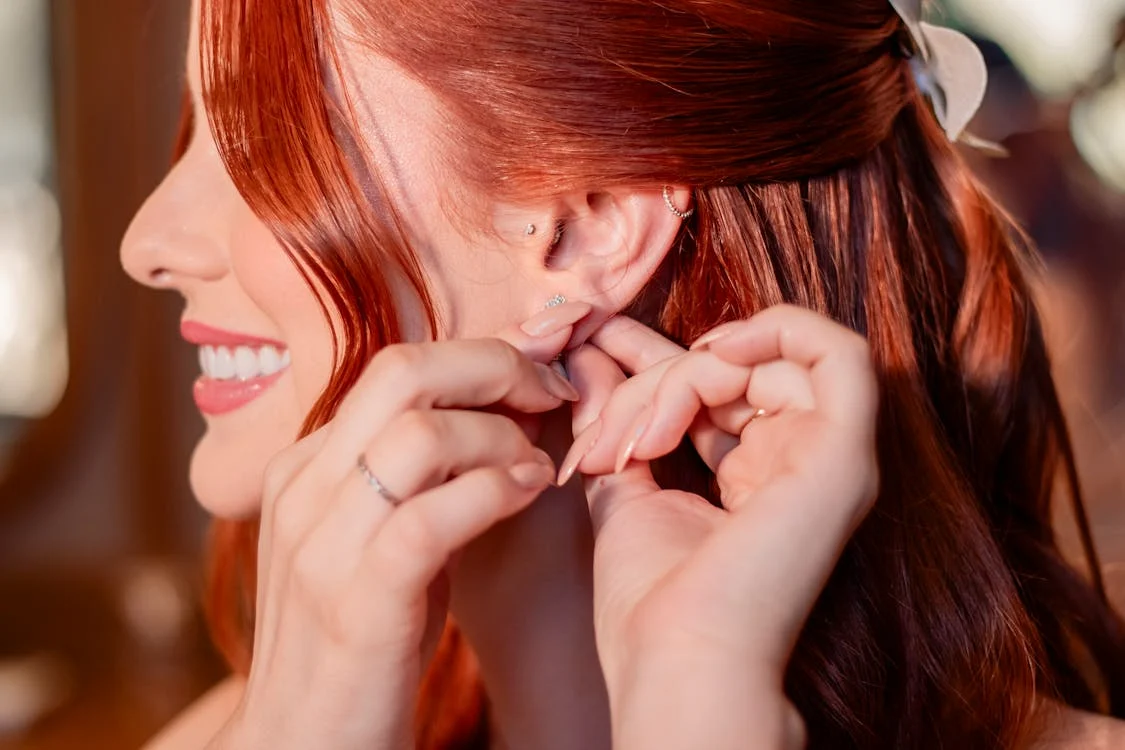
Modern skincare routines have grown significantly more complex, and that complexity now has a direct relationship with the jewelry people wear. The two no longer exist in separate categories.
Skincare, Sweat, and Fragrance Can Change Wear
Many of the products applied to skin daily, including moisturizers, chemical exfoliants, retinoids, sunscreens, and fragrances, can alter how skin behaves beneath and around jewelry. Active acids and fragrance compounds, in particular, are among the skin-irritating materials to watch for when pairing beauty products with accessories worn close to the skin.
When a ring, necklace, or pair of earrings sits against skin that has been primed with these ingredients, the contact zone changes. Occlusion traps heat and product residue, sweat adds moisture, and friction from movement keeps the interaction continuous.
That combination can accelerate skin irritation, even with pieces that previously caused no issues. For areas like earlobes, the back of the neck, and wrists, where jewelry contact is constant and layering is common in current beauty looks, the effect is more pronounced.
Readers with sensitive skin have started to approach this the same way they approach ingredient checking in skincare: by asking whether a material suits their skin, not simply whether it looks good. Fashion jewelry made with reactive metals or low-quality plating introduces additional variables into that equation, since the base metal can become exposed as plating wears through contact with sweat and product residue.
Hypoallergenic earrings and other sensitive-skin-friendly accessories have become especially relevant in this context. For anyone building a layered fashion look or wearing pieces through a full day of beauty layering, an allergic reaction that develops mid-routine is far more disruptive than one that appears after occasional wear. Material choice has become part of the routine itself, and e-commerce stores like CordsClub.com sit alongside skincare brands as places people turn to when shopping for hypoallergenic jewelry and fashion accessories with ear sensitivity and skin comfort in mind.
Which Materials Hold Up Best for Sensitive Skin
Not every material labeled skin-safe behaves the same way in practice. For shoppers managing sensitivity, the distinction between genuinely low-risk metals and those that depend on alloy quality or plating condition can make a meaningful difference in daily comfort.
Best Bets for Daily Wear
Some materials have a stronger track record for consistent tolerability, largely because of how little they interact with skin chemistry over time.
- Titanium is one of the most frequently recommended options for sensitive skin. It’s lightweight, durable, and releases virtually no reactive particles, which is why it’s also used in medical implants.
- Niobium offers similar tolerability and is particularly useful for people who react even to well-regarded metals. It’s less widely available, but worth seeking out.
- Platinum is naturally inert and well-tolerated by most skin types. Its higher price makes it less practical for everyday pieces, but it remains one of the more dependable choices.
- Surgical stainless steel can work well for many people, though the grade matters. Some formulations contain trace nickel, so confirming the specific alloy composition before purchasing is worth the extra step.
For shoppers who want to keep things simple, prioritizing nickel-free labeling alongside these material types narrows the field considerably.
Materials That Deserve a Closer Label Check
Sterling silver, 14k gold, and plated jewelry are commonly worn by people with no issues, but they require more careful evaluation for anyone with known sensitivity.
Sterling silver blends 92.5% silver with other metals, and 14k gold contains a significant percentage of non-gold material. Either can include nickel depending on the manufacturer, which isn’t always disclosed clearly on product listings.
Costume jewelry carries the most variability. Base metals in lower-cost pieces tend to shift significantly between manufacturers, and plating thin enough to wear through after regular contact with sweat or skincare products exposes whatever sits underneath.
Why Dermatology and Wellness Trends Matter
Dermatologists have long advised patients with sensitive skin to reduce unnecessary contact with known irritants, and metal allergies consistently appear on that list. The recommendation has historically been framed as avoidance, but the conversation in professional skincare circles has expanded to include proactive material choices as part of a broader skin health strategy.
That shift aligns closely with where consumer attitudes have moved. Clean beauty, low-friction routines, and ingredient awareness have reshaped how shoppers evaluate nearly every product category, and accessories are no longer exempt from that scrutiny.
Hypoallergenic jewelry fits naturally into this mindset. Choosing pieces made from titanium or niobium rather than reactive alloys follows the same logic as reaching for a fragrance-free moisturizer or auditing a product label for known triggers.
Sustainable jewelry has also entered this conversation. Many shoppers drawn to ethically sourced or lower-impact materials find that those pieces overlap significantly with hypoallergenic options, since responsible manufacturing often avoids the cheaper filler metals most associated with allergic reactions. This is part of a wider pattern in which consumers are evaluating accessories through the same lens they apply to skincare: comfort, composition, and long-term wearability. That lens reflects the evolving personal expression in beauty that increasingly treats daily choices as extensions of health values, not just style preferences.
How to Shop Without Falling for the Label
When a listing says nickel-free, the next question worth asking is how specific that claim actually is. A vague nickel-free label without any supporting material disclosure tells a shopper relatively little, especially if the brand doesn’t clarify what the base metal, alloy, or plating composition actually contains.
Full material disclosure matters more than surface-level claims. Rhodium plating on a base layer of reactive metal may protect skin initially, but plating thins over time, particularly on pieces worn against skin treated with acids or fragrance.
It’s also worth checking every contact point, not just the decorative element. Posts, clasps, and earring backs sit directly against skin for hours, and for newly pierced ears especially, those secondary components carry just as much risk as the face of the piece itself. The EU Nickel Directive has raised the standard for disclosure in European markets, increasing awareness of what rigorous labeling looks like. However, it doesn’t apply universally, and listings outside that framework vary considerably in how much they reveal.
Why This Shift Is Likely to Last
Hypoallergenic jewelry isn’t trending because of a single season’s aesthetic. It reflects something more durable: a broader reorientation in how people weigh comfort alongside appearance when making everyday beauty decisions.
As awareness of metal sensitivity grows, shoppers will continue expecting style options that don’t compromise skin health. The conversation around sensitive skin has matured well beyond avoidance, becoming part of how people actively build their routines and select what they wear.
The takeaway isn’t that every person needs the same metal or approach. It’s that material literacy now belongs in the modern beauty lifestyle the same way ingredient awareness does in skincare. Knowing what something is made of, and why that matters for your skin, has quietly become part of getting dressed.