Should Lip Liner Be Darker Than Lipstick? Truth Revealed


A woman is carefully applying lipstick to her lips, showcasing her routine.
I wore the wrong shade lip liner for two years before anyone told me the truth. That harsh ring around my lips? Everyone saw it. No one said anything.
Here’s what nobody tells you: should lip liner be darker than lipstick? The answer isn’t what you think.
I’ve tested every combination on myself and clients for six years. Sometimes darker works. Sometimes it’s a disaster. Sometimes matching is perfect. Sometimes it looks flat.
The real answer depends on three specific things most people never consider.
Let me show you exactly when each rule applies and why.
What Does Lip Liner Actually Do?

A woman applies lipstick with a brush, focusing intently on her reflection in a mirror.
Lip liner isn’t just about drawing a line around your mouth.
It defines and shapes your lips, giving you control over their appearance. You can make thin lips look fuller or uneven lips look symmetrical.
The biggest benefit? It prevents your lipstick from feathering into the fine lines around your mouth. Nothing ages a look faster than bleeding lipstick.
Lip liner also makes your lipstick last longer. It creates a base that grabs onto color, so you’re not reapplying every hour.
How Lip Liner Affects Lip Appearance
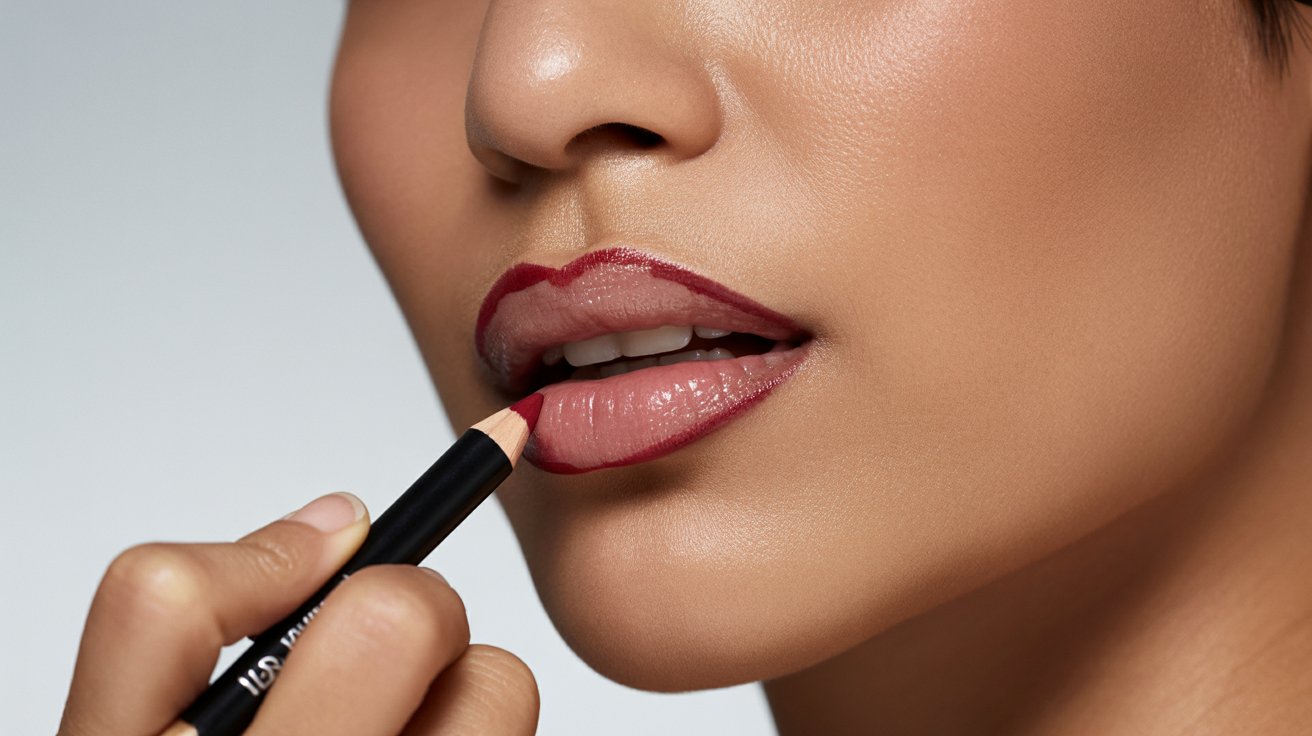
A woman applies lipstick to her lips using a brush, focusing intently on her makeup application.
Here’s where lip liner gets powerful.
Want fuller lips? Slightly overline your natural lip edge with liner. The definition tricks the eye into seeing more volume.
Got uneven lips? Most people do. One side is slightly different from the other. Liner lets you correct this by adjusting where you place your line.
Lip liner also intensifies your lipstick color. When you fill in your entire lip with liner before applying lipstick, the color pops more and stays vibrant longer.
Should Lip Liner Be Darker Than Lipstick?
Let’s answer the question everyone’s asking.
The Short Answer for Most Makeup Looks
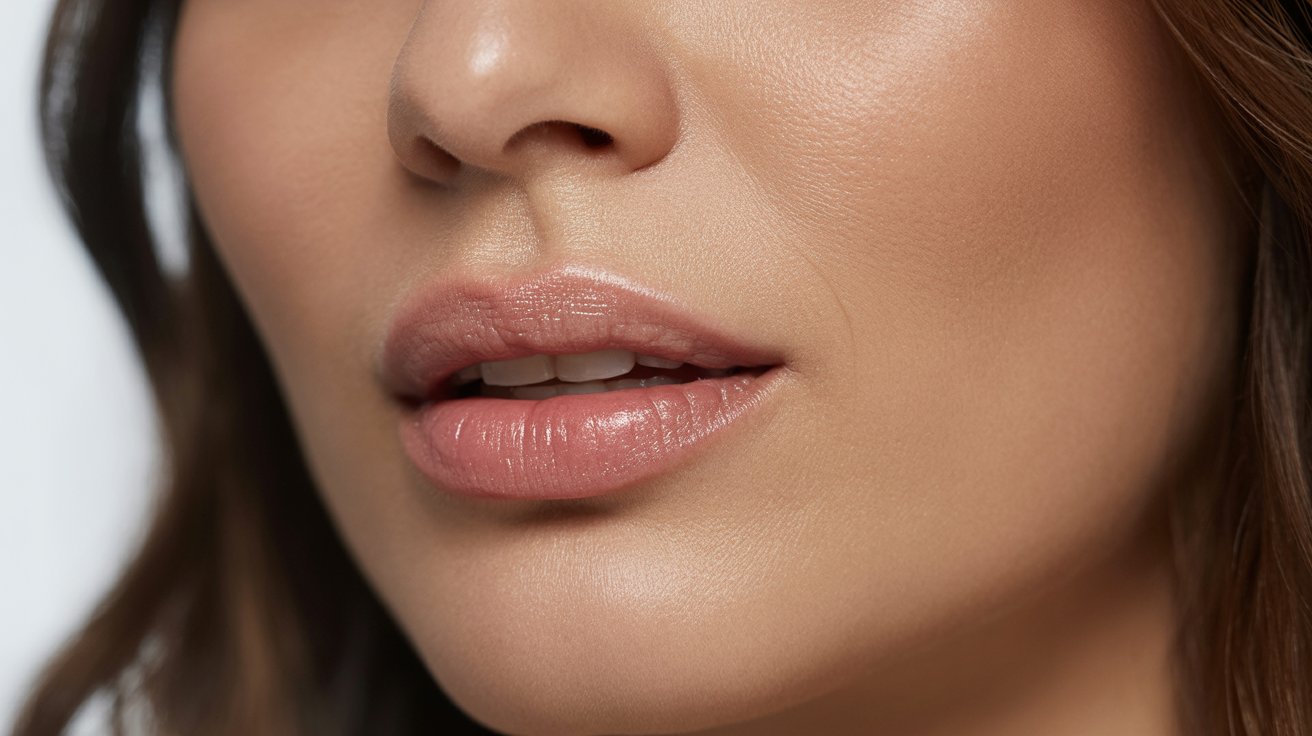
Close-up of a woman’s lips, showcasing their natural color and texture against a soft, blurred background.
For everyday natural looks, your lip liner should be slightly darker than your lipstick. Just one shade deeper.
This creates a subtle definition without looking harsh. Your lips have shape and dimension but don’t look outlined.
Matching your liner exactly to your lipstick works too. This gives you a seamless finish where everything blends together. No visible line at all.
Both approaches work. It depends on how much definition you want visible.
When a Darker Lip Liner Works Best
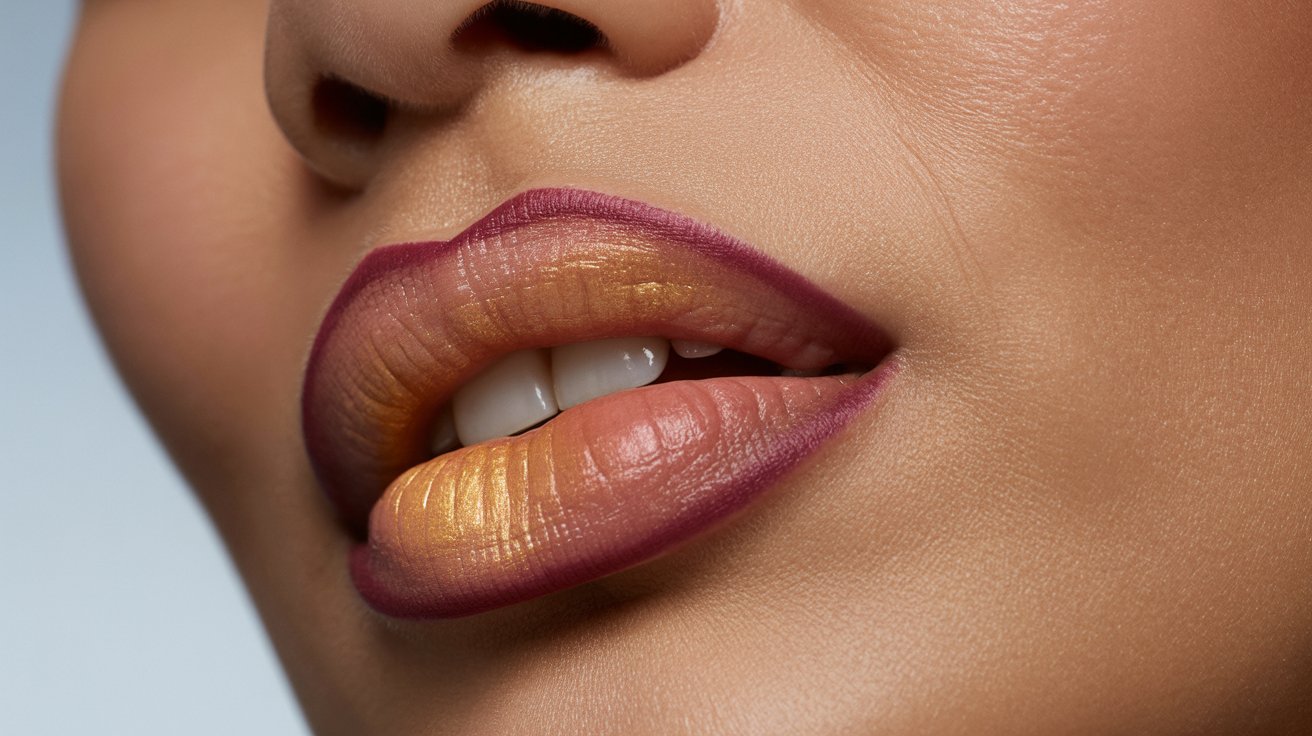
Close-up of a woman’s lips adorned with shimmering gold lipstick, highlighting their shape and texture.
Go darker when you want drama.
Ombre lips need a darker outer edge that gradually lightens toward the center. You’ll line with a deep shade and fill the center with something lighter.
Bold makeup styles benefit from visible definition. Red lips with a deeper liner. Berry tones with a plum edge.
Overlining also requires a slightly darker shade. It makes the extended line look natural instead of drawn on.
When a Lighter Lip Liner Is Better

Close-up of a woman’s face showcasing her light brown lip color and natural makeup.
Nude lips and natural looks call for lighter liner.
If your lipstick is already light, going darker creates too much contrast. You end up with that harsh ring effect from the 90s.
Use a liner that’s the same shade or even slightly lighter. Blend it well so there’s no visible edge.
Minimal makeup days don’t need strong definition. Keep everything soft and close to your natural lip color.
How to Choose the Right Lip Liner Shade
Stop guessing. Here’s the formula.
Matching Lip Liner to Lipstick Colors
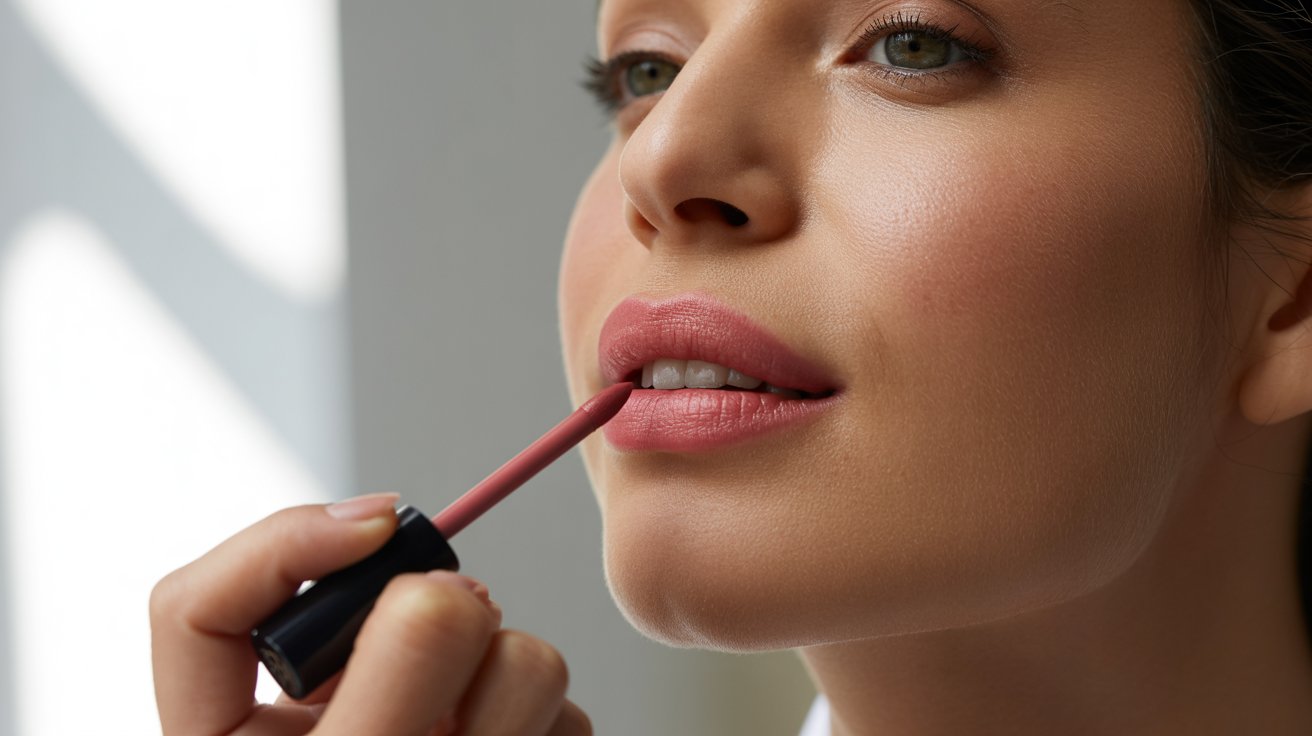
A woman carefully applies lipstick to her lips, focusing on achieving a precise and polished finish.
Nude lipsticks pair with liner one shade darker in the same undertone family. Pink nude? Pink-toned liner. Beige nude? Warm brown liner.
Red lipstick works with either matching red liner or one shade deeper. Avoid brown-toned liners with cool reds.
Pink and berry shades need precise matching. Go too dark and you create a harsh border. Stick within one shade variation.
Dark or bold lipsticks like plum, burgundy, or deep red can handle darker liner. The contrast actually adds the drama.
Skin Tone Considerations
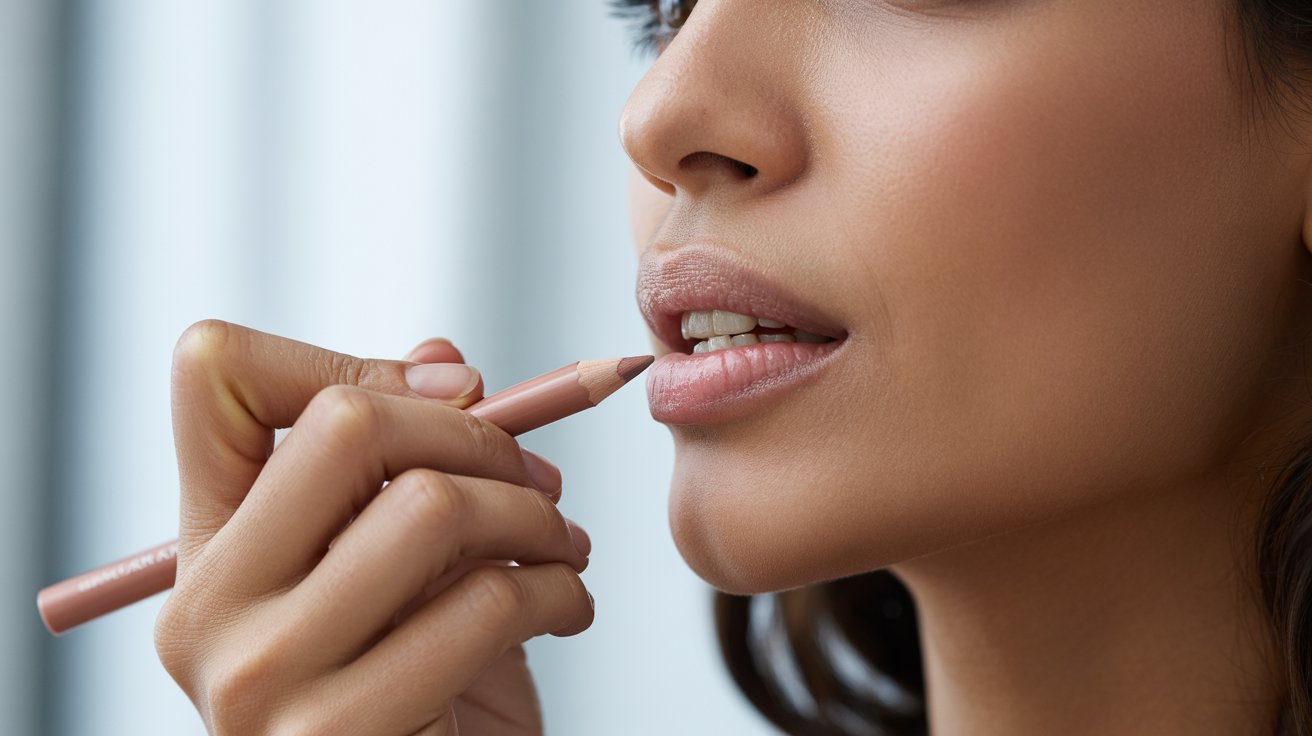
A woman carefully applies lipstick to her lips, focusing on achieving a precise and polished finish.
Fair skin looks best with liners that don’t stray too far from natural lip color for everyday looks. Soft pinks, light mauves, barely-there browns.
Medium skin tones can handle more variation. Rose, mauve, terracotta, and deeper browns all work well.
Deep skin tones shine with rich liner shades. Deep berry, chocolate brown, plum, and wine tones create gorgeous definition.
Test liner on your hand first. It should blend with your skin undertone, not fight it.
Step-by-Step Guide to Applying Lip Liner with Lipstick
Let me walk you through the right technique.
Step 1: Preparing Your Lips

A woman brushing her teeth with a toothbrush in a bright bathroom mirror.
Start with smooth lips. Exfoliate with a soft toothbrush or lip scrub to remove any flakes.
Apply lip balm and let it absorb for two minutes. Blot off excess before lining.
Dry, flaky lips make the liner look patchy. Prep is non-negotiable for a clean finish.
Step 2: Proper Lip Liner Application Technique
A woman carefully applies lipstick to her lips, focusing on achieving a precise and polished appearance.
Outline your lips first, starting at the center of your upper lip. Follow your natural lip line or slightly overline if you want fuller lips.
Connect the center to the outer corners. Then outline your bottom lip from corner to corner.
Fill in your entire lip with the liner. This creates a base for your lipstick and makes color last longer.
Blend the edges with your finger or a lip brush. No harsh lines should be visible.
Step 3: Applying Lipstick for a Balanced Look
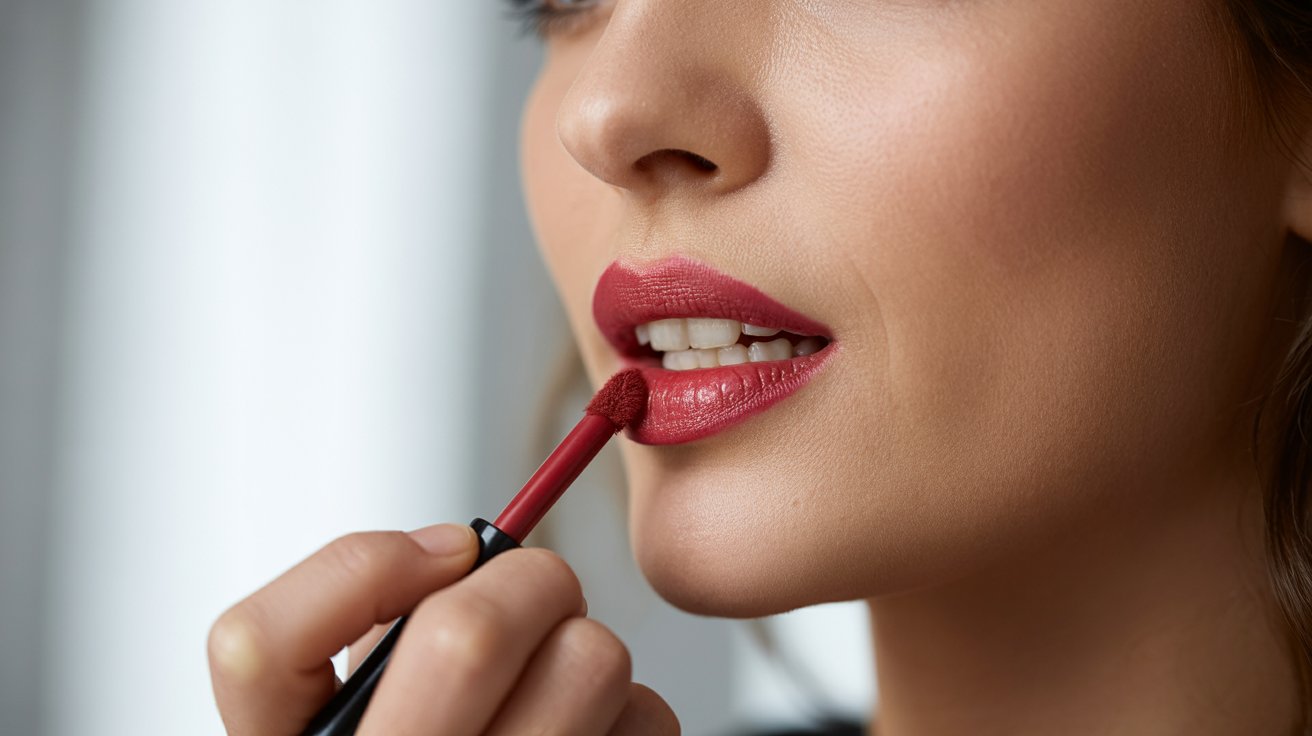
A woman applies red lipstick using a brush, focusing intently in front of a mirror.
Layer your lipstick over the liner base. Use a lip brush for precision or apply directly from the bullet.
Blot with tissue and reapply for longer wear and deeper color.
The liner underneath prevents the lipstick from sliding around. Everything stays exactly where you put it.
Common Lip Liner Mistakes to Avoid
I’ve seen these errors countless times, and they’re all fixable.
Here’s what not to do:
- Using liner that’s three shades darker than your lipstick creates that harsh 90s ring
- Skipping lip prep makes liner go on patchy and uneven
- Not blending the liner before applying lipstick leaves visible edges
- Overlining too much looks obvious instead of natural
- Using old, dried-out liner that drags and tugs on soft lip skin
- Choosing the wrong undertone that fights with your lipstick color
- Applying liner without sharpening first gives you thick, imprecise lines
Most mistakes come from rushing. Take your time with lip liner. It’s worth the extra two minutes.
Pro Tips for Achieving Perfect Lip Definition
These tricks separate amateur from professional application.
Try these techniques:
- Warm up your liner on the back of your hand before applying for smoother glide
- Use concealer around your lip line to clean up any mistakes and sharpen edges
- Blend liner into the center of your lips so there’s no demarcation line
- Choose cream liners for softer looks and pencil liners for precision
- Keep your liner sharpened for clean, defined lines
- Layer lipstick and liner by applying liner, then lipstick, then another thin layer of liner
- Set with translucent powder for extra longevity
Test your lip look in natural lighting before leaving. Artificial light can make things look different than reality.
Conclusion
Go grab your lip liner and lipstick right now. Seriously, stop reading and get them. Try the technique I showed you. Take a photo. Compare it to what you were doing before.
Drop a comment with your lip combo. What liner? What lipstick? I’ll tell you if you nailed it or if there’s a better match.
Screenshot your favorite tip from this post and tag me on Instagram. I reshare the best ones every Friday.
Your perfect lip liner shade has been sitting in your makeup bag this whole time. Time to actually use it right.
What are you waiting for?
Frequently Asked Questions
Can I use the same shade for lip liner and lipstick?
Yes, matching shades create a seamless finish with no visible liner edge. This works wonderfully for natural everyday looks.
Does darker lip liner make lips look bigger?
Slightly darker liner with proper blending adds definition that can make lips appear fuller. Overlining with a dark, unblended liner looks harsh instead.
Should beginners use darker or lighter lip liner?
Beginners should start with liner that matches their lipstick exactly. This is most forgiving and eliminates the risk of harsh contrast.
How do I blend lip liner with lipstick properly?
Fill your entire lip with liner, then softly blend the edges with your fingertip before applying lipstick over top. The two products will meld together seamlessly.
What lip liner color works with nude lipstick?
Choose liner one shade darker than your nude lipstick in the same undertone family. Pink nudes need pink-toned liner, beige nudes need warm brown liner.