
Beyond Bone Broth: The Modern Toolkit for Restoring Facial Volume

You notice it one day. Maybe while scrolling through old photos. Maybe under harsh bathroom lighting that seems personally offended by your existence. Your face looks… different. Not older exactly. Just less full.
For years, people talked about bone broth as the answer. Drink collagen, support skin, age gracefully. And sure, there’s some logic there. But if you’re trying to restore actual facial volume, the conversation has become much bigger than what’s simmering in a pot.
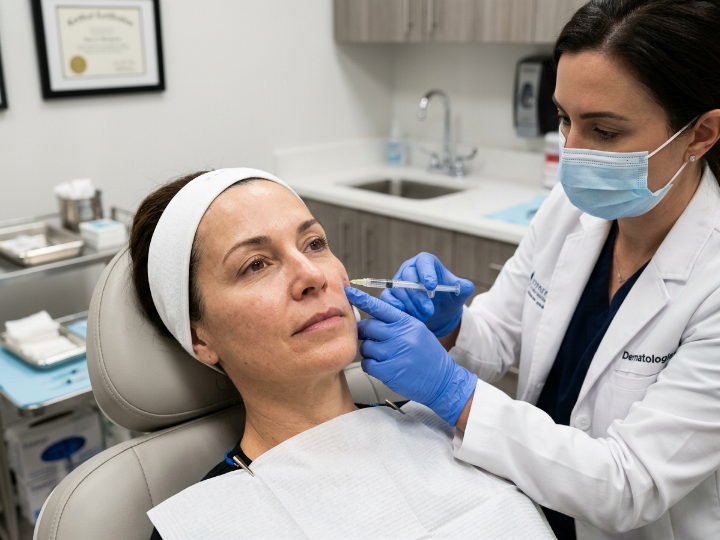
Some people eventually explore everything from nutrition changes to advanced aesthetic treatments and even research where to buy dermal fillers through licensed providers. The modern toolkit is surprisingly broad. Sometimes confusing. Occasionally overhyped. But fascinating nonetheless.
What Facial Volume Loss Actually Looks Like
Most people think aging is about wrinkles.
It isn’t.
Well, actually… wrinkles are part of it. But facial volume loss often changes your appearance more dramatically.
As you age, several things happen at once:
- Fat pads shift and shrink
- Bone structure subtly changes
- Collagen production declines
- Skin becomes thinner
- Hydration levels fluctuate
The result?
Cheeks flatten. Temples hollow. Under-eyes look deeper. Jawlines soften.
The first time I learned that facial bones themselves remodel over time, I honestly thought it sounded exaggerated. But researchers have documented measurable structural changes in the facial skeleton as we age.
You’re not imagining the difference in the mirror.
There are real anatomical reasons behind it.
Bone Broth Isn’t Useless… But It Has Limits
Bone broth developed a near-mythical reputation online.
Drink it daily. Restore youth. Glow from within.
The reality is less dramatic.
Bone broth contains amino acids, minerals, and collagen-derived proteins that may support overall skin health as part of a balanced diet. That’s good. Genuinely good.
But drinking collagen doesn’t automatically replace lost cheek volume.
That’s where social media sometimes skips a few important details.
Research published in the journal Nutrients found that oral collagen supplementation may improve skin elasticity and hydration in certain populations. That’s encouraging. Yet improved elasticity is different from rebuilding facial fat compartments.
Those are separate processes.
Sometimes wellness trends blur those distinctions.
The Nutrition Layer Still Matters
Before jumping to procedures, it’s worth looking at the basics.
Not because they’re exciting. Because they work.
Your skin and connective tissues depend on:
- Adequate protein intake
- Vitamin C
- Zinc
- Omega-3 fatty acids
- Antioxidant-rich foods
- Proper hydration
A dermatologist once described skin aging as “a cumulative biological process influenced by intrinsic and extrinsic factors.”
That sounds academic. But the practical translation is simple:
What you eat matters.
What you don’t eat matters too.
Chronic dieting, especially aggressive calorie restriction, can sometimes make facial volume loss appear more pronounced. You lose body fat, yes. Sometimes facial fat goes with it. Many people celebrate the weight loss and then wonder why they suddenly look tired.
It’s an oddly common experience.
Pro Tip
If your face has recently lost fullness after significant weight loss, focus on maintaining a stable healthy weight for several months before pursuing corrective treatments. Your appearance may continue adjusting naturally during that period.
Collagen Supplements: Helpful or Hype?
This topic gets emotional.
Some people swear by collagen powders.
Others dismiss them entirely.
The truth probably sits somewhere in the middle.
According to a systematic review published in the International Journal of Dermatology, oral collagen supplementation showed positive effects on skin hydration, elasticity, and density in several studies.
That’s promising.
But collagen supplements don’t selectively rebuild lost volume in the cheeks or temples.
Think support rather than replacement.
A subtle difference. An important one.
If you’re expecting dramatic facial plumping from a scoop of powder in your morning coffee, you’ll probably be disappointed.
If you’re looking for incremental skin-support benefits, maybe you’ll be pleasantly surprised.
Energy-Based Treatments and Skin Tightening
This is where things start getting more modern.
And more expensive.
Devices using radiofrequency, ultrasound, or other energy technologies aim to stimulate collagen production beneath the skin.
Examples include:
- Radiofrequency treatments
- Ultrasound-based lifting procedures
- Fractional laser therapies
Research from the American Society for Dermatologic Surgery notes that collagen remodeling can continue for months after certain treatments.
That sounds impressive.
The catch?
Results tend to be gradual. And they’re usually better at tightening and improving skin quality than replacing substantial lost volume. People often confuse these goals. Tighter skin doesn’t always mean fuller skin.
The Rise of Biostimulatory Injectables
Now we’re entering one of the fastest-growing areas in aesthetics.
Biostimulatory injectables work differently than traditional fillers.
Instead of primarily adding immediate volume, they encourage your body to produce more collagen over time.
Dr. Michael Gold, a board-certified dermatologist, has described collagen stimulation as an approach that can create more progressive, natural-looking improvements rather than abrupt changes.
Many patients appreciate that.
Especially those who fear looking “done.” Because let’s be honest… We’ve all seen examples that went too far. Or at least appeared that way on Instagram.
Dermal Fillers: Why They’re Still Popular
Despite constant innovation, dermal fillers remain one of the most commonly performed non-surgical aesthetic procedures worldwide.
There’s a reason.
They work.
Fast.
Hyaluronic acid fillers can restore volume in:
- Cheeks
- Temples
- Nasolabial folds
- Jawline areas
- Lips
- Under-eye regions
The appeal is obvious. You often see results immediately.
But they’re not perfect.
Pros
- Immediate improvement
- Minimal downtime
- Customizable treatment
- Reversible options available
Cons
- Temporary results
- Ongoing maintenance costs
- Risk of overcorrection
- Requires experienced providers
A common mistake is assuming more filler equals better results.
Usually not.
The most natural outcomes often come from restraint.
A little volume in the right place can make a bigger difference than large amounts spread everywhere.
The Lifestyle Factors Nobody Wants to Discuss
This part isn’t glamorous.
Which is probably why it gets less attention.
- Sleep quality.
- Stress management.
- Sun protection.
- Alcohol intake.
- Smoking.
All of them influence how your face ages.
Research from the American Academy of Dermatology consistently highlights ultraviolet exposure as one of the largest contributors to visible aging.
Not exciting advice.
Still true.
I’ve met people with elaborate skincare routines who skip sunscreen entirely. It’s a strange contradiction when you think about it.
Protecting existing collagen is usually easier than trying to rebuild it later.
Social Media Has Changed Expectations
This deserves mentioning.
Filtered faces have altered what many people think is normal.
You see impossibly smooth skin.
Perfect cheek contours. Zero under-eye hollowness.
No texture. No asymmetry. No signs of being an actual human being. Then you look in the mirror and feel disappointed. That’s a tough comparison to win.
Especially because many online images combine filters, lighting tricks, cosmetic procedures, editing software, and strategic camera angles.
Real faces have variation.
They should.
Building Your Personal Volume-Restoration Toolkit
The smartest approach usually combines several strategies rather than chasing a single miracle solution.
For many people, that might include:
- Protein-rich nutrition
- Consistent sun protection
- Quality sleep
- Strength training
- Collagen supplementation
- Professional skin treatments
- Injectable options when appropriate
Not everyone needs every tool.
And not everyone wants aesthetic procedures.
That’s perfectly reasonable. The goal isn’t to look twenty forever. Honestly, that sounds exhausting. The goal is usually to look healthy, vibrant, and recognizable to yourself.
Those are different things.
Final Thoughts
Bone broth isn’t the villain. It simply isn’t the entire story.
Restoring facial volume today involves a much broader set of options, from nutrition and collagen support to advanced technologies and injectable treatments. Some approaches work gradually. Others produce faster changes. None are magic.
If there’s one takeaway, it’s this: volume loss is a structural issue, not merely a skincare problem. Understanding that distinction helps you make better decisions and avoid chasing unrealistic promises.
Start with the foundations. Protect your skin. Support your overall health. Then, if you choose, explore modern aesthetic options with qualified professionals.
Your face doesn’t need perfection. It probably never did.
It just needs support, patience, and maybe a little less pressure from the mirror.