How ImagineArt Enterprise is Scaling AI-Powered Beauty Content Creation

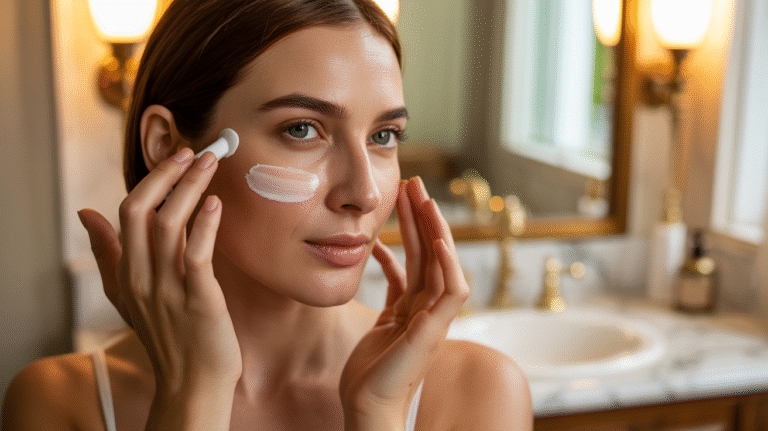
There is a quiet shift happening in how beauty brands communicate with their audiences. It is less about the volume of content: though that matters too: and more about something harder to pin down: the feeling that content was made with intention. That the image of a serum sitting on a marble countertop was considered, that the face you see holding the product belongs to an identity you recognise and trust.
For years, the tension in beauty marketing was between scale and soul. You could have one or the other. Either a small creative team producing beautiful, deliberate work at a pace that could never feed a modern content calendar, or a large-scale operation churning out visual assets that felt interchangeable and hollow.
AI has quietly begun resolving that tension: not by replacing creative people, but by giving them better tools.
The Challenge for Beauty and Skincare Brands
Consumers in the beauty space are perceptive. They have grown up watching an industry move from glossy, unreachable campaigns to a creator-driven world where honesty and consistency carry far more weight than polish alone.
- They notice when a brand’s Instagram looks like it was assembled from three different visual languages.
- They notice when the model changes week to week, or when the product photography shifts in tone from warm and lifestyle-led to cold and clinical without explanation.
Authenticity, it turns out, is partly an exercise in consistency. And consistency at scale has historically required either enormous budgets or significant compromise. This is where creative AI for enterprises like ImagineArt is changing the conversation.
1.AI Influencers
One of the more meaningful developments for beauty brands using AI has been the ability to establish a persistent visual persona and maintain it across hundreds of content pieces. The AI Influencer App within ImagineArt allows brands to create a virtual creator: a consistent face, aesthetic, and visual identity: that functions like an always-on content partner. The persona does not change from one campaign to the next. The lighting sensibility stays coherent. The overall feeling of the content holds.
This matters for smaller beauty brands especially. A brand that cannot afford to retain the same photographer and model for every shoot, and cannot book the same influencer on a monthly retainer, can now build something consistent that feels like it has a genuine creative point of view. The visual identity becomes ownable.
Larger brands are using this capability to run regional or product-specific content streams that maintain coherence with their wider identity without requiring each execution to go back to a central creative team for approval at every step.
2.AI Product Photography
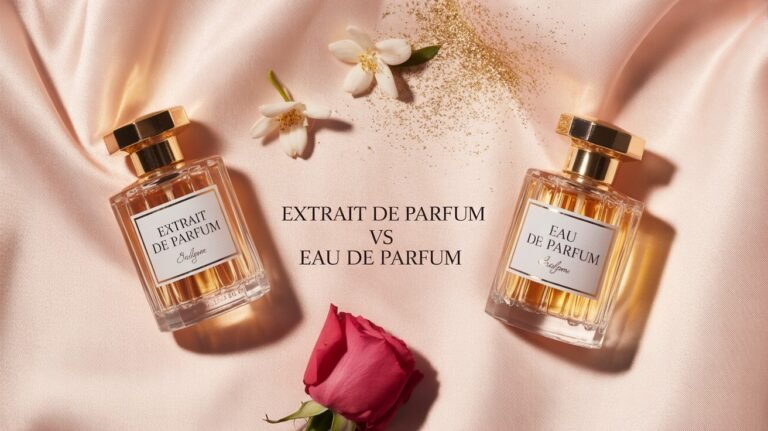
Photography has always been the backbone of beauty content. A cleanser on a white background communicates information. The same cleanser in someone’s bathroom, beside a folded towel and a soft morning light, communicates a feeling.
Translating product catalogue imagery into lifestyle photography used to require dedicated shoots for every SKU, a logistics effort that most brands could only afford for hero products. AI Product Photography, available within ImagineArt, changes what is practical. Ghost mannequin imagery can be converted to on-model presentation. A product photographed in studio conditions can be placed into lifestyle contexts that fit the brand’s visual world.
The Image Iterator capability is particularly useful for teams managing full product ranges. Rather than treating each product as a separate creative problem, brands can run consistent visual treatment across an entire catalogue in a single workflow: preserving coherence while dramatically reducing the time and cost involved. For seasonal launches where fifty or a hundred SKUs need updated imagery, this kind of systematic production is the difference between a realistic plan and an impossible one.
3.Beauty and Skincare Marketing Workflows
The most significant change may be less visible to the final audience but deeply felt by the teams doing the work. ImagineArt Workflows brings a node-based canvas to AI creative production, with more than fifty AI nodes available for chaining into automated pipelines. A beauty brand’s creative team can sequence image generation, editing, video output, audio, and resizing into a single run.
What this removes is the constant handoff. The friction of moving between tools, the versioning problems that arise when files pass through multiple hands, the hours spent on reformatting assets for different platforms. A campaign that might have taken a production team two weeks of back-and-forth coordination can be structured as a repeatable pipeline that executes in a fraction of that time: and can be run again with variations for the next campaign without rebuilding from scratch.
For brands producing content across multiple channels simultaneously: social, retail partners, email, digital advertising: this kind of end-to-end automation is becoming essential rather than aspirational.
4.Commercially-Safe Outputs
Any conversation about AI-generated content in beauty eventually arrives at the question of governance.
- Who decides what goes out?
- How does a brand ensure that the AI-produced content actually represents it?
- What happens about diversity: in tone, in values, in the way it depicts people?
These are serious questions, and the answer cannot simply be “move fast and see what happens.”
ImagineArt Enterprise carries SOC 2 compliance, which means data handling meets established security standards: a genuine requirement for enterprise beauty groups managing proprietary visual assets and campaign strategy. Brand governance tools allow teams to set parameters and maintain oversight across distributed creative operations, so local teams and agency partners are working within defined boundaries rather than improvising.
5.AI Beauty and Fashion Studio
The needs of fashion and beauty visual content are genuinely specific. Texture, skin tone rendering, fabric behaviour, the way light moves across a product: these are not generic creative challenges. They require an AI beauty content tool with this logic and realism.
ImagineArt is a dedicated production environment for skincare and beauty content generation. Brands looking for enterprise-level solutions are scaling their content generation to outperform customers, especially in the B2C and D2C spaces.
What Authenticity Actually Requires
It is worth saying plainly: AI does not manufacture authenticity. It cannot decide what a brand believes, or what relationship it wants with the people who use its products. Those decisions still belong entirely to human beings.
What AI creative tools do: when they are well-built and thoughtfully used: is remove the friction between intention and execution. When a brand knows what it wants to say, and how it wants to look, the gap between that vision and a finished piece of content has narrowed considerably.
The beauty brands finding genuine success with AI-assisted production are the ones treating it as a creative infrastructure choice rather than a content shortcut. They are setting up systems that carry their values forward consistently, building visual identities that hold across platforms and campaigns, and freeing their human creative teams to focus on the decisions that require genuine taste and judgement.