How to Get a Smaller Forehead: From Surgery to Makeup


Have you ever looked in the mirror and thought of if your forehead could look more balanced with the rest of your face? You’re not alone.
Many people notice a high or wide forehead and want simple ways to improve facial harmony.
In this blog, I’ll share both professional and at-home approaches, from surgical procedures like hairline lowering to non-surgical tricks with hair, makeup, and accessories.
I’ll also let you know recovery tips, real-life experiences, and ways to maintain results.
If you’re curious about how to get a smaller forehead, this guide will walk you through everything you need to know.
Let’s get started.
Understanding Forehead Size and Facial Proportions
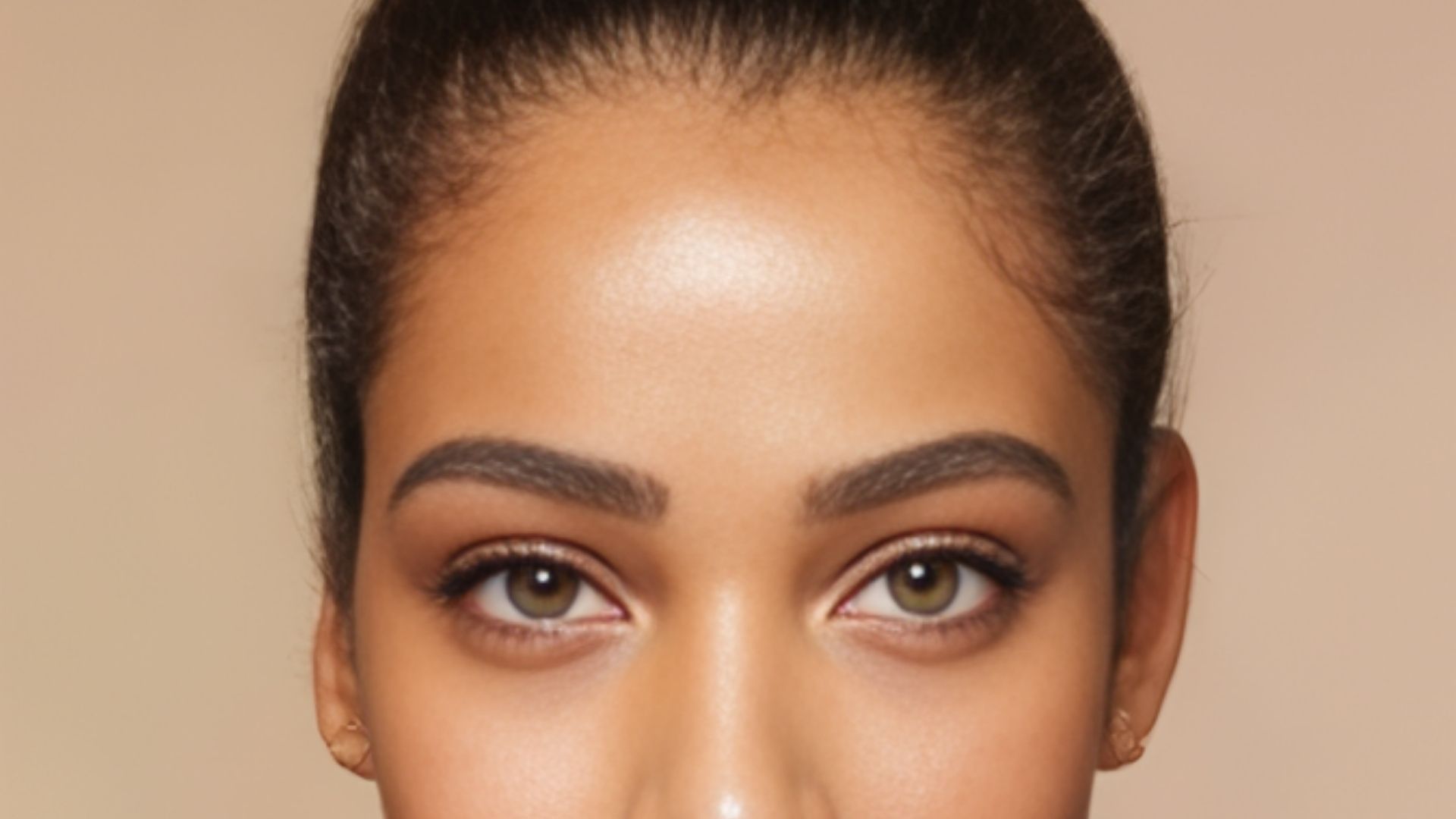
The forehead affects facial balance. A tall or wide forehead can make other features look smaller.
Forehead size can be measured using the three-finger rule: place three fingers vertically from the top of your eyebrows to the hairline. If it is taller than three fingers, it is considered high.
People often think about how to get a smaller forehead naturally, which can include hairstyles or makeup in addition to professional solutions.
Forehead size is influenced by genetics, age, and hairline recession. Hair thinning or a receding hairline can make the forehead appear larger.
Cosmetic solutions may be used if the forehead looks disproportionate. Options include hairstyle changes, makeup tricks, or surgical procedures.
A professional consultation determines the best approach.
How to Get a Smaller Forehead: Surgical Options
Surgical procedures are the most effective way to permanently reduce forehead size. These options involve modifying the hairline or bone structure to create better facial balance.
1. Forehead Reduction Surgery (Hairline Advancement)
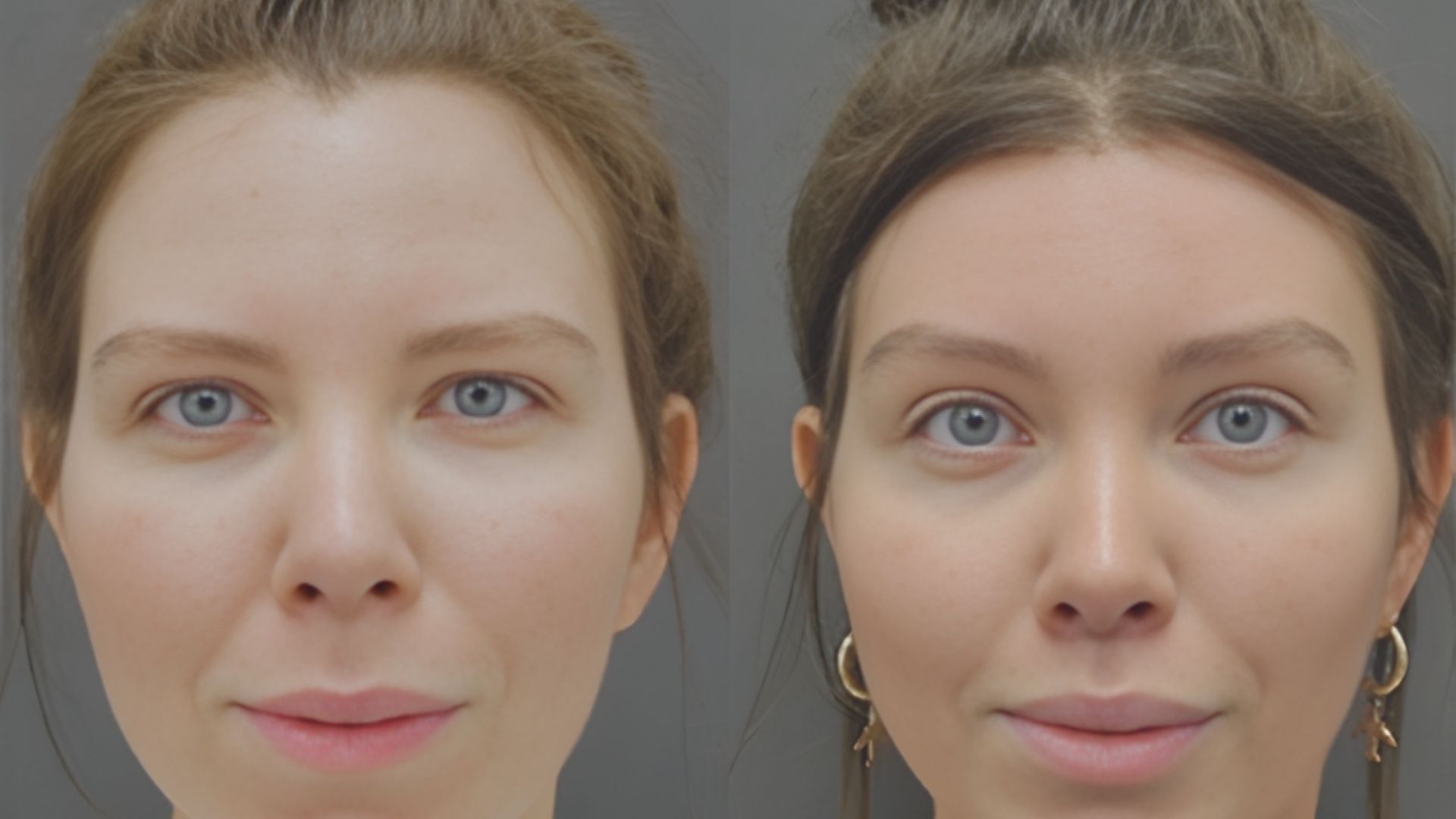
Forehead reduction surgery removes a strip of skin along the hairline and moves the scalp forward.
It typically reduces forehead height by 2-3 cm. Ideal candidates are adults with a high forehead and good health.
Recovery takes one to two weeks, with full results in a few months. Risks include scarring, temporary numbness, and infection.
2. Hairline Lowering Surgery
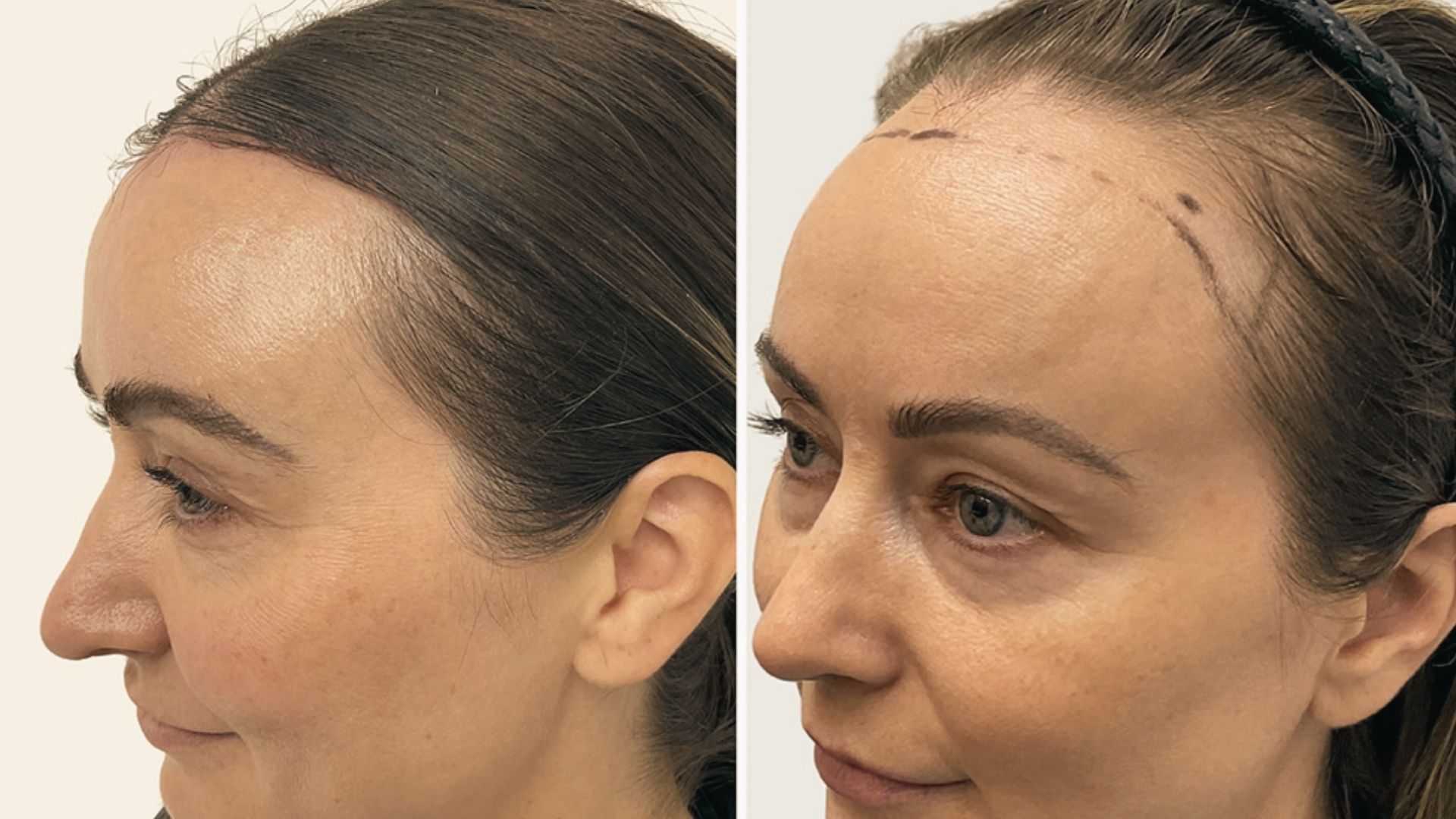
Hairline lowering surgery advances the hairline to shorten the visible forehead without removing skin.
It improves facial proportion and balance. Recovery usually involves mild swelling and one to two weeks of downtime.
Results are permanent but limited by scalp elasticity and hairline shape. This procedure is best for those with a naturally high hairline.
3. Brow Bone Reduction / Contouring
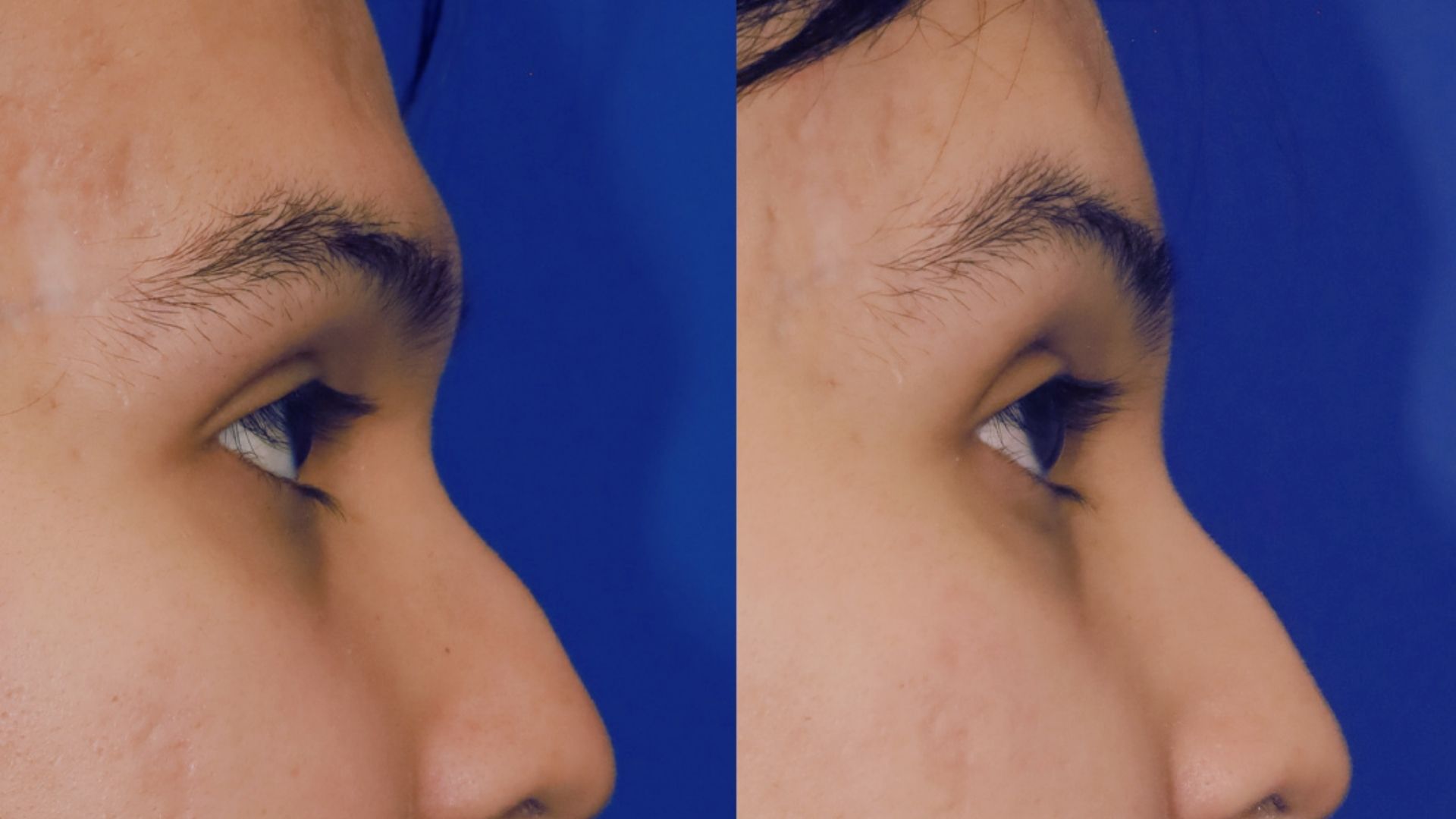
Brow bone reduction reshapes the forehead for individuals with a prominent brow ridge. It
smooths the forehead contour and can be combined with hairline lowering for optimal results.
Recovery includes temporary swelling and bruising. Risks include numbness or minor contour irregularities.
This procedure permanently improves facial harmony and balances forehead proportions.
How to Get a Smaller Forehead Without Surgery
Non-surgical options reduce the appearance of a high or wide forehead and improve facial proportions without surgery.
1. Hair Transplants
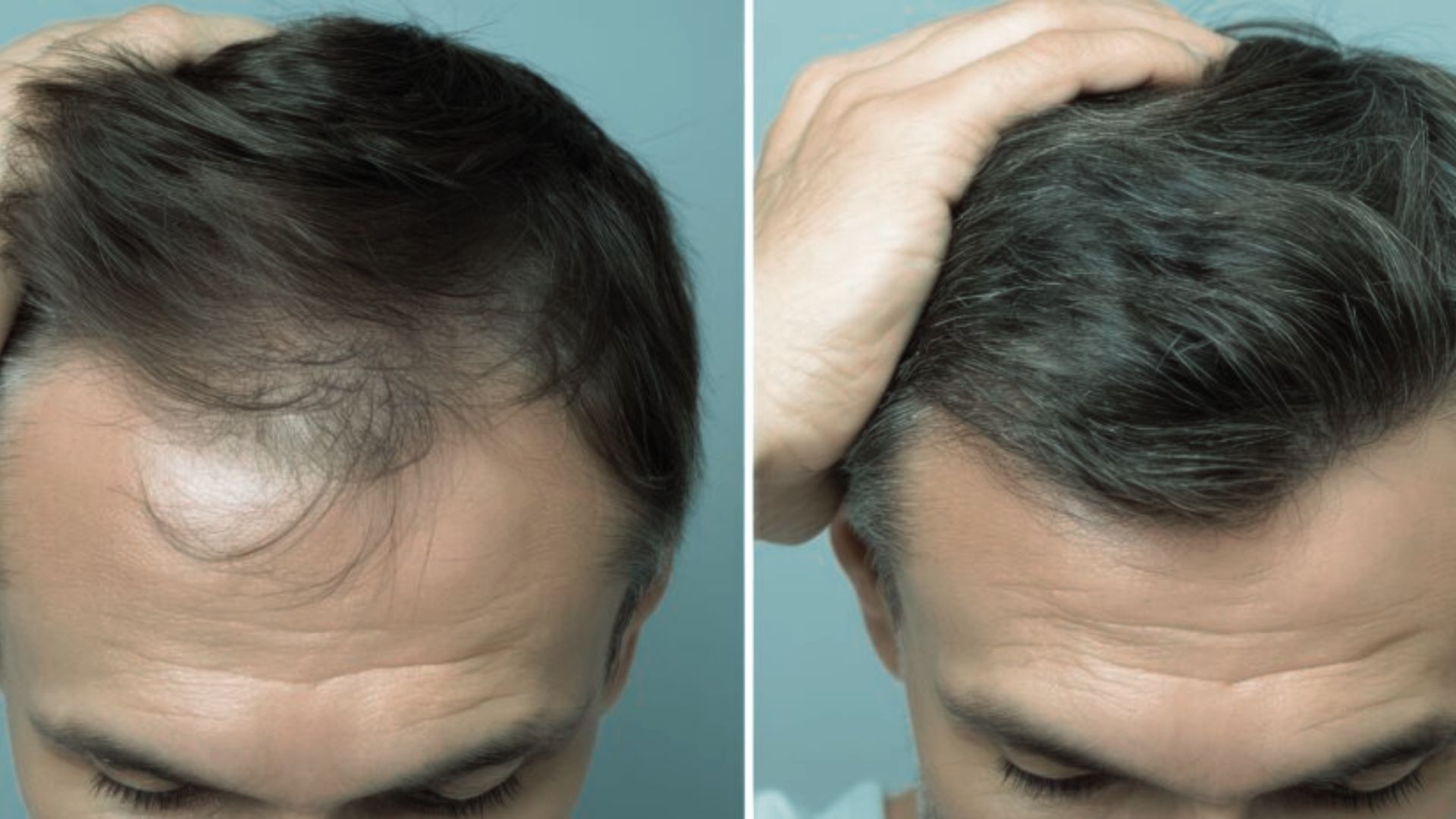
Hair transplants can lower a high forehead or fill in a receding hairline by moving hair follicles to the front scalp.
The procedure involves harvesting healthy follicles and implanting them along the hairline. Results are natural-looking and permanent once the transplanted hair grows fully.
It is best suited for individuals with hairline thinning or naturally high foreheads seeking lasting improvement.
2. Fillers or Fat Grafting
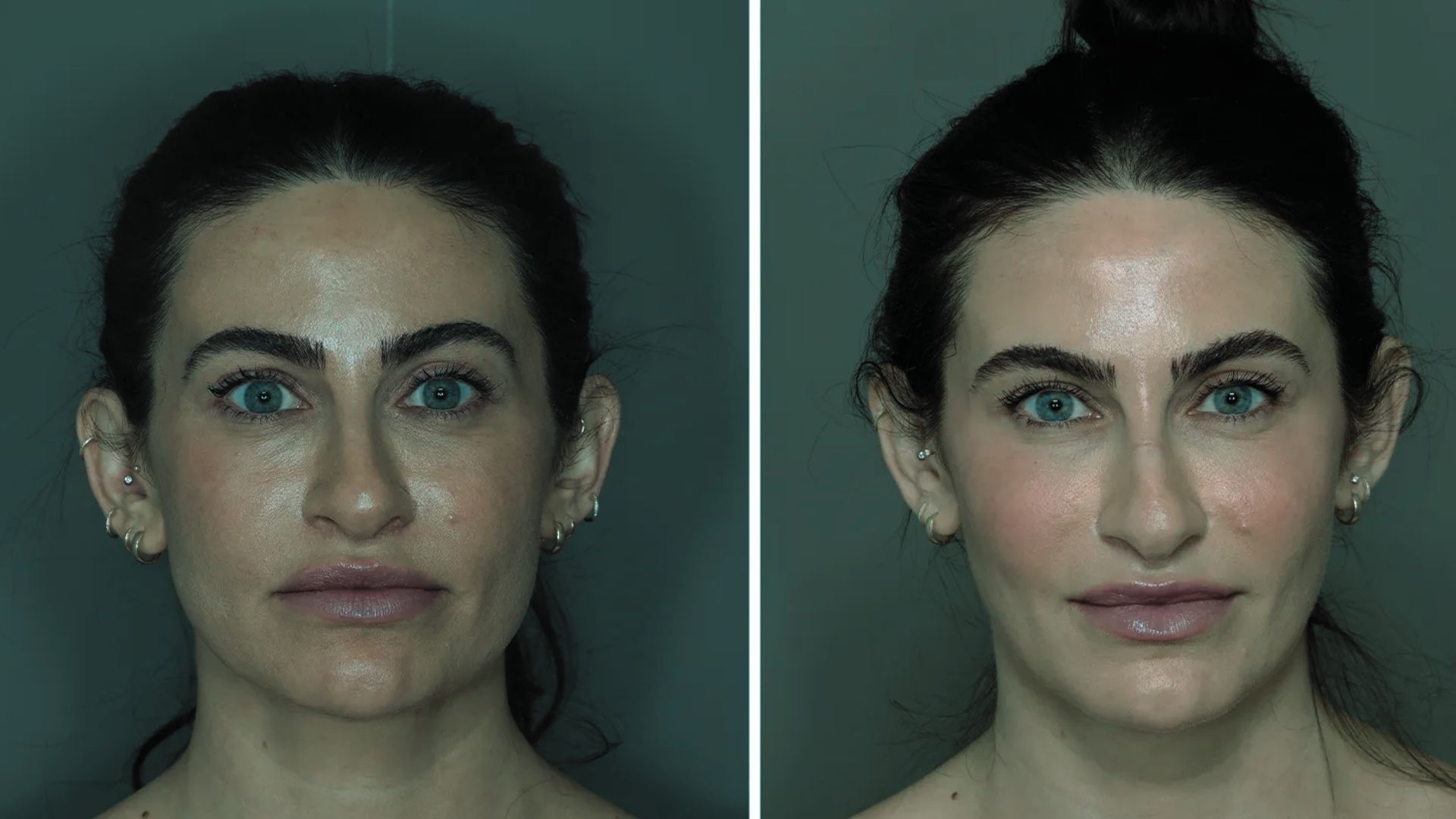
Fillers or fat grafting create subtle forehead contouring to improve proportion. The procedure involves injecting dermal fillers or transferring fat to specific areas of the forehead.
Fillers provide temporary results, lasting several months, while fat grafting can offer longer-lasting outcomes.
This method is suitable for people seeking minor adjustments without surgery, especially when the forehead height is only slightly disproportionate.
3. Other Minimally Invasive Tricks
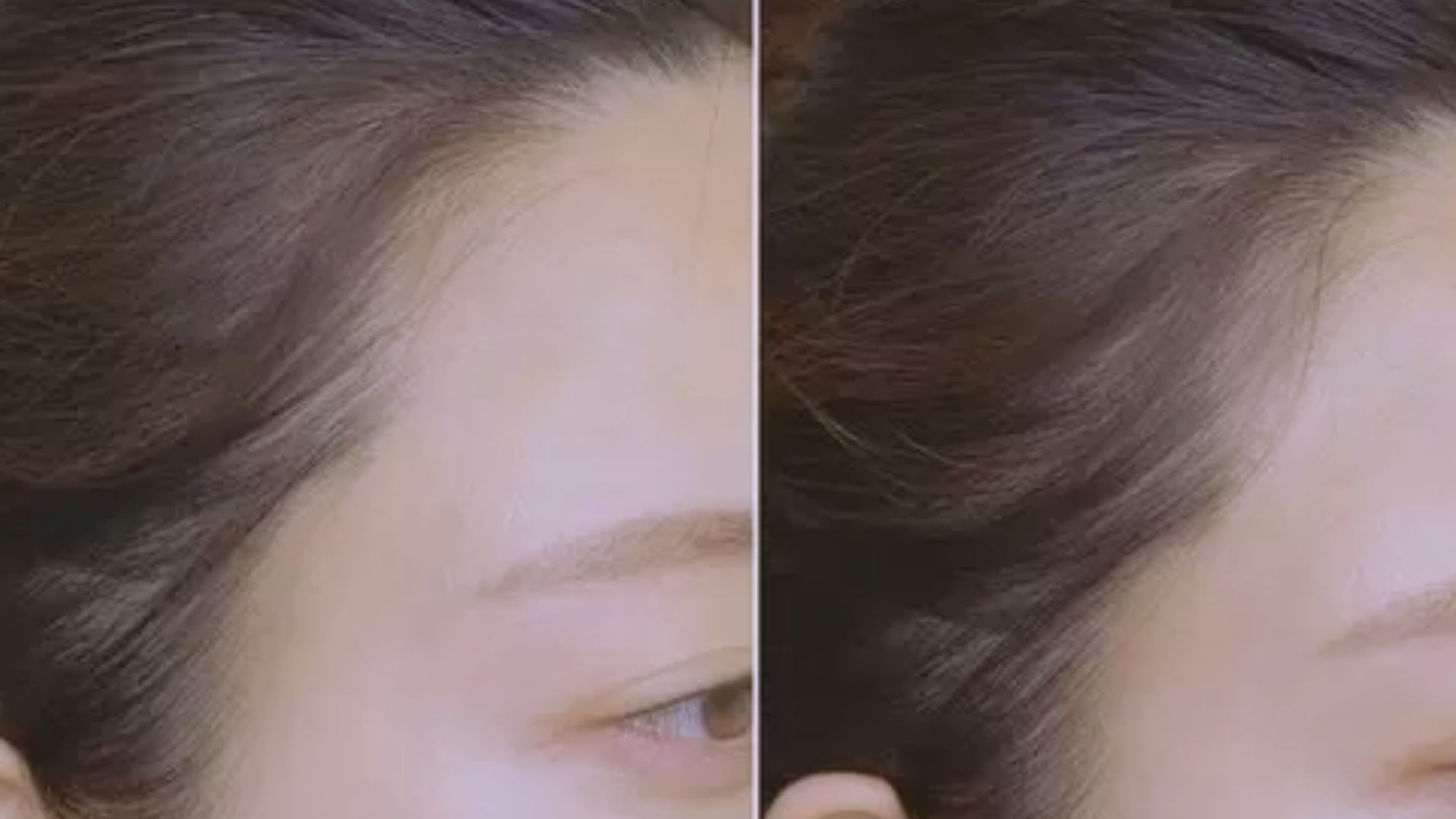
Temporary methods include hairline shading with makeup, microblading, or cosmetic injections
like Botox to adjust forehead contours.
These techniques require regular maintenance but offer a non-invasive way to improve balance.
While not permanent, they are quick, low-risk options for those who prefer minimal intervention over surgical procedures.
How to Get a Smaller Forehead: Cosmetic Tricks
You don’t always need surgery to make your forehead appear smaller. Simple cosmetic tricks using hair, makeup, and accessories can create immediate visual balance.
Hairstyles: Choosing the right hairstyle can make a forehead appear smaller. Bangs, side-swept layers, and face-framing volume help cover or balance a high forehead.
Makeup: Contouring along the hairline and using hairline powders can create the illusion of a lower forehead. Blending properly ensures a natural look.
Accessories: Headbands, scarves, and hats can visually shorten the forehead and draw attention to other facial features.
Daily maintenance: Taming baby hairs and using volumizing techniques at the sides of the face can enhance forehead proportions and maintain the hairstyle’s effect.
Recovery and Aftercare For Both Surgical & Non-Surgical
Recovery and aftercare are essential for safe results. Proper care helps reduce complications and ensures effectiveness.
| Feature | Surgical | Non-Surgical |
|---|---|---|
| Post-procedure care | Keep your forehead clean, avoid pressure, follow the surgeon’s instructions. | Keep the area clean, avoid rubbing, and follow specialist’s instructions. |
| Swelling/bruising/results | Swelling and bruising 1-2 weeks, full results in months. | Minor redness or swelling for hours to days, results often immediate. |
| Common complications | Infection, scarring, numbness, asymmetry. | Redness, temporary irritation, uneven contour. |
| Maximizing results | Follow instructions, avoid strenuous activity, attend follow-ups. | Follow instructions, maintain hairline or contour, avoid pressure. |
Cost, Risks, and Choosing a Right Surgeon
Knowing the cost, risks, and how to choose the right surgeon is essential before any forehead procedure. Being informed helps you make safe and effective decisions.
Costs: Forehead reduction or hairline lowering surgery in the USA usually ranges from $5,000 to $15,000. Non-surgical options like fillers or hairline shading are less expensive and vary by clinic.
Assessing a Surgeon: Check for board certification, experience with forehead procedures, and patient reviews. Ensure the surgeon has performed similar procedures successfully.
Questions to Ask: Ask about procedure steps, recovery time, risks, and expected results. Clarify any concerns about scarring, numbness, or limitations.
Expectations: Results improve forehead proportions but depend on anatomy and procedure type. Set realistic goals to avoid disappointment.
Real-Life Success Stories on Getting Smaller Forehead
Real experiences from Reddit users show how both surgical and non-surgical methods can effectively reduce the appearance of a high forehead.
One Reddit user who followed surgery:
This user lowered their high forehead using about 3,000 hair grafts to advance the hairline. They were pleased with the results, noting visible improvement after recovery despite some swelling and scabbing.
One Reddit user who followed non-surgical methods:
This user used hairstyle changes and makeup techniques, including hairline shading and adding volume, to make their forehead appear smaller while considering long-term options.
Conclusion
After searching about both surgical and non-surgical options, I’ve learned that achieving a forehead that feels balanced and natural is possible for everyone.
Whether you choose hairline lowering surgery, fillers or any approach,personal comfort, realistic expectations, and professional guidance make all the difference.
If you are thinking how to get a smaller forehead, taking the right steps ensures results that boost confidence and facial harmony.
If you found these tips helpful, share your experience or leave a comment to help others learn about forehead reduction options.
Frequently Asked Questions
Are There any Age Restrictions for Surgery?
Forehead reduction and hairline lowering are recommended for adults over 18, when facial growth is complete. Younger patients should wait until growth is finished.
Is Forehead Reduction Painful?
The procedure is done under anesthesia, so there is no pain during surgery. Mild soreness or swelling is normal during recovery and can be managed with medication.
Minor vs. Major Adjustments: Which Option is Right?
Subtle changes can be done with fillers, hairline shading, or makeup. Significant size reduction or structural changes require surgery or brow bone contouring.
Can Botox Make My Forehead Look Smaller?
Botox cannot permanently reduce forehead size. It relaxes muscles and can slightly adjust the brow position, creating the appearance of a smaller forehead.
Is Hairline Lowering Surgery Painful?
Hairline lowering surgery is performed under anesthesia. Mild swelling and discomfort may occur during recovery but usually resolve in 1-2 weeks.