Spray Tan Vs. Self Tan: Pros, Cons & Tips

I’ve tested both spray tans and self-tanners over the years, and I know how confusing it can be to choose.
This guide breaks down spray tan vs self tan so you can pick what works best for you. You’ll learn what each method involves, how much they cost, and which one fits your lifestyle.
I’ll cover the pros and cons of both options, plus share tips for getting that flawless glow at home or in the salon.
With my experience in trying different tanning methods, I’ll help you avoid common mistakes and get the results you actually want.
Let’s get started.
What is a Spray Tan?
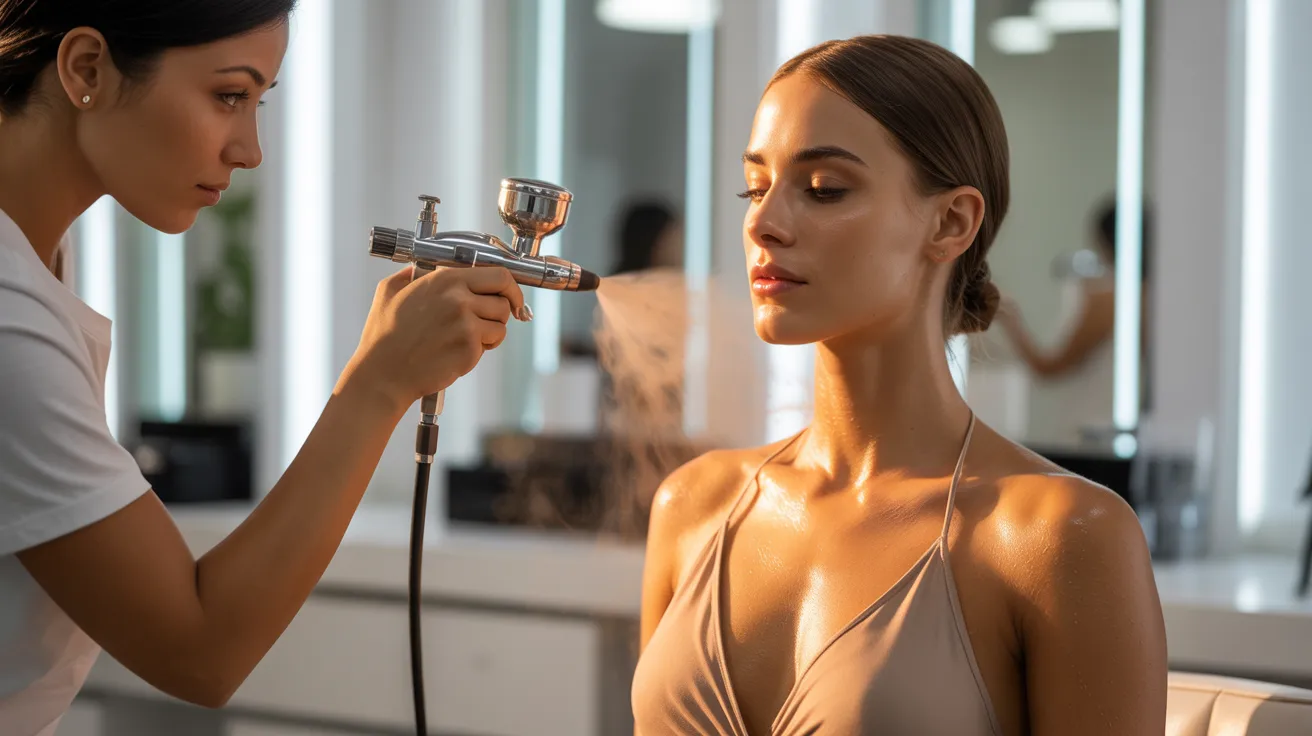
A spray tan gives you color without UV exposure. A technician applies a special solution to your skin using an airbrush or booth.
The formula contains DHA, which reacts with amino acids on your skin’s surface. You’ll see a color guide right away, but the full tan shows up within 24 hours.
Definition and How It Works
Professional spray tans use a UV-free solution applied by a trained technician. The process involves either an airbrush or an automated booth.
DHA (dihydroxyacetone) is the active ingredient that reacts with the amino acids in your skin. You get an immediate color guide that shows where the product was applied.
The complete tan develops over the next 24 hours as the chemical reaction finishes.
Application Methods
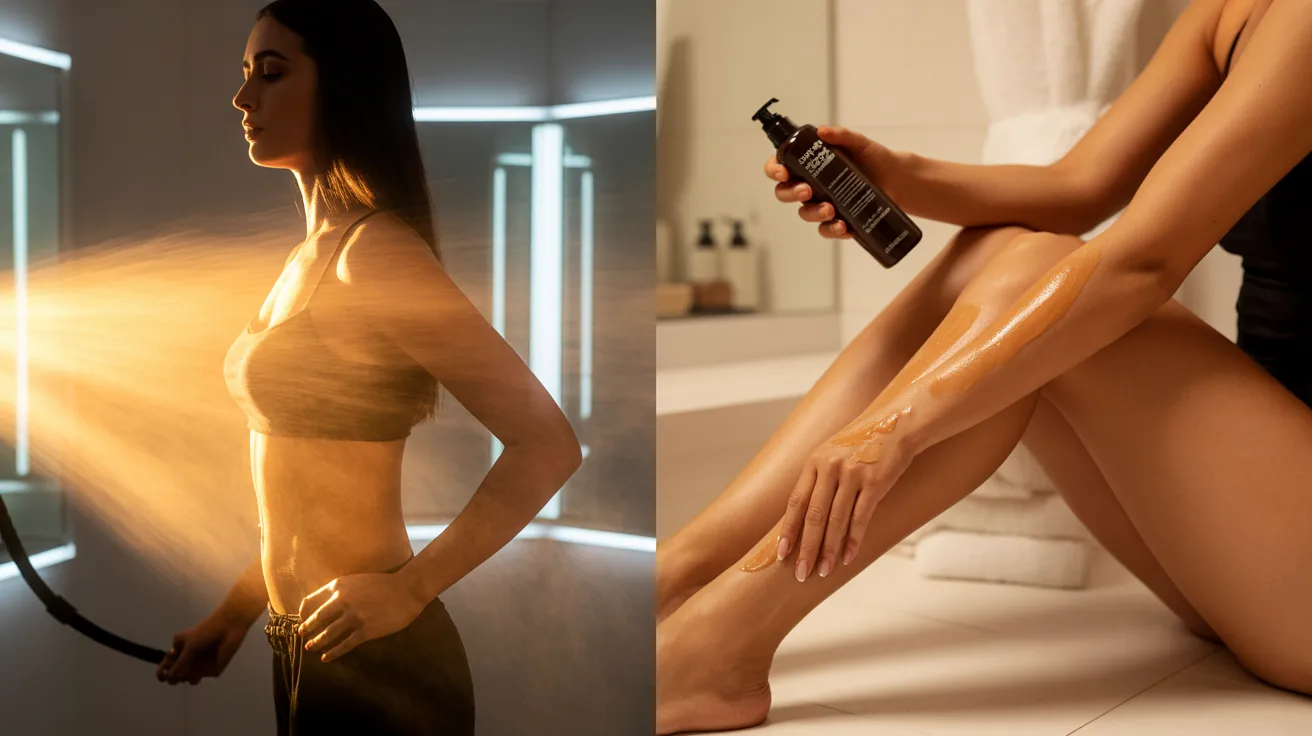
Airbrush Tanning: A technician manually sprays the solution on your body. This method offers precision and control. The technician can adjust coverage for different areas. You get customized results based on your skin tone.
Spray Tan Booth: Automated jets spray the solution while you stand in specific positions. This method is faster than airbrush application. However, it offers less customization. The results depend on how well you position yourself.
Duration and Maintenance
A spray tan typically lasts 5 to 7 days with proper care. You need to exfoliate before your appointment for best results.
After getting sprayed, avoid water and sweat for several hours. Skip tight clothing that might rub the tan off. Moisturize daily to help the color last longer.
What is a Self-Tanner?

Self-tanner is a product you apply at home for a sun-kissed look. These come as lotions, mousses, drops, or sprays.
Like spray tans, they use DHA to create color. The difference is you control the application yourself. You can build up the color gradually over several days.
Definition and How It Works
At-home self-tanners are UV-free products you apply yourself. They come in various forms including lotions, mousses, drops, and sprays.
The DHA-based formula works the same way as professional spray tans. Your skin develops a golden color over several hours after application.
You can layer applications to build deeper color over time.
Application Methods
Lotions and Mousses: These hydrating formulas are easy to spread on skin. They blend well when applied with a tanning mitt. Poor prep can lead to streaks or patches. Exfoliation before use is key.
Sprays and Mists: These work well for reaching your back and other hard spots. You need careful technique to avoid over-spraying areas. They dry quickly but require practice for even coverage.
Duration and Maintenance
Self-tanner lasts 5 to 7 days on average. The exact time depends on how well you exfoliate and hydrate. Better quality products tend to last longer.
You can easily reapply to maintain or deepen the color. Some advanced formulas can last up to 9 days.
Spray Tan vs Self Tan: Quick Comparison
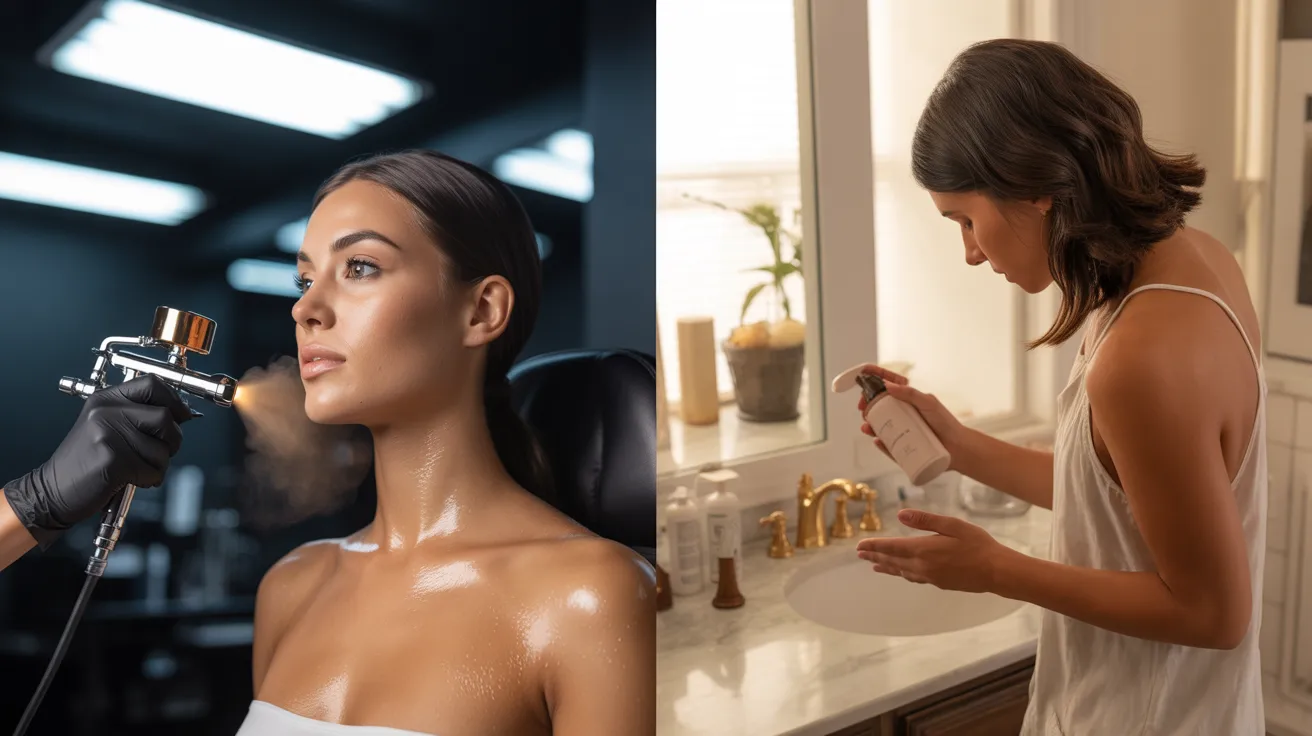
Here is a comparison table between Spray Tan and Self Tanner:
| Feature | Spray Tan | Self-Tanner |
| Cost | $50–$100 per session | $20–$50 per bottle |
| Convenience | Requires salon visit | Apply anytime at home |
| Results | Professional, even finish | DIY results; can match salon look with prep |
| Longevity | 5–7 days | 5–7 days (up to 9 with advanced products) |
| Customization | Technician adjusts shades | Buildable coverage at home |
| Safety | UV-free, generally safe | UV-free, generally safe |
Pros and Cons of Spray Tan and Self-Tanner
Both options can give you a natural glow, choose based on your budget, convenience, and control.
Spray Tan Pros
- Professional application means you get even, polished results every time.
- The technician knows how to avoid streaks and patches.
- They can customize the shade to match your skin tone perfectly.
- You see an immediate color guide that shows how your tan will look. This takes the guesswork out of the process.
Spray Tan Cons
- Each session costs between $50 and $100, which adds up over time.
- You need to book appointments and travel to the salon.
- After getting sprayed, you face restrictions for several hours.
- No water, no sweating, no tight clothes allowed. This can be inconvenient if you have plans right after.
Self-Tanner Pros
- One bottle gives you multiple applications for the price of one spray tan session.
- You can apply it whenever you want without scheduling appointments.
- You control exactly how dark you want to go by layering applications.
- This flexibility fits any schedule or budget.
- The convenience of home use is hard to beat.
Self-Tanner Cons
- Getting an even application takes practice and patience at first.
- You might see streaks or uneven patches if you skip proper skin prep.
- Some products have a strong odor that lingers for hours.
- Building up to your desired color depth may require several applications over days.
Tips for a Flawless Tan
- Exfoliate 24 hours before tanning. Focus on knees, elbows, and ankles for even color.
- Moisturize dry spots lightly before applying. This stops hands, feet, and elbows from getting too dark.
- Use a tanning mitt to avoid orange palms. Blend in circles and work from bottom to top.
- Wait before showering. Give spray tans 8-12 hours and self-tanners 4-6 hours to set properly.
- Moisturize daily with oil-free lotion. This keeps your tan looking fresh and prevents patchy fading.
Choosing the Right Option for You
Your budget and lifestyle help you decide between spray tan and self-tanner. Self-tanner works best if you want regular tanning on a budget.
You like controlling the process at home and don’t mind applying it yourself. Spray tan works best if you have a special event coming up.
You want fast, professional results and prefer letting an expert handle it. Both methods give great results. Pick what fits your needs.
Conclusion
I’ve tried both methods, and honestly, they each have their place. For my weekly glow, I stick with self-tanner at home. But for big events, I treat myself to a spray tan.
Now you know the real differences between spray tan vs self tan and can make the best choice for your needs. Think about your budget and schedule.
Try one method and see how it feels. You might find you love the convenience of home tanning or prefer the salon experience.
Drop a comment below and tell me which option you’re leaning toward!
Frequently Asked Questions
How long does a spray tan last compared to self-tanner?
Both spray tans and self-tanners last about 5 to 7 days on average. Advanced self-tanner formulas can last up to 9 days with proper care and moisturizing.
Can I shower after applying self-tanner?
Wait at least 4 to 6 hours before showering after applying self-tanner. For spray tans, you should wait 8 to 12 hours to let the color fully develop.
Is spray tan worth the extra cost?
Spray tans are worth it for special events or if you want guaranteed professional results. For regular tanning, self-tanner is more cost-effective over time.
Do spray tans and self-tanners stain clothes?
Both can stain clothes if not fully dry. Wear loose, dark clothing after application and wait until the product is completely absorbed before dressing normally.
Which is better for beginners?
Self-tanner is better for beginners because you can practice at home and build color gradually. Spray tans require less skill but cost more per session.