Ultrasonic Rhinoplasty vs. Traditional Rhinoplasty: What Patients Need to Know

Rhinoplasty is one of the most popular cosmetic procedures in the United States. It is also one of the most technically demanding. Every small adjustment to bone or cartilage affects how the nose looks and how well it functions. That means the tools a surgeon uses matter just as much as the surgeon’s skill and experience.
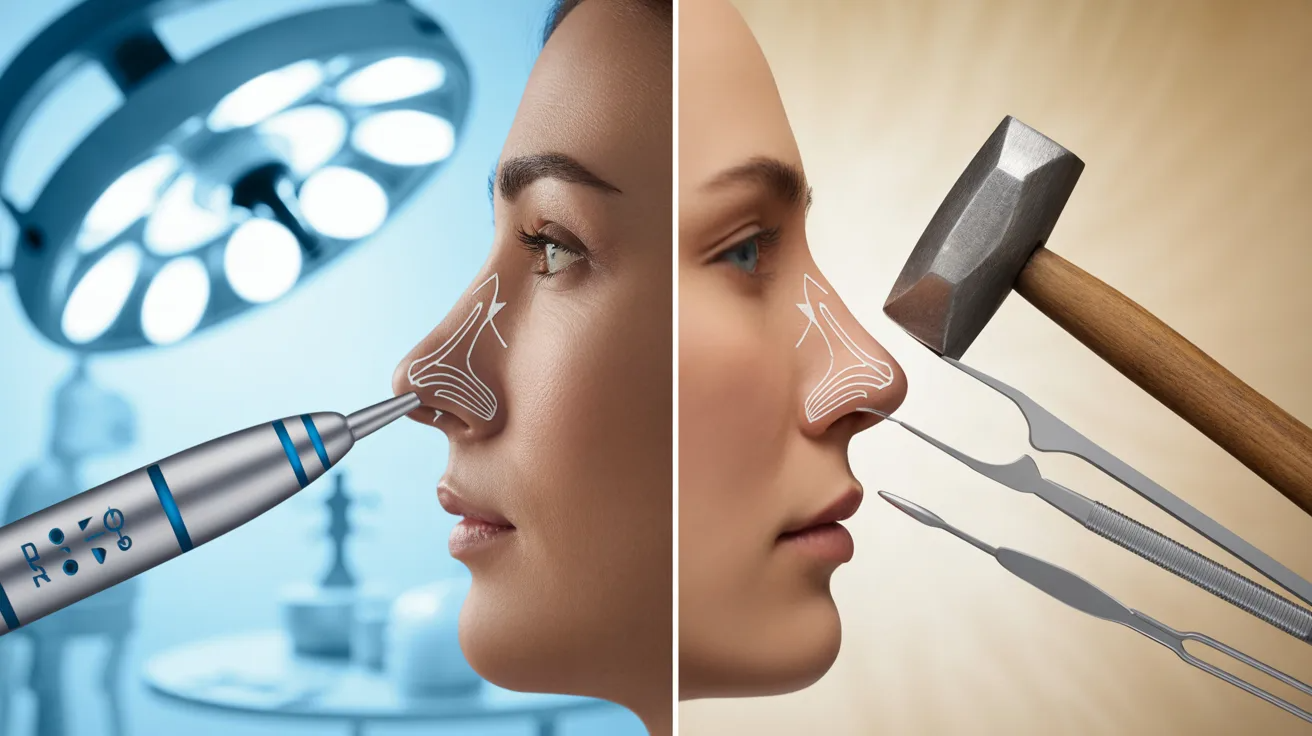
Over the past several years, a newer approach called ultrasonic rhinoplasty has entered the conversation. It uses specialized instruments powered by high-frequency sound waves to reshape nasal bone with extreme precision. Traditional rhinoplasty, on the other hand, relies on manual tools like chisels, osteotomes, and rasps that surgeons have used for decades.
Both methods can produce excellent results. But they work differently, recover differently, and serve different purposes depending on the patient’s anatomy and goals. This guide breaks down the key differences between ultrasonic rhinoplasty and traditional rhinoplasty so you can have a more informed conversation with your surgeon.
How Traditional Rhinoplasty Works
Traditional rhinoplasty has been the standard approach to nose reshaping for generations. It remains the most widely performed method in the United States, and most board-certified plastic surgeons are trained extensively in these techniques.
“Traditional rhinoplasty techniques have stood the test of time for a reason,” says Long Island rhinoplasty surgeon, Dr. Ari Hoschander. “The tools may not be as flashy as newer technology, but in experienced hands, they give surgeons the control and versatility to handle virtually any nasal concern. What matters most is not which instrument is on the tray. It is the surgeon’s ability to assess each patient’s anatomy and make precise adjustments that produce a natural, balanced result.”
The Surgical Process
During traditional rhinoplasty, the surgeon reshapes the nose by manually adjusting bone, cartilage, and soft tissue. When changes to the nasal bones are needed, the surgeon uses instruments like chisels and osteotomes to cut or fracture the bone in a controlled way. Rasps are used to smooth and contour bony surfaces.
The procedure can be performed through either an open or closed approach. Open rhinoplasty involves a small incision across the columella (the strip of tissue between the nostrils) to give the surgeon direct access to the internal structure. Closed rhinoplasty uses incisions entirely inside the nostrils, which avoids any visible external scarring.
What Traditional Rhinoplasty Can Address
Traditional rhinoplasty is a versatile procedure. It can handle a wide range of cosmetic and functional concerns, including the following.
- Dorsal humps: A prominent bump on the bridge of the nose can be shaved down or restructured for a smoother profile.
- Bulbous or wide nasal tips: Cartilage reshaping and suture techniques can refine the tip for a more defined appearance.
- Deviated septums: Straightening the internal septum can improve airflow and correct a crooked nose at the same time.
- Nasal asymmetry: Bone and cartilage adjustments on both sides of the nose can restore balance and proportion.
- Breathing problems: Structural corrections to the septum, nasal valves, or turbinates can open up the airway significantly.
Since traditional rhinoplasty addresses both bone and cartilage, it remains the go-to method for complex cases, major structural changes, and revision procedures. It is a proven approach with a long track record of safe and predictable outcomes.
How Ultrasonic Rhinoplasty Works
Ultrasonic rhinoplasty (also called piezoelectric rhinoplasty or piezosurgery) uses a specialized device that delivers high-frequency ultrasonic vibrations to cut and sculpt nasal bone. The technology was originally developed for dental and orthopedic surgery before being adapted for use in nasal procedures. The FDA approved the piezoelectric device for rhinoplasty use in November 2017.
The piezoelectric device has given surgeons another level of control when it comes to bone work,” notes the Rhinoplasty Center of Long Island plastic surgeon. “It allows us to sculpt bone with a degree of accuracy that traditional instruments simply cannot replicate. For patients who need significant reshaping of the nasal bridge or bony framework, it can make a real difference in both precision and recovery.
The Piezoelectric Device
The key instrument in ultrasonic rhinoplasty is the piezotome. It works by converting electrical energy into ultrasonic microvibrations that oscillate at frequencies between 25,000 and 30,000 Hz. These vibrations are strong enough to cut through bone but gentle enough to leave surrounding soft tissue, blood vessels, and nerves completely unharmed.
This tissue selectivity is the defining advantage of the technology. Traditional chisels and osteotomes do not distinguish between bone and soft tissue, which means there is always some degree of collateral disruption during manual bone work. The piezoelectric device eliminates that risk by only affecting hard structures.
What Makes It Different From Traditional Tools
The biggest difference between ultrasonic and traditional rhinoplasty comes down to how bone is reshaped. Here is how the two methods compare on a practical level.
- Cutting mechanism: Traditional tools use manual force to fracture or shave bone. The piezotome uses controlled vibrations to sculpt bone at a cellular level without fracturing it.
- Precision: The ultrasonic device allows surgeons to remove or reshape bone millimeter by millimeter. Traditional instruments offer less granular control, especially during osteotomies (controlled bone cuts).
- Soft tissue impact: Piezoelectric vibrations only affect bone, which means blood vessels, nerves, and cartilage in the surrounding area are left intact. Traditional tools can inadvertently damage these structures.
- Visibility: Many surgeons report that the piezoelectric device allows them to perform osteotomies under direct vision, giving them a clearer view of exactly where and how much bone is being removed.
These differences add up to a meaningfully different experience during the bone-reshaping portion of surgery. That said, it is important to note that ultrasonic technology only applies to bone work. Cartilage reshaping, tip refinement, and soft tissue adjustments are still performed using the same techniques as traditional rhinoplasty.
Recovery: Ultrasonic vs. Traditional
Recovery is one of the areas where patients notice the most significant differences between these two approaches. Multiple published studies have compared the two, and the research generally favors ultrasonic rhinoplasty for early recovery outcomes.
What the Research Shows
A systematic review and meta-analysis published in JAMA Facial Plastic Surgery examined outcomes across multiple clinical trials comparing piezoelectric and conventional osteotomy in rhinoplasty. The findings showed that piezoelectric osteotomy was associated with significantly less swelling, bruising, mucosal injury, and pain during the first week after surgery. There was no meaningful difference in osteotomy duration or total procedure time between the two methods.
A separate study published in the QJM: An International Journal of Medicine confirmed these findings. Researchers compared piezoelectric and conventional osteotomy on opposite sides of the same patients’ noses. The piezoelectric side showed less pain, less bruising, and finer, more precise fracture lines on CT imaging.
One nuance worth noting: a prospective cohort study of 31 rhinoplasty patients found that the piezoelectric side actually produced slightly more swelling, while the traditional osteotome side produced more bruising. Both side effects resolved during recovery, but the finding highlights that the two methods have distinct healing profiles rather than one being universally “better” across every measure.
What Patients Can Expect
In general, patients who undergo ultrasonic rhinoplasty tend to experience the following during recovery.
- Less bruising: Since the piezoelectric device avoids damage to blood vessels, the classic “black eye” effect is often reduced or absent entirely.
- Reduced swelling in the first week: Early swelling tends to resolve faster, which means patients look presentable sooner after surgery.
- Less postoperative pain: Multiple studies report lower pain scores in the first seven days compared to traditional osteotomy.
- Faster return to daily activities: Many patients resume work and social commitments within 7 to 10 days, compared to 2 to 3 weeks with traditional methods.
It is worth remembering that all rhinoplasty involves some degree of swelling and recovery time. The full refinement of results can still take up to 12 months regardless of which technique is used. Ultrasonic rhinoplasty does not eliminate recovery. It can shorten and ease the early stages.
When Traditional Rhinoplasty May Be the Better Choice
Ultrasonic rhinoplasty has clear advantages for bone work. But it is not always the right tool for every patient or every surgical plan.
Cases That Favor Traditional Methods
There are several scenarios where traditional rhinoplasty may be more appropriate or even necessary.
- Cartilage-only procedures: If a patient’s surgical plan does not involve bone reshaping, the piezoelectric device has no role to play. Tip refinement, cartilage grafting, and septoplasty are all done with standard techniques regardless of approach.
- Major structural reconstruction: Patients who need significant changes to the overall framework of the nose may benefit from the versatility of traditional instruments, especially in complex revision cases.
- Closed rhinoplasty preference: While newer research shows that piezoelectric instruments can be adapted for closed rhinoplasty, the technology was originally designed for open procedures where the surgeon has direct visual access to the bone. Some surgeons still prefer traditional tools for closed cases.
- Surgeon experience: The piezoelectric device requires specialized training. A highly experienced traditional rhinoplasty surgeon with decades of excellent results may produce better outcomes than a less experienced surgeon using ultrasonic technology.
The most important factor in any rhinoplasty outcome is still the surgeon’s skill, judgment, and experience. Technology is a tool, not a substitute for expertise.
A Common Misconception About Ultrasonic Rhinoplasty
One thing that often gets lost in the conversation is that “ultrasonic rhinoplasty” is not an entirely separate procedure. It is a technique used during one specific portion of rhinoplasty: the bone work.
A primary rhinoplasty typically takes two to three hours to perform. The piezotome may be used for 10 to 15 minutes of that time, specifically during osteotomies or dorsal bone contouring. The rest of the surgery still involves the same cartilage work, tip sculpting, and structural adjustments that define any rhinoplasty.
Some marketing language can make it sound like ultrasonic rhinoplasty is a completely different, less invasive surgery. That is not accurate. It is a valuable advancement in how bone is handled during rhinoplasty, but it does not change the fundamental nature of the procedure. Patients should be cautious about practices that oversell the technology as a shortcut or a painless alternative to traditional nose surgery.
How to Decide Which Approach Is Right for You
The best way to determine whether ultrasonic or traditional rhinoplasty is right for your situation is to have a thorough consultation with a board-certified surgeon who is experienced in both techniques.
Questions to Ask Your Surgeon
Here are some questions that can help guide the conversation.
- Do you offer both ultrasonic and traditional rhinoplasty? A surgeon who is trained in both methods can make an objective recommendation based on your anatomy rather than defaulting to the only technique they know.
- Does my surgical plan involve bone work? If your goals are primarily related to the nasal tip or cartilage, ultrasonic technology may not be relevant to your case.
- What has your revision rate been with each technique? This gives you a sense of long-term reliability, not just short-term recovery benefits.
- Can I see before-and-after photos from both approaches? Real patient results tell you more than any technology pitch.
- What approach do you recommend for my specific anatomy? The answer should be individualized, not a one-size-fits-all sales pitch for one method over the other.
A great rhinoplasty surgeon will not push one technique over another. They will evaluate your bone structure, skin thickness, nasal anatomy, and cosmetic goals, then recommend the approach that gives you the best chance of a natural, lasting result.
So Which Rhinoplasty Technique Is Actually Better?
Ultrasonic rhinoplasty represents a real advancement in how surgeons handle the bony portion of nose surgery. Published research supports its benefits for reducing bruising, pain, and early swelling compared to traditional osteotomy techniques. For patients whose surgical plan involves significant bone reshaping, it offers a level of precision and tissue preservation that traditional instruments cannot match.
That said, traditional rhinoplasty is not outdated or inferior. It remains the standard for cartilage work, complex reconstructions, and cases where bone modification is minimal. Many of the best rhinoplasty results in the country are still produced with traditional tools in the hands of highly skilled surgeons.
The smartest approach is to focus less on the technology and more on the person holding it. Find a board-certified rhinoplasty specialist who understands both methods, can explain the tradeoffs honestly, and has the experience to deliver consistent results. That combination of skill and judgment is what produces great outcomes, regardless of which instruments are on the tray.