Who Invented Lip Gloss? Secrets Behind the Gloss


Have you ever wondered who invented lip gloss? I’ll walk you through the fascinating story of how this shiny product came to be.
We’re covering the inventor’s background, the original formula, and how it went from Hollywood sets to makeup bags worldwide.
You’ll learn what made it different from lipstick, when it became popular, and how formulas changed over the decades.
This isn’t just history, as it’s about understanding a product you probably use or see daily. Let’s get into the real story behind that shine.
Who Invented Lip Gloss?

Max Factor created the first lip gloss. He was a Polish-born cosmetic chemist working in Los Angeles during Hollywood’s golden age.
In 1930, he developed this product specifically for movie actresses. The harsh studio lighting used in black-and-white films made lips look flat and dull on camera.
Max Factor needed something that would make lips sparkle and catch the light.
His innovation came from understanding what cameras needed, not just what looked good in person.
The First Commercial Lip Gloss

The original product was called X-Rated. Yes, that was the actual name.
At first, only Hollywood actresses could buy it. Max Factor released it to regular consumers in 1932.
This product created an entirely new makeup category. Before this, makeup was about color coverage. Now, shine became just as important.
X-Rated changed how people thought about lip products.
How Lip Gloss Was First Created?

The first lip gloss used a simple recipe, which is 65% petroleum jelly, 20% mineral oil, 10% beeswax, and 5% pigments. Max Factor focused on reflection, not color.
Workers heated petroleum jelly until it melted, then added mineral oil and pigment while stirring. The mixture cooled in the tube containers.
Max Factor tested multiple versions on film sets under camera lighting. He adjusted thickness, shine level, and application until it worked well for both camera and natural light.
When Did Lip Gloss Become Popular?
Lip gloss didn’t become a mass-market hit overnight. It took decades of innovation, smart marketing, and cultural shifts to reach the popularity it enjoys today.
Early Adoption (1932-1950s)

California consumers adopted lip gloss first. It spread gradually across the United States. By 1945, Max Factor was making $2.3 million from gloss sales.
That represented 18% of the company’s total revenue.
Teen Market Revolution (1960s-1980s)

Bonne Bell changed everything in 1973 by launching Lip Smacker. This product targeted teenagers specifically. Sales jumped 340% between 1970 and 1975.
Other brands noticed this success. Revlon, Maybelline, and Estée Lauder all entered the market. Competition drove innovation and variety.
Modern Era (1990s-2020s)

The 1990s brought minimalist beauty trends. Natural, glossy lips fit this style well. Celebrity endorsements in the 2000s pushed luxury formulas into mainstream awareness. Social media amplified this trend even more.
From 2010 to 2020, sales increased by 67%. By 2019, 73% of women aged 18-34 owned at least one gloss product.
Companies That First Sold Lip Gloss

Several pioneering brands shaped the lip gloss industry, each targeting different markets and price points to build the category we know today.
- Max Factor (1932): Launched X-Rated for the Hollywood market and established the category.
- Bonne Bell (1973): Introduced Lip Smacker for teens with flavored variants and made gloss fun and accessible.
- Revlon (1975): Brought mass-market glosses at affordable prices and made the product available to everyone.
- Clinique (1978): Offered dermatologist-tested, allergy-safe options and addressed skin sensitivity concerns.
- Lancôme (1982): Created luxury premium glosses priced at $18-$24 and positioned gloss as high-end beauty.
What Made the First Lip Gloss Different from Lipstick
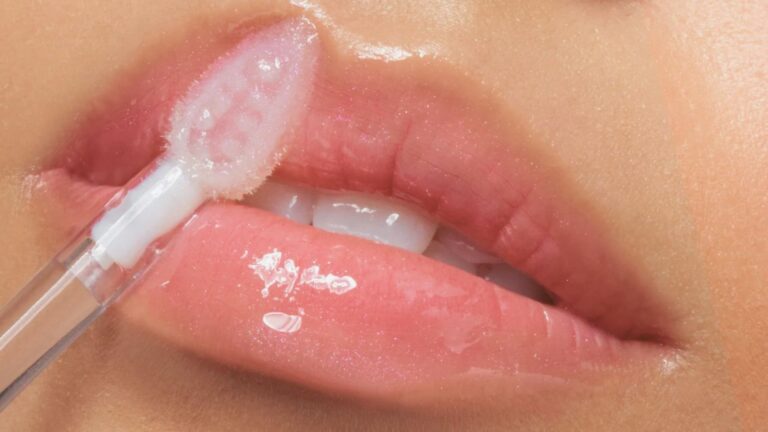
Lip gloss changed the game by offering something lipstick couldn’t: pure shine with a natural look. While lipstick focused on bold color coverage, gloss prioritized reflection and moisture.
- Texture difference: Gloss had a liquid, flowing consistency that glided smoothly. Lipstick was solid and waxy, requiring more pressure and tugging.
- Reflective finish: Gloss gave a high-shine, wet look that reflected light from every angle. Lipstick had a flat, matte finish that couldn’t match this reflective quality.
- Sheer coverage: Gloss offered buildable coverage that let natural lip color show through. Lipstick provided full, opaque coverage that completely changed lip color.
- Natural appearance: Gloss looked more natural and subtle on the lips. Lipstick made a bolder, more dramatic statement.
- Moisturizing formula: Gloss was flexible and didn’t crack or feather into lip lines. It maintained shine under bright lights, making it ideal for performers and photographers.
How Lip Gloss Formulas Changed Over Time
Lip gloss formulas have come a long way since Max Factor’s original petroleum-based recipe. Each decade brought new ingredients and benefits that changed gloss from simple shine to a multifunctional lip care product.
Original Formulation (1930-1960)

Early formulas relied on petroleum-based ingredients for shine. They worked well but required frequent reapplication throughout the day.
The focus was purely on reflection and camera performance.
Reformulation and Flavored Gloss (1973-1985)

Bonne Bell added flavor and sweet-scented oils to their products. This made gloss more appealing to younger users.
Brands increased vitamin E content for moisturizing benefits. Gloss became a skincare product, not just makeup.
Modern Additions (1990-Present)

In 1996, companies started adding hyaluronic acid for lip plumping effects. By 1998, mineral-based shimmer replaced some petroleum shine ingredients.
This created different finish options. From 2006 onward, vegan, antioxidant-rich, and SPF-enriched formulations became standard. Today’s glosses do much more than shine.
Ingredients in Lip Gloss

Modern lip gloss contains several key components:
- Base ingredients: Petroleum jelly or plant-based alternatives provide the foundation.
- Emollients: Mineral oil and vitamin E deliver hydration and smooth application.
- Colorants: Iron oxides, mica, and titanium dioxide add tint and shimmer.
- Preservatives: Phenoxyethanol and tocopherol keep the product safe and stable.
- Modern additions: Hyaluronic acid, peptides, and botanical oils offer extra benefits like plumping and nourishment.
The ingredient list has grown significantly since the 1930s original formula.
Lip Gloss vs. Lipstick
The main difference is that gloss prioritizes moisture and reflective shine. Lipstick focuses on color payoff and staying power.
|
Attribute |
Lip Gloss |
Lipstick |
|
Texture |
Liquid and gel-like |
Solid and waxy |
|
Finish |
High shine |
Matte, satin, or glossy |
|
Opacity |
Sheer to medium coverage |
Full coverage |
|
Longevity |
2-4 hours |
4-8 hours |
|
Ingredients |
60-70% oils and emollients |
40-50% wax and pigments |
Who Uses Lip Gloss Today

Women aged 16-34 make up 68% of gloss consumers. This is the primary market.
Professional makeup artists use gloss regularly for tutorials, bridal makeup, and photo shoots. The men’s grooming industry has also started using glosses.
North America, Asia, and Europe show the highest popularity rates. The product has truly gone global.
Types of Lip Gloss Available Today
The lip gloss market offers an incredible variety to suit every preference and budget. From finish to application method, you can find the right gloss for your needs.
- Finish options: Choose from clear gloss for pure shine, tinted gloss for a hint of color, or shimmer gloss for sparkle and dimension.
- Application methods: Products come with wand applicators for precision, squeeze tubes for control, or rollerball designs for easy portability and mess-free use.
- Formula variations: Standard glosses offer basic shine, plumping glosses contain ingredients that temporarily swell lips, and long-wear glosses resist fading and transfer throughout the day.
Popular brands include MAC, NARS, Fenty, Glossier, Maybelline, L’Oréal, and Revlon. Options exist at every price point.
Conclusion
I’ve always found it interesting that who invented lip gloss comes down to one person solving a film lighting problem.
Max Factor’s creation went from movie sets to becoming a $2.1 billion industry. The formula changed from simple petroleum jelly to complex blends with plumping agents and vitamins, but the core idea stayed the same, as shine matters.
If you wear it alone or layered, gloss still does what it did in 1930. Try layering your favorite gloss over lipstick this week and see the difference. Drop a comment below about your go-to gloss brand or share this with someone who loves makeup history.
Frequently Asked Questions
What ingredients should I avoid in lip gloss?
Watch out for fragrance compounds, cinnamic aldehyde, and menthol if you have sensitive skin. These ingredients commonly cause tingling, burning, or allergic reactions.
How long does lip gloss typically last on lips?
Most glosses last between 2 to 4 hours before needing reapplication. Long-wear formulas can extend this time slightly, but still fade faster than lipstick.
Can men use lip gloss?
Yes, men’s grooming has incorporated lip gloss for hydration and shine. Many brands now market clear or lightly tinted options specifically for men.
Do I need to prep my lips before applying gloss?
Yes, exfoliate and moisturize first for best results. This creates a smooth surface and prevents the gloss from highlighting dry patches or flakes.
What’s the difference between plumping gloss and regular gloss?
Plumping gloss contains ingredients like hyaluronic acid or mild irritants that temporarily swell lips. Regular gloss just provides shine and moisture without volume effects.