Why Everyone Suddenly Cares About Keeping the Skin Barrier Healthy

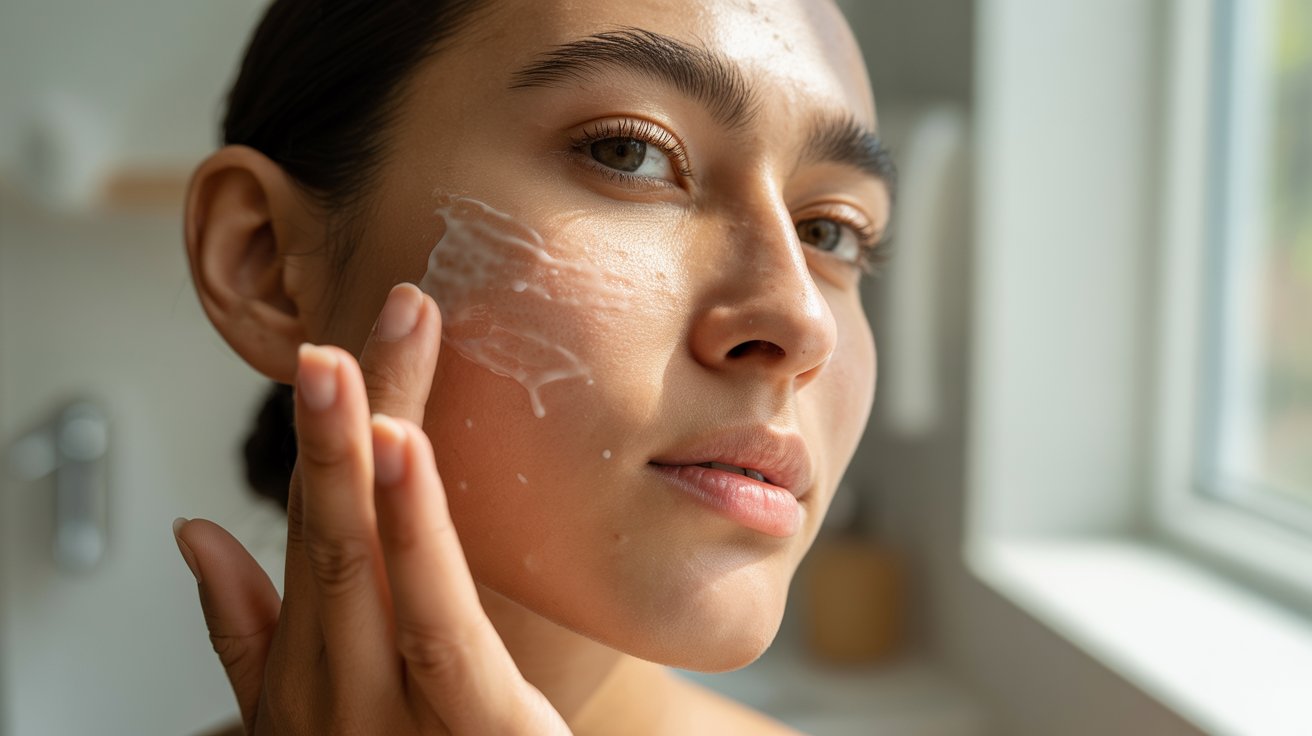
You see a girl on TikTok in a slick bun, showing her perfect ‘glass skin.’
In the description, you see she says that she uses a vitamin C serum every morning, a retinoid every single night, and she also exfoliates with glycolic acid once a week. Along with that, she also makes sure to always double cleanse, and she emphasizes that the retinoid she uses is the Superman of all retinoids – tretinoin.
Your first instinct is to buy everything she uses and copy her skincare routine.
It doesn’t matter that the only active ingredients you’re used to are peptides and hyaluronic acid; clearly, you’re doing something wrong because your skin doesn’t look like glass. It’s clear and soft, sure, but it’s not glassy. So, you buy what you can, beg your dermatologist for a prescription for tretinoin, and off you go, on your way towards the best skin of your life.
And that’s the story of a ruined skin barrier, stinging, flaky patches, tightness, and breakouts all over your face.
That’s why everyone cares about keeping their skin barrier healthy.
Skincare Became Too Aggressive
Not that long ago, a skincare routine was a cleanser, a toner, and a moisturizer.
If you were smart, you also used SPF in the morning, but that was it. Somewhere along the way, that changed drastically. Thanks to skincare trends and social media, we became obsessed with active ingredients like acids, retinoids, chemical peels, acne treatments, brightening serums… And now it’s all normal.
Not all of this is bad.
These ingredients became popular because they work, but the problem is that people started layering them on top of each other in a way that only made things worse.
You’d see a woman layering a retinoid on top of a glycolic acid toner, and when her skin became red and flaky, she’d call that progress. Her skin was ‘getting used to it.’ And when you get acne, that’s not a sign the product isn’t working for you.
Oh no, we call that ‘purging,’ and not only is it considered normal, but it’s actually welcome.
The only result you could get from this is a ruined skin barrier, which means more flakiness and more acne. And when your skin barrier is compromised, even a basic moisturizer will sting, and even the driest skin can get oily.
Why Beauty Treatments Started Looking More Natural
Now, the focus is on how to keep your skin barrier healthy, and that has changed a lot more than just home routines.
It also changed how people think about professional chemical peels, facials, lasers, and cosmetic procedures in general. They know better, so they’re no longer chasing dramatic transformations that leave you looking dry and peeling for a week. Modern clients want healthy skin above all else, and they don’t want to damage it in order to get to that point.They’re more interested in hydration, and they ask more questions about downtime.
Clinics track all this thanks to medical spa software, which allows spas and businesses that specialize in aesthetics to keep all client info in one place and keep an eye on how a client’s skin reacts over time.
How to Help Your Skin Barrier Recover
If you’ve ever been guilty of ruining your skin barrier, get in line. We’ve all been there. Here’s how to help it recover.
Too Much Cleansing
Double cleansing is a superstar, but if you’re using harsh cleaners, you’re stripping your skin of natural oils it needs to keep the barrier healthy.
Using hot water and scrubbing makes this even worse. More cleansing doesn’t automatically guarantee clearer skin, and that tightness you feel after washing is actually bad for you. It means the cleanser is too aggressive, and your skin has lost moisture because of it.
Always use only lukewarm water while cleansing your face, and a mild cleanser.
If your skin is squeaky and tight after, your cleanser is too strong.
Recovery Skincare
Skincare should be about stable, long-term results. Nothing good ever comes from having drastic results overnight.
A recovery routine obviously doesn’t have as many active ingredients in it.
Instead, what you can do is use ingredients that support the barrier, such as ceramides, glycerin, squalane, and panthenol. And stay consistent! It might be several weeks until your barrier recovers.
Long-Term Skin Health
Once you get your barrier to being healthy again, don’t make the same mistake. Stick to a simpler skincare routine. You can still use retinoids and acids. In fact, you should, because they’re clinically proven to give you results.
But instead of tretinoin, how about starting with retinyl palmitate? Instead of glycolic acid, why not give lactic or mandelic acid a try?
Remember that healthy skin equals beautiful skin.
And health comes from a strong barrier.
Conclusion
Hopefully, now you understand why everyone cares about skin barrier health.
About time, right?
If only we knew how important that was back in 2012 or 2013, when we thought walnut face scrubs were the best thing in the world.
Don’t swear off active ingredients, though. They have their place in your skincare routine. Just take it easy, and if you see a breakout or a flake, that’s your sign to step back a little.