What Is Airbrush Makeup? Benefits, Pros & Key Differences

You have probably heard the term airbrush makeup at least once, whether from a bride, a makeup artist, or a beauty reel online. But what does it actually mean for your skin?
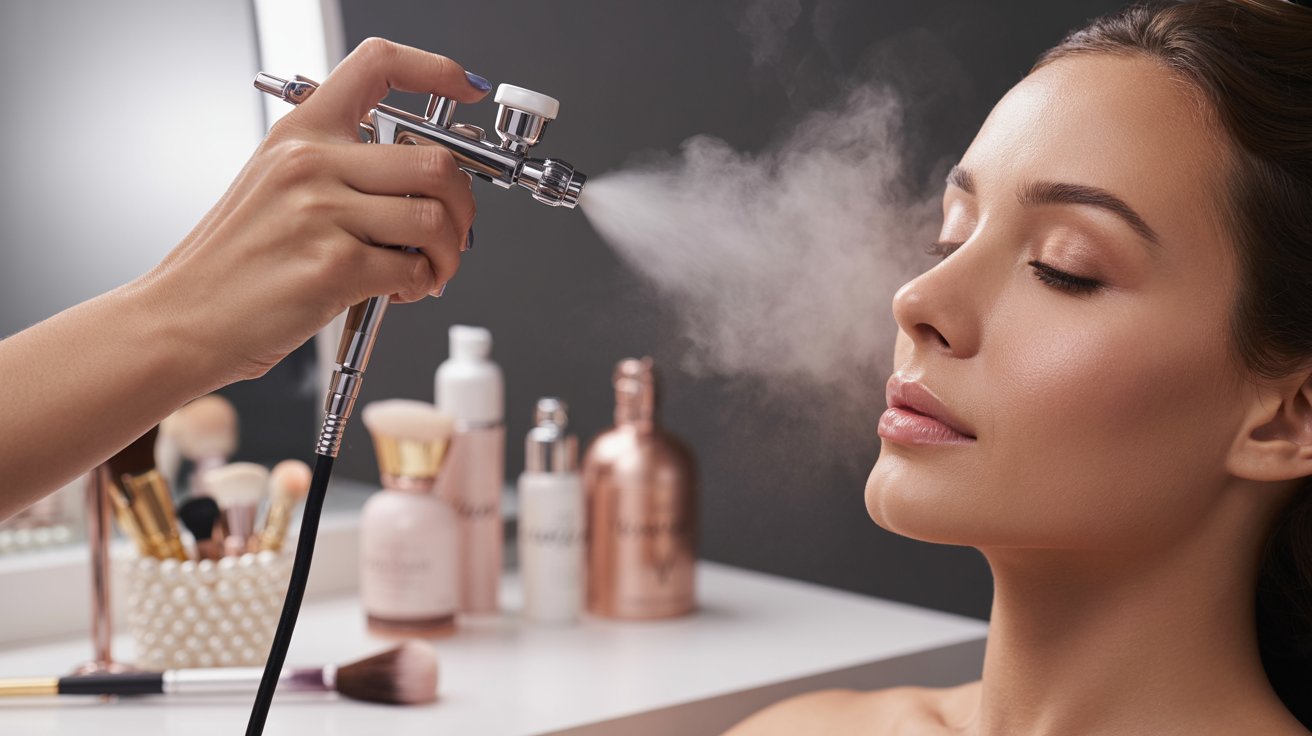
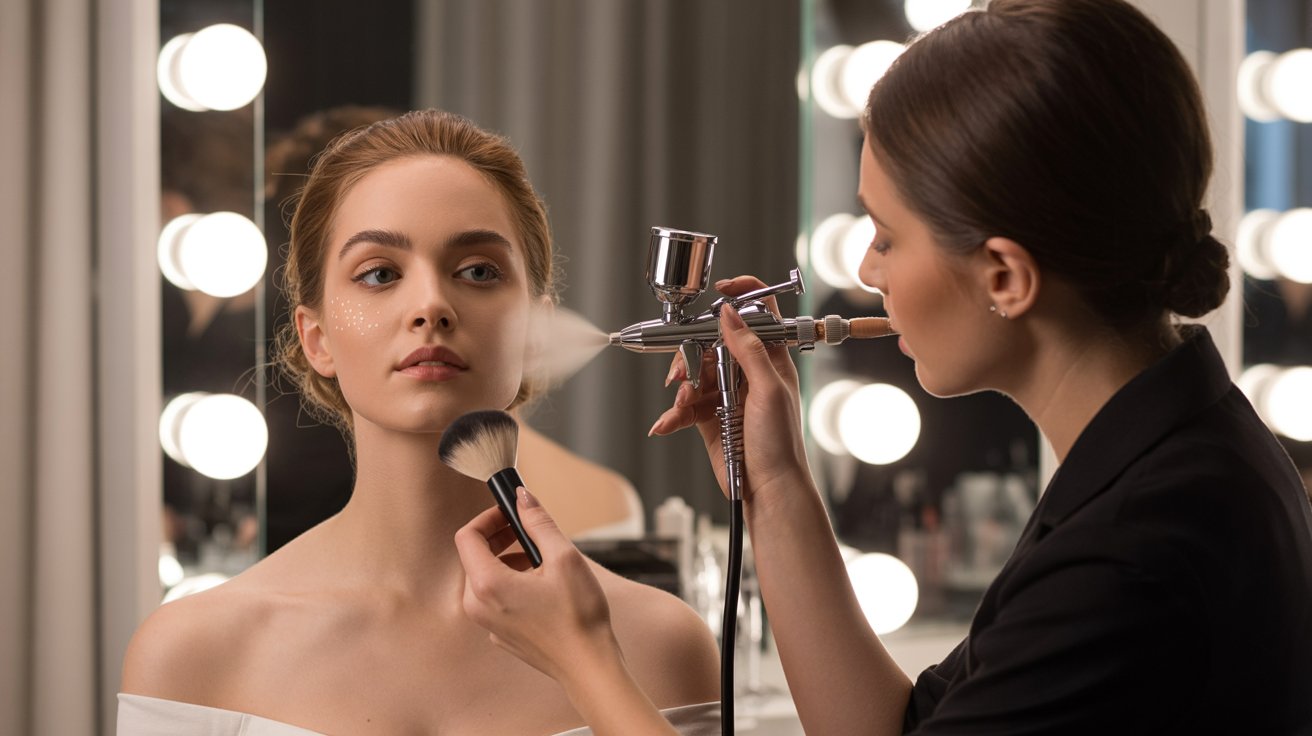
Airbrush makeup uses a spray gun and air compressor to apply a fine mist of product onto the skin. The finish feels light, looks smooth, and tends to last longer than regular makeup.
But is it right for you? That depends on your skin type, your budget, and the look you want. This blog breaks it all down so you can decide with confidence.
What Is Airbrush Makeup?
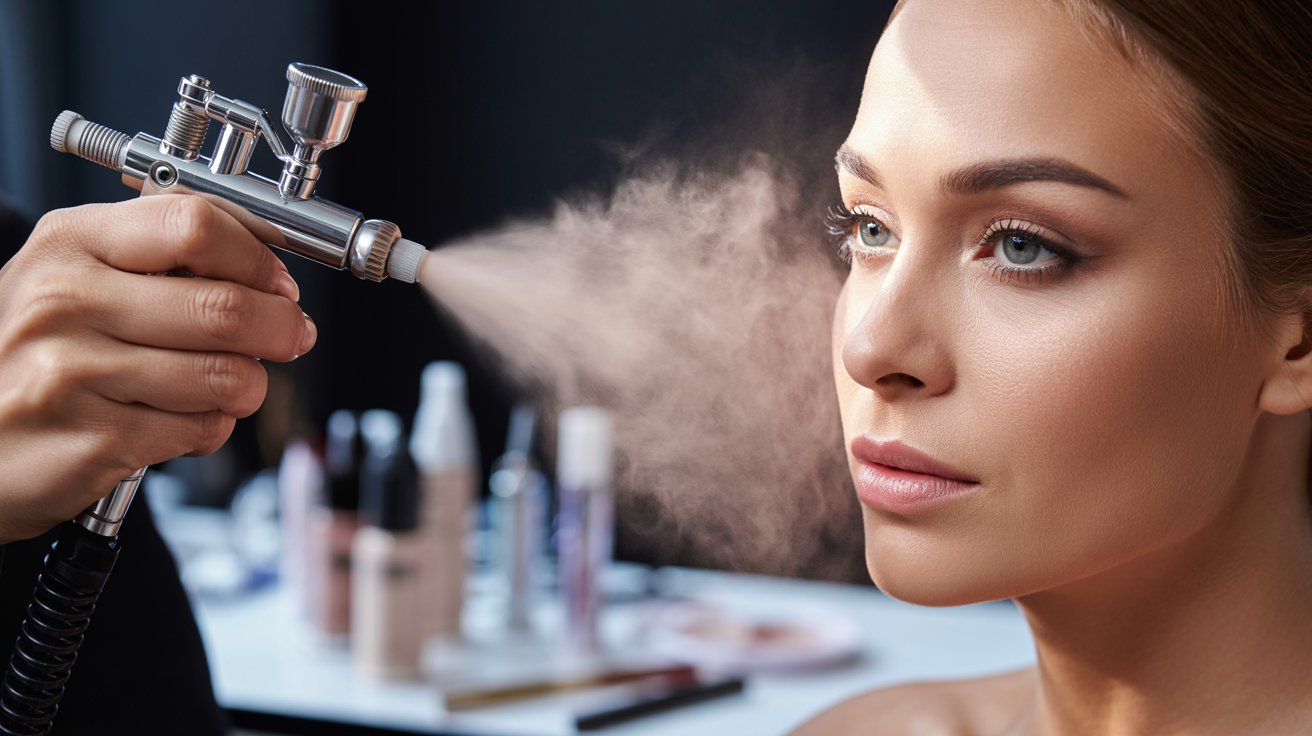
Airbrush makeup uses a spray gun and air compressor to apply foundation and other products directly onto the skin. Instead of a brush or sponge, it releases a fine mist that settles evenly across the face.
The result is lightweight, smooth coverage that looks natural. Thin layers are built up gradually, so the skin still shows through.
This technique is popular for weddings, photoshoots, and special events where a long-lasting, camera-ready finish matters most.
Airbrush Makeup vs Traditional Makeup
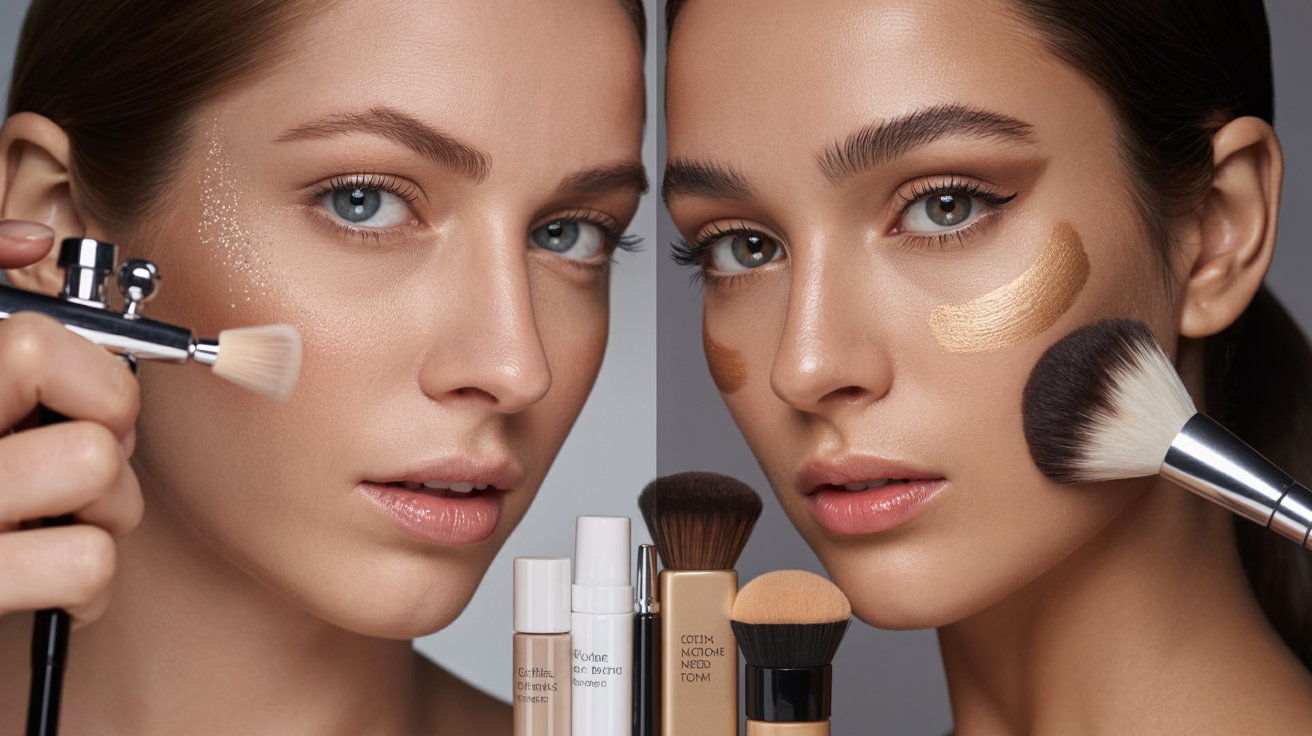
Choosing between airbrush and traditional makeup comes down to the finish you want and how long it needs to last.
Main Differences Between the Two
Airbrush makeup uses spray technology, while traditional makeup relies on brushes, sponges, or fingers.
Airbrush gives a softer, more diffused finish, whereas traditional methods allow more precision and control during application.
Coverage and Finish Comparison
Airbrush makeup sits lightly on the skin and looks seamless. Traditional makeup offers fuller, buildable coverage.
Both methods can achieve a natural or glam look depending on how they are applied.
Longevity and Wear Time
Airbrush makeup is known for staying put longer without frequent touch-ups. Traditional makeup may need refreshing throughout the day.
Silicone-based formulas, used in both methods, help improve durability and wear time.
Benefits of Airbrush Makeup
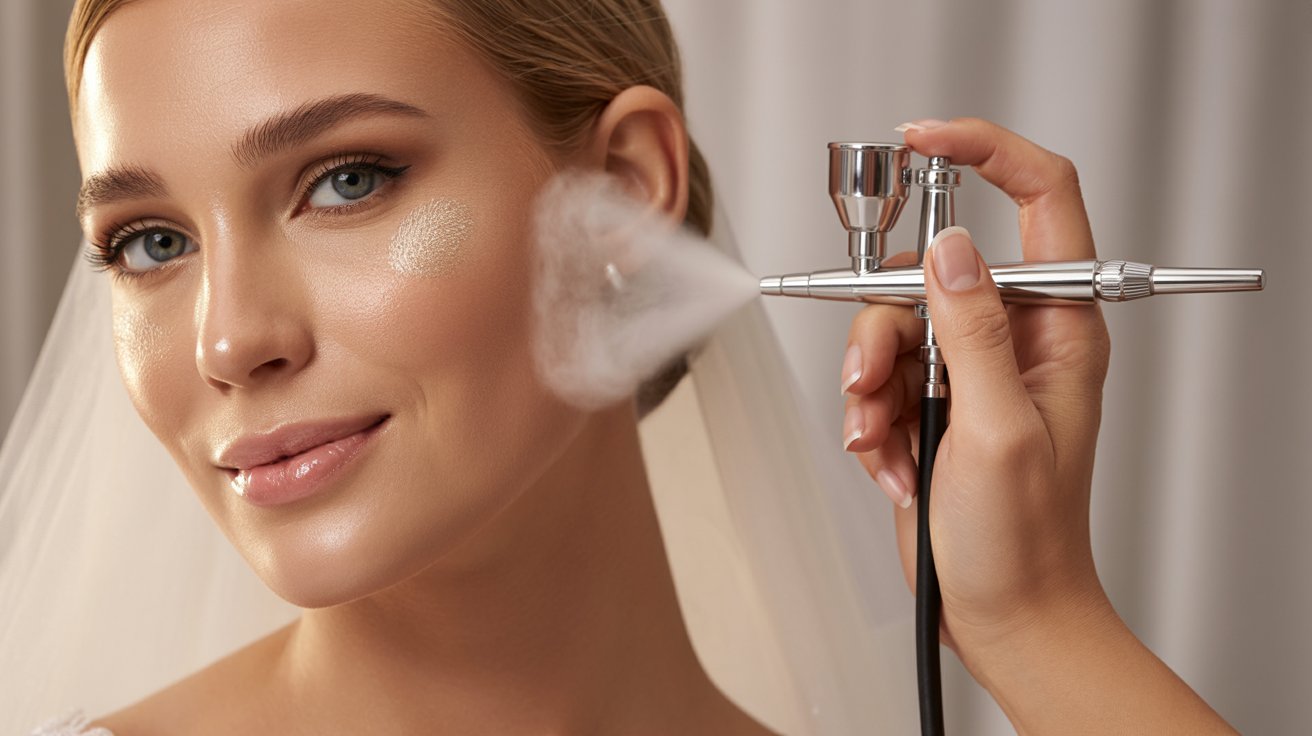
Airbrush makeup comes with some real advantages that make it a go-to choice for many makeup artists and clients alike.
Lightweight Feel
Thin layers of product sit comfortably on the skin without feeling heavy. This makes it a great option for long events and weddings where you need to wear makeup for hours.
Smooth, Flawless Finish
Airbrush makeup creates an even, camera-ready look. It blends smoothly into the neck and chest area, so there are no visible lines or uneven patches.
Long-Lasting Results
The formula holds up well against sweat and transfer throughout the day. This is why it remains a top choice for bridal and professional makeup looks.
Customizable Coverage
You can easily build coverage from sheer to medium by adding thin layers. The finish looks natural and skin-like without any heaviness or cakey texture.
Disadvantages of Airbrush Makeup
Airbrush makeup works well for many people, but it does have a few drawbacks worth knowing before you commit.
Limited Coverage for Textured Skin
Airbrush formulas may not fully cover acne scars, deep wrinkles, or dry patches. This technique tends to work best on smoother skin types.
More Expensive Than Traditional Makeup
Special tools like a spray gun and compressor add to the overall cost. Professional airbrush applications also tend to be priced higher than regular makeup services.
Harder to Touch Up
The fast-drying formula makes it tricky to reblend once it sets. Getting a clean finish requires a steady hand and some practice.
Smaller Shade Range
Airbrush foundations come in fewer shades compared to traditional products. Finding the right match can sometimes mean mixing two shades together to get the correct tone.
What Is Traditional Makeup?
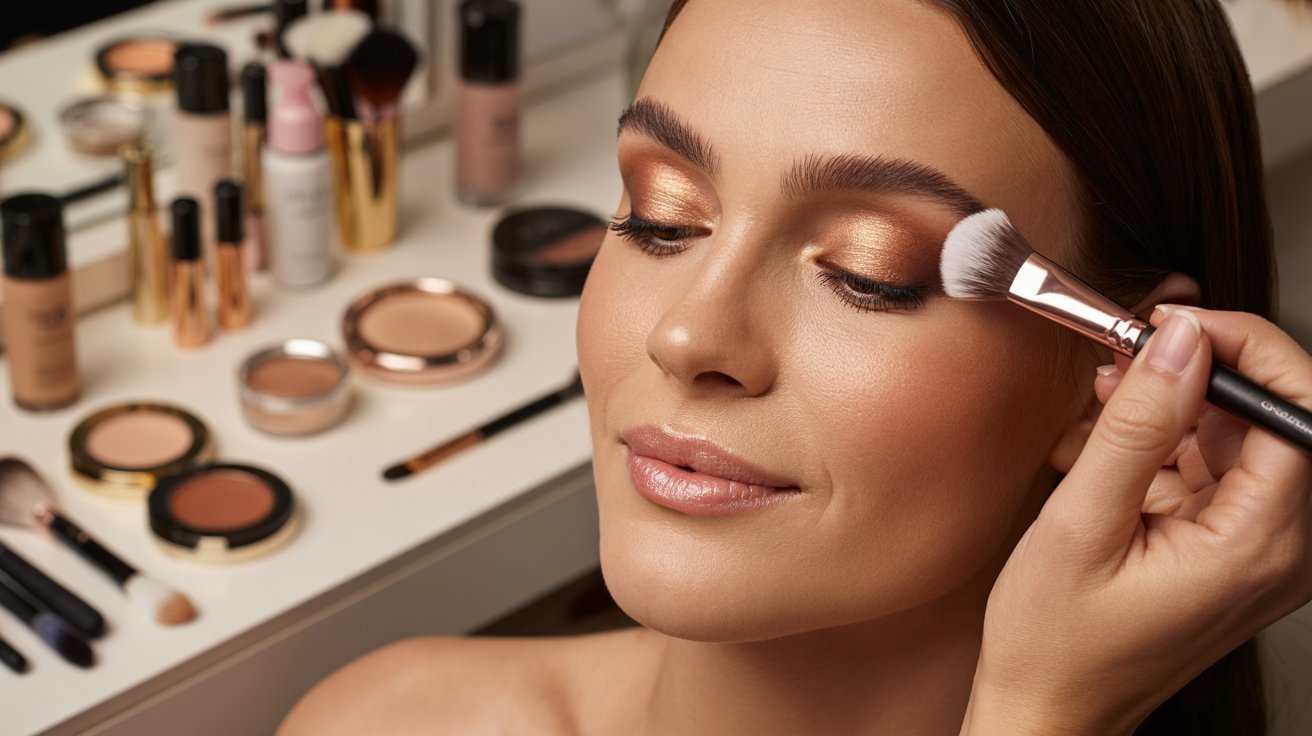
Traditional makeup is applied using brushes, beauty sponges, or fingertips. It covers a wide range of products including liquid, cream, and powder formulas, giving you plenty of options to work with.
It works particularly well on textured or dry skin since the products can be layered and blended with more control.
Touch-ups are simple and quick throughout the day. For precise, detailed application or bold glam looks, traditional makeup gives you the flexibility to build and adjust as needed.
Which Skin Types Are Best for Airbrush Makeup?
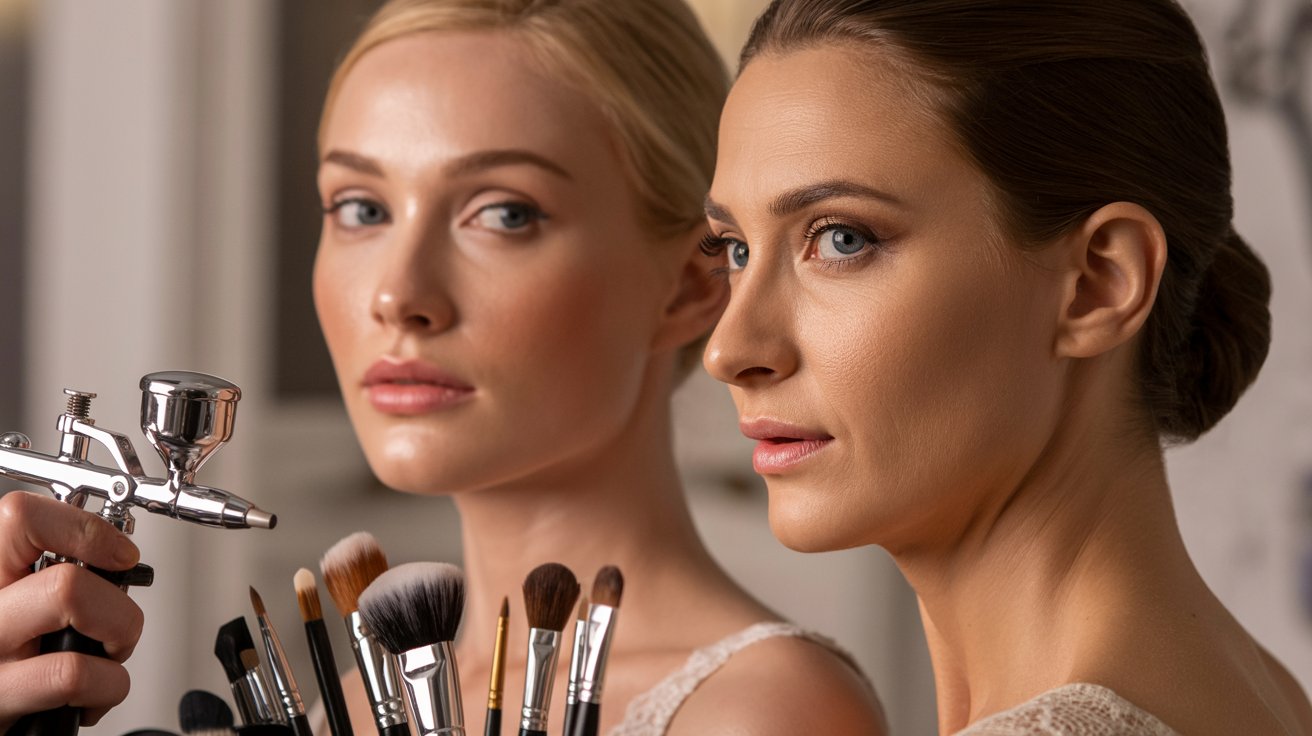
Not every skin type responds the same way to airbrush makeup. Knowing your skin can help you pick the right method.
Airbrush Makeup Works Best For
Airbrush makeup suits oily and combination skin well since the lightweight formula does not clog pores or feel greasy.
It also works nicely on smooth skin with minimal texture. Brides who want a comfortable, long-wearing finish without heaviness tend to prefer this method.
Traditional Makeup May Be Better For
Dry or mature skin benefits more from traditional makeup as it can be layered with moisturizing products for added comfort.
Those with acne-prone or textured skin get better coverage through buildable, blendable formulas. People who prefer full coverage also find traditional makeup easier to work with.
Common Myths About Airbrush Makeup
There are a few common misconceptions about airbrush makeup that are worth clearing up.
Myth #1 – Airbrush Makeup Makes Skin Perfect
Airbrush makeup can improve your appearance and give a smooth finish, but it cannot completely erase skin texture.
Scars, pores, and uneven patches may still show through, especially without proper skin prep.
Myth #2 – Airbrush Makeup Is Always Waterproof
Water resistance comes from the formula itself, not the spray machine. Some airbrush products are water-resistant while others are not.
Always check the product details before assuming it will hold up against sweat or moisture.
Myth #3 – Airbrush Makeup Is Better for Everyone
No single technique works for every person. Skin type, coverage preference, and the look you want all play a bigger role than the application method.
Traditional makeup can deliver equally good or better results depending on the individual.
How to Choose Between Airbrush and Traditional Makeup
Before picking a technique, think about the finish you want, how long you need it to last, and whether your skin has dryness or texture. Also consider if you are going for a natural look or full glam.
A makeup trial helps answer these questions practically. It lets you test wear time, comfort, and how each method sits on your skin, making it easier to choose what works best for your event.
Conclusion
Airbrush makeup is a solid choice for lightweight, long-lasting coverage, especially for special occasions and smooth skin types. But if you have textured or dry skin, traditional makeup may serve you better.
Honestly, the technique matters less than the person applying it. A skilled makeup artist can make either method work beautifully for you.
Thinking about trying airbrush makeup? Book a trial session and see how it feels on your skin before your big day.
Frequently Asked Questions
Is airbrush makeup good for everyday use?
Airbrush makeup is better suited for special occasions like weddings or events. For daily use, traditional makeup is quicker to apply and easier to manage.
How long does airbrush makeup last on the skin?
Airbrush makeup can last up to 12 to 16 hours depending on the formula and skin type. Silicone-based formulas tend to hold up the longest throughout the day.
Can airbrush makeup cover acne scars or blemishes?
Airbrush makeup provides light to medium coverage and may not fully hide deep scars or blemishes. Layering thin coats can help, but results vary based on skin texture.
Is airbrush makeup suitable for all skin types?
Airbrush makeup works best on oily, combination, or smooth skin types. Those with dry, mature, or textured skin may find traditional makeup more comfortable and effective.
Do I need a professional to apply airbrush makeup?
A professional makeup artist will give you the best results with airbrush makeup. The technique requires practice and proper equipment, making it harder to do on your own at home.