Butterfly Cut vs Wolf Cut: Key Differences Explained


Choosing between a butterfly cut vs wolf cut can feel confusing. At first glance, they look similar, but they create very different shapes, layers, and overall styles.
If you're wondering which haircut will suit your hair, face shape, and daily routine, you're in the right place.
In this guide, you'll learn the key differences, the pros and cons of each cut, who they work best for, and how much styling and maintenance they need.
By the end, you'll have a clear idea of which haircut fits your look and lifestyle.
I've spent time researching current hair trends and expert styling advice, so this guide focuses on practical information you can actually use before your next salon visit.
What Is a Butterfly Cut?
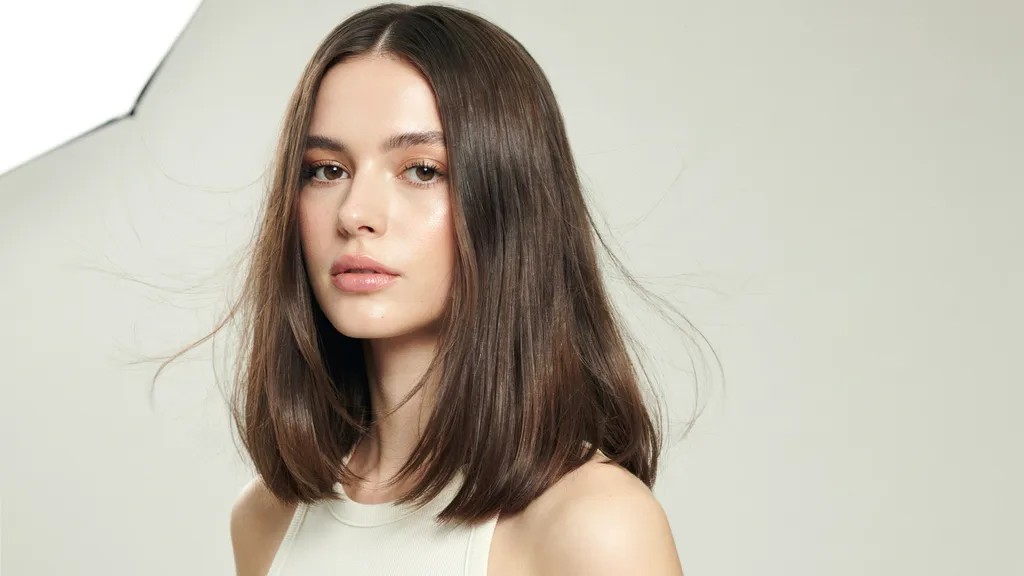
A butterfly cut is a layered hairstyle designed to add movement, volume, and shape while keeping most of your hair length.
Its signature look comes from long, blended layers that create a soft, feathered finish.
Shorter, face-framing pieces add lift around the front, while the longer layers flow naturally through the rest of the hair. This creates the illusion of shorter hair without giving up length.
One of the biggest benefits of a butterfly cut is its versatility. It is easy to style, works especially well on medium to long hair, and is a great choice if you're growing your hair out.
However, the makeover is more subtle than edgier cuts, and regular trims are needed to keep the layers looking fresh and well-defined.
What Is a Wolf Cut?

A wolf cut is a bold, layered hairstyle that blends the best features of a shag and a mullet.
It has heavy layers at the crown to create extra volume, while the ends are tapered for a textured, slightly messy finish. This gives the haircut its signature edgy look.
A wolf cut works especially well on wavy, curly, or naturally thick hair because it improves texture with minimal effort.
Many people like it because it looks stylish even with casual, undone styling. However, it is a more dramatic haircut than a butterfly cut.
It can take time to grow out evenly, and people with fine or straight hair may need extra styling products or tools to achieve the desired volume and shape.
Butterfly Cut vs Wolf Cut: Key Differences
If you're comparing a butterfly cut vs wolf cut, these are the differences that affect how the haircut looks, feels, and fits into your daily routine.
Layering Technique
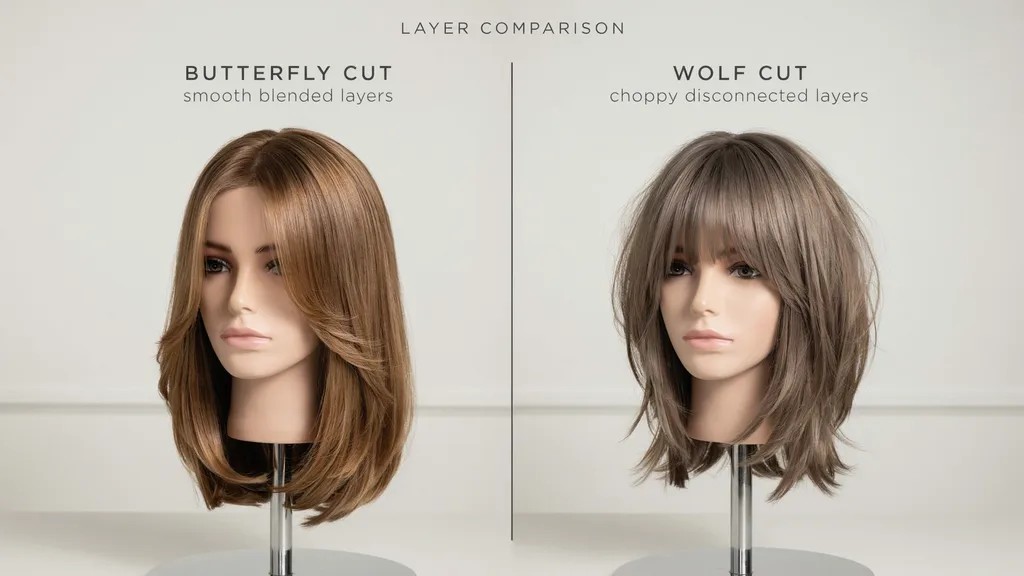
The butterfly cut uses soft, blended layers that flow smoothly into the rest of the hair. The wolf cut relies on heavily textured, choppy layers to create a more dramatic effect.
Butterfly layers look polished and airy, while wolf cut layers add separation and movement for a deliberately undone, edgy appearance that stands out more.
Volume Placement
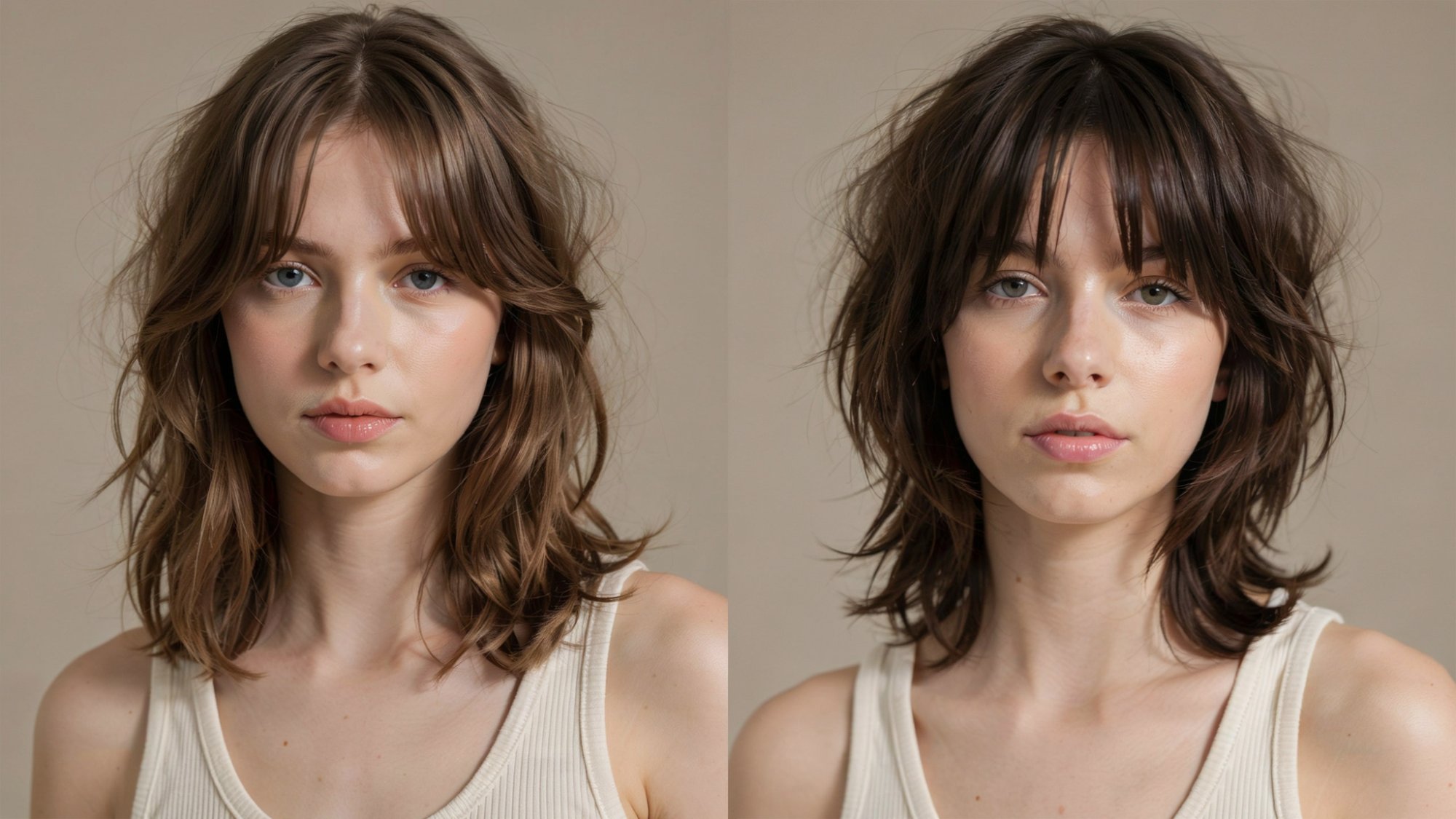
A butterfly cut creates balanced volume throughout the hair, giving an even, lifted shape from top to bottom.
A wolf cut places most of the volume at the crown, making the top appear fuller while the ends look lighter and more tapered. This difference changes the overall silhouette of the haircut.
Overall Shape
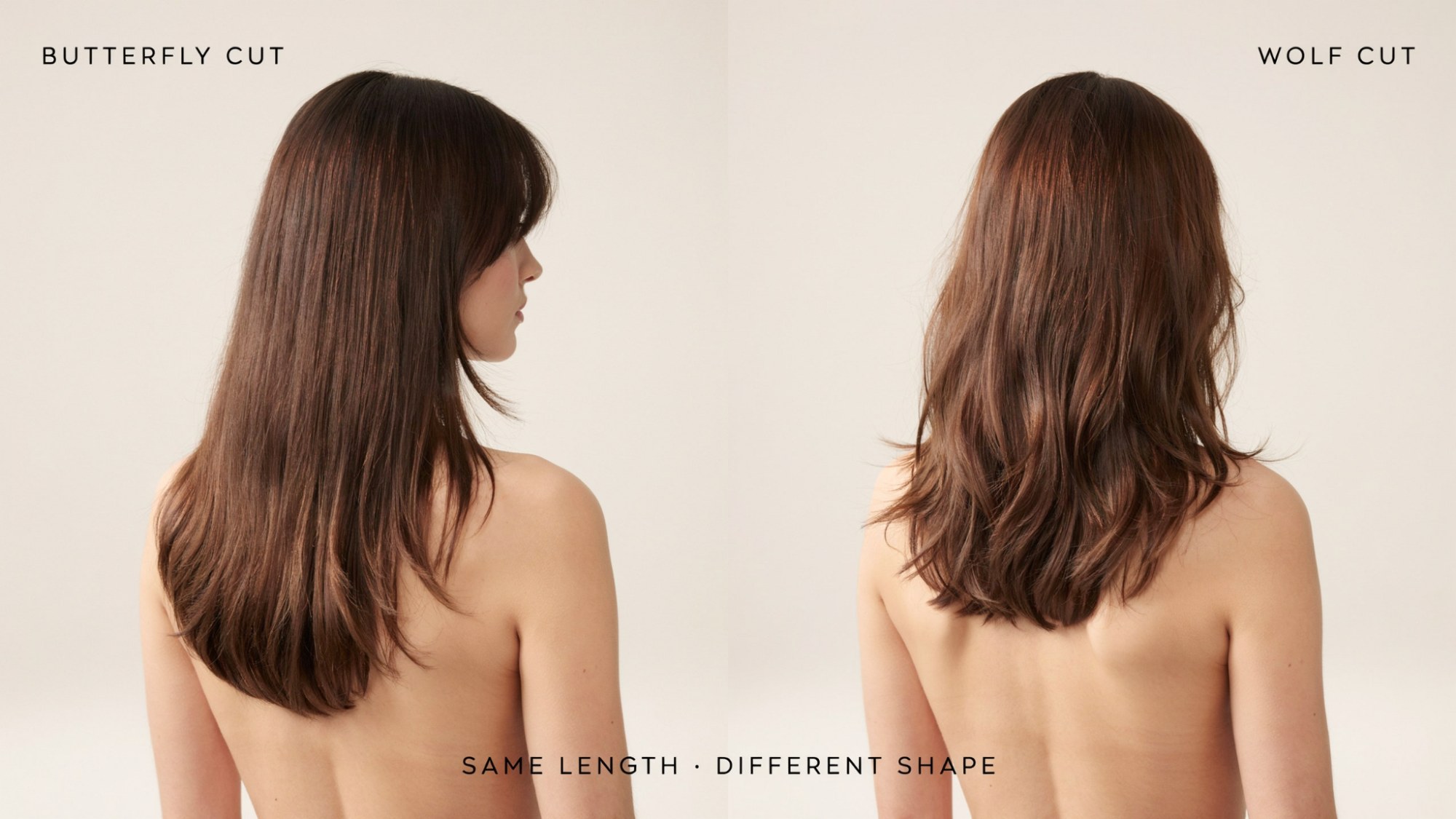
The butterfly cut has a rounded, flowing shape that feels soft and classy. The wolf cut has a shaggy, edgy shape with more visible texture and contrast between the top and the ends.
If you prefer a smoother, classic look, the butterfly cut is usually the better choice.
Hair Length

One of the biggest advantages of a butterfly cut is that it preserves overall hair length while adding layers.
A wolf cut often creates the visual effect of shorter hair because of the heavy crown layers and tapered ends.
Styling Requirements
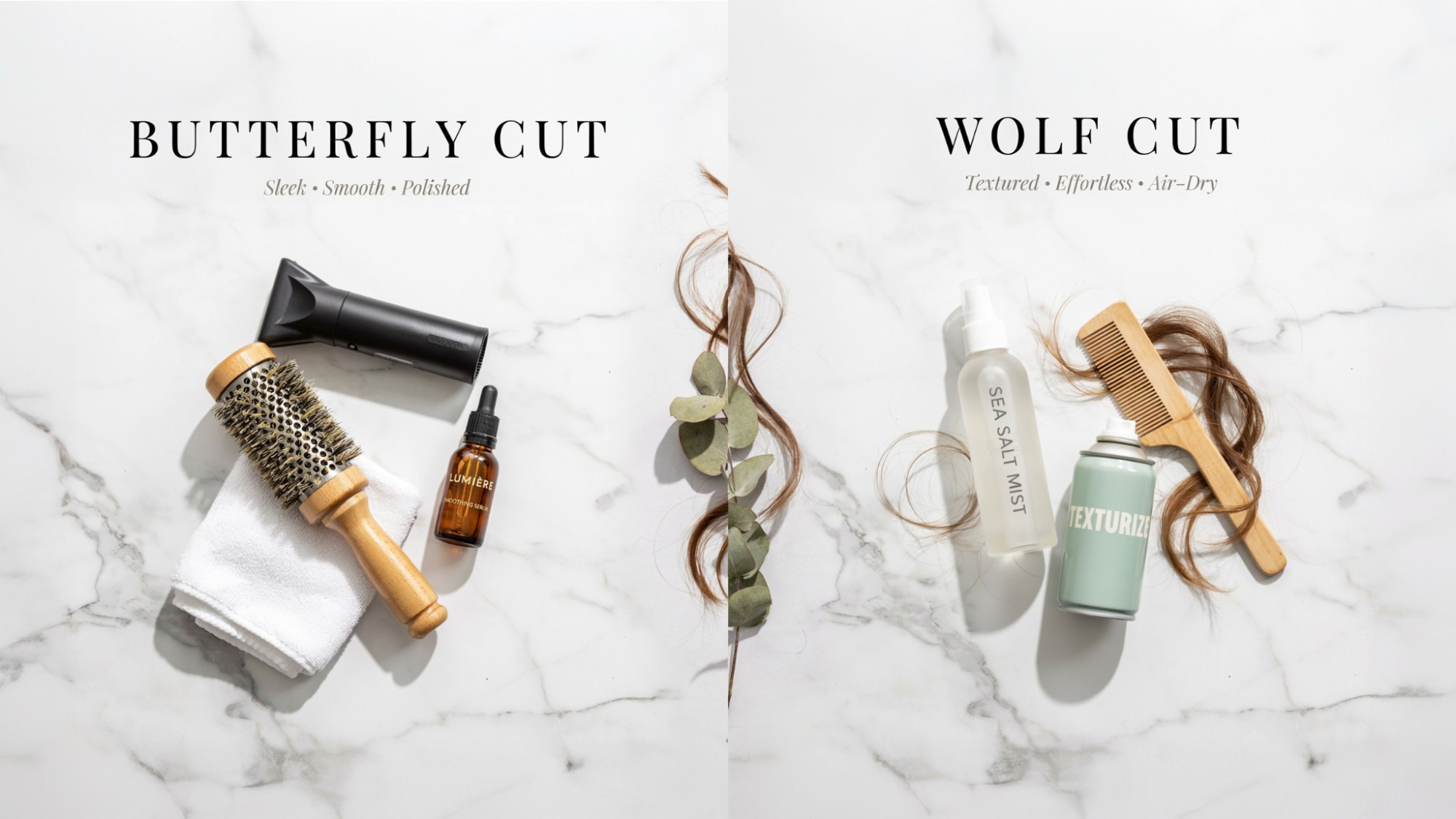
Butterfly cuts usually look best with blow-drying, a round brush, or soft waves to highlight the feathered layers.
Wolf cuts often rely on texturizing sprays, sea salt spray, or air drying to improve the messy, lived-in texture.
Maintenance
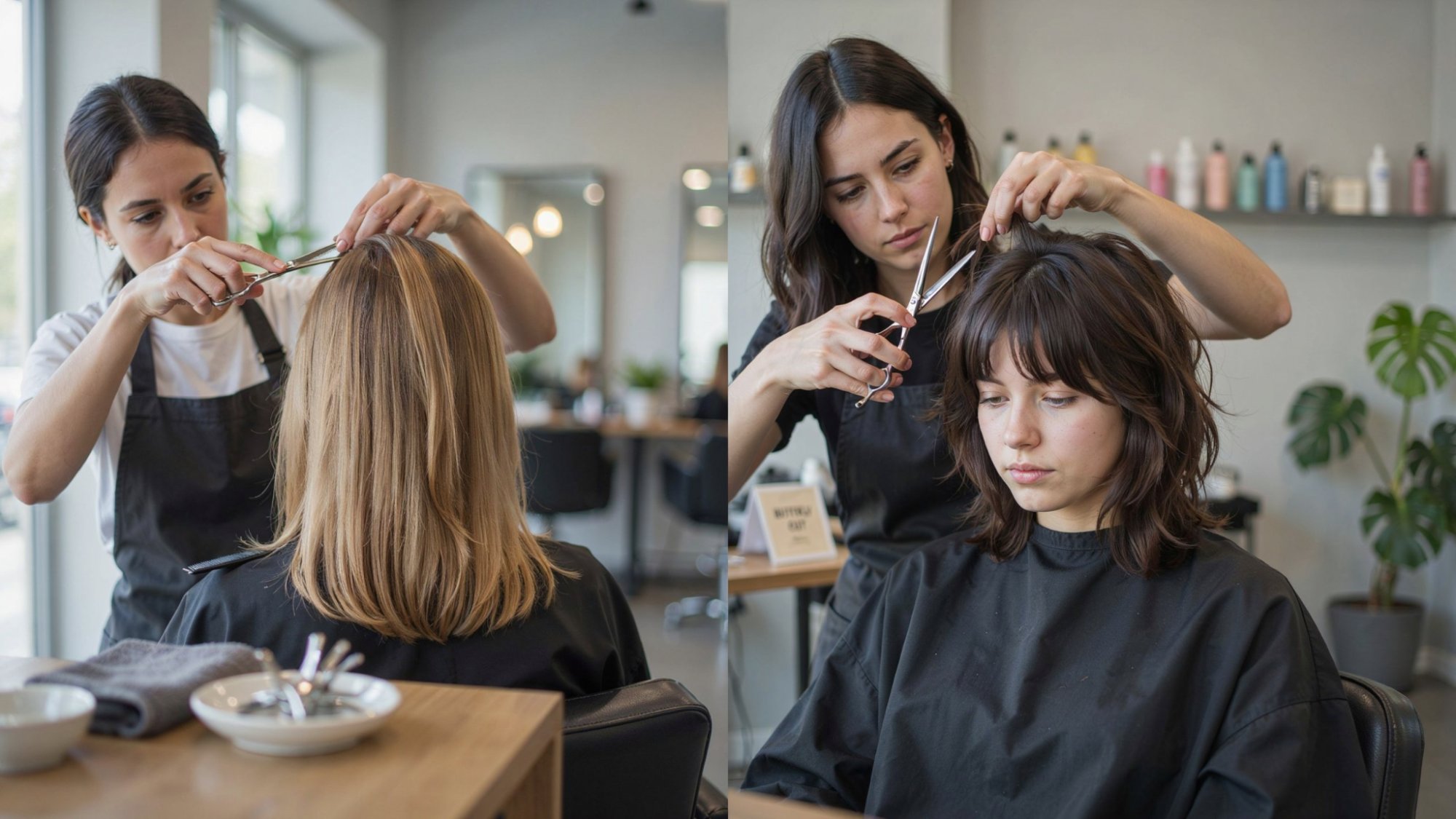
A butterfly cut needs trims to keep the blended layers fresh, while a wolf cut needs maintenance to prevent the textured shape from becoming uneven.
Daily styling effort is usually lower for naturally textured wolf cuts, but fine hair may need extra work.
Which Hair Types Suit Each Cut?
Your natural hair texture plays a big role in how each haircut looks and how easy it is to style every day.
Best Hair Types for a Butterfly Cut
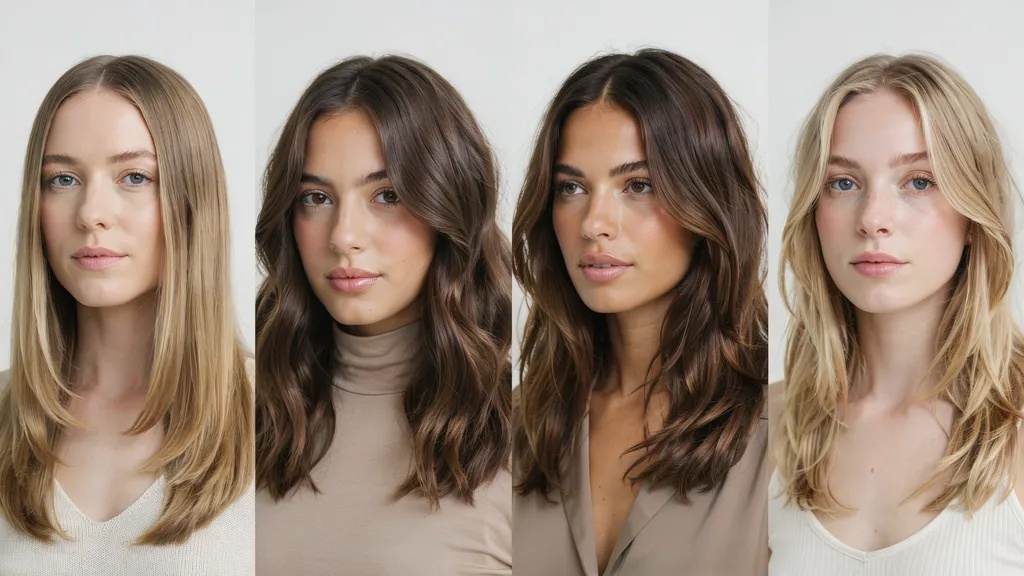
The butterfly cut works best for:
- Straight hair
- Slightly wavy hair
- Thick hair
- Fine hair seeking volume
Best Hair Types for a Wolf Cut
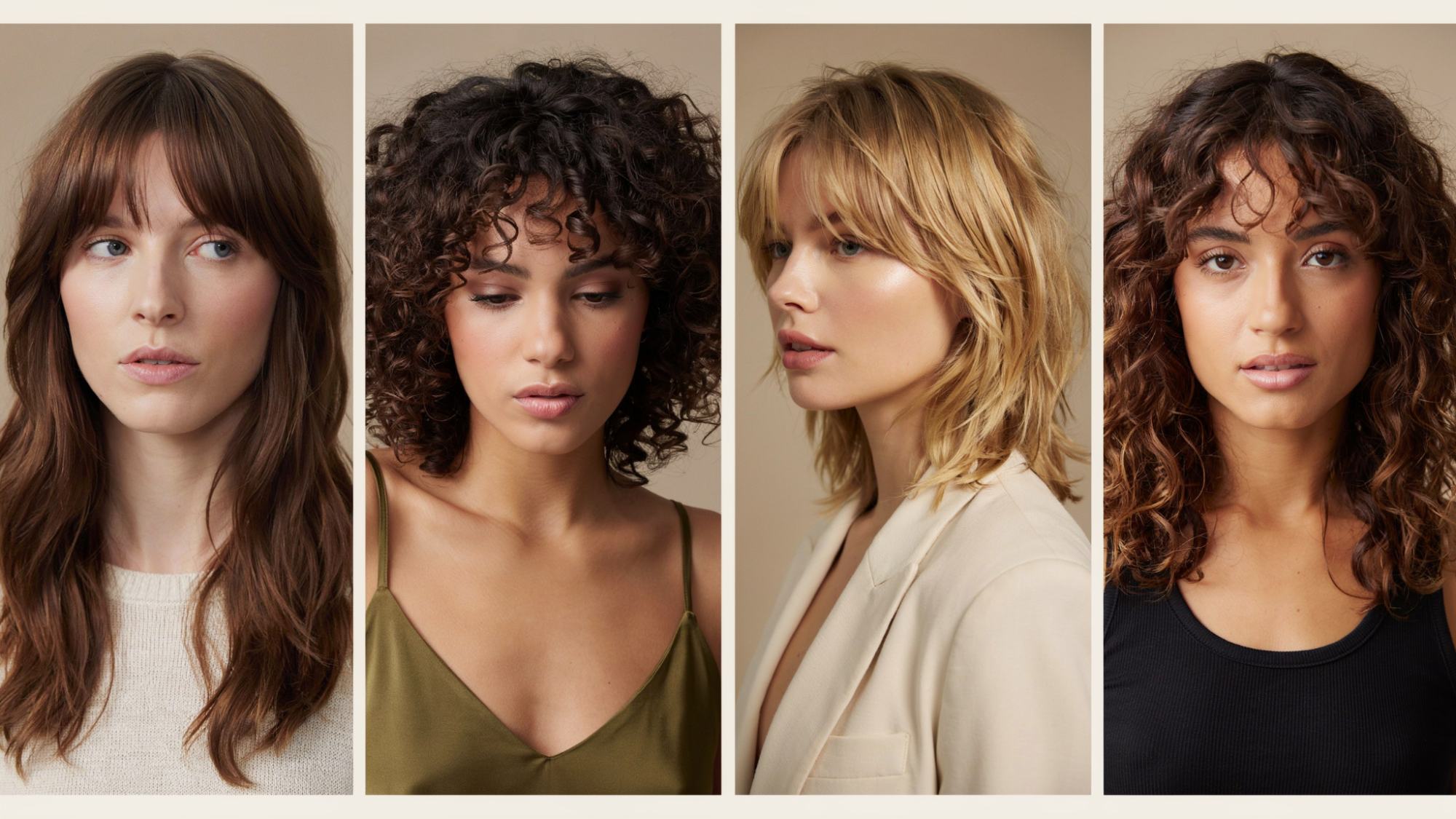
The wolf cut is an excellent choice for:
- Wavy hair
- Curly hair
- Thick hair
- Naturally textured hair
Which Face Shapes Work Best?
The right face shape can help each haircut look more balanced and flattering. Here's where each style tends to work best.
Butterfly Cut
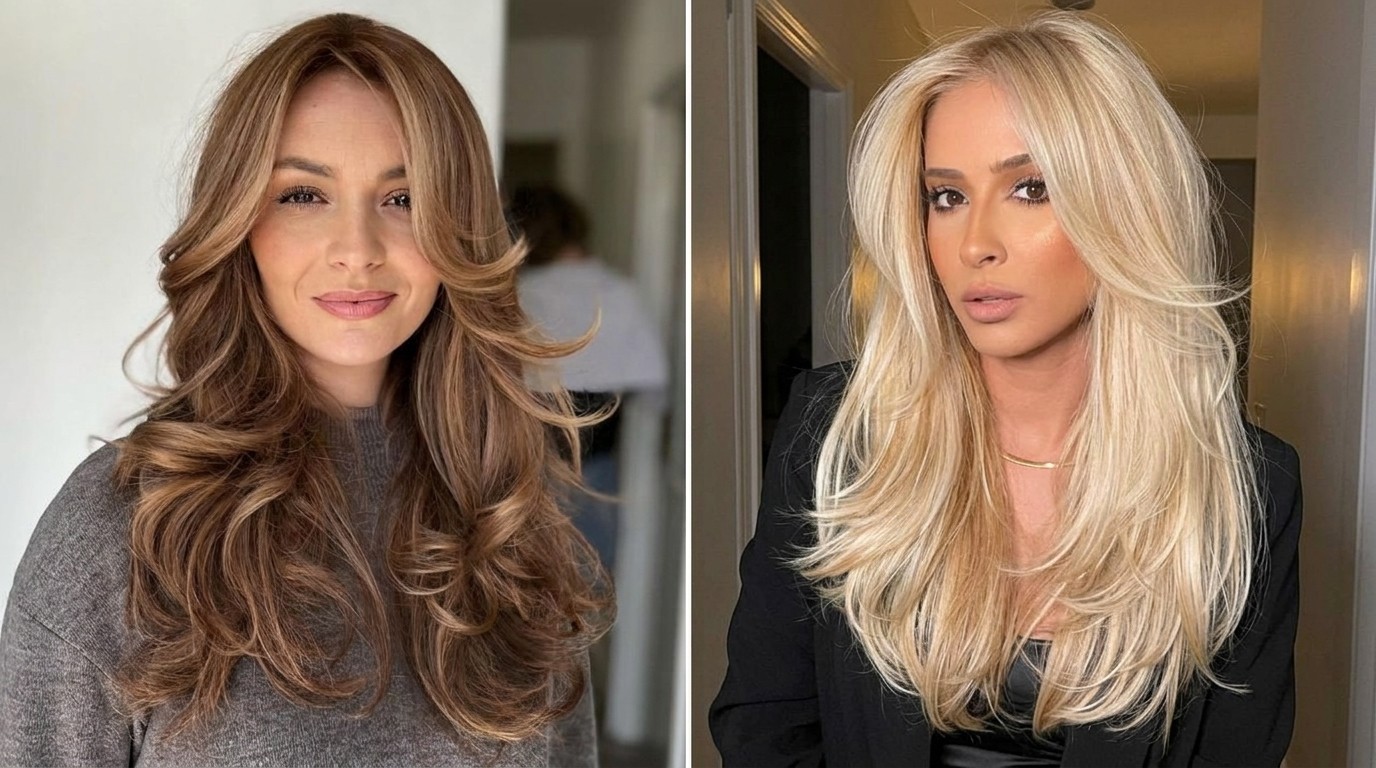
The butterfly cut is especially flattering for:
- Oval
- Round
- Heart
- Square
Wolf Cut
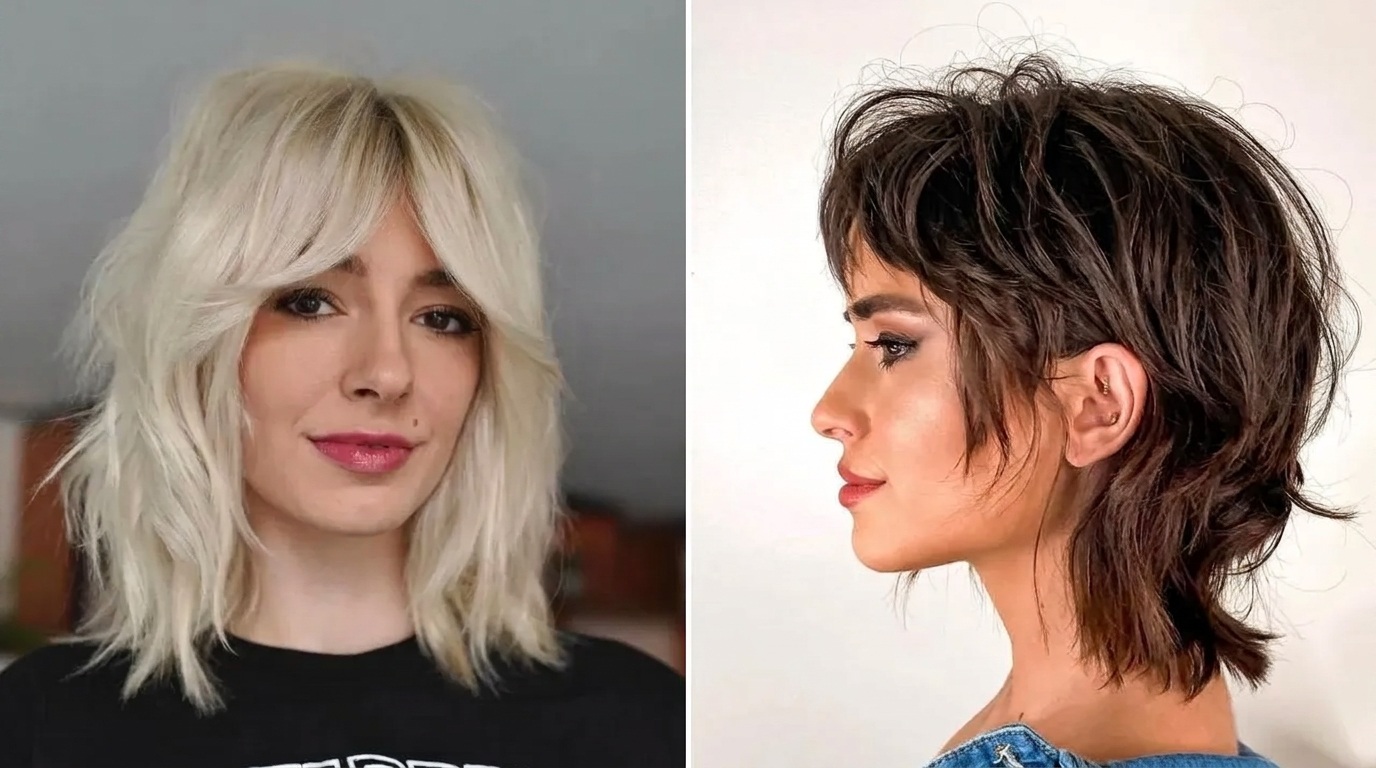
The wolf cut complements these face shapes the most:
- Oval
- Heart
- Diamond
- Square
Which Haircut Is Easier to Maintain?
Both haircuts need regular care, but the time, styling effort, and upkeep can vary depending on your hair type and daily routine.
| Maintenance Factor | Butterfly Cut | Wolf Cut |
| Daily Styling | Usually requires blow-drying or light styling to define the layers. | Often looks best with a natural, messy finish, though fine hair may need extra styling. |
| Salon Visits | Every 8–12 weeks to maintain soft, blended layers. | Every 6–8 weeks to keep the textured shape and crown volume. |
| Products Needed | Volumizing mousse, heat protectant, and a lightweight hair oil. | Texturizing spray, sea salt spray, styling cream, or mousse for definition. |
| Growing Out | Grows out smoothly because the layers blend naturally. | Can look uneven while growing out and may need reshaping between trims. |
Can You Combine a Butterfly Cut and Wolf Cut?
Yes, you can combine a butterfly cut and a wolf cut to create a modern hybrid hairstyle.
This trend blends the soft, face-framing layers of a butterfly cut with the textured, voluminous layers of a wolf cut.
The result is a softer version of the wolf cut that keeps its edgy character without looking overly dramatic.
It adds movement, shape, and volume while maintaining more length around the sides and back. This combination is a great choice for people who want a stylish and balanced haircut.
It works especially well on medium to long hair with natural waves or light texture. Ask your stylist to customize the layers based on your hair type, face shape, and styling routine.
Butterfly Cut vs Wolf Cut: Which One Should You Choose?
The best choice depends on your personal style, hair type, and how much time you want to spend styling your hair.
Choose a Butterfly Cut If:
- You want a soft, rich hairstyle.
- You prefer keeping your hair long.
- You like versatile styling options.
- You want subtle volume and movement.
Choose a Wolf Cut If:
- You love bold, trendy hairstyles.
- You enjoy textured, messy looks.
- You have naturally wavy or curly hair.
- You want maximum volume at the crown.
Conclusion
Choosing between a butterfly cut vs wolf cut comes down to the look you want and what fits your daily routine.
I always think the best haircut is one that makes styling feel easier, not harder. Picture yourself walking out of the salon with a style that feels like you every day.
Take this guide with you when talking to your stylist, and you'll feel more confident about your choice.
If this article helped, leave a comment, share it with a friend, or try our other hairstyle guides for more ideas.
Frequently Asked Questions
Is a butterfly cut or wolf cut better for fine hair?
A butterfly cut is usually a better choice for fine hair because its soft layers create the appearance of fuller, more voluminous hair.
A wolf cut may need extra styling to achieve the same effect.
Which haircut is easier to style every day?
A butterfly cut often needs a quick blow-dry to define the layers, while a wolf cut can look great with a natural, slightly messy finish. The easier option depends on your hair texture.
Can I get a butterfly cut on medium-length hair?
Yes. A butterfly cut works well on medium-length hair and adds movement without removing too much length. Your stylist can adjust the layers to suit your hair.
Does a wolf cut work on straight hair?
Yes, but straight hair may need texturizing products or styling tools to create the signature volume and layered effect. Naturally wavy hair usually achieves the look more easily.
How often should I trim a butterfly cut or wolf cut?
Most people benefit from a trim every 6 to 12 weeks, depending on the haircut and how quickly their hair grows. Regular trims help maintain the shape and healthy-looking layers.