Disadvantages of Cutting Dry Hair: Choose Your Perfect Style

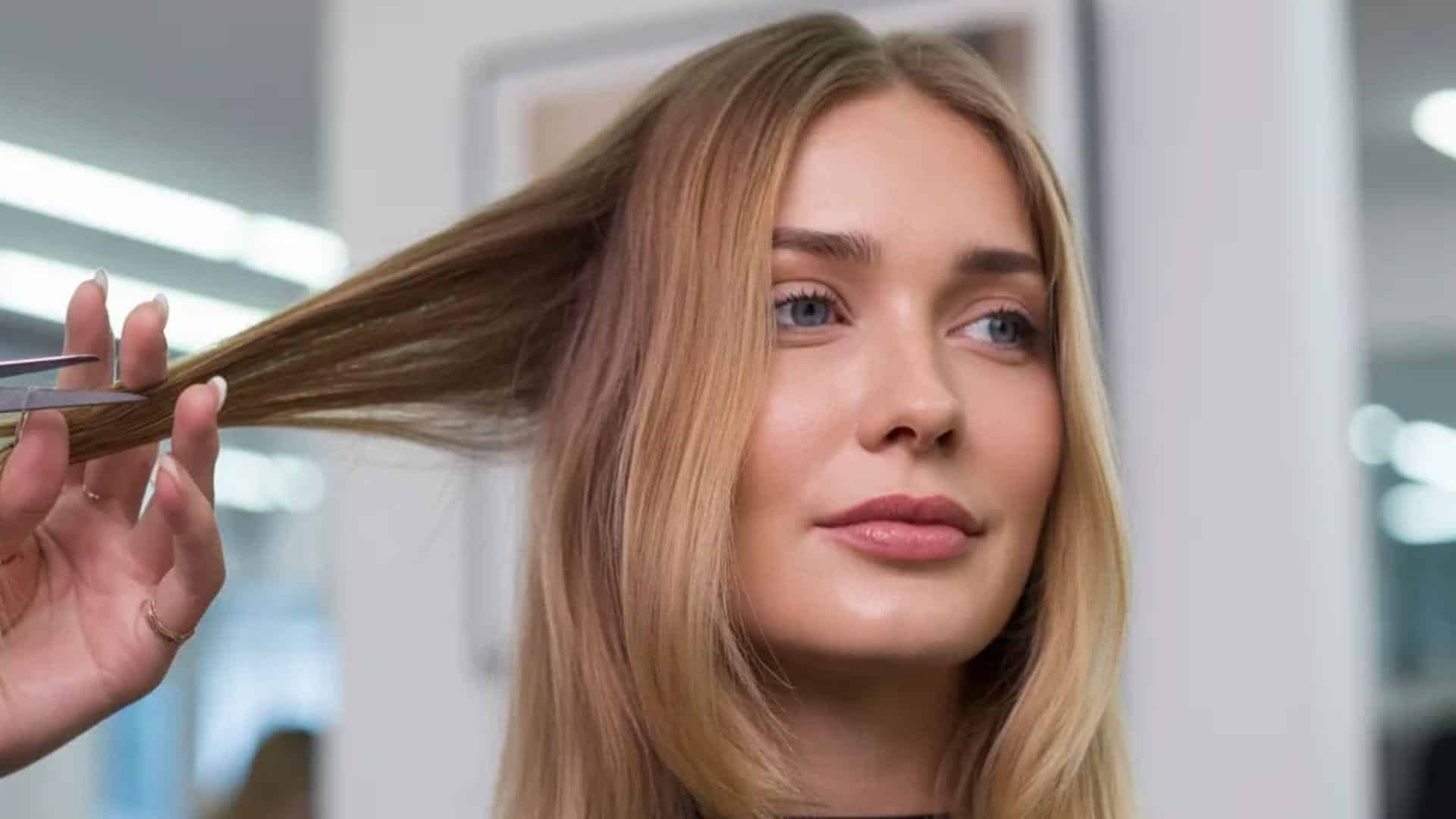
Have you ever left the salon and noticed your haircut didn’t look the same once it dried?
How hair is cut can change the way it falls, moves, and frames your face.
Drawing from years of experience as a stylist, I’ll guide you through the advantages and the disadvantages of cutting dry hair compared to wet cutting.
You’ll learn which method suits your hair type, how to avoid common mistakes, and tips to keep your style balanced and natural.
By understanding these techniques, you can feel confident in getting the results you want every time.
What Is Dry Hair Cutting?

Dry hair cutting is the method of trimming or shaping hair while it is completely dry.
This approach allows stylists to see how the hair naturally falls, moves, and behaves in everyday conditions.
Have you ever left the salon and noticed your haircut didn’t look the same once it dried?
How hair is cut can change the way it falls, moves, and frames your face.
Drawing from years of experience as a stylist, I’ll guide you through the advantages and the disadvantages of cutting dry hair compared to wet cutting.
You’ll learn which method suits your hair type, how to avoid common mistakes, and tips to keep your style balanced and natural.
By understanding these techniques, you can feel confident in getting the results you want every time.
What Is Dry Hair Cutting?
Dry hair cutting is the method of trimming or shaping hair while it is completely dry.
This approach allows stylists to see how the hair naturally falls, moves, and behaves in everyday conditions.
Common tools include sharp scissors, thinning shears, and combs, which help control the hair and achieve the desired shape.
Dry cutting is often used for texturizing to add layers or remove excess bulk, for final shape adjustments to refine the overall haircut for balance and symmetry, and for working with curls or waves to shape hair while preserving its natural pattern.
This method helps stylists make precise decisions based on how hair looks naturally.
What Is Wet Hair Cutting?
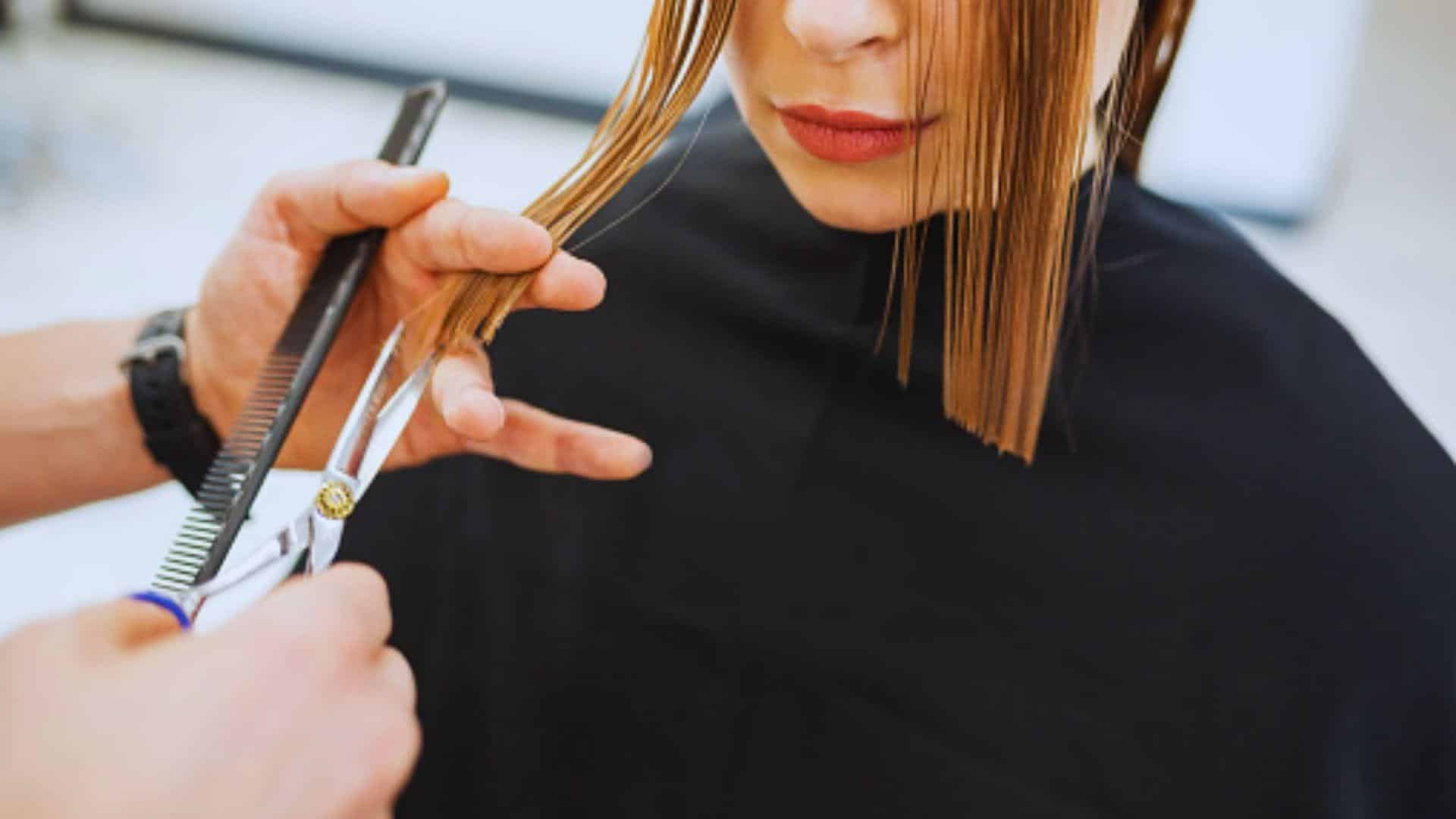
Wet hair cutting is a method where the hair is dampened before trimming. Moist hair allows stylists to handle it more easily, keeping tension even and sections controlled.
This makes the cutting process more precise and predictable.
Wet cutting is commonly used for precision trims to create clean, straight lines, for straight hair shaping to ensure the hair falls evenly and smooths out irregularities, and for bulk length removal to efficiently shorten long sections without uneven results.
It is especially helpful for hair that is thick or prone to shifting during cutting. Working on damp hair helps stylists achieve balance, uniformity, and a neat finish with less guesswork.
Advantages and Disadvantages of Cutting Dry Hair

Dry hair cutting has both benefits and challenges. Knowing the advantages and disadvantages helps you decide if this method suits your hair type and style.
Key Disadvantages of Cutting Dry Hair
Dry cutting presents challenges that can affect the overall look and precision of the haircut. Stylists need to be extra careful to maintain balance and accuracy.
- Difficulty achieving precise lines:
Cutting hair while it is dry makes it harder to create blunt edges or sharp angles.
Hair naturally moves and separates, which can cause the cut to look uneven or misaligned. Stylists must constantly check the sections to maintain balance.
- Higher risk of hair breakage or split ends:
Dry hair lacks moisture, making it more fragile and prone to breakage.
Friction from scissors can cause split ends if the tools are not extremely sharp or if the hair is dense or coarse.
- Not suitable for major length reduction:
Removing large amounts of hair in one go can lead to inconsistencies.
Dry cutting does not allow bulk hair to be smoothed easily, increasing the risk of an uneven finish and requiring repeated corrections.
- Reduced control due to frizz or static:
Flyaways and frizz can make sectioning difficult, especially in fine or curly hair.
Texture variations in dry hair can affect the accuracy of the cut, making it challenging to achieve a uniform result.
- Time-consuming process:
Dry cutting requires careful, strand-by-strand attention.
Stylists may need to repeatedly check and reshape sections, particularly for thick, coarse, or wavy hair, which can make the process slower than cutting wet hair.
Advantages of Cutting Hair Dry
Dry cutting has benefits that can help refine styles and highlight natural hair patterns. It is useful for finishing touches and curl definition.
- Better visibility of natural texture:
Dry hair cutting allows stylists to see exactly how the hair falls and behaves in everyday conditions.
This helps shape layered or lived-in styles that follow the hair’s natural movement.
- More accurate shaping for curls and waves:
Dry cutting enables curls and waves to be shaped without surprises after drying.
This method preserves curl definition, ensures consistent layering, and avoids unwanted shrinkage.
- Ideal for finishing touches:
Dry cutting is effective for refining a haircut after wet cutting.
Stylists can adjust lengths, smooth edges, and perfect the overall balance of the style, leaving the hair looking controlled and polished.
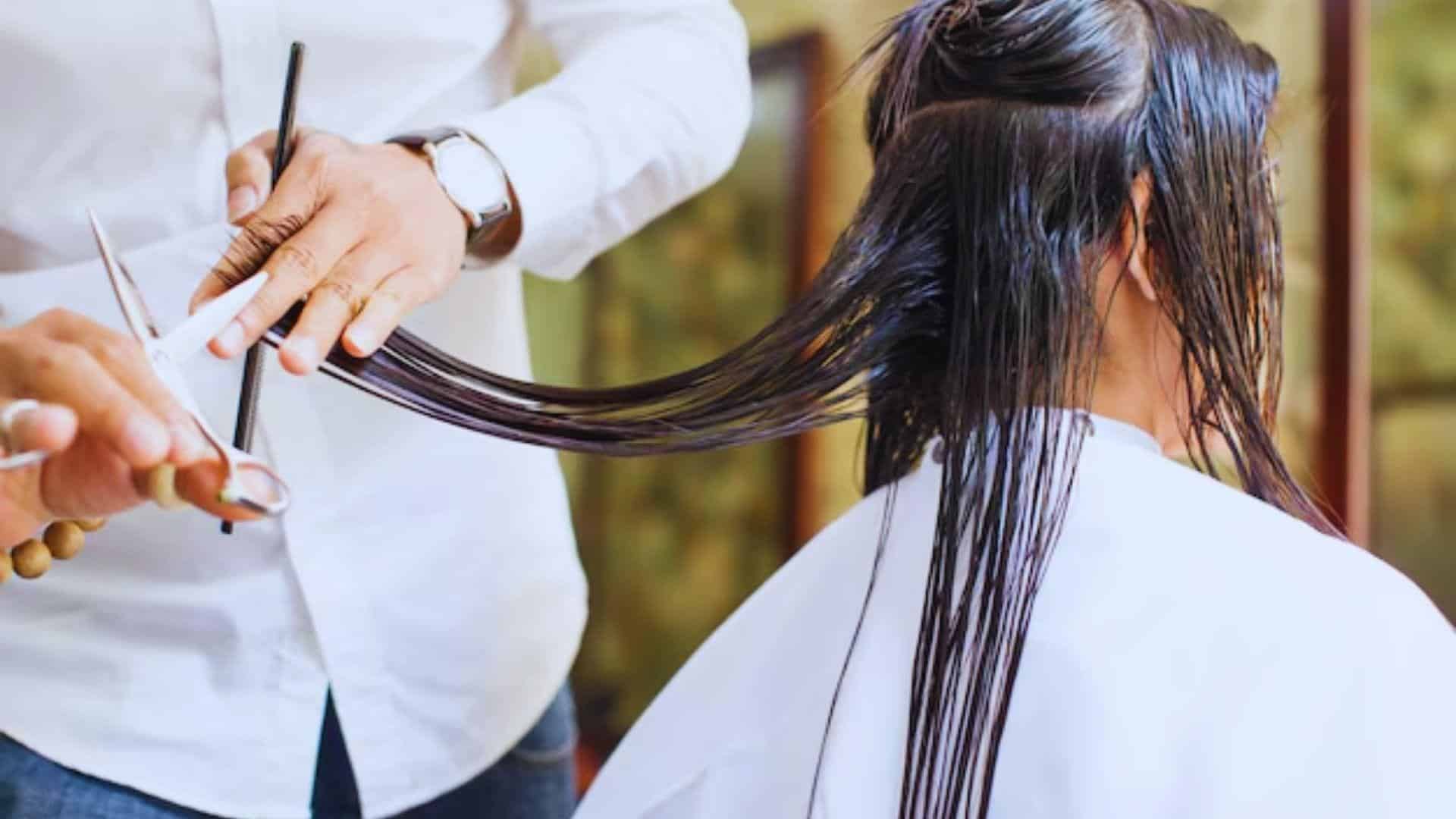
Wet hair cutting has both benefits and limitations. Knowing them can help you choose the best method for your hair type, texture, and desired style.
Disadvantages of Cutting Wet Hair
Wet cutting may hide how hair naturally falls and behaves once it dries. Stylists need to anticipate shrinkage and texture changes to avoid unexpected results.
Difficulty predicting final shape: Hair can shrink or expand after drying, making the haircut look different from what was intended. This is especially common with curly or wavy hair.
Limited view of natural movement: Wet hair lies flat and loses some of its volume, which makes it harder to see how layers or textures will appear naturally.
Not ideal for curl definition: Curls and waves may spring up after drying, which can affect the intended style if cut while wet.
Potential for overcutting: Removing too much length at once can create imbalances, particularly in thicker hair, because wet hair appears longer than it will be when dry.
Advantages of Cutting Hair Wet
Despite some limitations, wet cutting is preferred for many styles due to its precision and efficiency.
Higher precision and symmetry: Damp hair is easier to comb and section, allowing stylists to create straight lines and balanced shapes with accuracy.
Easier handling and sectioning: Wet hair is smoother and less tangled, which simplifies working with both long and short sections.
Faster for complete style upgradations: Wet cutting makes it easier to remove large amounts of length efficiently, saving time on major trims.
Works well for straight and structured haircuts: This method is ideal for straight hair or designs that require uniform, clean edges and consistent layering.
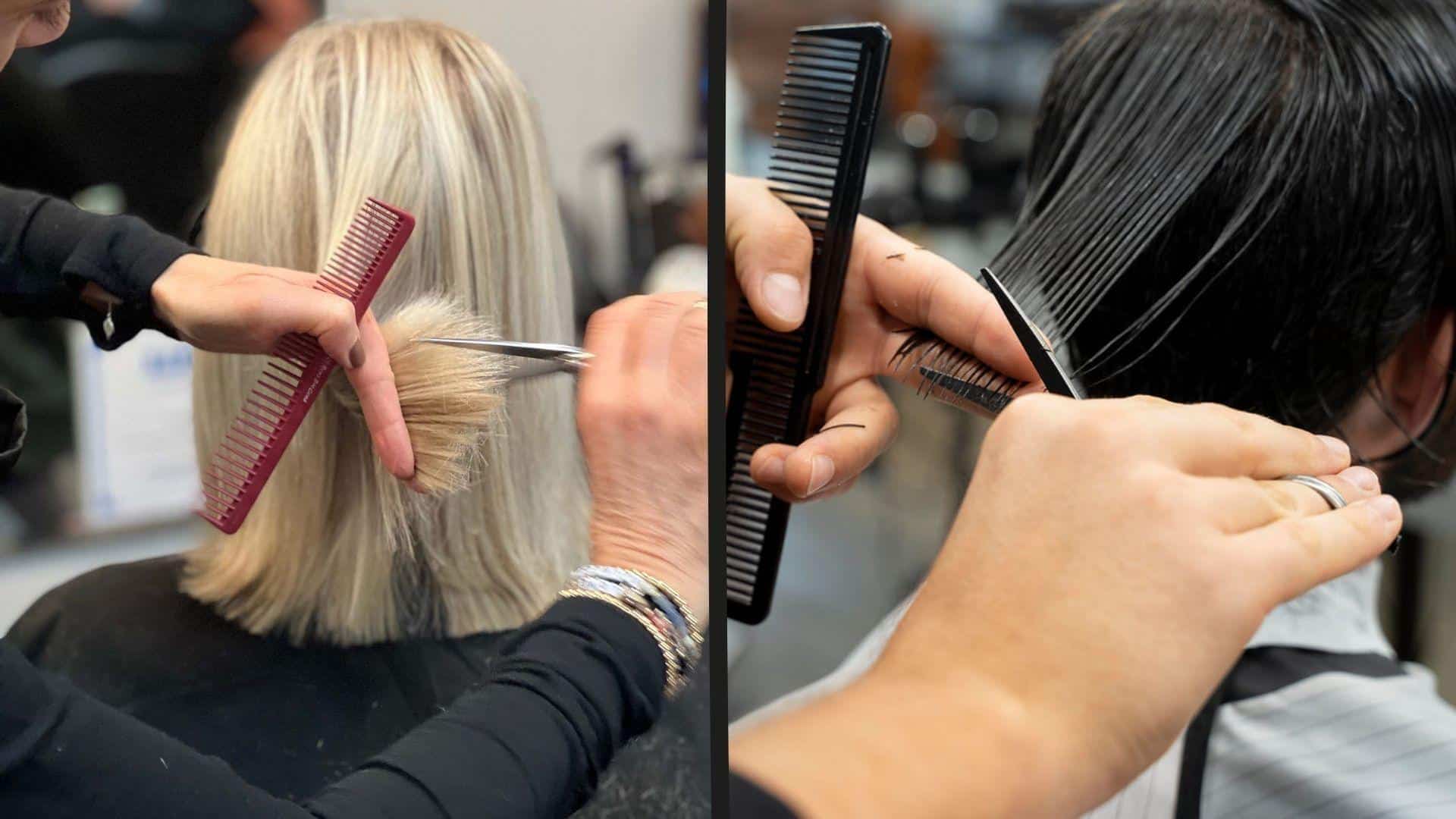
Knowing the differences between wet and dry hair cutting helps you pick the right method for your hair type and style.
Each technique has its pros and cons in precision, texture, and overall outcome.
1. Precision and line accuracy
Dry hair cutting shows how hair naturally falls, which is helpful for curls and waves. Straight lines can be harder to achieve and may require extra checking.
Wet hair cutting allows for clean, straight lines with easier sectioning. It works best for structured styles and straight hair that need symmetry.
2. Suitability for different hair types
Dry cutting works well for curly, wavy, or textured hair. Layers and movement can be shaped accurately, but thick hair may be harder to manage.
Wet cutting is ideal for straight or fine hair. It smooths bulk and makes even cutting easier, but curls may shrink after drying.
3. Styling outcome and texture control
Dry cutting preserves natural texture and curl definition. Stylists can refine small details for a balanced, natural finish.
Wet cutting produces smooth, structured results. Bulk removal is easier, though final texture may differ once the hair dries.
4. Time and effort required
Dry cutting usually takes longer because each section needs careful attention. Checking and adjusting is often necessary.
Wet cutting is faster for major trims. Damp hair allows efficient bulk removal and shaping while maintaining accuracy.
5. Risk of damage or uneven cuts
Dry cutting can increase split ends or breakage, especially on fragile hair. Uneven sections may require corrections.
Wet cutting lowers breakage risk as damp hair is easier to manage. Overcutting can occur if shrinkage or curls are not accounted for.
Dry vs. Wet Hair Cutting: Quick Comparison
Quickly compare dry and wet hair cutting to see which method works best for your hair type and style.
| Feature | Dry Hair Cutting | Wet Hair Cutting |
|---|---|---|
| Precision & Lines | Shows natural fall, harder to get sharp, straight lines | Easier to achieve clean, straight lines and symmetry |
| Hair Type Suitability | Ideal for curly, wavy, or textured hair, less suited for thick or coarse hair | Best for straight, fine, or thick hair that needs uniform bulk removal |
| Texture & Movement | Preserves natural texture and curl definition | Smooths hair, final texture may differ after drying |
| Time & Effort | Slower, requires careful sectioning and repeated checks | Faster for major trims, bulk removal easier |
| Risk of Damage | Higher risk of breakage or split ends on fragile hair | Lower risk of breakage, overcutting possible if shrinkage is not considered |
| Best Use | Finishing touches, curl shaping, small adjustments | Major trims, structured styles, and straight hair shaping |
This comparison highlights the key differences, helping you quickly see which method suits your hair type and styling goals.
Choosing When to Cut Hair Dry
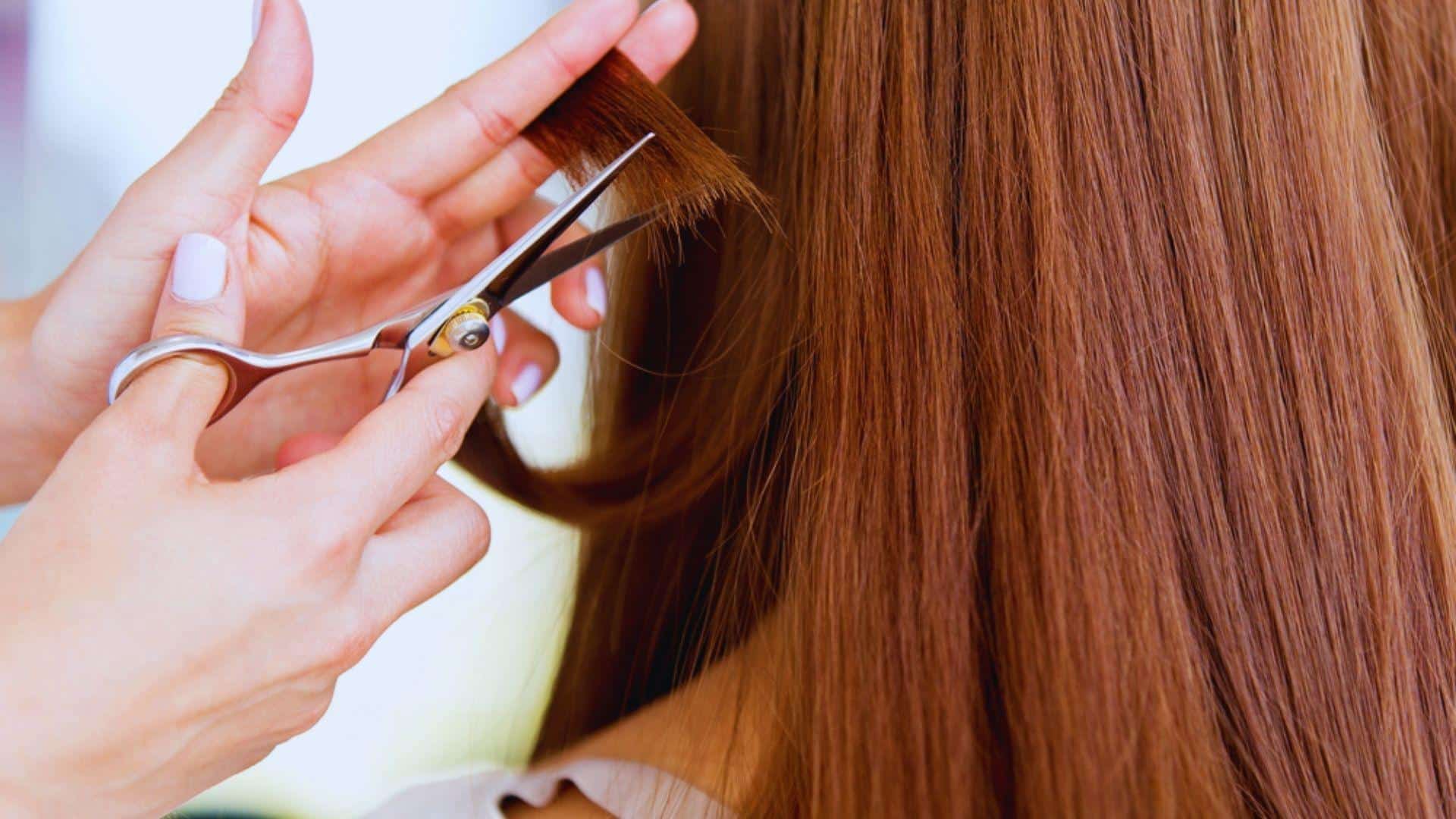
Dry hair cutting is not ideal for every hair type or situation. Knowing which hair types to avoid and when it can be useful helps achieve better results and prevents damage.
Which Hair Types Should Avoid Dry Cutting
Not all hair responds well to dry cutting. Some hair types can be difficult to manage or shape using this method.
Thick and coarse hair: Dry cutting is harder to control on thick or coarse hair. Bulk removal can be uneven, requiring more effort and adjustments.
Very frizzy or damaged hair: Frizz and breakage increase the risk of uneven cuts. Stylists may struggle to create clean lines.
People planning drastic style changes: Major length reduction or structural changes are harder, which may lead to uneven sections or unwanted shapes.
Fine hair needing blunt density: Dry cutting can make fine hair appear uneven or sparse, making uniform blunt finishes harder to achieve.
When Dry Cutting Can Be the Better Choice
Dry cutting works well in situations where natural texture, curl definition, or finishing touches are needed. Knowing when to use it improves style outcomes.
Curly or wavy hair shaping: Stylists can shape curls and waves based on their natural fall while refining layers.
Maintaining an existing haircut: Minor trims or adjustments are easier, as stylists can follow the natural shape and maintain balance.
Adding movement or texture: Light layers and texture can be added easily, with adjustments made visibly without guessing.
Quick maintenance trims: Dry cutting is convenient for touch-ups, removing split ends, or trimming small sections while following the hair’s natural pattern.
Knowing when dry cutting works helps achieve safer and more precise results.
Expert Tips to Prevent Problems When Cutting Hair Dry
Follow these expert tips to prevent common problems when cutting hair dry.
- Use professional-grade, sharp shears to reduce breakage and ensure clean cuts.
- Work in small sections to maintain control and precision throughout the haircut.
- Ensure hair is clean and fully detangled before cutting to prevent uneven results.
- Avoid removing a large length at once, especially on thick or textured hair.
- Combine dry and wet techniques when needed to achieve better balance and accuracy.
Using these simple practices helps achieve cleaner, safer, and more precise results.
Final Thoughts
Choosing between wet and dry hair cutting depends on your hair type and style goals.
From my experience, dry cutting works well for refining curls and finishing touches, while wet cutting is better for straight lines and bulk removal.
Understanding the advantages and the disadvantages of cutting dry hair helps achieve a balanced, natural look and avoid uneven results.
Using the right method ensures a manageable haircut that suits everyday hair movement.
Give your next haircut a smarter approach by applying these tips to see what works best for your hair!
Frequently Asked Questions
Can I Cut My Hair Dry At Home Safely?
Yes, but only for minor trims. Major cuts are better done by a professional to avoid uneven results and damage.
How Often Should I Trim My Hair Using Dry Cutting?
For dry cutting, small touch-ups every 6-8 weeks help maintain shape and manage split ends without overcutting.
Does Dry Cutting Affect Hair Growth?
No, dry cutting does not affect hair growth. It only trims the ends and shapes the hair.
Can I Switch Between Wet And Dry Cutting In One Session?
Yes, combining both methods is common. Wet cutting removes bulk, while dry cutting refines texture and curls.
Is Dry Cutting Suitable For Colored Or Chemically Treated Hair?
Dry cutting can be done on treated hair, but extra care is needed to prevent breakage and uneven ends.
Common tools include sharp scissors, thinning shears, and combs, which help control the hair and achieve the desired shape.
Dry cutting is often used for texturizing to add layers or remove excess bulk, for final shape adjustments to refine the overall haircut for balance and symmetry, and for working with curls or waves to shape hair while preserving its natural pattern.
This method helps stylists make precise decisions based on how hair looks naturally.
What Is Wet Hair Cutting?
Wet hair cutting is a method where the hair is dampened before trimming. Moist hair allows stylists to handle it more easily, keeping tension even and sections controlled.
This makes the cutting process more precise and predictable.
Wet cutting is commonly used for precision trims to create clean, straight lines, for straight hair shaping to ensure the hair falls evenly and smooths out irregularities, and for bulk length removal to efficiently shorten long sections without uneven results.
It is especially helpful for hair that is thick or prone to shifting during cutting. Working on damp hair helps stylists achieve balance, uniformity, and a neat finish with less guesswork.
Advantages and Disadvantages of Cutting Dry Hair
Dry hair cutting has both benefits and challenges. Knowing the advantages and disadvantages helps you decide if this method suits your hair type and style.
Key Disadvantages of Cutting Dry Hair
Dry cutting presents challenges that can affect the overall look and precision of the haircut. Stylists need to be extra careful to maintain balance and accuracy.
- Difficulty achieving precise lines:
Cutting hair while it is dry makes it harder to create blunt edges or sharp angles.
Hair naturally moves and separates, which can cause the cut to look uneven or misaligned. Stylists must constantly check the sections to maintain balance.
- Higher risk of hair breakage or split ends:
Dry hair lacks moisture, making it more fragile and prone to breakage.
Friction from scissors can cause split ends if the tools are not extremely sharp or if the hair is dense or coarse.
- Not suitable for major length reduction:
Removing large amounts of hair in one go can lead to inconsistencies.
Dry cutting does not allow bulk hair to be smoothed easily, increasing the risk of an uneven finish and requiring repeated corrections.
- Reduced control due to frizz or static:
Flyaways and frizz can make sectioning difficult, especially in fine or curly hair.
Texture variations in dry hair can affect the accuracy of the cut, making it challenging to achieve a uniform result.
- Time-consuming process:
Dry cutting requires careful, strand-by-strand attention.
Stylists may need to repeatedly check and reshape sections, particularly for thick, coarse, or wavy hair, which can make the process slower than cutting wet hair.
Advantages of Cutting Hair Dry
Dry cutting has benefits that can help refine styles and highlight natural hair patterns. It is useful for finishing touches and curl definition.
- Better visibility of natural texture:
Dry hair cutting allows stylists to see exactly how the hair falls and behaves in everyday conditions.
This helps shape layered or lived-in styles that follow the hair’s natural movement.
- More accurate shaping for curls and waves:
Dry cutting enables curls and waves to be shaped without surprises after drying.
This method preserves curl definition, ensures consistent layering, and avoids unwanted shrinkage.
- Ideal for finishing touches:
Dry cutting is effective for refining a haircut after wet cutting.
Stylists can adjust lengths, smooth edges, and perfect the overall balance of the style, leaving the hair looking controlled and polished.
Wet hair cutting has both benefits and limitations. Knowing them can help you choose the best method for your hair type, texture, and desired style.
Disadvantages of Cutting Wet Hair
Wet cutting may hide how hair naturally falls and behaves once it dries. Stylists need to anticipate shrinkage and texture changes to avoid unexpected results.
Difficulty predicting final shape: Hair can shrink or expand after drying, making the haircut look different from what was intended. This is especially common with curly or wavy hair.
Limited view of natural movement: Wet hair lies flat and loses some of its volume, which makes it harder to see how layers or textures will appear naturally.
Not ideal for curl definition: Curls and waves may spring up after drying, which can affect the intended style if cut while wet.
Potential for overcutting: Removing too much length at once can create imbalances, particularly in thicker hair, because wet hair appears longer than it will be when dry.
Advantages of Cutting Hair Wet
Despite some limitations, wet cutting is preferred for many styles due to its precision and efficiency.
Higher precision and symmetry: Damp hair is easier to comb and section, allowing stylists to create straight lines and balanced shapes with accuracy.
Easier handling and sectioning: Wet hair is smoother and less tangled, which simplifies working with both long and short sections.
Faster for complete style upgradations: Wet cutting makes it easier to remove large amounts of length efficiently, saving time on major trims.
Works well for straight and structured haircuts: This method is ideal for straight hair or designs that require uniform, clean edges and consistent layering.
Knowing the differences between wet and dry hair cutting helps you pick the right method for your hair type and style.
Each technique has its pros and cons in precision, texture, and overall outcome.
1. Precision and line accuracy
Dry hair cutting shows how hair naturally falls, which is helpful for curls and waves. Straight lines can be harder to achieve and may require extra checking.
Wet hair cutting allows for clean, straight lines with easier sectioning. It works best for structured styles and straight hair that need symmetry.
2. Suitability for different hair types
Dry cutting works well for curly, wavy, or textured hair. Layers and movement can be shaped accurately, but thick hair may be harder to manage.
Wet cutting is ideal for straight or fine hair. It smooths bulk and makes even cutting easier, but curls may shrink after drying.
3. Styling outcome and texture control
Dry cutting preserves natural texture and curl definition. Stylists can refine small details for a balanced, natural finish.
Wet cutting produces smooth, structured results. Bulk removal is easier, though final texture may differ once the hair dries.
4. Time and effort required
Dry cutting usually takes longer because each section needs careful attention. Checking and adjusting is often necessary.
Wet cutting is faster for major trims. Damp hair allows efficient bulk removal and shaping while maintaining accuracy.
5. Risk of damage or uneven cuts
Dry cutting can increase split ends or breakage, especially on fragile hair. Uneven sections may require corrections.
Wet cutting lowers breakage risk as damp hair is easier to manage. Overcutting can occur if shrinkage or curls are not accounted for.
Dry vs. Wet Hair Cutting: Quick Comparison
Quickly compare dry and wet hair cutting to see which method works best for your hair type and style.
| Feature | Dry Hair Cutting | Wet Hair Cutting |
|---|---|---|
| Precision & Lines | Shows natural fall, harder to get sharp, straight lines | Easier to achieve clean, straight lines and symmetry |
| Hair Type Suitability | Ideal for curly, wavy, or textured hair, less suited for thick or coarse hair | Best for straight, fine, or thick hair that needs uniform bulk removal |
| Texture & Movement | Preserves natural texture and curl definition | Smooths hair, final texture may differ after drying |
| Time & Effort | Slower, requires careful sectioning and repeated checks | Faster for major trims, bulk removal easier |
| Risk of Damage | Higher risk of breakage or split ends on fragile hair | Lower risk of breakage, overcutting possible if shrinkage is not considered |
| Best Use | Finishing touches, curl shaping, small adjustments | Major trims, structured styles, and straight hair shaping |
This comparison highlights the key differences, helping you quickly see which method suits your hair type and styling goals.
Choosing When to Cut Hair Dry
Dry hair cutting is not ideal for every hair type or situation. Knowing which hair types to avoid and when it can be useful helps achieve better results and prevents damage.
Which Hair Types Should Avoid Dry Cutting
Not all hair responds well to dry cutting. Some hair types can be difficult to manage or shape using this method.
Thick and coarse hair: Dry cutting is harder to control on thick or coarse hair. Bulk removal can be uneven, requiring more effort and adjustments.
Very frizzy or damaged hair: Frizz and breakage increase the risk of uneven cuts. Stylists may struggle to create clean lines.
People planning drastic style changes: Major length reduction or structural changes are harder, which may lead to uneven sections or unwanted shapes.
Fine hair needing blunt density: Dry cutting can make fine hair appear uneven or sparse, making uniform blunt finishes harder to achieve.
When Dry Cutting Can Be the Better Choice
Dry cutting works well in situations where natural texture, curl definition, or finishing touches are needed. Knowing when to use it improves style outcomes.
Curly or wavy hair shaping: Stylists can shape curls and waves based on their natural fall while refining layers.
Maintaining an existing haircut: Minor trims or adjustments are easier, as stylists can follow the natural shape and maintain balance.
Adding movement or texture: Light layers and texture can be added easily, with adjustments made visibly without guessing.
Quick maintenance trims: Dry cutting is convenient for touch-ups, removing split ends, or trimming small sections while following the hair’s natural pattern.
Knowing when dry cutting works helps achieve safer and more precise results.
Expert Tips to Prevent Problems When Cutting Hair Dry
Follow these expert tips to prevent common problems when cutting hair dry.
- Use professional-grade, sharp shears to reduce breakage and ensure clean cuts.
- Work in small sections to maintain control and precision throughout the haircut.
- Ensure hair is clean and fully detangled before cutting to prevent uneven results.
- Avoid removing a large length at once, especially on thick or textured hair.
- Combine dry and wet techniques when needed to achieve better balance and accuracy.
Using these simple practices helps achieve cleaner, safer, and more precise results.
Final Thoughts
Choosing between wet and dry hair cutting depends on your hair type and style goals.
From my experience, dry cutting works well for refining curls and finishing touches, while wet cutting is better for straight lines and bulk removal.
Understanding the advantages and the disadvantages of cutting dry hair helps achieve a balanced, natural look and avoid uneven results.
Using the right method ensures a manageable haircut that suits everyday hair movement.
Give your next haircut a smarter approach by applying these tips to see what works best for your hair!
Frequently Asked Questions
Can I Cut My Hair Dry At Home Safely?
Yes, but only for minor trims. Major cuts are better done by a professional to avoid uneven results and damage.
How Often Should I Trim My Hair Using Dry Cutting?
For dry cutting, small touch-ups every 6-8 weeks help maintain shape and manage split ends without overcutting.
Does Dry Cutting Affect Hair Growth?
No, dry cutting does not affect hair growth. It only trims the ends and shapes the hair.
Can I Switch Between Wet And Dry Cutting In One Session?
Yes, combining both methods is common. Wet cutting removes bulk, while dry cutting refines texture and curls.
Is Dry Cutting Suitable For Colored Or Chemically Treated Hair?
Dry cutting can be done on treated hair, but extra care is needed to prevent breakage and uneven ends.