Best Skin Care Routine for Oily Skin That Actually Works


Does your skin start to shine by midday? You are not alone. Millions deal with oily skin, excess shine, clogged pores, and unexpected breakouts. It can feel frustrating when your skin seems to have a mind of its own despite your efforts.
Many people try dozens of products, and some only make things worse, while others work for a short time. Managing oily skin does not require magic solutions or complicated routines. Consistent steps backed by dermatologists and licensed estheticians can help control oil and keep your skin balanced.
This guide offers practical advice for oily skin. You will get morning and night routines, recommended ingredients, common mistakes that worsen oiliness, and tips to build a routine that works. With the right approach, oily skin can feel manageable and healthier over time.
Understanding Oily Skin: What You Need to Know
Oily skin produces excess sebum, leaving a shiny, greasy appearance, especially in the T-zone. While it can lead to breakouts, it also helps prevent fine lines and wrinkles over time.
To identify oily skin, check your face 30 minutes after washing. If it looks slick all over, it’s oily; partial shine usually indicates combination skin. A dermatologist can confirm your skin type if unsure.
Oily skin needs a balanced routine that hydrates without overproducing oil. Focus on minimizing shine, protecting the skin barrier,
Key Ingredients for Oily Skin (Expert Recommendations)
Ingredients matter more than brand names. Once you know what works for oily skin, you can spot effective products instantly. Here are the powerhouses dermatologists recommend.
- Salicylic Acid (BHA): Exfoliates deep inside pores, clears excess oil and dead skin, and prevents blackheads and breakouts.
- Niacinamide (Vitamin B3): Regulates oil production, reduces inflammation and redness, and minimizes the appearance of enlarged pores.
- Hyaluronic Acid: Provides lightweight hydration without adding oil, helping oily skin retain moisture and control excess sebum.
- Ceramides: Restore and maintain the skin’s natural moisture barrier, supporting hydration without clogging pores.
- Retinol and Retinoids: Promote skin renewal, refine texture, regulate oil, and prevent clogged pores; start slowly to allow adjustment.
- Benzoyl Peroxide: Targets acne-causing bacteria, controls breakouts, and can be used in cleansers or spot treatments.
- Glycolic Acid (AHA): Exfoliates the skin’s surface, brightens complexion, and improves texture; use 2–3 times per week.
- Clay (Kaolin and Bentonite): Absorbs excess oil and impurities from pores, controls shine, and prevents breakouts without over-drying.
Morning Skincare Routine for Oily Skin (Step-by-Step Expert Guide)
Your morning routine sets the tone for the entire day. The goal is to control oil and protect your skin. Let’s break down each step with expert guidance.
Step 1: Cleanse with Foaming Cleanser

Start with a gentle, foaming cleanser to remove overnight oil without over-drying. Sulfate-free formulas with salicylic acid help exfoliate inside pores while keeping skin balanced.
Massage the cleanser onto damp skin in circular motions, focusing on the T-zone. Rinse with lukewarm water, as hot water can strip natural oils and worsen oiliness.
Step 2: Apply Alcohol-Free Toner

Toner helps balance your skin’s pH and removes any leftover oil or impurities after cleansing. This step preps your skin for better absorption of the next products.
Choose alcohol-free toners with ingredients like witch hazel, niacinamide, or salicylic acid. Apply gently with a cotton pad, sweeping across face and neck, and let it fully absorb before continuing.
Step 3: Use Lightweight Serum

Serums deliver concentrated ingredients that target specific concerns. For oily skin, niacinamide helps regulate sebum, while prebiotics support a healthy skin barrier for less reactive, balanced skin.
Use a pea-sized amount and gently pat it into your T-zone, avoiding aggressive rubbing. Let the serum fully absorb before moving on to the next step for maximum effectiveness.
Step 4: Moisturize with Oil-Free Formula
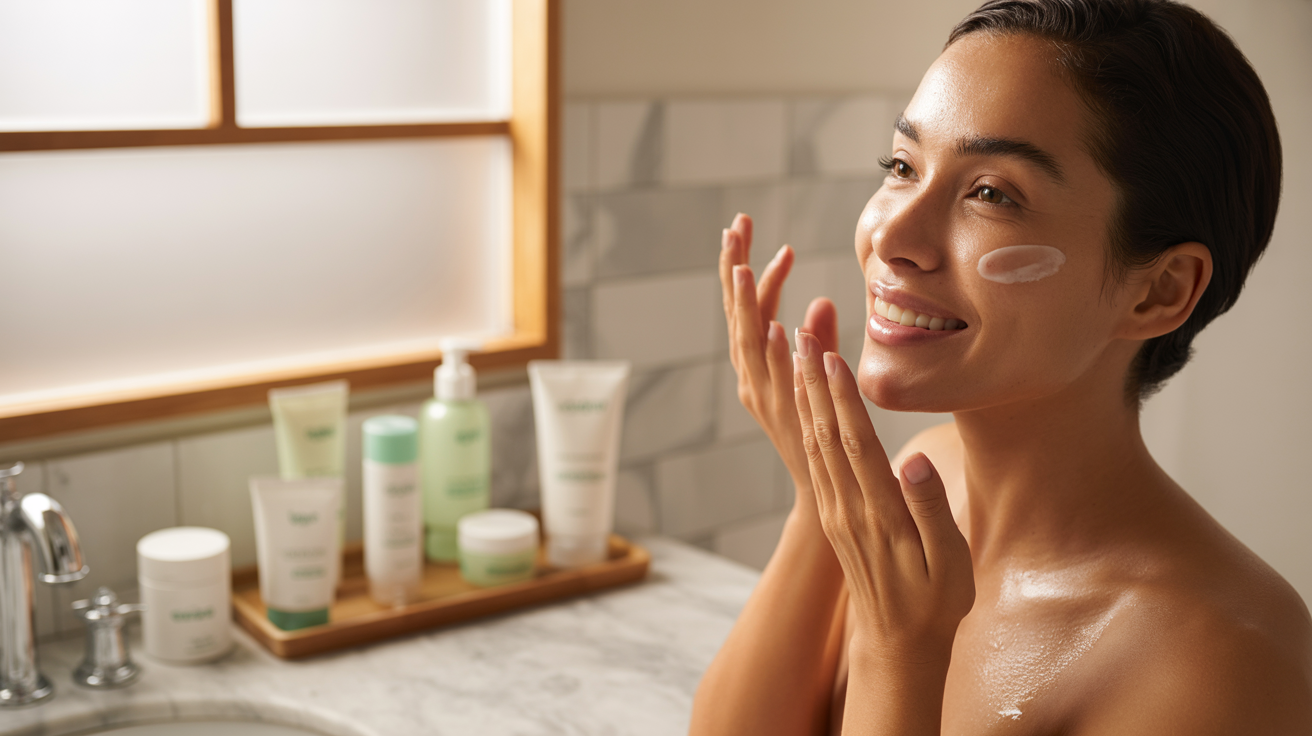
Moisturizing is crucial for oily skin to maintain a healthy skin barrier and prevent excess oil production. Gel-based or oil-free moisturizers with hyaluronic acid hydrate without clogging pores.
Use a dime-sized amount and massage upward, focusing on the T-zone for even coverage. The goal is lightweight hydration that keeps skin balanced and comfortable.
Step 5: Apply Sunscreen Daily

Sunscreen is crucial for all skin types, including oily skin, as sun exposure can trigger excess oil production. Choose broad-spectrum SPF 30 or higher with non-comedogenic, oil-free, matte-finish formulas.
Mineral sunscreens with zinc oxide or titanium dioxide work well for oily skin. Apply generously 15 minutes before sun exposure, cover all areas, and reapply every two hours when outdoors or sweating.
Nighttime Skincare Routine for Oily Skin (Step-by-Step Expert Guide)
Nighttime is when your skin repairs itself. This is when you use stronger treatments. Your evening routine focuses on deep cleaning and active ingredients.
Step 1: Double Cleanse

Begin with an oil-based or gel-to-oil cleanser to remove sunscreen and makeup that water-based cleansers can’t fully dissolve. Massage onto dry skin, then add water to emulsify before rinsing.
Follow with a water-based foaming cleanser for a double cleanse. This ensures thorough cleaning while keeping skin balanced and comfortable, leaving it clean but not tight.
Step 2: Apply Chemical Exfoliant
Chemical exfoliants help keep oily skin clear by preventing clogged pores and breakouts. They’re gentler and more effective than physical scrubs and should be used 2 to 3 times per week.
BHA (salicylic acid) works deep inside pores, while AHA (glycolic acid) exfoliates the surface and brightens skin. Start slowly, increasing frequency as tolerated to avoid irritation.
Step 3: Use Retinoid Treatment
Retinoids are highly effective for oily, acne-prone skin, improving texture and regulating oil without clogging pores. They promote faster skin renewal and help prevent breakouts.
Introduce retinoids slowly, using a pea-sized amount every other night. Avoid combining with other exfoliants on the same night to minimize irritation and let your skin adjust.
Step 4: Apply Treatment Serum
Apply your niacinamide serum after exfoliating to boost its pore-refining effects. It helps balance oil production and smooths skin overnight.
Prebiotics in the serum strengthen your skin barrier, promoting clearer, healthier skin by morning. Gently pat it on after retinoids or exfoliants and let it absorb overnight.
Step 5: Moisturize with Lightweight Formula
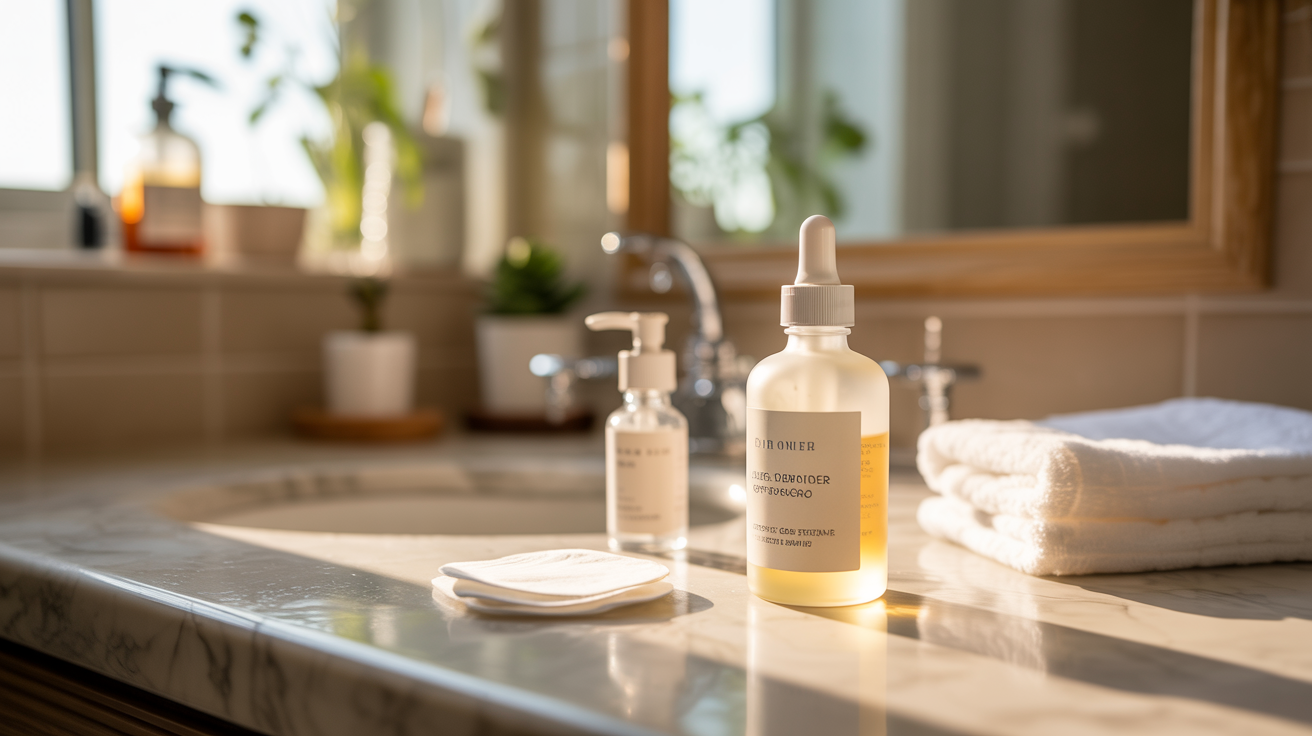
Finish your routine with a lightweight, oil-free moisturizer that hydrates without adding greasiness. It helps control shine while supporting overall skin health.
Nighttime antioxidant protection aids your skin’s natural repair process. Apply a moderate amount so your skin feels refreshed and nourished, not heavy or overloaded.
What to Avoid in Your Oily Skin Routine?
Knowing what not to use is just as important as knowing what to use. These common mistakes make oily skin worse. Avoid them completely.
- Avoid heavy, oil-based moisturizers like cocoa butter, lanolin, and corn oil, as they clog pores and worsen shine.
- Choose fragrance-free products to prevent irritation and allergic reactions, especially if you have sensitive oily skin.
- Skip alcohol-based toners or astringents, which over-dry skin and trigger more oil production.
- Avoid physical scrubs with rough particles; chemical exfoliants like salicylic acid are gentler and more effective.
- Never skip moisturizer; use lightweight, oil-free formulas to maintain a balanced skin barrier and control oil naturally.
Understanding the Difference: Morning vs. Nighttime Routines
Your skin has different needs during the day versus night. That’s why you need two separate routines. Here’s what each one accomplishes.
| Aspect | Morning Routine | Nighttime Routine |
|---|---|---|
| Purpose | Prepares and protects skin for the day | Repairs and treats skin overnight |
| Cleansing | Removes overnight oil buildup | Deep cleanses sunscreen, makeup, and daily pollution |
| Key Products | Lightweight, mattifying products; oil-free or matte sunscreen | Exfoliating ingredients, retinoids, and hydrating serums |
| Focus | Oil control, UV, and environmental protection, makeup prep | Treatment, cell turnover, hydration, repair |
| Why it matters | Shields skin from environmental stressors and sun damage | Active ingredients work during the natural repair cycle |
| Skin Rhythm Alignment | Matches daytime protection mode | Matches nighttime repair and regeneration mode |
Conclusion
Finding a skincare routine for oily skin does not have to be complicated. With the right products and consistent habits, you can control shine, prevent breakouts, and keep your skin healthy and balanced. Understanding how your skin reacts helps you build a routine that truly works.
Focus on gentle cleansers twice a day, lightweight moisturizers, and ingredients like salicylic acid and niacinamide. Always use sunscreen and avoid over-drying, as stripping your skin can increase oil production. Small, consistent steps are more effective than harsh treatments.
With these expert tips and product suggestions, you can create a routine suited to oily skin. Start simple, add treatments gradually, and give your skin time to adjust. Share what has worked for you or check out more guides for targeted advice on oily skin care.
Frequently Asked Questions
What is the best skin care routine for oily skin?
The best routine includes cleansing twice daily with a foaming cleanser containing salicylic acid, applying alcohol-free toner, using lightweight serums with niacinamide, moisturizing with oil-free formulas, and applying broad-spectrum sunscreen daily. Add chemical exfoliants 2-3 times weekly and retinoids at night for optimal results.
Should I skip moisturizer if I have oily skin?
No, never skip moisturizer. Oily skin still needs hydration to maintain a balanced skin barrier. Skipping moisturizer can trigger your skin to produce even more oil to compensate for dryness. Choose lightweight, oil-free, or gel-based moisturizers with hyaluronic acid that hydrate without feeling greasy.
How often should I wash my face if I have oily skin?
Wash your face twice daily, once in the morning and once at night, plus after sweating heavily. Use a gentle, sulfate-free foaming cleanser with salicylic acid. Avoid washing more frequently as over-cleansing strips natural oils and triggers increased oil production, worsening the problem.
What ingredients should I look for in products for oily skin?
Look for salicylic acid to unclog pores, niacinamide to regulate oil production, hyaluronic acid for lightweight hydration, retinoids for skin renewal, and clay for absorbing excess oil. Avoid heavy oils, comedogenic ingredients like cocoa butter, fragrances, and alcohol-based products that strip skin.
Can oily skin benefit from using sunscreen daily?
Yes, sunscreen is crucial for oily skin. Sun exposure can dry out skin, triggering increased sebum production. Choose non-comedogenic, oil-free, matte-finish formulas with SPF 30 or higher. Physical sunscreens with zinc oxide or titanium dioxide work well for controlling shine while protecting skin.