Hyperbaric Oxygen Therapy for Skin: What the Research Shows

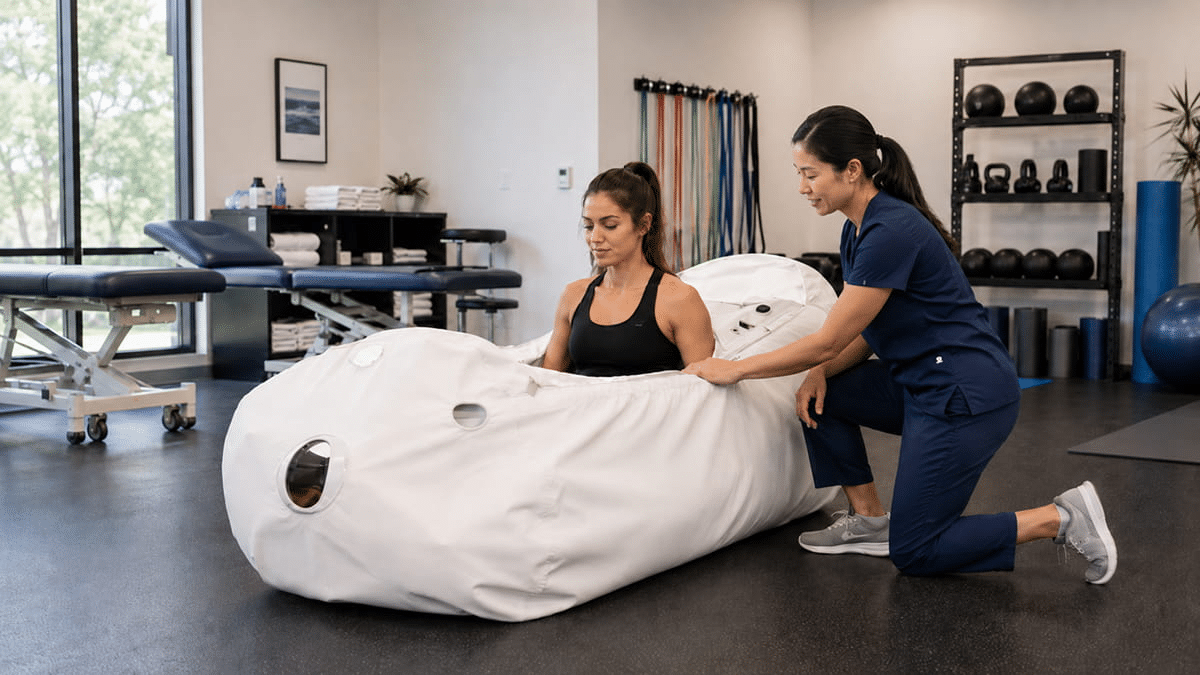
Oxygen chambers keep turning up on treatment menus, usually attached to a promise about glow. Hyperbaric oxygen therapy for skin is one of the few trending treatments with actual biopsy data behind it, and also one of the most oversold. Here is what the studies support, what they do not, and what a real course of sessions costs.
How Oxygen Under Pressure Reaches Your Skin
In a hyperbaric chamber, air pressure rises above normal sea level, which pushes far more oxygen into the fluid part of your blood instead of only onto red blood cells. That dissolved oxygen reaches tissue that usually receives very little of it, including the deeper layer of skin where collagen is produced.
Skin cells need oxygen to build collagen and repair damage. Raising the supply is a reasonable mechanism, not just a marketing line. Whether it changes how your face looks is a separate question.
What the Research Actually Supports
A 2021 clinical trial published in Aging put participants through 60 daily sessions at 2 ATA, 90 minutes each, five days a week across three months. Researchers took skin biopsies before and after.
The changes were measurable:
|
Marker |
Before |
After |
|
Collagen density |
67.8% |
76.6% |
|
Blood vessel count |
24.0 |
33.4 |
|
Elastic fiber length |
6.94 µm |
14.25 µm |
|
Senescent cells |
3.14 |
2.48 |
Elastic fiber fragmentation, a marker of aged skin, fell from 90% of samples to 10%. Blood supply to the skin improved alongside it, which matters because collagen is only as good as the circulation feeding it.
One caveat worth stating plainly: only 13 people were biopsied, all men, average age 68. Earlier reviews on photoaging point in the same direction, but this is a real signal from a small pool, not settled science.
What Is Still Unproven
Nothing in that data supports the one-session glow. Marie Claire’s coverage of HBOT for skin notes that people often report looking better immediately, then points out those effects may be shallow and short-lived. Skin turnover takes weeks, so a month is a fair minimum before judging results.
Three other gaps rarely get mentioned:
- No head-to-head comparison against daily sunscreen and a retinoid, which are cheap and well supported.
- No data on younger skin. The trial studied people in their late sixties, where there was more room to improve.
- No answer on durability. Nobody has shown how long the collagen gains hold after you stop.
McGill’s Office for Science and Society remains skeptical of wrinkle claims for exactly these reasons.
Cost and Session Count Are the Real Filter
Independent hard-shell clinics charge roughly $150 to $450 per session, with a national average near $250 to $350 in early 2026. Lower-pressure wellness studios run $75 to $150. Insurance covers none of this for cosmetic use.
Run those numbers against a 60-session protocol and the total lands somewhere between $9,000 and $21,000. That math is why people start pricing hyperbaric chambers for sale rather than buying session packages.
Pressure Is Where Home Units Differ
This is the detail most articles skip. The trial used 2.0 ATA with 100% oxygen delivered by mask, which is roughly the pressure you would feel 33 feet underwater.
Most home hyperbaric chambers operate at 1.3 to 1.5 ATA, closer to 10 to 16 feet of water. Less pressure means less dissolved oxygen, so expect a smaller effect than the published protocol produced. Check the ATA rating before you assume a unit matches what the research tested.
Who Should Ask a Doctor First
Pressure changes are not risk free. Talk to a physician before your first session if any of these apply:
- Ear or sinus problems, or recent ear surgery, since pressure changes affect the middle ear
- An untreated collapsed lung, which rules out treatment entirely
- Current chemotherapy with drugs such as bleomycin or doxorubicin
- A seizure disorder, uncontrolled fever, or pregnancy
- Claustrophobia, which is worth testing in a short session before committing to sixty
The Honest Summary
Hyperbaric oxygen therapy for skin has better evidence behind it than most treatments in this category, and worse evidence than the marketing suggests. It changed collagen and circulation in one small trial using a demanding three-month protocol at clinical pressure. It has not been shown to work as a one-off, at lower pressure, or on skin that is not already aging.
If sunscreen, sleep, and a retinoid are not yet habits, start there. If they already are, and you are willing to commit to months rather than a single appointment, this is a reasonable next thing to look into with a doctor who knows your history.