No Scars, No Hospital Stay: Why Dallas Adults Are Exploring ESG Over Gastric Sleeve


There’s a quiet but growing shift happening in the weight loss industry, and Dallas is sitting at the centre of it. Across the city, professionals in their late twenties through their fifties are increasingly steering away from gastric sleeve surgery, not because it doesn’t work, but because of what comes with it: visible abdominal scarring, multi-night hospital stays, and weeks of disrupted routines.
For a generation that has spent considerable time and money investing in how they look and feel, those trade-offs matter.
It’s why many are now turning to a clinically validated alternative that requires no incisions, no general anaesthesia in the traditional surgical sense, and no overnight admission.
What is ESG, and Why is it gaining ground?
Endoscopic Sleeve Gastroplasty as more commonly known as ESG stomach tightening, works by reducing the stomach’s functional volume from the inside using a flexible endoscope and a series of sutures. There are no external cuts, no staples, and no removal of stomach tissue.
The result is a significantly smaller stomach capacity, which supports earlier satiety and, over time, meaningful weight reduction.
Current wellness research suggests that well-selected candidates may lose between 15–20% of their total body weight within the first year, though individual outcomes vary depending on metabolic health and adherence to post-procedure guidance.
What sets ESG apart from gastric sleeve surgery on a practical level is the recovery profile. Most patients return home the same day and resume normal daily activity within a matter of days. Gastric sleeve surgery, by contrast, typically involves a hospital stay of two or more nights and a recovery period that can extend four to six weeks.
The scarring conversation no one was having
Gastric sleeve surgery requires several laparoscopic incisions across the abdomen, typically three to five which, while small, leave permanent marks. For anyone who has worked hard on how their body looks, or who simply did not factor scarring into their expectations of weight loss surgery, this comes as an unwelcome surprise.
Because faster weight loss can also change how skin sits on the body, some readers also think ahead about loose skin and long-term body confidence (not just the number on the scale)
ESG, operating entirely through the mouth via an endoscope, leaves no surface marks whatsoever. For Dallas patients who are weighing their options, particularly those under fifty who are active, appearance-conscious, or both, this distinction is increasingly driving decision-making.
The trend also reflects something broader: the 2026 wellness conversation has moved well beyond aesthetics.
Experts are increasingly linking sustained weight management to nervous system regulation, metabolic resilience, and long-term hormonal balance. Patients aren’t just asking ‘How much will I lose?’ They’re asking ‘What will this cost me in recovery time, in body confidence, in long-term health?’
Where Dallas residents are turning
For Dallas-area residents exploring non-surgical options, ESG stomach tightening procedure in Dallas, TX is now available through Everself, the nation’s largest provider of endoscopic weight loss solutions.
Procedures are performed at a state-of-the-art surgical facility offering patients a clinical-grade environment without the logistical weight of traditional hospital admission.
The programme pairs the ESG procedure with twelve months of structured, concierge-level metabolic support, nutritional guidance, medication management, and ongoing clinical monitoring, recognising that the procedure itself is only one chapter in a longer story.
Beyond Weight: The Metabolic Health Dimension
One of the more significant clinical shifts in weight management is the move away from weight as the sole metric of success.
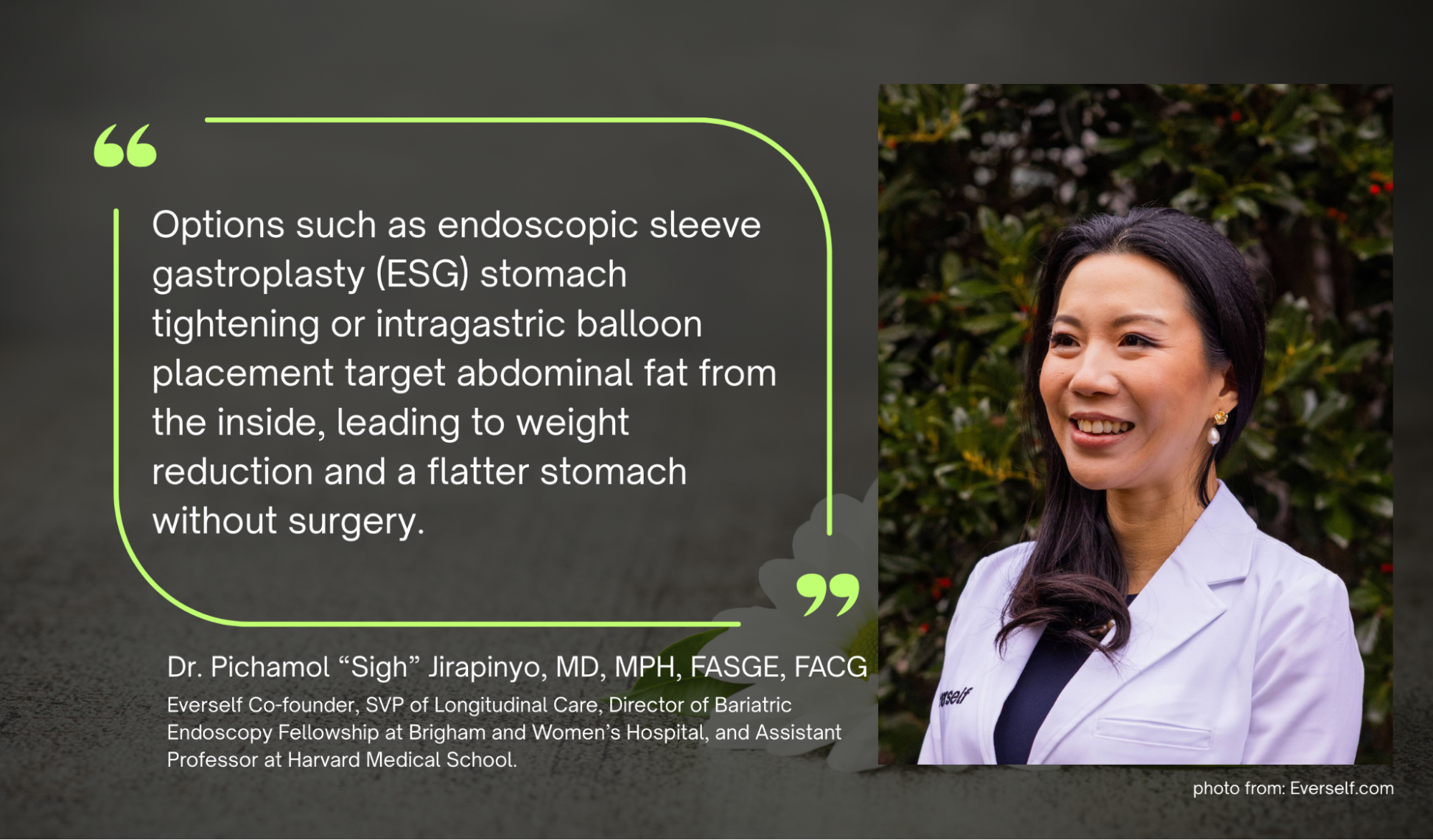
“Research suggests ESG may be associated with improvements in diabetes-related markers in some patients, alongside weight loss—though outcomes vary and should be interpreted in clinical context.”
ESG may support improvements in some of these markers, particularly for patients with obesity-related metabolic disruption.
Current wellness research suggests a meaningful association between stomach volume reduction and improvements in blood sugar regulation, an area of growing interest for patients navigating the early stages of metabolic shift, particularly in the 35–55 age bracket.
For this group, many of whom are managing the hormonal and metabolic realities of mid-life while maintaining demanding professional schedules, the appeal of a procedure that integrates into life rather than interrupting it is considerable.
Is ESG the Right Choice for Everyone?
It’s worth being clear: ESG is not a universal solution, and specialists consistently emphasise that candidacy should be determined through proper clinical assessment.

To make that assessment more useful, it helps to look at a few practical factors:
- Your starting BMI and health profile: ASMBS notes ESG is primarily recommended in the BMI 30–40 range, though candidacy is individualized by clinic and risk profile (like diabetes, sleep apnea, or fatty liver) and overall health can shift what’s recommended.
- Your primary goal: Are you aiming for steady, sustainable loss with less downtime, or do you need the largest possible weight reduction for medical reasons?
- Your lifestyle and support system: ESG outcomes tend to improve when patients can commit to follow-up care, nutrition support, and habit changes, so access to a structured program matters.
- Your comfort with permanence: Some people want an option that feels less “final” than surgery, while others prefer a one-time, definitive pathway.
What the process actually looks like
For those considering the procedure in Dallas, the patient journey typically begins with a virtual consultation, allowing prospective candidates to discuss their history, goals, and questions before committing to anything. This is followed by a clinical evaluation and, where appropriate, scheduling of the procedure at the clinic facility.
The ESG procedure itself takes approximately 60–90 minutes under sedation. Patients are discharged the same day.
The first two weeks post-procedure involve a structured liquid-to-soft-food dietary transition, which forms the foundation of the longer metabolic programme that follows.
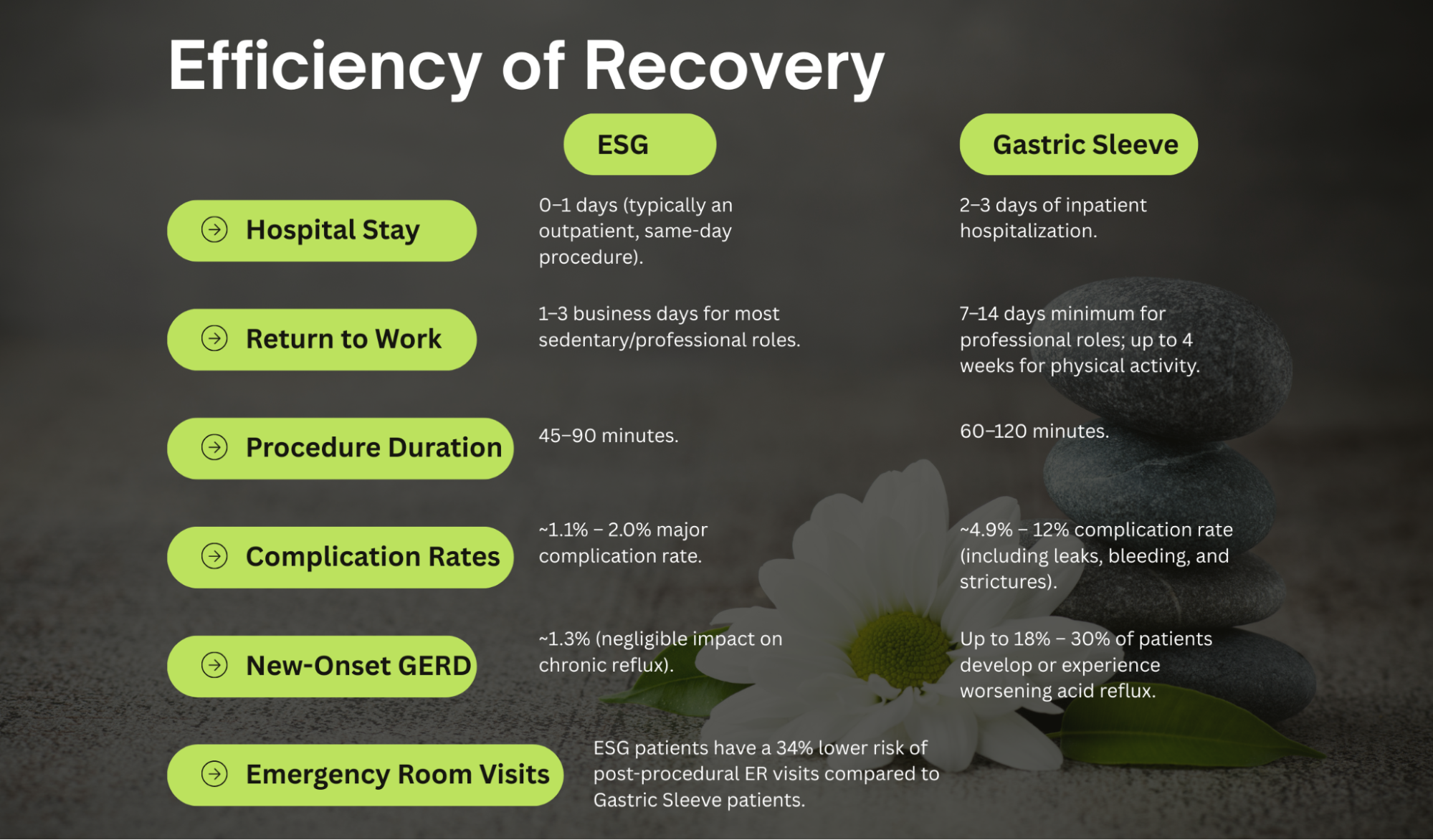
The emphasis on longitudinal care; the 12-month support structure that accompanies the procedure reflects a growing clinical consensus: that sustainable weight management requires ongoing accountability, not a one-time intervention.
The Bigger Picture
The rise of ESG as a preferred option isn’t a trend built on novelty. It’s built on a very practical set of trade-offs: no scarring, no hospital admission, a faster return to normal life, and a clinical framework that treats weight as a long-term metabolic challenge rather than a short-term problem to be solved.
For those who have weighed the options and found that gastric sleeve surgery carries more disruption than they’re willing to accept, ESG may represent a meaningful middle ground, and evidence-backed, minimally invasive, and increasingly available closer to home.