The Injectable Reboot with Dr Zunaid Alli


Why Regenerative Aesthetics Is Moving Beyond the Overfilled Face
In the latest ever more popular Aesthetics Today podcast with beauty expert Gabrielle Richens, Dr Zunaid Alli makes the case for a quieter, more medical future for cosmetic treatments, one built less around instant volume and more around skin quality, repair and restraint.
There is a particular kind of beauty conversation that belongs in this podcast. Not the breathless launch of another miracle treatment, nor the familiar moral panic about “having work done”, but the more useful middle ground.
What is actually changing? What should patients understand before handing over their face? And why does the modern aesthetics clinic increasingly sound less like a beauty salon and more like a medical consultation room?
Dr Zunaid Alli brings the sort of CV that gave this conversation a different weight. Trained in South Africa, with a Bachelor of Medicine and Surgery, a Bachelor of Science with honours and an MBA, he later completed a Master’s in Minimally Invasive Aesthetics at UCL, after earlier clinical experience across hospital medicine, emergency care, oncology and psychiatry. Today, as founder and medical director of Edition Clinic in Wimbledon, his work sits firmly in the newer, more medical end of aesthetics. Advanced injectables, regenerative treatments, full-face assessment and patient selection.
He is also closely involved with Vivacy, the French aesthetic medicine company behind STYLAGE, and speaks in the episode about his role as a trainer and what he prefers to call a clinical product specialist rather than simply a key opinion leader. That role has expanded through Vivacy’s UK and European work with Rejuran, the Korean polynucleotide brand now being introduced more widely across Western Europe, with Dr Alli involved in practitioner training, launch education and clinical case work.
At Edition Clinic, he also works with technologies and platforms including Morpheus radiofrequency microneedling, CO2 laser, Femilift, IPL, Nd:YAG, Q-switched laser, alexandrite laser, Focus Dual and a training partnership with Linton Lasers UK, a combination that places him not just in the injectables conversation, but in the wider movement towards skin repair, device-led rejuvenation and regenerative aesthetics.
That is where this episode of the Aesthetics Today podcast lands. Hosted by Gabrielle Richens, the interview with Dr Zunaid Alli is ostensibly about regenerative injectables, polynucleotides and the rise of treatments such as Rejuran. But the real subject is broader and more important, the maturing of aesthetic medicine itself. The episode follows Alli from hospital medicine, emergency care, oncology and psychiatry into aesthetics, and positions him as part of a growing shift away from beauty-led enhancement towards medical, assessment-led treatment planning.
Alli’s route into aesthetics was not the usual glossy origin story. He describes initially having little interest in Botox and fillers, only encountering them while covering a GP maternity locum in South Africa. What began as a practical add-on slowly became a serious discipline. That matters because it frames the rest of the interview. For Alli, the face is not a canvas for trends. It is anatomy, psychology, ageing, skin behaviour, risk, repair and patient expectation all arriving in the same consultation room.
One of the most striking points raised is that modern aesthetics is now almost too information-rich for patients. Social media has created a treatment vocabulary that many consumers can repeat, polynucleotides, exosomes, HIFU, Morpheus, skin boosters, Russian lips, without necessarily understanding what any of it means, who it suits, or what can go wrong. Alli’s approach begins with a deceptively simple question. What bothers the patient most? From there, he argues, the practitioner must work holistically, rather than simply delivering the treatment the patient has seen online.
The episode is especially strong when it moves into the psychology of cosmetic treatment. Zunaid's background in clinical psychology gives the discussion more depth than the standard “natural results” conversation. He is careful to distinguish between a formal diagnosis of body dysmorphic disorder and the more common grey area of dysmorphic traits, the one or two features many people fixate on in the mirror. His point is not that every patient is psychologically unsuitable, but that clinicians have a duty of care when expectation becomes unrealistic or disproportionate.
That thread runs through the discussion of refusal, cooling-off periods and patient selection. Alli says he has refused very few patients over more than a decade in aesthetics, but the examples he gives are very revealing. Patients whose expectations could not be met, or who appeared to be “doctor shopping”. For procedures such as threads, he favours staged consultations, including a face-to-face element, borrowing from the more cautious culture of surgical consent. It is a reminder that the most ethical aesthetic treatment may sometimes be no treatment at all.
The End of “Filler First” Beauty Trends
The conversation then turns to one of the industry’s most uncomfortable truths. Regulation remains messy, and the public often assumes protections exist where they do not. Richens raises the confusion around UK rules and who is allowed to perform injectables. Alli is blunt that non-medics can still inject, and describes this as “incredibly concerning”. Toxin, he notes, is a prescription-only medicine in the UK, requiring a face-to-face consultation and a prescription for a specific patient. The problem, as the episode makes clear, is not just the needle; it is the ecosystem around the needle.
Counterfeit products are one of the darker points in the interview. Alli describes counterfeit fillers, toxin and even Rejuran appearing in the market, with practitioners approached online by sellers offering products at suspiciously low prices. The obvious question for patients is not simply “how much does it cost?” but “where has this product come from, who prescribed it, who is injecting it, and what happens if something goes wrong?” In a sector where a bargain can be injected directly into the face, cheapness is not a virtue.
There is also an important discussion about the commercialisation of clinics. Alli draws a distinction between doctor-led environments and more aggressively sales-led businesses, suggesting that the latter can place greater pressure on practitioners to upsell skincare or treatments. This is one of the episode’s more quietly damning observations. Aesthetic medicine is often sold as empowerment, self-care or confidence, but inside the wrong business model it can become a transaction machine. The patient arrives with a concern; the clinic sees a basket value.
Against that, Alli’s philosophy of “natural” results is more precise than the phrase usually allows. Natural does not mean untreated. It means anatomically credible. It means replacing or restoring what has been lost, not inventing a structure that was never there. He uses the example of cheek filler. There is a difference between restoring facial volume after weight loss and creating exaggerated “cat cheeks” that disrupt the patient’s own proportions. This is a useful distinction for consumers, because the best work in aesthetics is not always invisible, but it should usually be believable.
The Aesthetics Today interview is at its sharpest when discussing the hangover from filler culture. Alli does not dismiss filler outright. In fact, he defends its place when used appropriately. “Filler fills”, as he puts it. If there is a void, volume loss or structural deficit, filler may still be the right tool. What he rejects is the old “filler first” mindset, where patients were layered with product on top of product, often under the assumption that hyaluronic acid simply disappeared after a set period. The industry, he suggests, has had to grow up from that simplification.
That leads naturally into one of the episode’s most consumer-friendly warnings, Russian lips. Alli’s objection is not merely aesthetic, although he is clear that most lips are not suitable for the technique and that it often does not age well. His bigger concern is migration and the subsequent need to dissolve filler. Dissolving is commonly presented online as a simple reset button, but he stresses that it carries risk, including anaphylaxis, and can affect the body’s own hyaluronic acid before it gradually reconstitutes. In other words, filler is not “try before you buy”.
The rise of GLP-1 weight-loss injections adds another modern complication. Alli’s concern is not only the aesthetic issue of facial volume loss after weight reduction, but the ease with which people can obtain weight-loss medication online without proper support. He argues for BMI assessment, risk-factor review, medical history, nutrition planning and screening for eating-disorder history. It is a point the beauty industry will have to confront. The new face of weight loss is not just slimmer. It may also be more medically complex.
The headline subject, however, is regenerative aesthetics. Here, the episode becomes a useful primer for patients baffled by the new language of skin repair. Zunaid explains the difference between older sodium DNA-style mesotherapy products, PDRN and true polynucleotides, before discussing Rejuran as a more advanced polynucleotide with a scaffold-like structure that remains in the tissue for longer, increasing contact time with the cellular layers involved in healing and repair.
The under-eye area emerges as a major case study. Richens discusses her own experience with polynucleotides and carboxytherapy for dark circles, while Alli explains that in his clinic, seven out of ten polynucleotide treatments have been for the under-eye area. That is telling. The under-eye is notoriously difficult to treat. Thin skin, pigmentation, crepiness, fine lines, movement and ethnic variation all complicate the picture. Polynucleotides are not described as magic, but as part of a repair-led approach that can be used across a range of concerns.
The broader beauty story is that “skin quality” has become the new luxury marker. Ten years ago, many patients asked how to fill, freeze or lift. Now, they ask how to look rested, healthy, glassy, smooth and less tired without looking obviously treated. Alli links this partly to the Korean glass-skin effect, which has pushed patients towards skin health rather than just toxin and filler. He sees that as broadly positive, provided treatments have credible evidence, safety data and proper clinical reasoning behind them.
The episode also offers a clear, useful distinction between the main regenerative categories. Skin boosters are generally hyaluronic-acid-based and designed to improve hydration and skin quality rather than create deep structural volume. Biostimulators, including products such as Sculptra, Radiesse and thread-based approaches, work by stimulating collagen through a controlled biological response. Exosomes, in Alli’s practice, are used topically rather than injected, often after procedures such as microneedling or laser, to support cellular repair in the superficial layers of the skin.
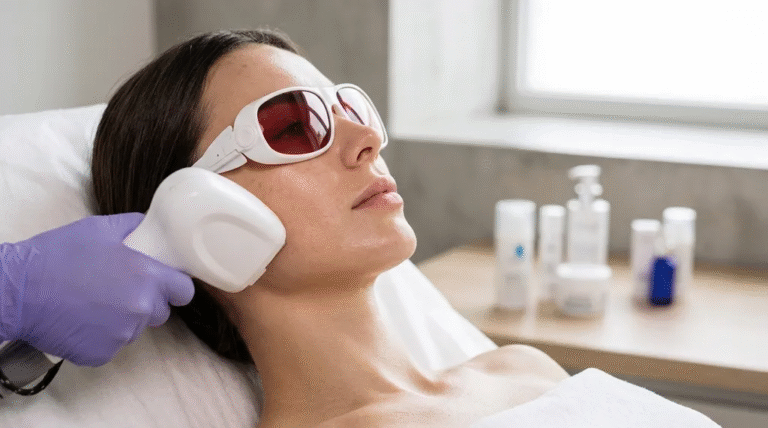
Devices are another part of this regenerative landscape. Alli discusses radiofrequency microneedling, CO2 laser, IPL, Nd: YAG, Q-switched lasers, alexandrite laser and HIFU, but again the theme is not gadget worship. His point is that the device has to fit the patient population, the skin type and the clinical goal. The discussion of darker skin is particularly important. Alli notes that darker skin is often misunderstood as robust, when in fact it can be highly sensitive and easier to injure if treated incorrectly.
The most important conclusion from the episode is that regenerative aesthetics is not being positioned as a passing fad. Alli describes it as a permanent industry shift, but one that requires caution. Combination treatments may deliver the best results, yet they also carry the risk of over-stimulating the skin if poorly planned. His future model is not the one-off treatment, but the bespoke year-long or 18 month plan. Sequential, measured, incremental and designed to improve the skin without changing too much at once.
This episode is valuable because it refuses the lazy binary. It is not anti-injectables, nor is it an uncritical celebration of them. It acknowledges that filler still has a place, that devices can be powerful, that regenerative treatments are exciting, and that patients are increasingly informed. But it also insists on the less glamorous truths. Anatomy matters, sourcing matters, regulation matters, psychology matters, and a practitioner’s willingness to say “not yet” or “not for you” may be as important as their technical skill.
The face, after all, is not a trend board. It is not a TikTok category. It is living tissue attached to a person with hopes, insecurities, medical history and social pressure. The future Alli describes is not necessarily treatment-free, but it is more thoughtful. It is less about chasing the biggest visible change, more about preserving identity while improving skin function, proportion and confidence in the quietest possible way. That may be the real rise of regenerative injectables, not simply a new product category, but a new standard of judgement.