Freckles vs Moles: Key Differences Explained

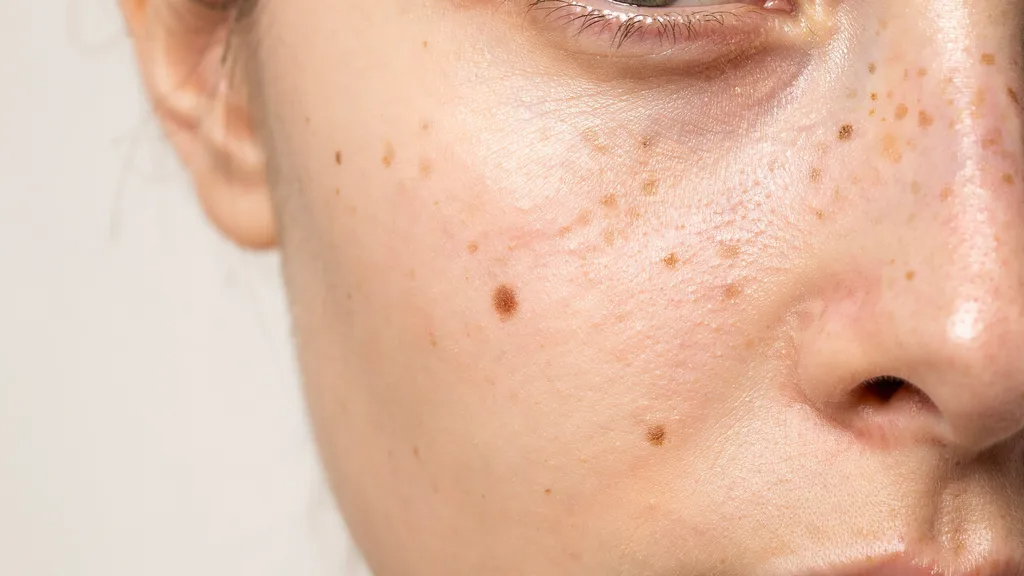
I used to mix up freckles and moles all the time. They both show up on skin, and they can look pretty similar at first glance. But they are not the same thing.
In this blog, I'll walk you through freckles vs moles, what sets them apart, what causes them, and when you should get one checked out.
I've done the research so you don't have to spend hours looking it up. I've covered skin topics for years, and I know how confusing this can get.
By the end, you'll know exactly what you're looking at.
Freckles vs Moles: What's the Difference?
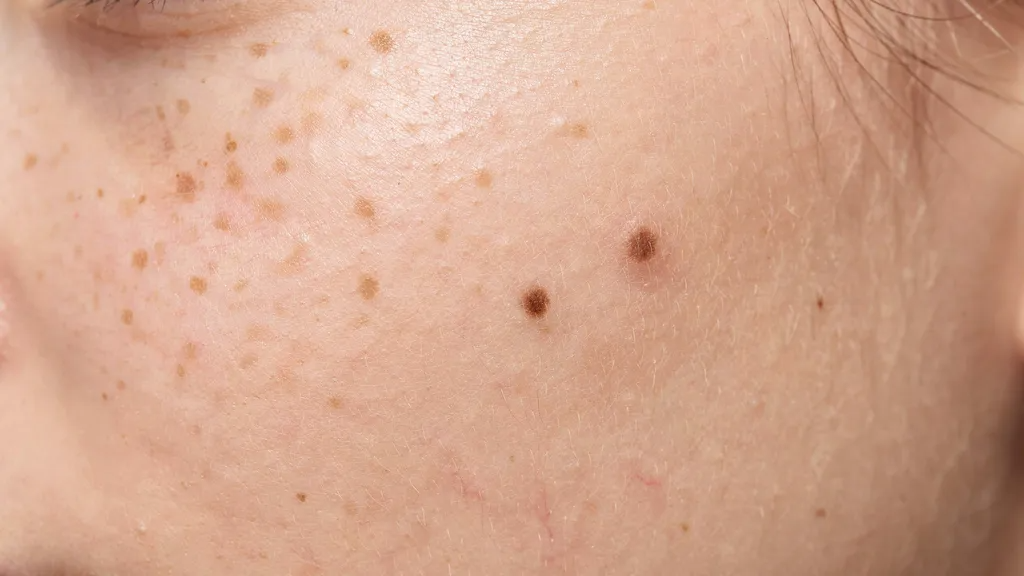
Freckles and moles are both spots on the skin. But they come from different places and behave differently.
Freckles are flat, small, and light. They show up when skin makes too much melanin in one spot.
Moles are growths. They form when melanin-producing cells group together under the skin.
Freckles tend to fade. Moles usually stick around for life. That's the short version. But there's more to it.
How to Tell the Difference Between a Freckle and a Mole
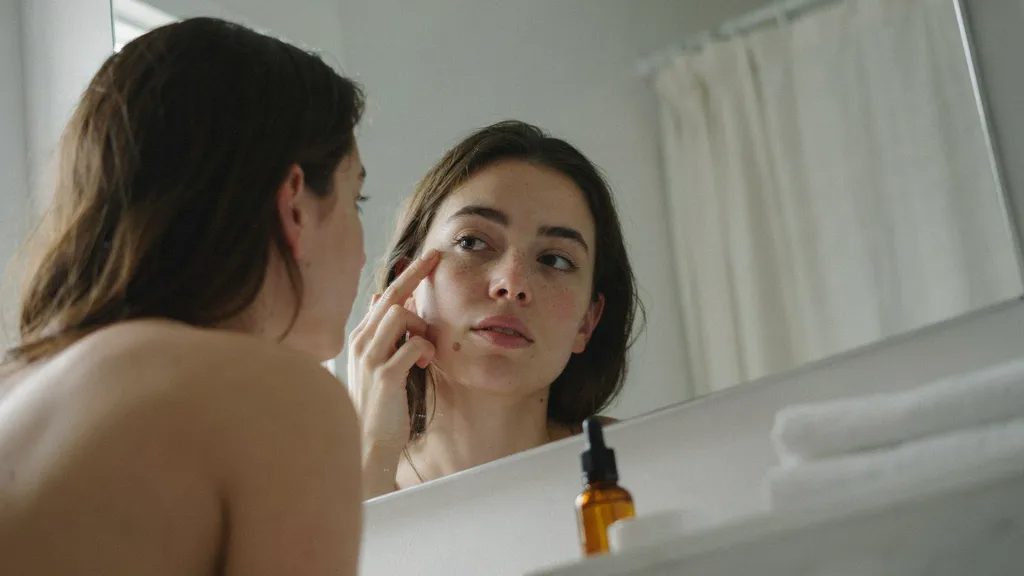
If you're standing in front of a mirror wondering what that spot is, here's what to look at.
- Appearance and Texture Differences
Freckles are flat. You can't feel them when you run your finger over them. They sit right on the surface.
Moles are different. Some are flat, but many have a slight raise to them. You can feel the edge. Some even stick out a bit.
If a spot feels raised or bumpy, it's more likely a mole.
- Color Differences
Freckles are usually light brown or tan. They can look reddish on fair skin. The color tends to be even across the spot.
Moles can be tan, brown, dark brown, or even black. Some moles have more than one shade in them.
A spot with multiple colors or uneven color is almost always a mole. Sometimes it can be a sign to get it checked.
- Size and Shape Differences
Freckles are small. Most are under 2mm. They have soft, irregular edges and blend into the skin around them.
Moles are usually bigger. They tend to be rounder or oval-shaped with a clearer border.
If a spot has a defined edge and is bigger than a pencil eraser, it's likely a mole.
- Where Freckles and Moles Commonly Appear
Freckles show up where the sun hits most. Think nose, cheeks, shoulders, and forearms.
Moles can grow anywhere. Scalp, between toes, under nails. Even in places that never see the sun.
If you notice a spot in a sun-hidden area, it's more likely a mole.
What Causes Freckles?

Freckles come from sun exposure. When UV rays hit the skin, some skin cells make more melanin than others. Those cells cluster, and that's what you see as a freckle.
Genetics play a role too. People with lighter skin and red or blonde hair tend to get more freckles. It runs in families.
Freckles are more common in kids and teens. They often fade as you age, especially if you spend less time in the sun.
They are not harmful. They're just your skin's response to sunlight.
What Causes Moles?
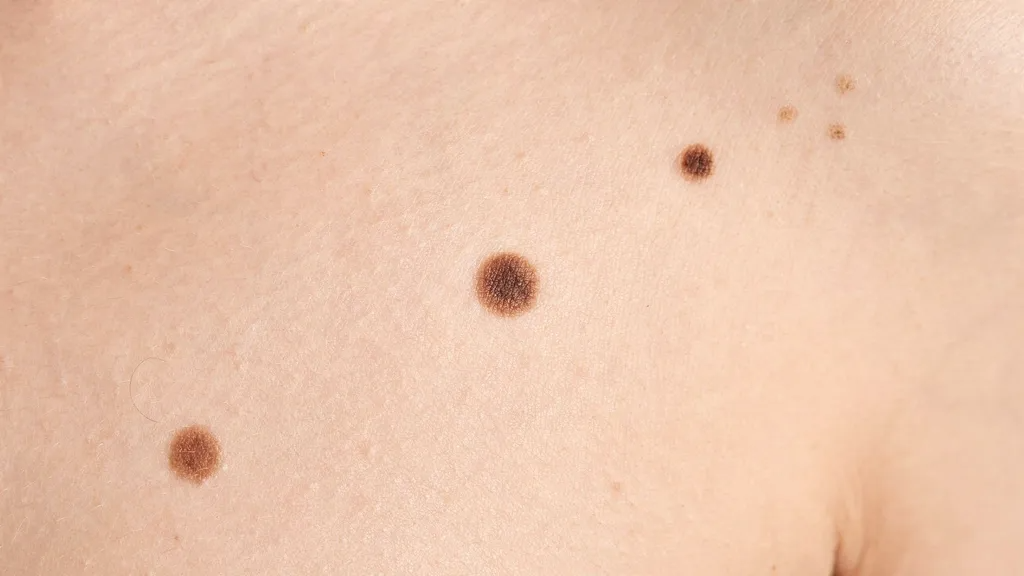
Moles form when melanocytes, the cells that give skin its color, grow in a cluster instead of spreading out evenly.
Most people get moles during childhood and teenage years. By adulthood, the average person has between 10 and 40 moles.
Sun exposure can trigger new moles and darken the ones you already have. Hormonal changes during pregnancy can also make moles more visible.
Genetics matter here too. If your parents had lots of moles, chances are you will too.
Freckles vs Moles: Key Characteristics Compared
Here's a quick side-by-side so it's easy to follow:
Freckles: flat, small, light brown, fade in winter, mostly on sun-exposed skin, caused by sun and genetics.
Moles: can be raised, larger, darker, stay all year, appear anywhere on the body, caused by clustered melanocytes.
The biggest giveaway is how the spot changes with seasons. Freckles fade when you're not in the sun. Moles don't.
Can Freckles Turn Into Moles?
No. Freckles don't turn into moles. They are two different types of skin spots with different causes.
A freckle might look darker after a summer outdoors. But it's still a freckle. It didn't change into something else.
What can happen is that a mole shows up near a freckle, and the two get confused. Or a new mole grows in an area where you already have freckles.
If a spot that used to look like a freckle suddenly changes in size, shape, or color, get it looked at. That's not normal freckle behavior.
Are Freckles or Moles Cancerous?
Freckles are not cancerous. They don't turn into cancer. But having lots of freckles means your skin is sensitive to sun damage.
That sensitivity can raise your risk of skin cancer over time if you don't protect your skin.
Moles are mostly harmless too. But some can turn into melanoma, which is a type of skin cancer.
The risk is higher if you have more than 50 moles, have a family history of skin cancer, have had sunburns in the past, or have moles with irregular borders or uneven color.
That doesn't mean every mole is dangerous. Most aren't. But it's worth keeping an eye on them.
When Should You Get a Freckle or Mole Checked?
I always tell people when in doubt, get it checked. A quick skin check with a doctor takes minutes and can catch something serious early.
Go see a dermatologist if a spot is changing in size or shape, has uneven or multiple colors, has a jagged or unclear border, is itching, bleeding, or crusting, or looks different from your other spots.
Doctors use a simple rule called ABCDE to spot problem moles. A is for asymmetry. B is for borders. C is for color. D is for diameter. E is for evolving.
If a mole checks any of those boxes, don't wait.
Conclusion
Freckles and moles may look similar, but they're not the same. Freckles are small, flat, and fade with less sun. Moles are deeper, last longer, and can appear anywhere.
Both are common and usually harmless. But moles need more attention over time.
I've learned that checking your skin regularly makes a real difference. You don't need to stress about every spot. Just know what to look for.
If something changes or looks off, see a doctor. Catching a problem early always leads to better results.
Have you ever confused a freckle for a mole, or had one checked out by a doctor?
Frequently Asked Questions
Can freckles go away on their own?
Yes, freckles often fade as you age or spend less time in the sun. They are not permanent for most people.
Is it normal to develop new moles as an adult?
New moles can appear in adulthood, but any new spot after age 40 should be shown to a dermatologist.
Do freckles need sunscreen?
Yes. Freckles mean your skin reacts strongly to UV rays, so sunscreen is important every day to protect your skin.
Can a mole be removed safely?
Yes, dermatologists can remove moles through simple procedures. Removal is common when a mole looks suspicious or causes discomfort.
How often should I check my moles?
Once a month at home is a good habit. A professional skin check once a year is recommended, especially if you have many moles.