How to Clean Makeup Sponges: Complete Beauty Guide


Dirty makeup sponges are a silent skin enemy. They collect bacteria, old foundation, and oil with every use. And most people don’t clean them nearly enough.
I’ve been there too. Breakouts I couldn’t explain, patchy makeup, and a sponge that smelled off. Cleaning it properly changed everything.
In this guide, you’ll learn why cleaning matters for your skin, the best methods using everyday items, and how often to clean and what mistakes to skip.
Trusted by beauty enthusiasts who prefer simple, effective routines, this blog keeps it straightforward and practical.
Why Cleaning Makeup Sponges Is Important
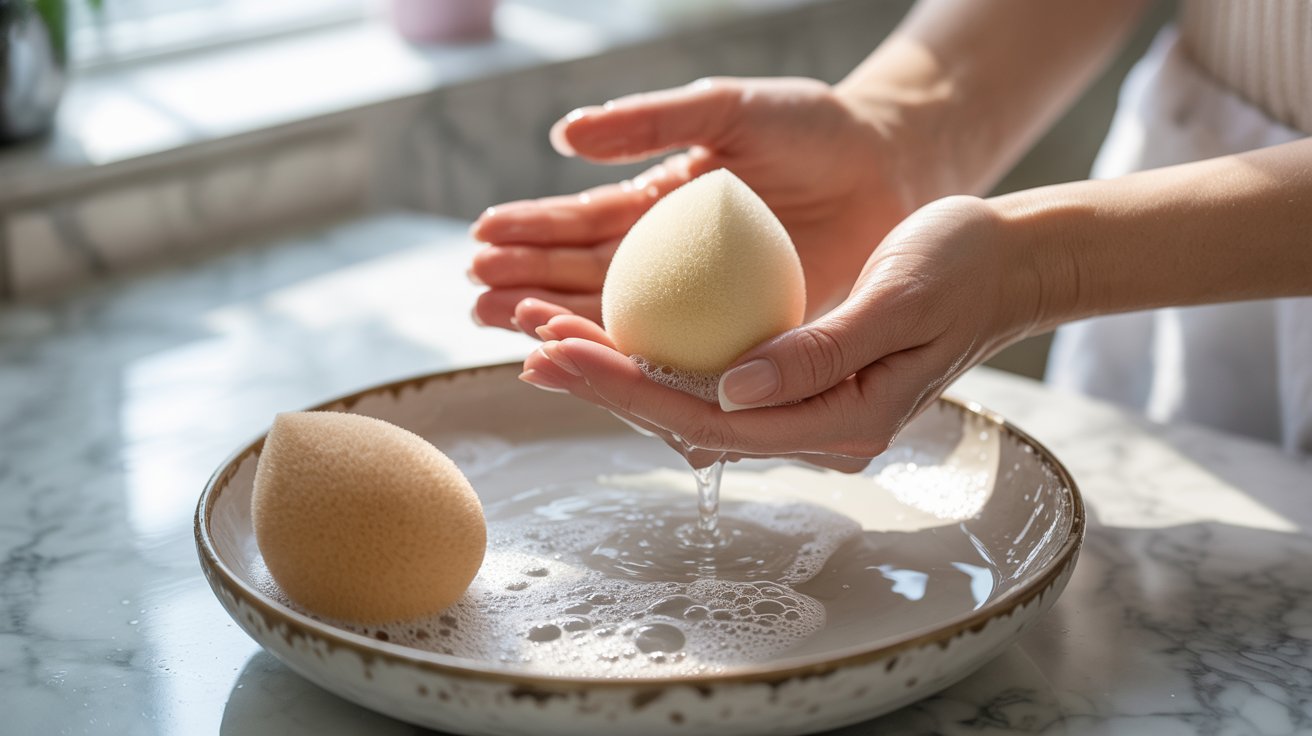
A dirty sponge does more harm than you think. Here’s what’s actually happening inside it.
Makeup sponges trap moisture, old makeup, and skin oils inside their tiny holes. When left uncleaned, bacteria and mold grow inside. You can’t always see it, but every use presses all of that directly onto your face.
Bacteria from a dirty sponge can clog pores and cause redness. If you’ve had sudden breakouts you couldn’t explain, your sponge might be the reason. Cleaning it regularly keeps your skin calm and clear.
A dirty sponge also pushes old products back onto your face and creates streaks. The texture gets stiff and it stops absorbing evenly. If your foundation looks patchy lately, check your sponge first.
Most Effective Cleaning Solutions for Makeup Sponges
Not all cleaning methods are equal. Some work better depending on the mess.
Soap and Warm Water (Basic and Effective Method)
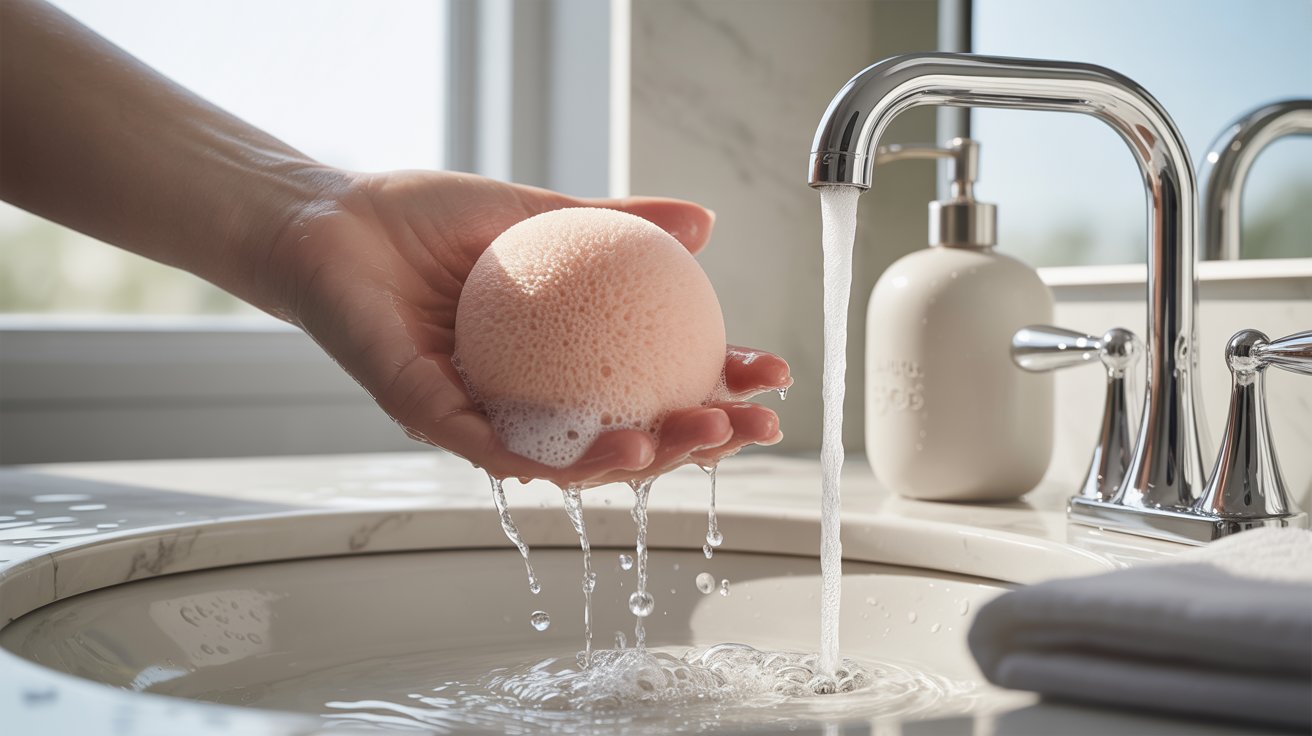
This is the go-to method for everyday cleaning and it works really well. Warm water softens the sponge while soap breaks down oils and product buildup.
Use antibacterial soap, baby shampoo, or dish soap for best results. Wet the sponge, apply soap, squeeze gently, and rinse until the water runs clear.
Micellar Water for Stubborn Makeup Removal
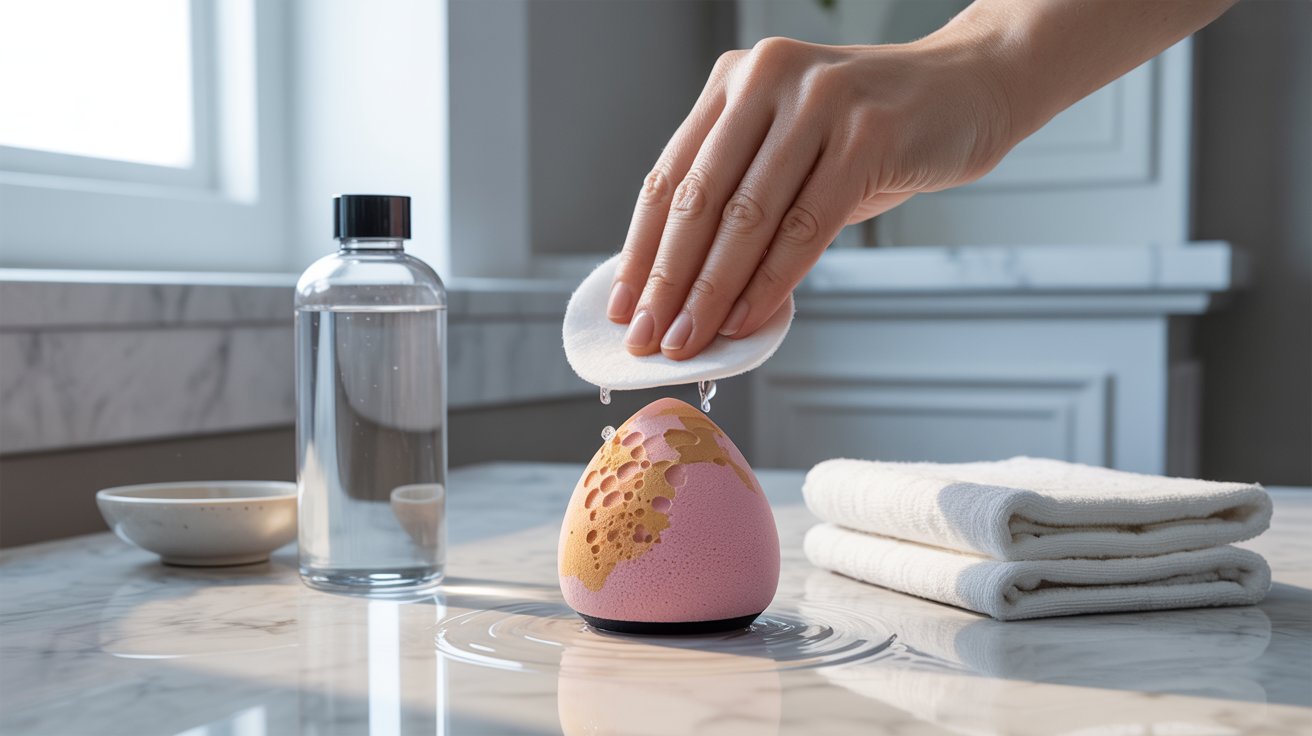
Micellar water is great for heavy foundation or thick concealer stains. Pour a little onto the sponge, press it in, and let it sit for a minute.
Then follow up with soap and warm water to finish. This combination handles even the most stubborn buildup.
Best Household Items to Clean Makeup Sponges
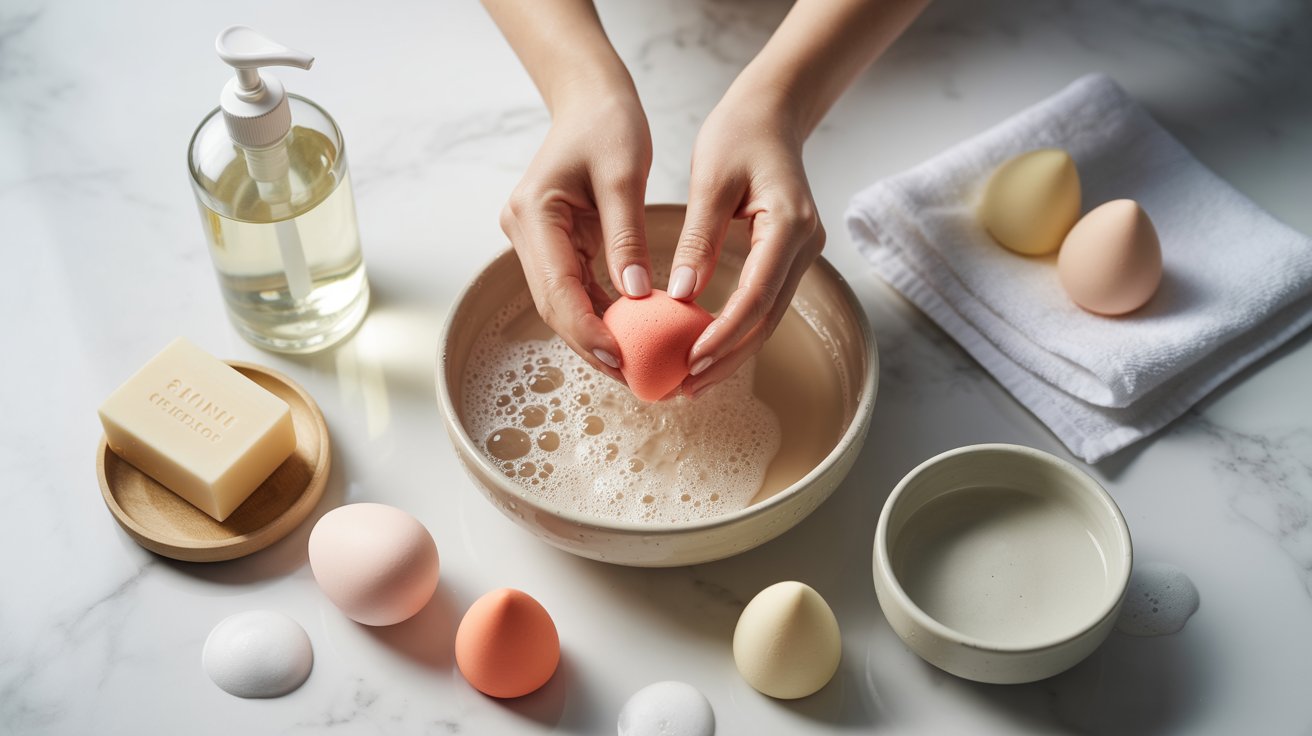
You don’t need fancy products. Your kitchen and pantry already have what you need.
How to Clean Makeup Sponges with Dish Soap
Dish soap cuts through grease, making it very effective on oily makeup residue. Wet the sponge, add a few drops of dish soap, and massage gently from the outside in.
Rinse under running water while squeezing until the water is fully clear. Rinse very thoroughly since dish soap can leave residue that irritates skin.
How to Clean Makeup Sponges with Vinegar
White vinegar is a natural disinfectant that helps kill bacteria. Mix one part vinegar with two parts water and soak the sponge for five minutes.
Squeeze gently, then rinse until the vinegar smell is gone. Use it as a weekly step rather than a daily method to avoid breaking down the sponge material.
How to Clean Makeup Sponges with Olive Oil
Olive oil works well on waterproof or long-wear makeup. Apply a small amount to the stained area, press it in, then wash with dish soap to remove the oil along with the makeup.
Always follow up with soap. Skipping that step can leave the sponge greasy and attract more dirt.
How to Clean Makeup Sponges with Specialized Products
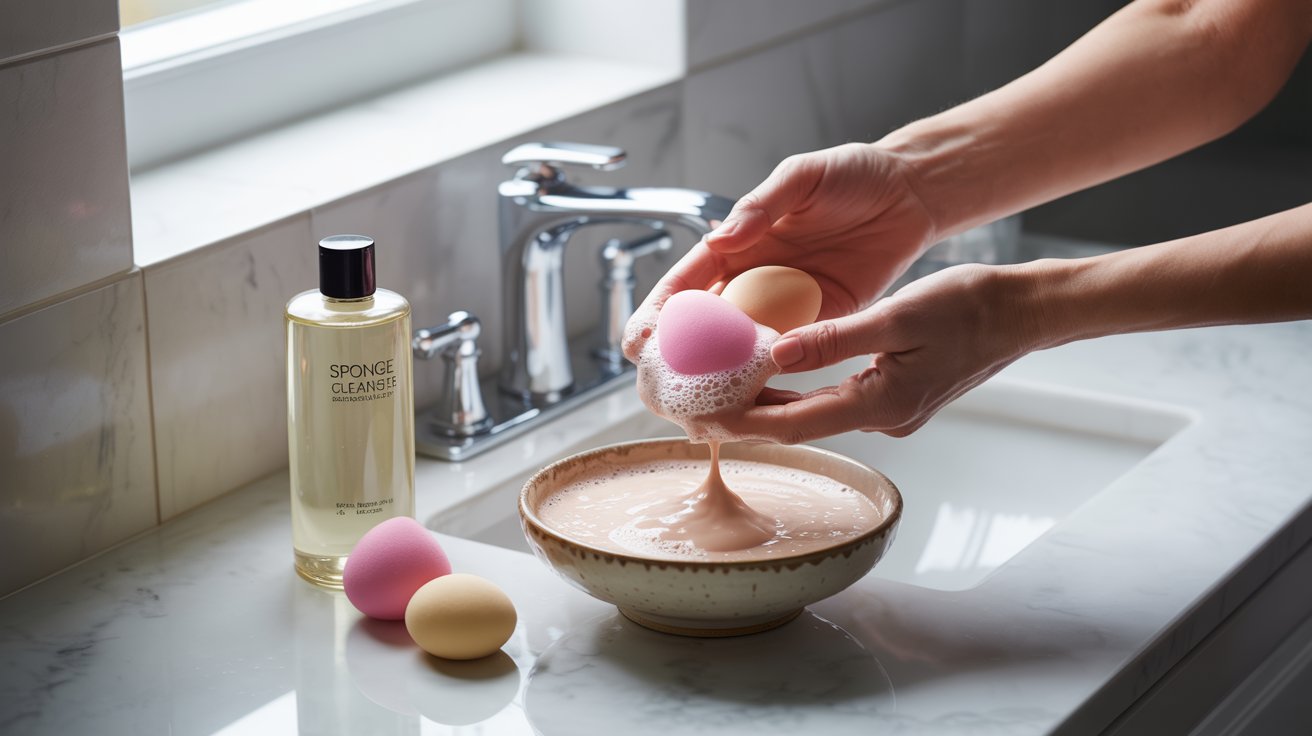
Sometimes a dedicated cleanser makes the whole process faster and easier.
Store-bought sponge cleansers are formulated to go deep into the sponge without damaging it. Antibacterial cleansers work better for daily users or acne-prone skin.
Regular cleansers are fine for maintenance cleaning. Commercial products are most useful for quick cleans between uses or when household items aren’t fully removing heavy stains.
Common Mistakes to Avoid When Cleaning Makeup Sponges
Small habits can damage your sponge faster than you’d expect. Here’s what to watch out for.
- Not rinsing thoroughly leaves cleanser inside that can irritate skin over time.
- Harsh products like bleach break down the foam and shorten the sponge’s life.
- Storing a damp sponge in a closed space encourages mold and bacteria to grow.
- Twisting or wringing the sponge causes it to tear and lose its shape quickly.
- Skipping regular cleaning lets old makeup and oils build up deep inside the sponge.
How Often Should You Clean Makeup Sponges

Cleaning frequency depends on how often you use your sponge, but there’s a simple rule to follow.
After Every Use vs Weekly Deep Cleaning
A quick rinse after every use keeps surface makeup from sitting overnight. A deep clean once a week removes everything that has built up inside.
If you wear makeup a few times a week, deep cleaning every few uses is enough.
Cleaning Frequency for Daily Users
If you use your sponge every day, a thorough clean every two to three days is a good habit. Daily users are more likely to deal with buildup and skin reactions if they skip cleaning too often.
Signs Your Sponge Needs Immediate Cleaning
A strange smell means it needs cleaning right away. Visible discoloration that doesn’t match your shade is another sign. If the texture feels stiff or blending has gotten uneven, it’s overdue for a wash.
Tips for Cleaning Makeup Sponges Effectively
Small steps that make a big difference in keeping your sponge clean and long-lasting.
- Clean your sponge regularly to prevent bacteria buildup
- Always rinse until water runs completely clear
- Avoid using overly hot water that can damage the sponge
- Use gentle squeezing instead of twisting to preserve shape
- Let the sponge dry in an open, well-ventilated area
- Avoid storing damp sponges in closed containers
- Use antibacterial or degreasing cleansers for best results
- Deep clean at least once a week if used daily
- Replace sponges every 2 to 3 months with frequent use
Conclusion
Cleaning your makeup sponge isn’t complicated, but it does make a real difference. I used to skip it and wonder why my skin acted up.
Once I made cleaning a routine, the results were clear. Your sponge works hard for your skin, so give it the care it needs.
Try one of these methods today and see how much better your makeup applies. Found this helpful?
Leave a comment below, share it with a friend, or check out more of our beauty care guides. Your skin will thank you.
Frequently Asked Questions
How often should makeup sponges be cleaned?
You should rinse your sponge after every use and do a deep clean at least once a week. Daily users should aim to clean thoroughly every two to three days to avoid buildup.
What is the most effective way to clean makeup sponges?
Using warm water with antibacterial soap or dish soap is one of the most reliable methods. Work the cleanser gently and rinse until the water runs completely clear.
Can I clean makeup sponges with vinegar or olive oil?
Yes, both work well for specific needs. Diluted white vinegar helps disinfect, while olive oil helps break down waterproof makeup. Always follow up with soap to fully rinse the sponge.
Is washing machine cleaning safe for sponges?
It is not recommended. The agitation inside a washing machine can tear the sponge material and distort its shape. Hand washing is gentler and more effective for preserving the sponge.
How do I deep clean a heavily stained sponge?
Start with micellar water to loosen the stain, then apply dish soap or a store-bought cleanser and massage gently. Rinse thoroughly and repeat if needed until the water runs clear.