How to Help Your Skin Recover Faster


You wake up, look in the mirror and something feels off. Your skin looks dull, feels tight or carries a redness that wasn’t there before. It’s a feeling most people know well, and it’s more common than you’d think.
The encouraging part is that skin is a living organ with a genuine capacity for skin regeneration. It rebuilds, renews and restores itself constantly. It simply needs the right conditions to do it properly.
This article covers the most practical skin recovery tips, from rethinking your routine to supporting your body from the inside out.
Understand What Your Skin Is Going Through
Your barrier is a protective layer made up of cells and lipids that works in two directions: it locks moisture in and keeps irritants out. When it’s functioning well, skin feels calm, soft and balanced. When it’s disrupted, sensitivity, flaking and inflammation follow.
Several things get in the way of skin healing, such as:
- Harsh or overly active care products that strip or over-exfoliate.
- Chronic stress, which raises cortisol and interferes with the skin’s repair cycle.
- Poor sleep, when the skin misses its key regeneration window.
- Dry or cold air, which depletes surface moisture rapidly.
Knowing what works against your skin makes it easier to build conditions that work in its favor.
Simplify Your Skincare Routine
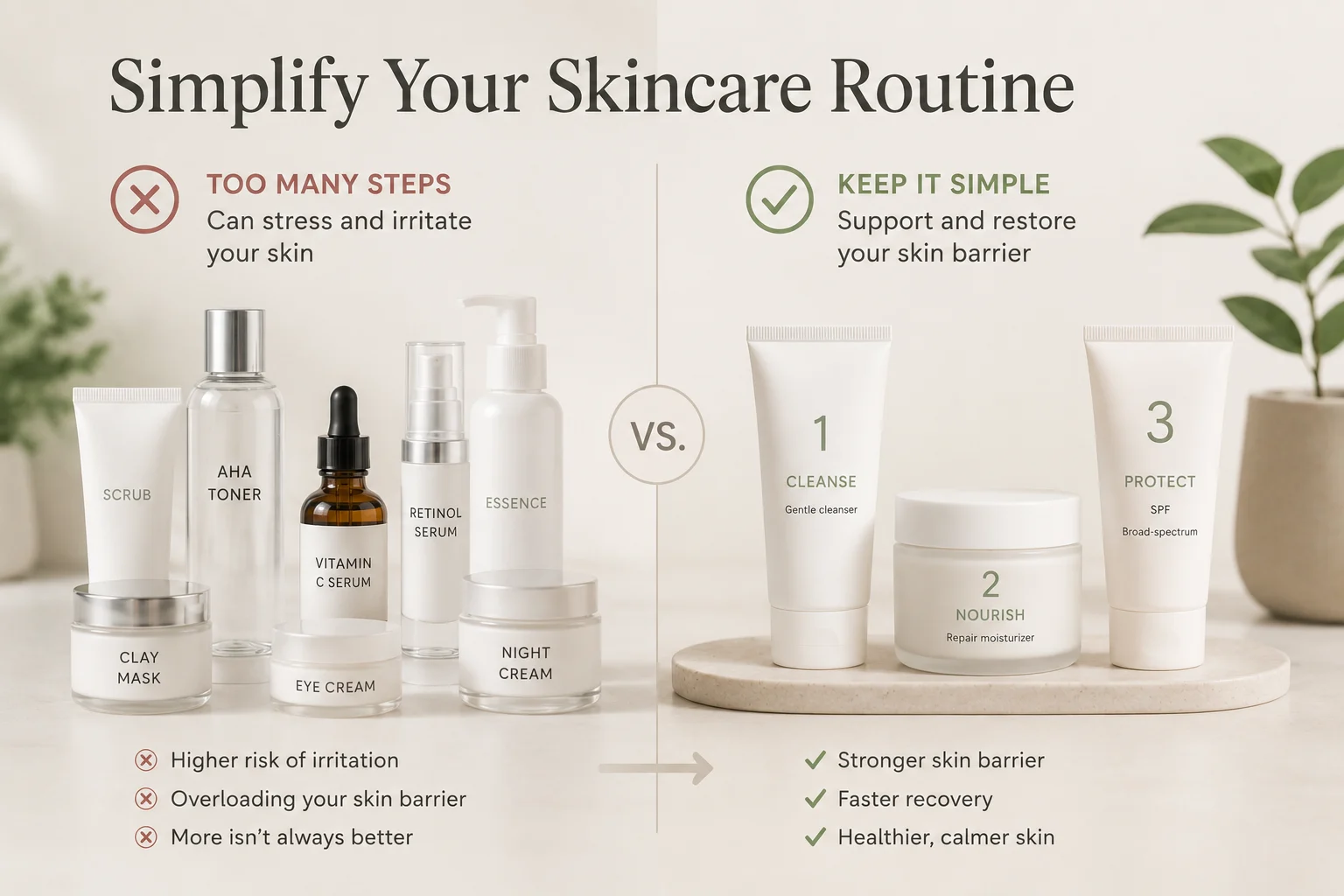
When skin is in recovery, the most effective thing you can do is simplify. Adding extra products rarely means better results, and during a compromised period, each additional ingredient is another variable your skin has to manage.
Step Away From the Actives
During recovery, a paired-back routine outperforms a complex one every time. The instinct to layer on more products is understandable, but skin that’s already struggling doesn’t need more variables. It needs breathing room. Products to set aside temporarily include:
- Exfoliating acids such as AHAs and BHAs, since even gentle ones can disrupt a weakened barrier.
- Retinol and retinoids, which are too stimulating for compromised skin.
- Physical scrubs that cause micro-damage on sensitized skin.
- Heavily fragranced formulas, a frequently overlooked source of irritation.
What a Recovery Routine Looks Like
Keep it to three steps:
- Use a mild, non-foaming cleanser that cleans without stripping.
- Add a nourishing moisturizer focused on barrier restoration.
- Apply broad-spectrum SPF during the day.
A well-chosen repair cream for sensitive skin is the cornerstone of this kind of routine. Rather than layering multiple products, it handles hydration, soothing and barrier support in a single step, which is exactly what depleted skin needs.
Prioritize Deep Hydration and Barrier Repair
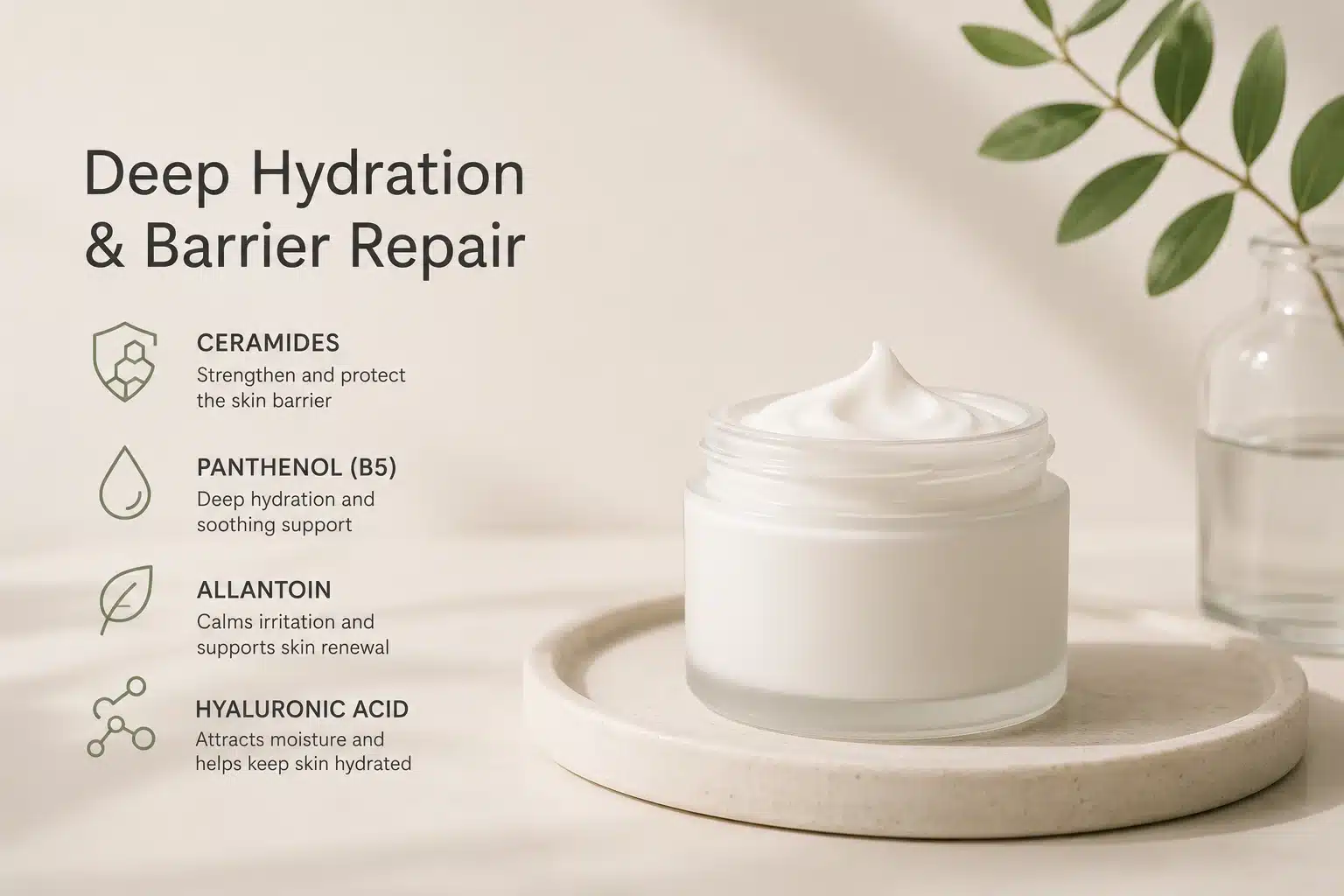
Moisture sits at the center of skin barrier repair.
A healthy lipid barrier keeps water locked inside the deeper layers while blocking environmental aggressors. When it’s compromised, water escapes faster than skin can replace it, creating a cycle of dryness, tightness and delayed recovery. Ingredients worth looking for are:
- Ceramides that replenish the lipid structure holding cells together.
- Panthenol (Vitamin B5) for deep hydration and anti-inflammatory support.
- Allantoin to promote cell turnover and calm irritation.
- Hyaluronic acid to attract moisture and hold it in the skin.
The Stayve Repair Cream brings these barrier-restoring ingredients together in a formula designed for sensitive and compromised skin, supporting regeneration without adding further stress to an already taxed barrier.
Protect Your Skin from Further Damage
Recovery requires two things happening at once: repairing existing damage and preventing new damage from piling on. A few daily habits make a real difference:
- Apply broad-spectrum SPF every day, since UV exposure slows skin healing and breaks down collagen even on overcast days.
- Skip hot showers, as high temperatures strip natural oils and leave skin drier than before.
- Pat skin dry instead of rubbing, since rough towel contact creates friction on sensitive surfaces.
- Resist picking or squeezing, which introduces bacteria and leads to scarring that prolongs the recovery timeline.
These are small adjustments, but they protect the progress skin makes between applications.
Support Recovery From the Inside
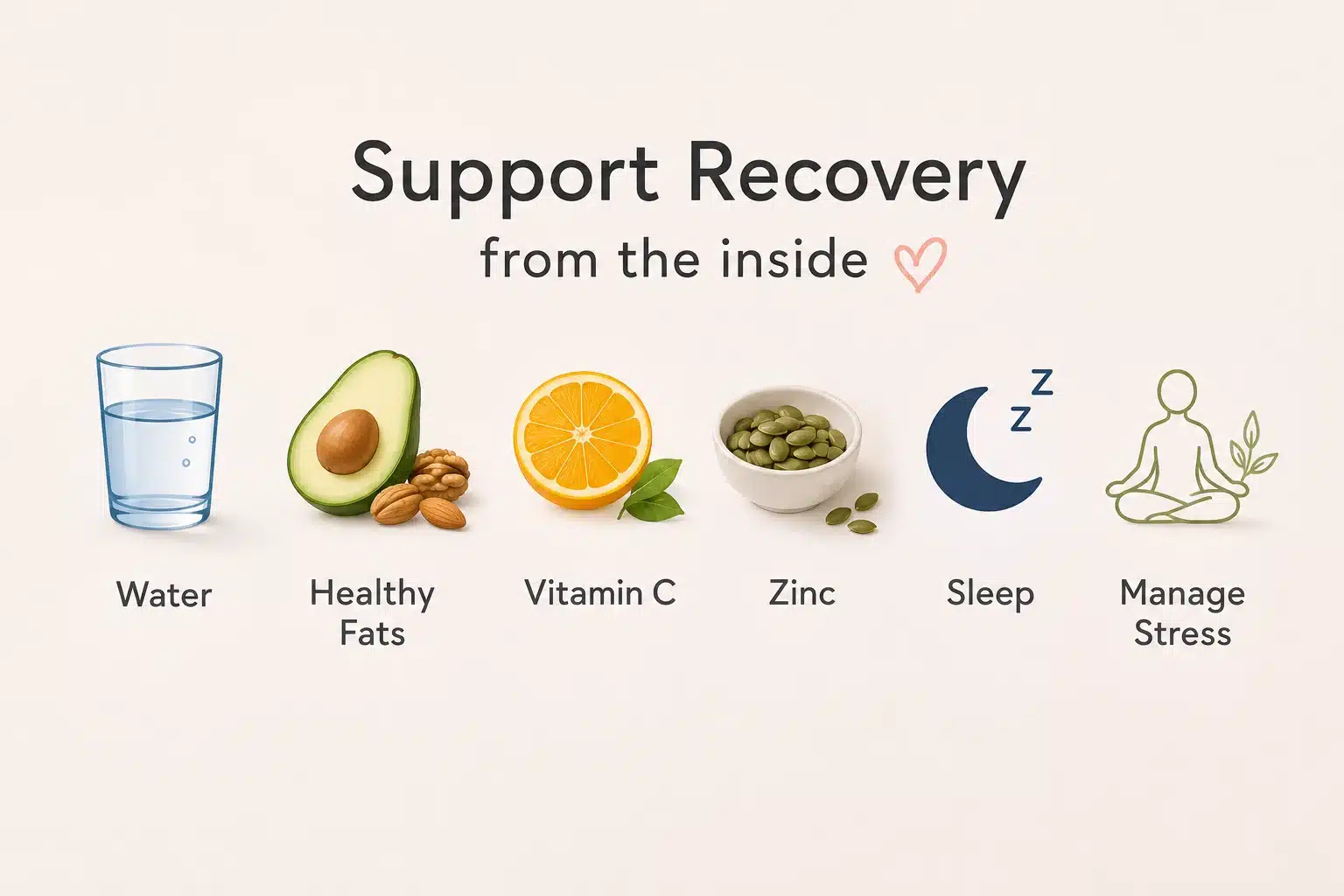
Topical products only address the surface. What happens internally shapes how fast skin can actually heal. A few essentials worth prioritizing are:
- Water, since dehydration shows up in skin quickly, dulling tone and slowing repair.
- Omega-3 fatty acids found in salmon, walnuts and flaxseed to reduce inflammation and support the lipid barrier.
- Vitamin C, good for collagen synthesis and skin repair.
- Zinc, which plays a direct role in wound healing and immune function.
- Sleep, as skin cell renewal peaks during deep sleep, making rest one of the most productive parts of any recovery plan.
- Stress management, since elevated cortisol disrupts the barrier and triggers flare-ups.
No extreme dietary changes needed here. Consistent basics go a long way.
Clinical Results with a Sensorial Experience
Skin regeneration follows a natural cycle of roughly 28 days, which means visible results take time. Switching products every week when nothing seems to happen is one of the most common ways people stall their own progress.
A simple, targeted routine used consistently over four to six weeks will outperform a rotating cast of products every time. Stability lets the skin do its job.
That’s the foundation of how to restore damaged skin, not a single miracle product, but steady, supportive conditions repeated over time.
Give Your Skin the Recovery It Deserves
Learning how to help skin recover faster isn’t about doing more, it’s about doing the right things with good intention.
Strip your routine back to essentials: gentle cleansing, targeted hydration, barrier repair and daily sun protection. Look for products built around proven ingredients like ceramides, panthenol, allantoin and hyaluronic acid. Protect your skin from new damage and back it up with sleep, nutrition and hydration.
It’s not about finding the perfect product or overhauling everything at once. It’s about creating consistent, supportive conditions and trusting your skin to do the rest.