Is Glycerin Good for Your Skin? Benefits & Uses

If you have ever picked up a skincare product and spotted “glycerin” on the label, you are not alone. It shows up in almost everything, from budget drugstore creams to high-end serums.
But what does it actually do for your skin?
Glycerin is a simple, affordable ingredient that has been used in skincare since the 1700s. It hydrates, soothes, and supports your skin barrier without causing irritation.
In this guide, you will find out exactly how it works, what benefits it offers, and the right way to use it.
Let’s get started.
What Is Glycerin?
Glycerin, also called glycerol, is a clear, odorless liquid with a thick, syrupy texture. It comes from plant or animal fats or can be made synthetically.
It has been around since 1779, when it was first identified during soap production. Over time, it became a go-to ingredient in skincare products.
In cosmetics, it works as a humectant, meaning it draws moisture from the air and holds it against the skin.
How Glycerin Works in Skincare

Glycerin attracts moisture, locks it in, and works alongside other ingredients to keep your skin hydrated and protected.
Humectant Action
Glycerin pulls moisture from the air and from the deeper layers of the skin. It then holds that moisture on the surface, keeping skin hydrated for longer. This makes it especially useful for dry or dehydrated skin types.
Works with Emollients and Occlusives
Glycerin works well when paired with emollients and occlusives. Emollients soften the skin, while occlusives create a barrier that stops moisture from escaping. Together, they help glycerin do its job more effectively and keep the skin barrier strong.
Comparison to Other Moisturizers
Glycerin works in a similar way to hyaluronic acid: both attract and retain moisture. However, glycerin also helps improve skin texture and adds a layer of protection. It is a more affordable option and works well in a wide range of skincare products.
Benefits of Glycerin for Your Skin
- Hydration and Moisture Retention: Glycerin draws moisture in and holds it there. This keeps skin soft, smooth, and supple throughout the day. It works for all skin types, including dry and sensitive skin.
- Smooths and Softens Skin Texture: Regular use of glycerin helps reduce dryness, roughness, and flakiness. It fills in the gaps in the skin’s surface, leaving it noticeably softer and more even to the touch.
- Plumps Skin for a Youthful Appearance: Glycerin temporarily plumps the skin by boosting its moisture levels. This can make fine lines and wrinkles look less visible, giving the skin a fuller and fresher look.
- Supports Skin Healing: Glycerin soothes irritated or inflamed skin and helps the healing process for minor wounds. It also forms a light protective layer that shields the skin from environmental damage and everyday irritants.
How to Use Glycerin Safely
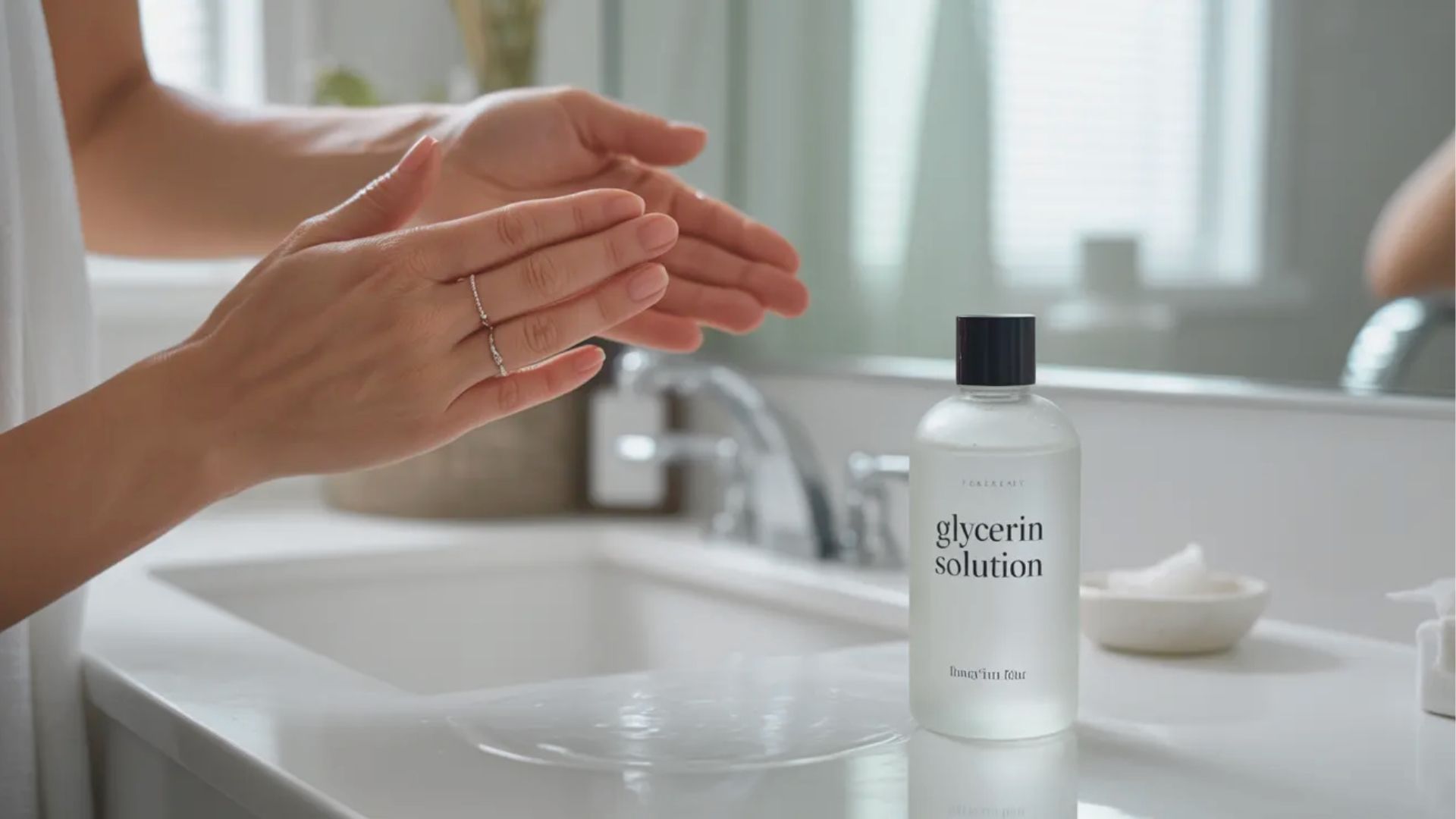
Glycerin is safe for most skin types when used correctly, diluted properly, and paired with the right ingredients.
Use in Formulated Products
The easiest way to use glycerin is through ready-made skincare products. Serums, creams, facial mists, and gels often contain glycerin at safe, skin-friendly concentrations. These products are already balanced with other ingredients, so you get the benefits without any guesswork.
Dilution Tips
Pure glycerin is very thick and should never be applied directly to the skin without diluting it first. A concentration of 3% to 20% is generally considered safe and effective. Mix it with water, rosewater, or a light moisturizer before applying it to your face or body.
Pairing With Other Ingredients
Glycerin pairs well with hyaluronic acid, rosewater, and emollients. Hyaluronic acid boosts hydration further, rosewater helps with absorption, and emollients seal in the moisture glycerin attracts. Using these together gives better and longer-lasting results.
Consult a Dermatologist
If you have sensitive skin, a skin condition, or specific concerns, it is always a good idea to speak with a dermatologist before adding glycerin to your routine. They can guide you on the right concentration and the best products suited to your skin’s needs.
Ethical and Sustainability Considerations
Knowing where glycerin comes from helps you make smarter, more responsible choices for your skin and the planet.
Plant-Based vs Animal-Based Glycerin
Glycerin comes from either plant or animal sources. Plant-based glycerin is popular among those following a vegan lifestyle, but much of it is derived from palm oil, which raises sourcing concerns.
Environmental Impact
Unsustainable palm oil farming is linked to deforestation, habitat loss, and threats to wildlife. When glycerin comes from poorly sourced palm oil, it adds to these environmental issues.
How to Choose Ethical Glycerin
Look for products with RSPO certification, which indicates the palm oil meets environmental and social standards. You can also choose brands that use responsibly sourced alternatives or openly disclose their ingredient origins.
Choosing the Right Glycerin Product for Your Skin
Choosing the right glycerin product depends on your skin type. Oily skin does well with lightweight gel creams, while dry or mature skin benefits more from richer formulations.
Always check the ingredient label and go for water-soluble, fragrance-free options with no unnecessary additives.
Hydrating serums, facial mists, oil-free gels, and moisturizers are all good choices. Picking a clean, well-formulated product ensures you get the most out of glycerin without irritating your skin.
Conclusion
Glycerin has earned its place in skincare for good reason. It hydrates, heals, and works with your skin rather than against it.
After years of seeing overhyped ingredients come and go, glycerin remains one of the most reliable and affordable options out there.
Start with a well-formulated product, check your labels, and pair it with the right ingredients. Your skin will thank you for it.
Ready to give glycerin a try? Share your experience in the comments below!
Frequently Asked Questions
Can I use glycerin on my face every day?
Yes, glycerin is safe for daily use on the face. It is gentle enough for all skin types, including sensitive and acne-prone skin.
Is glycerin good for oily skin?
Glycerin works well for oily skin because it hydrates without adding grease. Opt for a lightweight, oil-free gel formula to avoid clogging pores.
Can I apply pure glycerin directly to my skin?
Pure glycerin should always be diluted before applying it to the skin. Mix it with water or rosewater at a concentration of 3% to 20% for safe use.
Does glycerin help with dark spots or uneven skin tone?
Glycerin does not directly fade dark spots, but it keeps skin hydrated and supports the healing process. Well-moisturized skin tends to look more even and healthy over time.
Is plant-based glycerin better than animal-based glycerin for skin?
Both types work the same way on the skin. The choice between them usually comes down to personal values, such as following a vegan lifestyle or making more sustainable choices.