Is Sunflower Oil Good for Your Skin? Find Out Now


I’ve spent a lot of time trying different oils for my skin. Sunflower oil kept coming up in my research, and I had to find out if it really works.
In this blog, I’ll cover the benefits of sunflower oil for skin, how to use it safely, and what risks to keep in mind. I’ve looked into science and tried it myself, so you get honest, clear answers here.
This blog covers everything from nutrients to application tips. By the end, you’ll know exactly what this oil can do for you.
What Is Sunflower Oil?

Sunflower oil comes from sunflower seeds and is extracted in two ways. Cold-pressed keeps the nutrients intact, while refined processing removes some of them.
For skincare, cold-pressed is always the better pick. The oil is rich in Vitamin E, which protects skin from damage, linoleic acid, which locks in moisture and strengthens the skin barrier, and oleic acid, which softens and conditions.
These nutrients work together to support healthy skin. Dermatologists recommend it because it’s light, absorbs fast, and suits most skin types, making it a reliable base in many skincare products.
Is Sunflower Oil Safe for Your Face?

Yes, but there are a few things to know before putting it on your face.
Best Skin Types (Dry, Oily, Acne-Prone)
Sunflower oil works well for most skin types. Dry skin benefits from its moisturizing effect. Oily skin can handle it in small amounts since it’s lightweight.
Acne-prone skin should use it carefully and test it first.
Can It Cause Breakouts?
It’s possible but not common. Some people with very acne-prone skin may react to linoleic acid-rich oils.
Start with a small amount and see how your skin responds before applying it all over your face.
Patch Testing and Safety Tips
Always do a patch test before applying any new oil to your face. Put a small amount on your inner arm and wait 24 hours. If there’s no redness or irritation, it’s likely safe for your skin.
How to Use Sunflower Oil on Your Skin
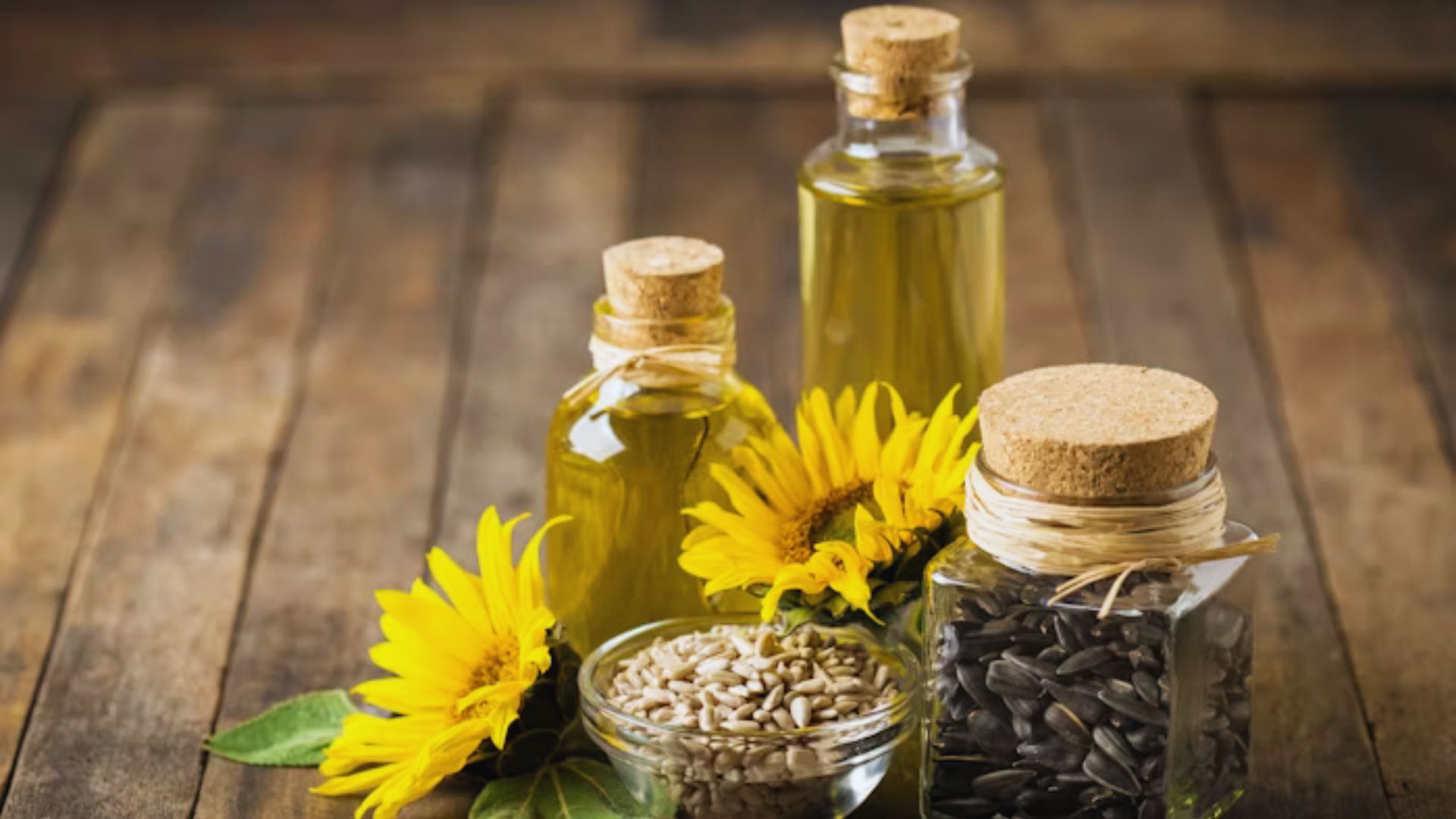
Simple, practical ways to add sunflower oil to your skincare routine.
Using It on Your Face and Body
Apply 2 to 3 drops to clean skin at night, warm it between your palms, and press it gently into your face. Let it absorb before bed. For your body, apply it after a shower when your skin is still slightly damp.
It spreads easily, absorbs well, and leaves no greasy feel, making it a good option for both daily face care and full-body use.
Mixing It with Other Skincare Products
Sunflower oil works well as a carrier oil. Mix it with a few drops of tea tree oil for acne-prone skin or lavender oil for a calming effect. Always dilute essential oils properly before use.
You can also stir a drop or two into your existing moisturizer or serum. Many skincare brands already include it in their formulas, listed as “helianthus annuus seed oil” on ingredient labels.
Picking the Right Type for Skincare
Not all sunflower oils are the same. Go for organic, cold-pressed sunflower oil for the best results on your skin.
Refined or heavily processed versions lose many of the nutrients that make it effective. Always check the label to make sure there are no added preservatives or extra ingredients mixed in.
Are There Any Drawbacks or Risks?

Sunflower oil is generally safe, but a few people should be cautious.
Allergies (Ragweed & Seed Sensitivities)
If you’re allergic to ragweed or related plants, you may react to sunflower oil. Seed allergies are also worth considering. Check with your doctor if you’re unsure about your sensitivities.
Overuse and Acne-Prone Skin Considerations
Using too much of any oil can lead to clogged pores over time. Stick to a small amount and see how your skin responds. Less is more, especially when you’re just starting out.
Eye Contact & Proper Application
Keep sunflower oil away from your eyes. If it gets in your eyes, rinse right away with clean water. Always apply with clean hands or a soft cotton pad to avoid transferring bacteria to your skin.
Benefits of Sunflower Oil for Skin

Here’s a look at what sunflower oil actually does for your skin, backed by real science.
Non-Comedogenic and Gentle on Pores
Sunflower oil has a low comedogenic rating, which means it’s less likely to block pores compared to heavier oils.
People with oily or acne-prone skin often find it easier to tolerate. It sits lightly on the skin and absorbs without leaving a greasy residue behind.
Strengthens the Skin Barrier and Locks in Moisture
The linoleic acid in sunflower oil helps repair the skin’s outer layer and keeps irritants out. It also acts as an emollient, filling in tiny gaps between skin cells to stop water from escaping.
If your skin feels tight or dry, this oil can make it feel softer and more comfortable throughout the day.
Fights Free Radicals and Slows Visible Aging
Vitamin E in sunflower oil is a strong antioxidant that protects skin cells from free radical damage.
Regular use may help reduce the appearance of fine lines and keep skin looking healthy. It’s a simple, natural way to support your skin’s long-term condition.
Calms Irritation and Aids Skin Recovery
Sunflower oil has anti-inflammatory properties that can help reduce redness and calm sensitive skin. It’s a good option for conditions like eczema or general irritation.
Some studies also show it supports faster skin healing, making it useful on dry, cracked areas or minor skin irritations.
Quick Tips for Best Results with Sunflower Oil
Small changes in how you apply it can make a big difference.
- Apply sunflower oil on slightly damp skin right after washing your face. Damp skin absorbs oil faster and more evenly.
- Use only 2 to 3 drops at a time. A little goes a long way, and using too much can feel heavy on the skin.
- If you’re prone to breakouts, limit use to once a day or every other day. Watch how your skin reacts and adjust from there.
- Store the bottle in a cool, dark place away from direct sunlight. Heat and light break down the nutrients over time.
- Always close the cap tightly after use to prevent the oil from oxidizing and going rancid too quickly.
- Pair it with niacinamide to help with redness and uneven skin tone, or with hyaluronic acid to boost hydration levels.
- Do a patch test before adding it to your full routine, especially if you have sensitive or reactive skin.
Conclusion
I started using sunflower oil on my skin a while back, and I was surprised by how gentle and effective it turned out to be.
It’s lightweight, absorbs fast, and works well with my routine. If you’ve been looking for a simple, affordable oil to add to your skincare, this might be it.
Patch test first, use a small amount, and go cold-pressed. I’d love to hear if you’ve tried it. Drop a comment below and share your experience.
And if you found this helpful, share it with a friend who might need it.
Frequently Asked Questions
Can I use sunflower oil on my face every day?
Yes, you can use it daily if your skin tolerates it well. Start with a few drops and adjust based on how your skin responds over time.
Is sunflower oil better than coconut oil for skin?
Sunflower oil is lighter and less likely to clog pores than coconut oil. It’s a better option for oily or acne-prone skin types.
Does sunflower oil help with dark spots?
It contains Vitamin E, which may support skin repair over time. However, it’s not a direct treatment for dark spots or hyperpigmentation.
Can sunflower oil be used on babies’ skin?
Some studies suggest it’s gentle enough for newborn skin. Always check with a pediatrician before using any oil on a baby.
How long does it take to see results from sunflower oil?
Most people notice softer, more hydrated skin within a few days. For benefits like reduced redness, it may take a few weeks of consistent use.