Cyst vs Ingrown Hair How to Tell the Difference


You find a bump on your skin and immediately wonder, is it a cyst or an ingrown hair? I've been there too, standing in front of the mirror, unsure what I was looking at.
Knowing the difference matters. The wrong treatment can make things worse.
In this article, I'll walk you through what each bump actually is, what causes them, and most importantly, cyst vs ingrown hair and how to tell the difference so you stop guessing.
I'll also cover safe treatment and prevention tips you can start using right away.
I've researched this topic carefully and consulted trusted dermatology sources so you get clear, honest answers without the confusion.
What Is the Difference Between a Cyst and an Ingrown Hair?
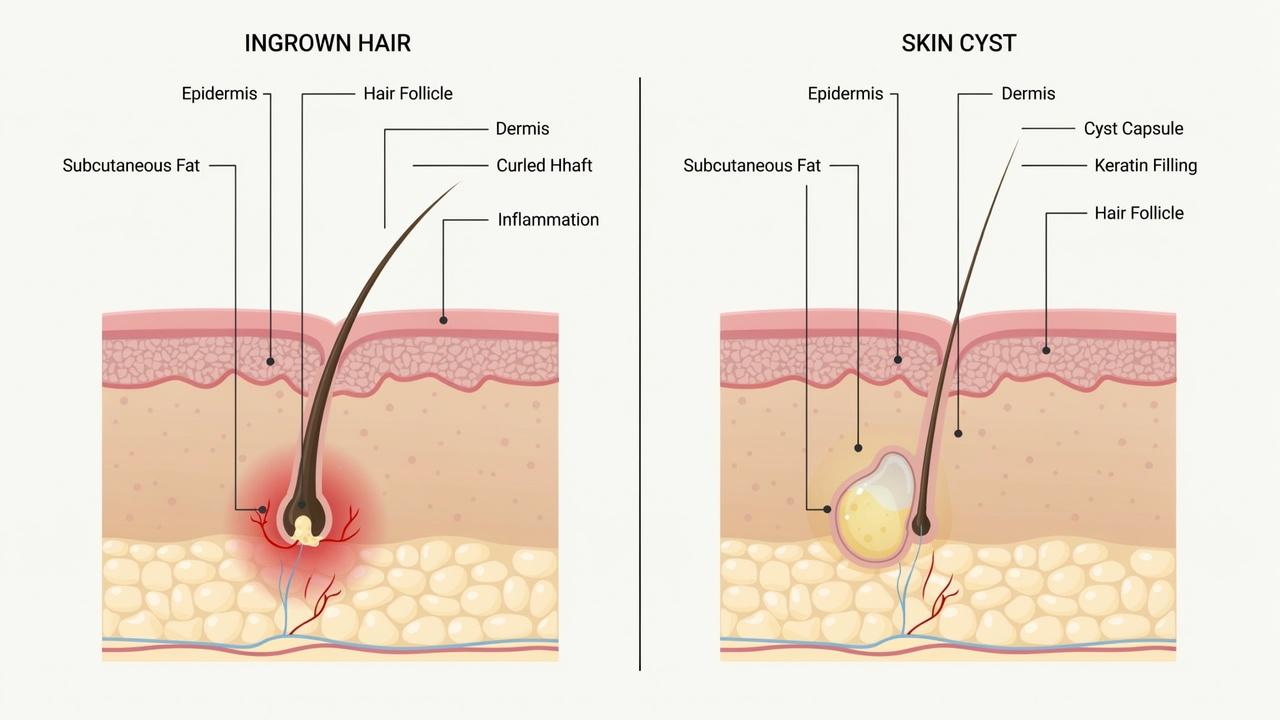
Both look like bumps, but they form differently and need different care.
An ingrown hair happens when a hair grows back into the skin instead of rising up from it, causing the skin to react and form a small red or flesh-colored bump.
This is common after shaving, waxing, or plucking. A skin cyst, on the other hand, is a closed pocket under the skin filled with fluid, air, or semi-solid material.
It forms when skin cells or oil glands get blocked and has nothing to do with hair removal. Ingrown hairs appear quickly, show visible trapped hair, and cause mild pain.
Cysts grow slowly, contain no hair, and are usually painless unless infected.
What Causes a Cyst vs an Ingrown Hair?
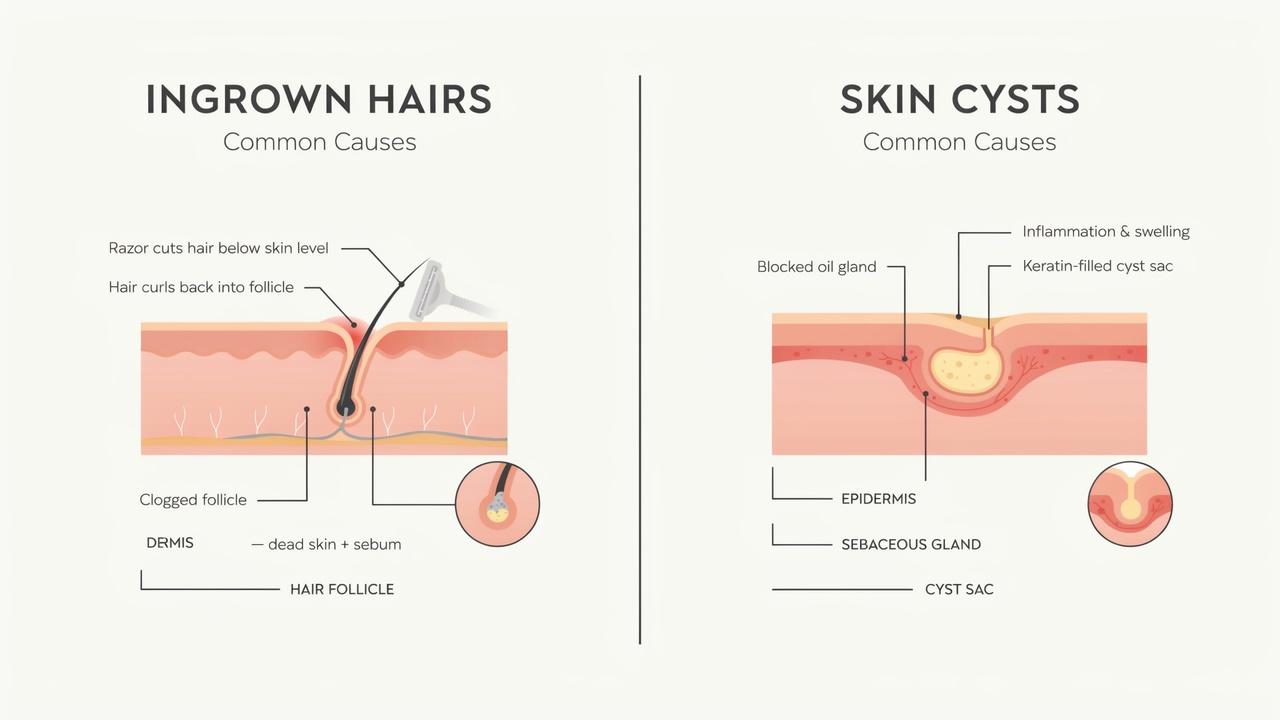
Understanding the root cause helps you treat and prevent both skin issues correctly.
Common Causes of Ingrown Hairs
- Hair removal methods: like shaving or waxing cut hair at an angle, making it more likely to curl back.
- Clogged hair follicles: trap dead skin cells around the hair opening.
- Friction from clothing: pushes hairs back into the skin, especially in tight areas.
- Poor shaving or waxing technique: leaves sharp hair edges that pierce back into skin.
- Curly or coarse hair: naturally curves, which increases the risk of growing inward.
Common Causes of Skin Cysts
- Blocked oil glands: cause sebum to build up under the skin.
- Chronic inflammation: from acne or skin conditions can lead to cyst formation.
- Injury or bacterial infection: may trigger an abnormal skin response.
- Hormonal changes: affect oil production, raising the chance of blockages.
- Genetic factors: can make some people more prone to cysts without any clear trigger.
Cyst vs Ingrown Hair How to Tell the Difference
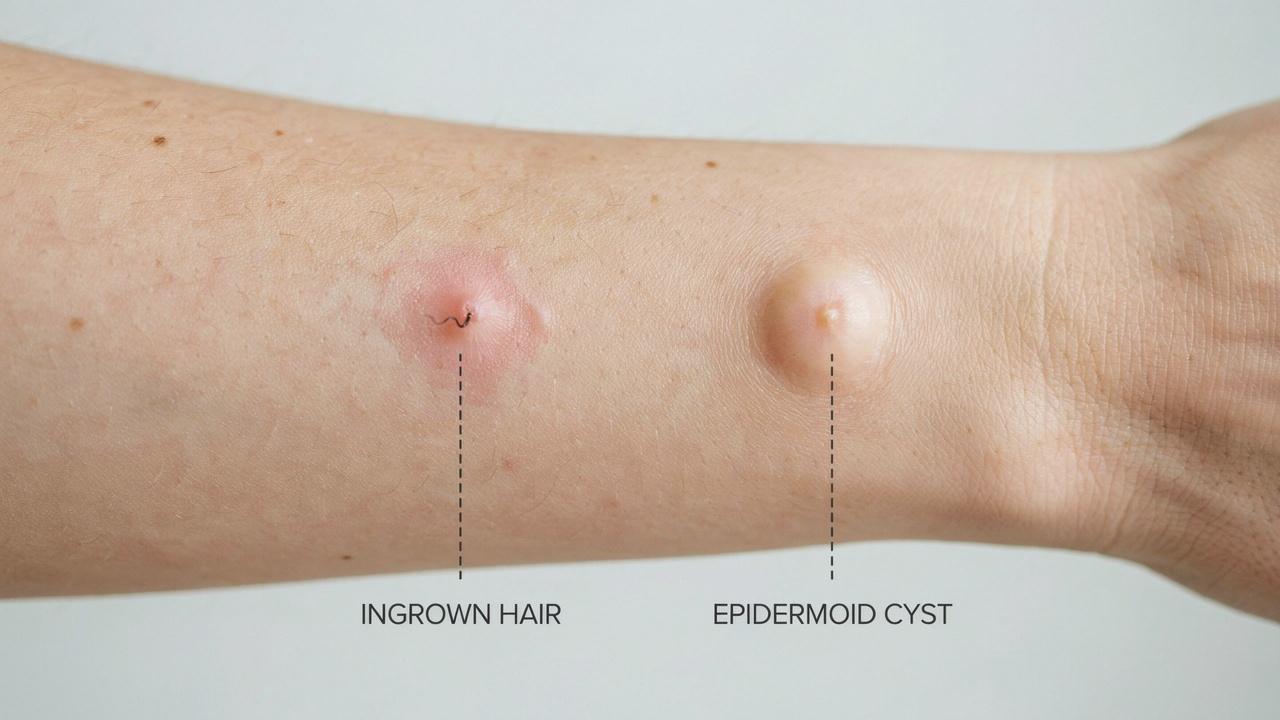
Look closely at the bump's features. Small details point you to the right answer.
Compare the Size and Texture
Ingrown hairs are usually small, around the size of a pea or smaller. They feel firm but sit close to the surface of the skin. You can often see redness around them.
Cysts can stay small for months before slowly growing larger over time. They feel smooth, round, and move slightly when you press on them.
Unlike ingrown hairs, cysts sit deeper under the skin and do not have visible redness unless infected.
Look for a Visible Trapped Hair
This is one of the easiest ways to tell them apart. If you can see a small dark dot or a curved hair under the skin, it is likely an ingrown hair.
The hair may look coiled or looped just beneath the surface. Cysts do not contain hair and will never show this sign.
If you press around the bump and see no hair at all, there is a good chance it is a cyst rather than an ingrown hair.
Check the Level of Pain and Tenderness
Ingrown hairs tend to feel tender, itchy, or sore when touched. The skin around them often looks irritated and slightly swollen. Cysts are usually painless unless they get infected or inflamed.
A bump that suddenly turns red, warm, and very painful may be infected and needs medical attention.
Do not ignore increasing pain around any skin bump, as this can be a sign that bacteria have entered the area.
Notice How Quickly the Bump Develops
Ingrown hairs appear fast, often within a day or two after hair removal. You may notice them while your skin is still sensitive from shaving or waxing.
Cysts grow slowly over weeks or even months and are not linked to hair removal at all. If a bump showed up overnight right after shaving, it is most likely an ingrown hair.
A bump that has been growing slowly without any recent hair removal is more likely a cyst.
Identify the Most Common Locations
Ingrown hairs appear most often on the
- Face and neck (in men who shave)
- Bikini area and legs (in women after waxing)
- Underarms
Cysts can appear almost anywhere on the body, including the scalp, back, and behind the ears.
How to Treat a Cyst vs an Ingrown Hair Safely

Treating the wrong bump the wrong way can lead to infection or scarring.
Caring for an Ingrown Hair at Home
Most ingrown hairs go away on their own. You can
- Apply a warm compress for 10 minutes to soften the skin
- Gently exfoliate the area after a day or two
- Use a clean, sterilized needle to lift the hair if it is near the surface
- Apply an over-the-counter product with salicylic acid or glycolic acid
Do not dig deep into the skin. Stop if it hurts or bleeds.
When a Cyst Needs Medical Attention
See a doctor if your cyst
- Grows larger over time
- Becomes red, warm, or leaks fluid
- Returns after draining on its own
- Is painful or bothersome
A doctor may drain it, inject it with a steroid, or remove it fully. Do not try to pop or drain a cyst at home.
What You Should Avoid Doing
Never squeeze, pop, or pick at either type of bump. This pushes bacteria deeper, causes scarring, and can lead to a worse infection.
Avoid harsh scrubs on irritated skin. Skip tight clothing over bumps that have not healed.
How to Prevent Cysts and Ingrown Hairs

Good habits before and after hair removal go a long way in keeping skin clear.
Exfoliate Regularly
Use a gentle scrub or chemical exfoliant two to three times a week. This removes dead skin cells that can trap hairs or block pores over time.
Products with salicylic acid or glycolic acid work well for this. Do not over-exfoliate though, as scrubbing too hard can irritate the skin and make things worse.
Gentle and consistent is always better than aggressive and occasional.
Use Proper Shaving or Waxing Techniques
Always shave in the direction of hair growth to reduce the risk of hairs curling back into the skin. Use a sharp, clean razor every time and never dry shave.
Apply a shaving gel or cream to soften the hair before each stroke. For waxing, pull the strip quickly and in the correct direction.
Dull razors and poor technique are two of the biggest causes of ingrown hairs.
Reduce Friction After Hair Removal
Wear loose clothing after shaving or waxing, especially in sensitive areas like the bikini line or underarms.
Tight fabrics rub against freshly removed hair and push it back into the skin before it has a chance to grow out properly.
Even wearing loose clothing for just the first 24 hours after hair removal can make a big difference in preventing bumps.
Keep Your Skin Clean and Moisturized
Wash the area gently after hair removal using a mild, fragrance-free cleanser. Follow up with a fragrance-free moisturizer to keep the skin soft and hydrated.
Hydrated skin allows hair to break through the surface more easily, which lowers the chance of it curling back inward.
Avoid heavy or scented lotions right after hair removal as these can clog pores and cause irritation.
Know When to Seek Professional Care
If you get frequent ingrown hairs despite following good habits, it is time to talk to a dermatologist.
They can recommend stronger treatments or procedures that work better for your skin type. Laser hair removal is a long-term option that significantly reduces ingrown hairs for many people.
For recurring cysts that keep coming back, a doctor can check for an underlying cause and offer a lasting solution instead of temporary fixes.
Tips to Keep Your Skin Healthy After Hair Removal
Simple daily steps protect your skin and lower the risk of bumps coming back.
- Stick to gentle, unscented products for 24 to 48 hours after hair removal and avoid hot showers, pools, or heavy sweating right away.
- Choose soft, breathable fabrics like cotton to reduce friction and let skin breathe, especially after waxing or shaving sensitive areas.
- Picking or squeezing pushes bacteria deeper into the skin, causes scarring, and makes healing take much longer, so use a warm compress instead.
- See a doctor if you notice increasing redness, pus, unusual discharge, fever, or swelling around the bump.
- Do not wait if the pain gets worse after a few days or if the bump keeps growing despite basic home care.
Conclusion
Now you know how to spot the difference between a cyst vs ingrown hair. One forms from a trapped hair, the other from a blocked gland under the skin.
Both are manageable when you handle them the right way. Personally, once I stopped picking and started using warm compresses, things cleared up much faster.
Take care of your skin, use good shaving habits, and do not ignore a bump that keeps growing. If something feels off, see a doctor. Got questions or tips? Drop them in the comments.
Frequently Asked Questions
Can an Ingrown Hair Turn Into a Cyst?
An ingrown hair can become inflamed and form a cyst-like lump. This is called a pseudocyst. A dermatologist can confirm what it is and recommend the right treatment.
Is It Safe to Pop an Ingrown Hair at Home?
You should not pop it. Squeezing pushes bacteria deeper and can cause infection or scarring. Use a warm compress and let it heal on its own when possible.
How Long Does an Ingrown Hair Take to Go Away?
Most ingrown hairs clear up within one to two weeks with basic care. If it stays longer or gets worse, it may need medical attention.
Can Cysts Go Away Without Treatment?
Some small cysts shrink or resolve on their own. Others stay the same or grow. If a cyst is growing or becomes painful, see a doctor instead of waiting.
Are Ingrown Hairs More Common in Certain Skin Types?
Yes. People with curly or coarse hair are more prone to ingrown hairs because the hair naturally curves back toward the skin after cutting or shaving.