Living in Arizona? Here’s What the Dry Climate Does to Sensitive and Acne-Prone Skin

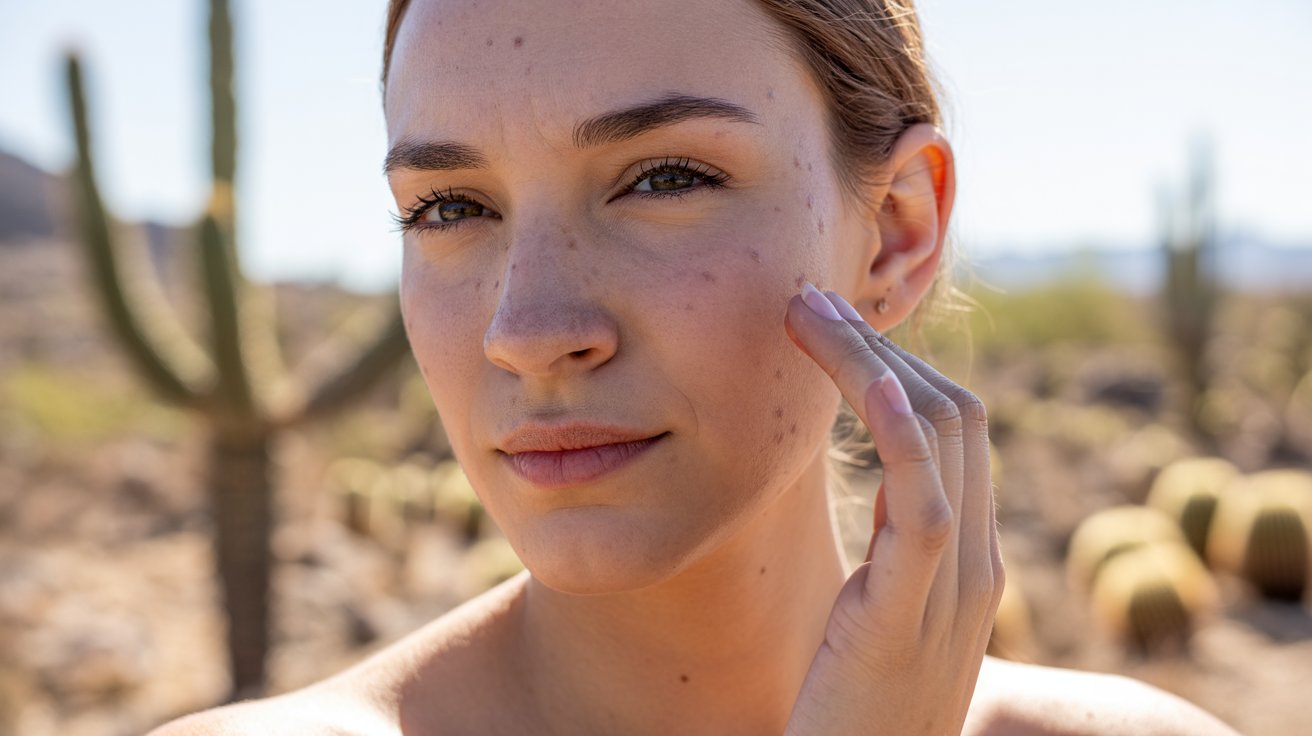
Arizona has that clean, wide-open feel. Blue skies almost every day. Dry air that doesn’t stick to you. Winters that feel like a reward for surviving somewhere colder.
If you have sensitive skin, you probably noticed the change fast. Tightness that shows up out of nowhere and ed patches that linger. Products that used to feel fine suddenly sting. If you’re acne-prone, things can get confusing. You could have more shine and more clogged pores. Yet somehow your skin still feels dry underneath it all.
That desert air everyone loves? It pulls moisture out of your skin all day long, consistently. Whether you’re outside in the heat or inside under blasting AC. And over time, that adds up.
Let’s talk about what’s actually happening.
What Dry Air Really Does to Your Skin
In places with high humidity, there’s moisture in the air. Your skin holds onto water more easily and it feels softer without much effort.
Arizona is the opposite. The air is dry enough that water evaporates from your skin faster than your body can replace it. You wash your face. It feels fine for a few minutes. Then that tight feeling creeps in.
That tightness is water leaving your skin. Add in strong UV exposure. Add heat that seems to come from above and below at the same time. Now your skin barrier is under pressure every single day.
And when the barrier gets stressed, everything becomes more reactive.
Sensitive Skin: Why It Gets Worse
If you already have sensitive skin, the desert turns the volume up.
The Barrier Takes a Hit
Your skin barrier is basically your shield. It keeps moisture in and irritants out. When the air is dry, tiny gaps can form in that barrier. You won’t see them but you’ll feel them as burning after you apply moisturizer and redness that hangs around longer than it used to, and that uncomfortable feeling like your face is two sizes too small.
Even gentle cleansers can start to feel harsh. Exfoliating acids you tolerated before suddenly cause peeling and any fragrance becomes unbearable.
All of this means that your skin is dehydrated and exposed.
Redness That Won’t Calm Down
Heat and sun already trigger flushing for a lot of people. In Arizona, that exposure is constant. Even quick errands mean UV contact and even cloudy days are bright.
When skin is dry and inflamed, redness sticks around longer. If you deal with rosacea or general sensitivity, you might notice flare-ups happening more often. Foundation starts clinging to dry patches. Concealer settles into areas you didn’t even know were textured.
It can feel frustrating. Especially when your routine hasn’t changed.
Acne-Prone Skin: It Gets Confusing Fast
Here’s where things start to feel backward.
You move to a dry climate and expect less oil. Maybe fewer breakouts. Instead, your forehead is shiny by noon. Your pores feel clogged and you’re breaking out along your jawline. And somehow your cheeks still feel dry.
What’s going on?
Oil Production Increases
When your skin loses water, it tries to protect itself. One way it does that is by producing more oil. The logic makes sense from a biological standpoint because oil helps seal the surface. But when oil mixes with dead skin cells in a dry environment, it thickens. Pores get congested. Breakouts follow.
So now you’re oily and dehydrated at the same time.
A lot of people respond by washing more often. Or switching to stronger acne treatments. Foaming cleansers and higher percentage benzoyl peroxide. More exfoliating acids. That, however, strips the skin further. Then oil production ramps up again. And the cycle keeps going.
Breakouts Linger Longer
Dry skin doesn’t bounce back quickly. When you get a blemish, healing can take longer. The surface stays irritated while post-acne marks look darker because the surrounding skin is dull and dehydrated.
You might feel like your acne suddenly became more stubborn after moving here. Sometimes the climate is part of that story.
Professional Facial Treatments Can Make a Difference
There’s only so much you can adjust at home. When your skin feels out of balance in the dry Arizona climate, professional facial treatments can help reset things. A good aesthetician looks at more than breakouts. They look at your hydration levels, barrier health, inflammation and the overall condition of your skin.
Hydrating facials are especially useful because they focus on restoring moisture instead of aggressively exfoliating, which can calm sensitivity and reduce that tight feeling. Ingredients like ceramides, peptides, and calming botanical extracts help rebuild the surface so it holds onto water better.
If you’re acne-prone, professional extractions are safer than trying to handle congestion yourself. There’s less trauma to the skin and less lingering redness. LED light therapy is another option that can reduce inflammation and support clearer skin without drying you out further.
For people dealing with chronic redness, calming facials designed for sensitive skin can slowly improve tolerance. Over time, your skin becomes less reactive.
Consistency matters here. Going in once when your skin is flaring can help, but going regularly, every six to eight weeks, often makes a bigger difference. Especially in a desert climate where the stress on your skin never really stops.
The key is finding someone who understands what dry air does to skin. Arizona skin behaves differently than skin in humid states.
Adjusting Your Routine for Desert Living
Living here means your skincare needs to work with the environment, not against it.
Choose a Gentler Cleanser
If your face feels squeaky clean after washing, that’s usually too much in this climate. Cream or low-foam cleansers tend to be better. Something that removes dirt and sunscreen without stripping every bit of oil.
If your skin feels tight before you even apply moisturizer, your cleanser might be part of the problem.
Layer Hydration
Hydration works better in layers. Apply a hydrating serum on slightly damp skin and look for ingredients like hyaluronic acid or glycerin. Follow with a moisturizer that contains barrier-supporting ingredients such as ceramides.
If you’re acne-prone, lightweight gel-cream formulas often sit well in the heat without feeling heavy. You don’t necessarily need thicker products. You need products that help your skin hold onto water.
Be Careful With Actives
Strong exfoliants and acne treatments can be helpful. In Arizona, they need to be used carefully.
Using them less often can sometimes improve your skin more than increasing strength. Pay attention to how your face feels the next day. Flaking and stinging are signs your barrier is struggling.
Dialing back can feel counterintuitive. Sometimes it’s exactly what your skin needs.
Sunscreen Every Day
The sun here is relentless.
Daily sunscreen protects against redness, dark marks, and long-term damage. Mineral formulas are often better tolerated by sensitive skin. Reapplying matters if you’re outside for extended periods.
This step alone can calm a lot of inflammation over time.
The Indoor Factors People Forget
It’s not just the desert air outside. Air conditioning pulls moisture from indoor spaces. If your skin feels worse at night or after long days inside, that dry indoor air might be contributing.
A humidifier in your bedroom can help balance things. It doesn’t need to turn your room into a tropical climate. Just adding some moisture back into the air can make a difference.
Hard water is another common issue in Arizona. Mineral buildup can leave residue on your skin, leading to dryness and irritation. Some people notice improvement after installing a shower filter.
And then there’s simple hydration. In a hot, dry state, you lose water quickly. Drinking enough throughout the day supports your skin from the inside out.
The Bottom Line
Arizona isn’t going to get more humid. The sun isn’t going anywhere. But your skin can adapt when you support it properly.
Sensitive skin needs more barrier care while acne-prone skin needs hydration as much as oil control. Both need protection from constant UV exposure.
Once you understand how the dry climate shifts your skin’s behavior, the changes start to make sense. With a few routine adjustments and occasional professional support, your skin can feel balanced again.
Desert living has its own rhythm. Your skincare just needs to find it.