Can I Use Vitamin C at Night? Mistakes You Must Avoid


I’ve tested vitamin C serums for years, and the night vs. morning debate is real.
You can absolutely use vitamin C at night, and I’m here to show you exactly how.
This guide covers the benefits and side effects of nighttime vitamin C use, plus how to layer it with other products.
You’ll learn the best strengths for evening application and common mistakes to avoid. As someone who’s dealt with hyperpigmentation, I’ve tried every timing strategy.
Let me break down what actually works based on both science and real-world results.
Can I Use Vitamin C at Night?

Yes, you can use vitamin C at night. Your skin absorbs it equally well during day and night.
Morning application pairs well with sunscreen since vitamin C boosts UV protection, but nighttime use works just as effectively.
Some people prefer night application because there’s less product layering and more time for absorption while you sleep.
Vitamin C also supports your skin’s natural overnight repair process. The key is consistency, not timing, pick morning or night based on your routine and stick with it for best results.
Benefits of Using Vitamin C at Night for Skin
Nighttime application gives vitamin C uninterrupted hours to work while your skin naturally repairs itself.
Brightens Skin and Boosts Overnight Glow

Vitamin C blocks melanin production while you sleep. This means less pigment formation during your body’s natural repair hours.
You’ll wake up with brighter, more even-toned skin. The overnight application gives vitamin C 8+ uninterrupted hours to work.
I noticed visible brightness after just one week of nightly use. My skin looked more awake, even before coffee.
Helps Fade Dark Spots and Hyperpigmentation

Dark spots fade faster with consistent nighttime vitamin C. The ingredient inhibits tyrosinase, the enzyme that creates melanin.
Night application means no sun exposure immediately after. This prevents new dark spots while treating existing ones.
Results take time. Expect 4-8 weeks for noticeable fading of stubborn spots.
Supports Collagen Production

Your skin makes new collagen at night, and vitamin C is a required cofactor for collagen synthesis.
Applying it before bed gives your skin the raw materials it needs during peak production hours. This leads to firmer skin texture, reduced fine lines, and better skin elasticity.
The anti-aging benefits compound over months, not days, making consistent nighttime application key to seeing real results.
Helps Repair Skin While You Sleep

Vitamin C is a powerful antioxidant that neutralizes free radicals from daily environmental damage.
At night, your skin shifts its focus from defense to repair, and vitamin C supports this natural process by reducing inflammation, speeding cell turnover, and strengthening the skin barrier.
Think of it as giving your skin extra tools for its nightly maintenance work, helping it recover more effectively while you sleep.
Side Effects of Using Vitamin C at Night
While vitamin C is generally safe, some people experience irritation or sensitivity, especially when starting out.
Can Cause Irritation, Redness, or Burning

High-strength vitamin C can sting, especially on sensitive skin. You might feel tingling or burning right after application.
This happens because vitamin C is acidic. Lower pH formulas work better but can irritate more. Start with lower concentrations (10%) if you’re new to vitamin C. Your skin needs time to adjust.
May Trigger Dryness or Peeling

Vitamin C increases cell turnover. This can lead to flaking or dry patches, particularly around your nose and mouth.
The dryness gets worse if you layer vitamin C with other active ingredients. Be careful mixing it with retinol or acids at night. Use a heavy moisturizer after vitamin C to combat dryness.
Can Cause Breakouts

Some people break out when starting vitamin C. This is often purging, not true acne. Purging means your skin is clearing out congestion faster.
It should clear up within 4-6 weeks. Real acne from vitamin C is rare but possible. The product itself might clog pores, or the formulation could be wrong for your skin type. Stop using it if breakouts worsen after 6 weeks.
How to Use Vitamin C at Night in Your Skincare Routine

Cleanse your face thoroughly to remove all makeup, sunscreen, and daily buildup. Apply vitamin C serum to damp skin (3-4 drops for full face and neck).
Wait 1-2 minutes for the serum to absorb before the next step. Layer with hyaluronic acid or moisturizer to lock in hydration.
Skip other strong activities like retinol on the same night when starting out.
What Can You Mix With Vitamin C at Night?

My favorite vitamin C pairings for nighttime include hyaluronic acid, which holds 1000x its weight in water and prevents dryness when applied after vitamin C.
Despite old warnings, niacinamide works beautifully with vitamin C.both target dark spots and uneven texture. Layer vitamin C first, wait 30 seconds, then add niacinamide.
For sensitive skin, ceramides are ideal. They buffer against vitamin C irritation while repairing your skin barrier. Apply vitamin C, then seal with a ceramide-rich moisturizer for the best results.
Vitamin C at Night vs Morning: Which Is Better?
Both timing options offer unique benefits: here’s how they compare to help you decide what works for your routine.
| Factor | Night Use | Morning Use |
|---|---|---|
| Sun Protection | No sun exposure after application | Boosts sunscreen effectiveness |
| Absorption Time | 8+ hours uninterrupted | May rub off on pillow/clothing |
| Layering | Easier routine with fewer products | Can feel heavy under makeup |
| Stability | Protected from light exposure | May oxidize faster with UV light |
| Skin Repair | Aligns with natural repair cycle | Provides antioxidant defense all day |
| Best For | Sensitive skin, simple routines | Sun damage prevention, anti-aging |
Best Vitamin C Strength for Night Use
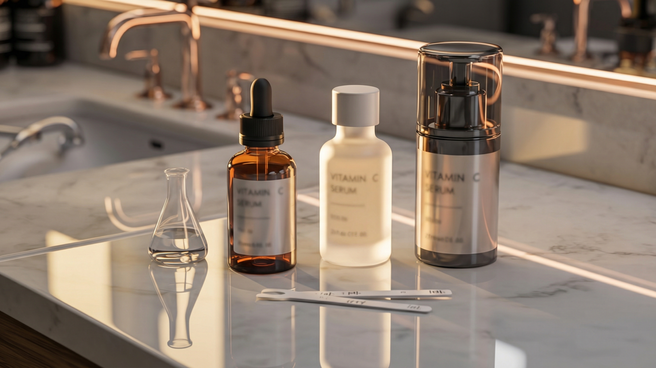
Start with 10% concentration if you’re new to vitamin C, then gradually work up to 15-20%. Higher isn’t always better:
your skin can only absorb so much. Sensitive skin should stick with 10% or gentler derivatives like sodium ascorbyl phosphate, magnesium ascorbyl phosphate, or ascorbyl glucoside.
Normal to oily skin handles L-ascorbic acid at 15-20% well, though it’s more irritating.
Check pH levels too: vitamin C works best at 3.5 or lower, but sensitive skin needs pH 5-6. Consistent use matters more than concentration.
Mistakes to Avoid When Using Vitamin C at Night
Avoiding these common errors will help you get better results and prevent unnecessary skin irritation.
- Don’t layer vitamin C with retinol and acids on the same night when starting out.
- Always follow vitamin C with a hydrating moisturizer to prevent dryness and flaking.
- Discard oxidized serum if it’s turned brown or orange, as it won’t work effectively.
- Apply vitamin C to damp skin, never dry skin, to reduce irritation.
- Be patient, vitamin C takes 4-12 weeks to show visible results.
Conclusion
Using vitamin C at night works just as well as morning application.
I’ve seen real results from consistent nighttime use: brighter skin, faded dark spots, and smoother texture.
The key is finding the right strength for your skin and giving it time to work. Start with 10% concentration if you’re new to this ingredient.
Layer it with hydrating products to avoid dryness. Most importantly, stick with it for at least 8 weeks before judging results.
Drop a comment below and tell me when you prefer to use vitamin C: morning or night?
Frequently Asked Questions
Can vitamin C cause breakouts at night?
Yes, purging can occur but clears within 4-6 weeks. Stop if breakouts worsen after 6 weeks.
Should I use vitamin C before or after moisturizer at night?
Always before. Apply on damp skin, wait 1-2 minutes, then moisturize.
Can I use vitamin C every night?
Yes, but start with 2-3 nights per week, then increase gradually.
Does vitamin C work better at night or with retinol?
Don’t combine them initially. Use on alternate nights or different times of day.
How long does vitamin C take to work at night?
4-8 weeks for dark spots, 1-2 weeks for brightness.