Does Dark Chocolate Cause Acne? Science Explained

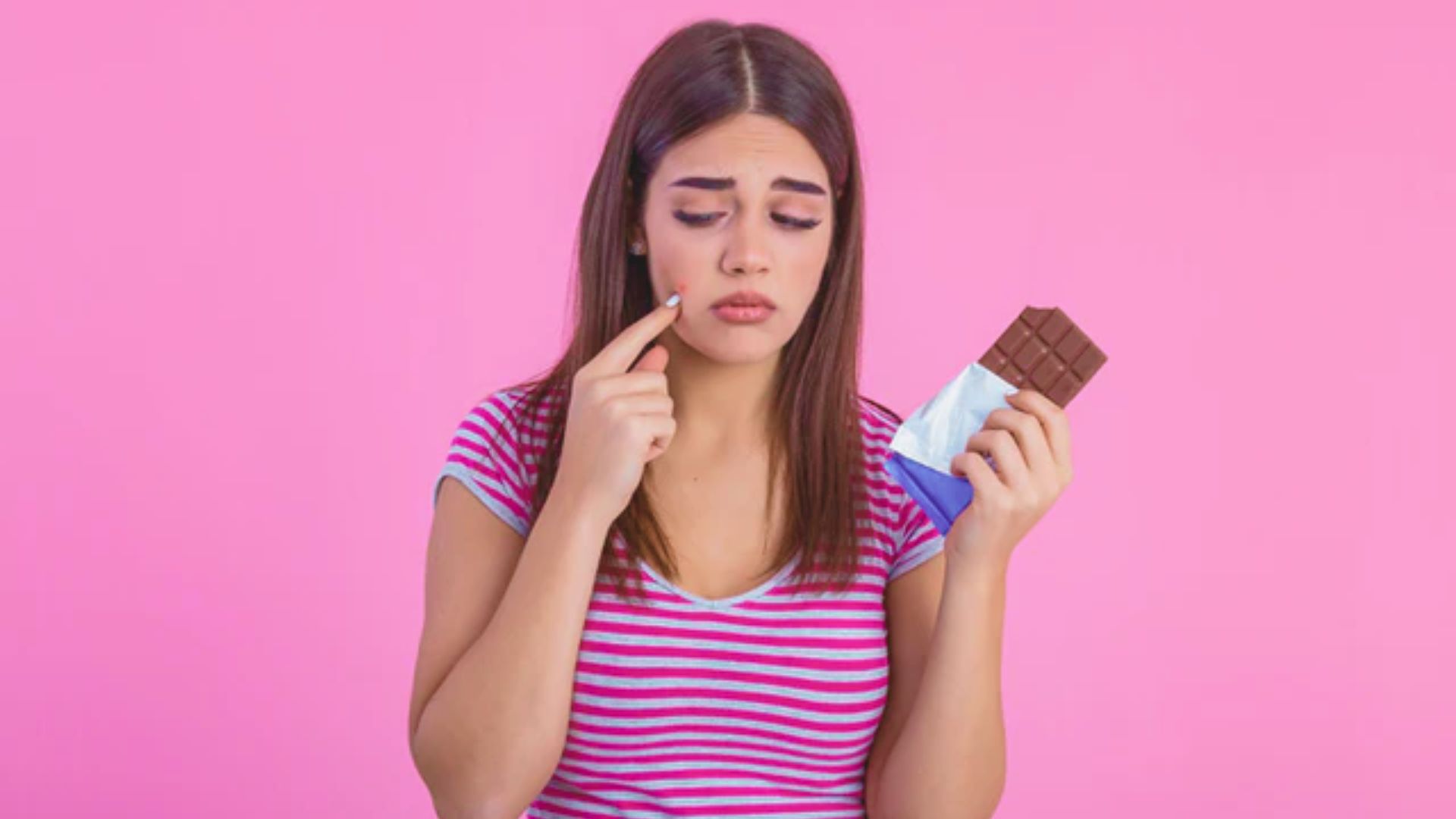
You finally find a dark chocolate bar you love, and then someone tells you it might be causing your breakouts.
Frustrating, right? The truth is, this question does not have a simple yes or no answer. Science shows that dark chocolate does not directly cause acne in everyone.
But for some people, it can make existing breakouts worse. Your skin’s reaction depends on your biology, hormone levels, and what else you are eating.
Let’s look at what the research actually says so you can make a smarter choice for your skin.
Does Dark Chocolate Cause Acne? (Evidence-Based Answer)

There is no definitive proof that dark chocolate directly causes acne. However, some recent clinical studies suggest it may worsen breakouts in people who are already acne-prone.
The response is not the same for everyone. Your skin’s reaction depends on your body’s biology, hormone levels, and overall diet.
So while dark chocolate is not a guaranteed trigger, it may still affect some people more than others.
What Science Says About Dark Chocolate and Acne

A closer look at what the science actually says about dark chocolate and its possible link to acne.
Early Research and Conflicting Results
Older studies found no clear connection between chocolate and acne. But many of those studies had flaws.
They often used chocolate bars loaded with sugar and milk, making it hard to tell what was actually causing the skin reaction. The results were inconsistent and not very reliable.
Modern Studies Showing a Possible Link
More recent controlled trials paint a different picture. Some studies found that people developed more acne lesions after eating chocolate regularly.
What’s interesting is that this happened even with high-cocoa dark chocolate, including varieties with 85 to 99 percent cocoa content. This suggests cocoa itself may play a role, not just the added sugar or dairy.
2024 Study Breakdown: Dark Chocolate and Acne Severity

A 2024 study tested daily dark chocolate intake on acne-prone skin and the findings are worth knowing.
Study Design (Simplified)
A 2024 study looked at 92 participants who already had acne-prone skin. Each person ate 50 grams of 85% dark chocolate every day. Their results were then compared against participants following an anti-inflammatory diet.
Key Findings
The results were pretty telling. Acne severity went up by roughly one point on the measurement scale. Most participants saw their breakouts get worse within just four weeks of daily dark chocolate consumption.
Why This Study Matters
What makes this study stand out is how carefully it was set up. Researchers removed common acne triggers like sugar, dairy, and processed foods from the equation.
That means the worsening acne could not easily be blamed on anything else. It points more directly at dark chocolate itself as a contributing factor.
Why Dark Chocolate Might Trigger Acne

Dark chocolate contains compounds that may trigger oil production, clog pores, and activate acne-related pathways in the body.
Insulin and IGF-1 Pathways
Eating chocolate can trigger a rise in insulin levels. When insulin spikes, it can lead to increased oil production in the skin. More oil means a higher chance of clogged pores, which sets the stage for breakouts.
Amino Acids and Hormonal Activation
Dark chocolate contains branched-chain amino acids, specifically leucine, isoleucine, and valine.
These amino acids can activate a biological pathway called mTORC1, which is directly linked to acne development. So even without sugar or dairy, the cocoa itself may be signaling your body in ways that affect your skin.
Cocoa Butter and Skin Effects
Cocoa butter is high in saturated fats. For people with acne-prone skin, this can be a problem. Cocoa butter is mildly comedogenic, meaning it has the potential to clog pores. While this effect is not severe for everyone, those with sensitive or oily skin may notice a difference.
Dark Chocolate vs Milk Chocolate: Which Is Worse for Acne?

Both milk and dark chocolate can affect acne-prone skin, but in different ways.
Dark Chocolate
Dark chocolate has less sugar and a lower glycemic index compared to milk chocolate. It sounds like the safer choice, but studies still link it to acne flare-ups. So lower sugar does not automatically mean better for your skin.
Milk Chocolate
Milk chocolate comes with a double hit. It has higher sugar content and contains dairy, both of which are known acne triggers. It also causes a stronger insulin spike, which increases the likelihood of breakouts.
Key Takeaway
- Milk chocolate has higher sugar and dairy content, making it a stronger acne trigger.
- Dark chocolate has less sugar but is still linked to acne flare-ups in clinical studies.
- Neither type is completely risk-free for acne-prone skin.
- If your skin is sensitive to chocolate, switching from milk to dark may not be enough.
How Quickly Can Dark Chocolate Affect Your Skin?

Dark chocolate can start affecting your skin faster than you might expect. Some studies show visible changes in as little as 48 hours after eating it.
With regular daily consumption, noticeable worsening typically shows up within two to four weeks. However, the timeline is not the same for everyone.
How quickly your skin reacts depends on how much you are eating and how often. Frequency and quantity both play a role in how your skin responds.
Tips to Eat Dark Chocolate Without Triggering Acne
- Keep your portions small. Eating large amounts daily, like 50 grams or more, increases the risk of breakouts, so stick to moderate servings.
- Go for high-quality dark chocolate with 70 to 85 percent cocoa content and as few added ingredients as possible.
- Pay attention to how your skin reacts after eating chocolate. Tracking breakouts can help you spot a pattern early.
- Cut back on sugar, processed foods, and dairy alongside chocolate. A cleaner overall diet can reduce your skin’s sensitivity.
- Give your skin time to respond before drawing conclusions. A few weeks of mindful eating will give you a clearer picture of your personal triggers.
Conclusion
Dark chocolate does not cause acne in everyone, but it can make existing breakouts worse for some people.
The amount you eat, your overall diet, and how sensitive your skin is all make a difference. If you keep breaking out and can’t figure out why, try cutting back on chocolate for a few weeks and see what happens. Your skin will tell you what it needs.
Have questions about foods that affect your skin? Drop them in the comments below. And if this helped, share it with someone who loves chocolate but struggles with acne.
Frequently Asked Questions
Can dark chocolate cause acne if I only eat it occasionally?
Eating dark chocolate occasionally is less likely to trigger breakouts. However, if your skin is already sensitive, even small amounts may cause a reaction in some cases.
Is high-cocoa dark chocolate safer for acne-prone skin?
High-cocoa dark chocolate has less sugar, but studies show it can still worsen acne. The cocoa itself contains compounds that may affect oil production and skin behavior.
How long should I avoid dark chocolate to see if it affects my acne?
Try cutting it out for at least three to four weeks. This gives your skin enough time to settle and helps you see whether chocolate is a real trigger for you.
Does the quality of dark chocolate make a difference for acne?
Yes, quality matters. Chocolate with fewer additives, lower sugar, and no dairy is a better option. But it still does not guarantee your skin will be completely unaffected.
Can a good skincare routine cancel out the effects of dark chocolate on acne?
A solid skincare routine helps manage acne, but it cannot fully offset what is happening inside your body. Diet and skincare work best when they go hand in hand.