Do Eyelashes Grow Back? Timeline, Causes & Tips

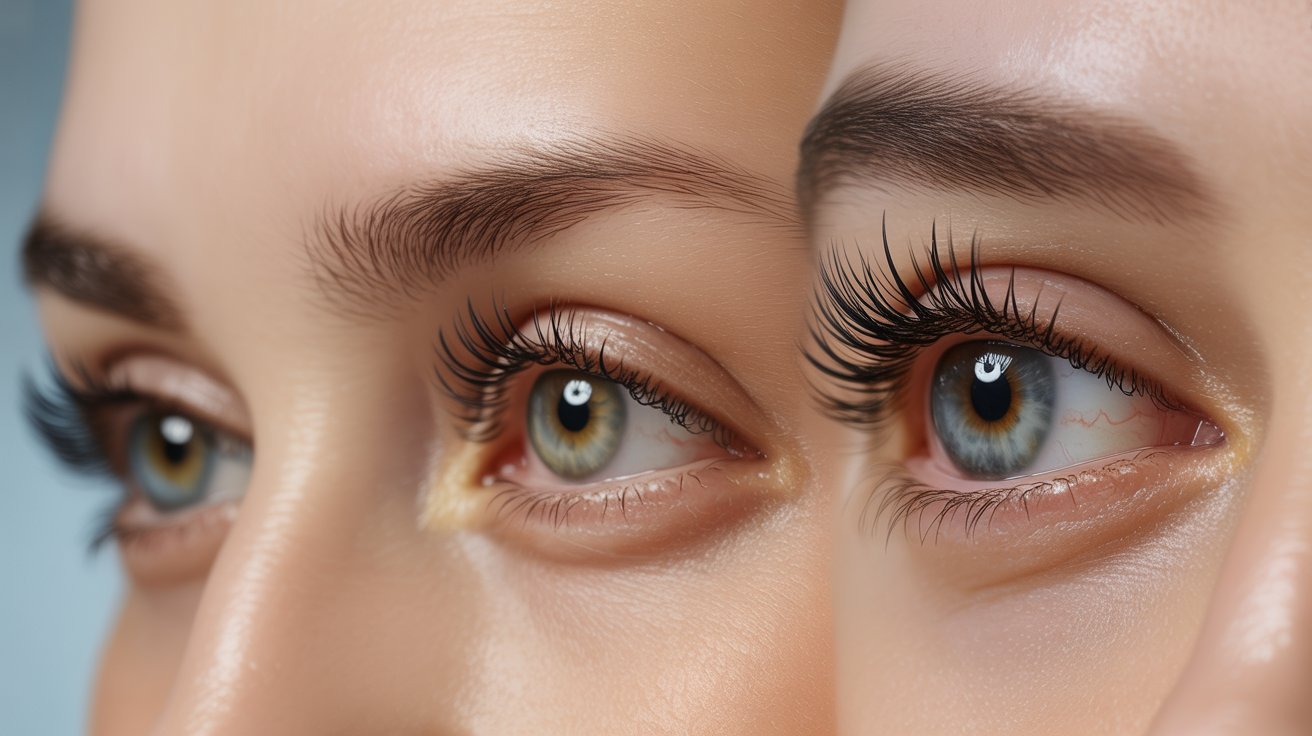
Yes, eyelashes grow back! Learn how long regrowth takes, what causes lash loss, and proven ways to speed up the process.
Have you ever panicked seeing your lashes look thinner in the mirror? I’ve been there, and I get how scary it feels.
Here’s the good news: yes, your eyelashes do grow back. I lost some of mine from rubbing my eyes during allergy season, and they returned within weeks.
Most people lose lashes from harsh makeup removal, medical treatments, or everyday habits.
Regrowth typically takes six to eight weeks, though your age, health, and care routine affect the speed.
Let’s talk about what happens during this process.
Do Eyelashes Grow Back Naturally?
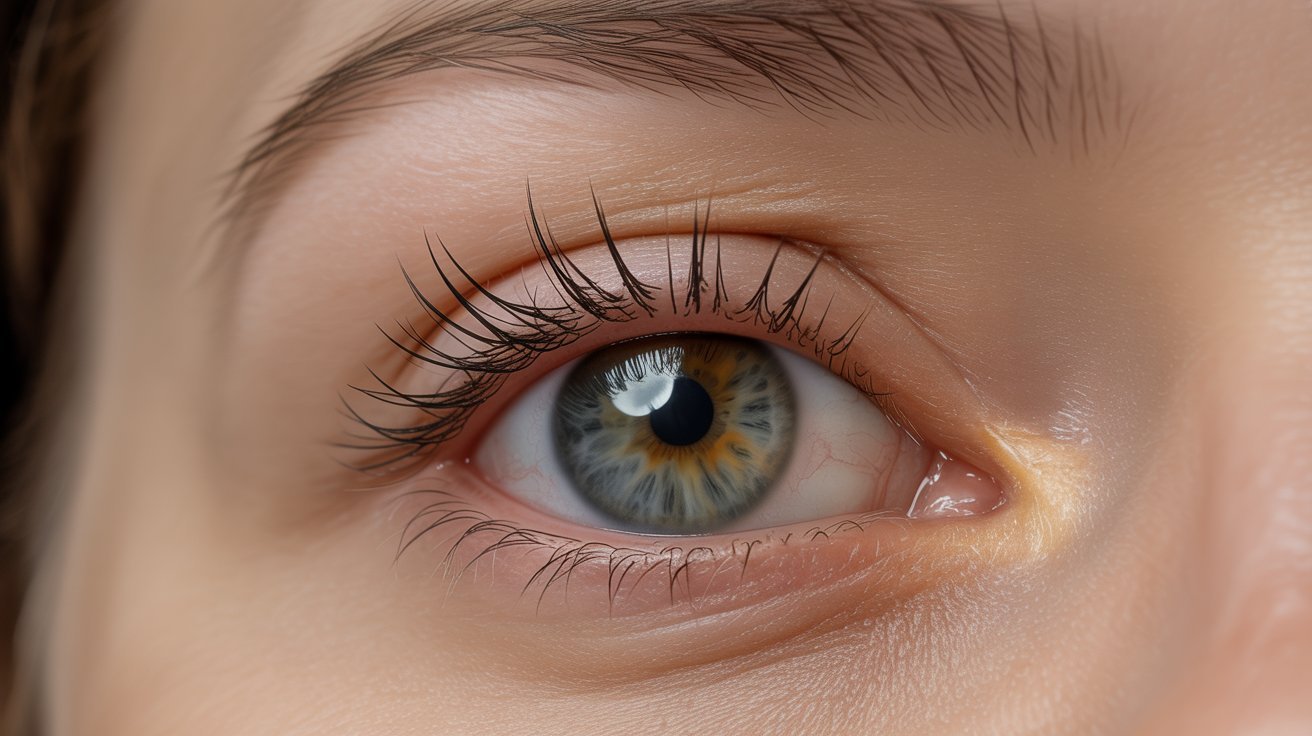
Yes, your eyelashes grow back naturally in most cases. As long as your eyelids and hair follicles stay healthy, new lashes will sprout to replace the ones you’ve lost.
The follicles under your skin are like tiny factories that keep producing fresh lashes throughout your life.
However, regrowth can be slow or incomplete if you have damaged follicles from burns, scarring, or certain medical conditions.
Repeated trauma to the lash line can also make regrowth harder. But for everyday lash loss, nature handles the rest.
What Are Eyelashes and Why Are They Important?
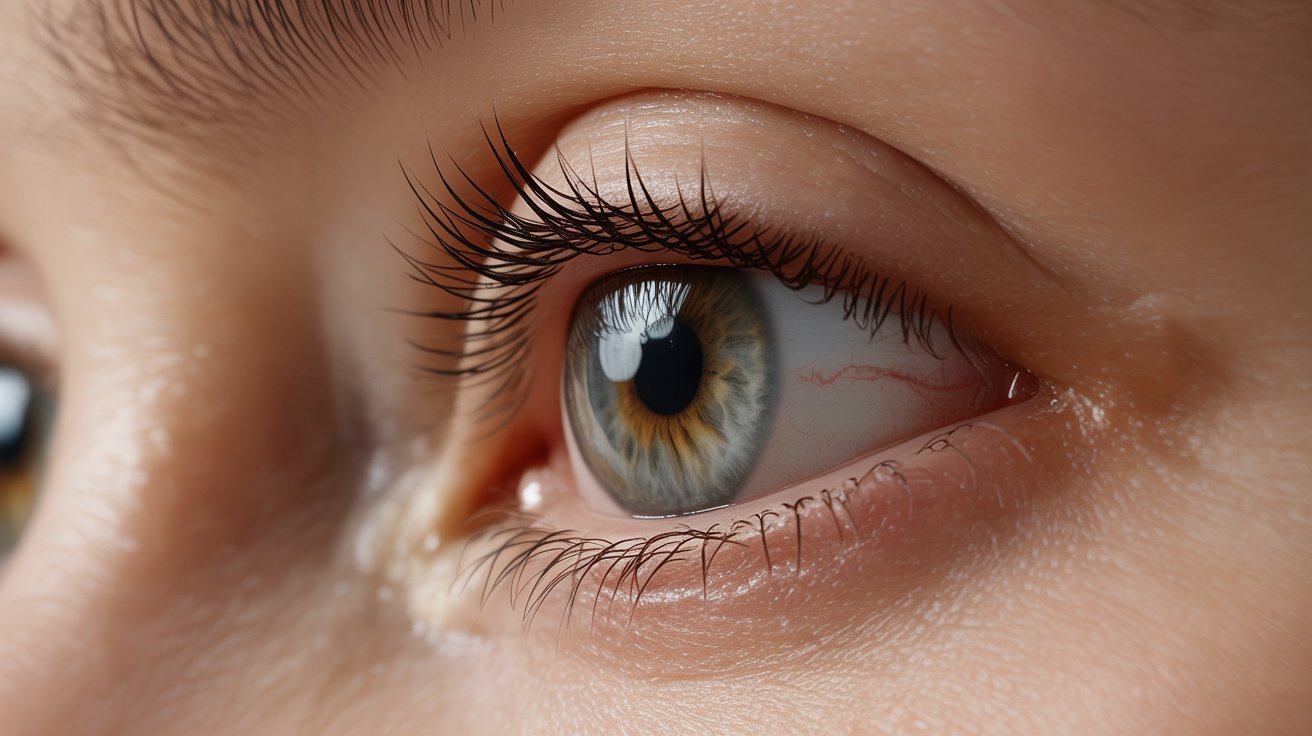
Eyelashes are the short, curved hairs that grow along the edges of your upper and lower eyelids.
I used to think they were just for looks, but they actually serve a serious purpose. Each eye has about 90 to 150 upper lashes and 70 to 80 lower ones.
These tiny hairs act as your eyes’ first line of defense against the outside world. They work hard to keep your eyes safe and comfortable all day long.
How Eyelashes Protect Your Eyes
Your lashes work like a natural shield. They catch dust, dirt, and small debris before these particles can reach your eyeball.
I noticed this during a windy day when my friend without lashes had to squint constantly while I was fine.
Lashes also trigger your blink reflex. When something touches them, your eyes automatically close. This split-second response has saved my eyes from flying insects or unexpected splashes.
They help control moisture too. Your lashes reduce airflow across your eyes, which keeps tears from evaporating too quickly. People with sparse lashes often deal with dry, irritated eyes.
Lashes even filter harsh light and reduce glare. They work like tiny sun visors, cutting down the brightness that hits your eyes. On sunny days, this natural filtering makes a real difference.
Understanding the Eyelash Growth Cycle
Your eyelashes don’t all grow and fall out at the same time. Each lash follows its own schedule through three phases, which keeps your lash line looking full.
1. Anagen Phase (Growth Phase)
This is when your lash is actively growing longer. The follicle is hard at work producing new cells that form the hair shaft. This phase typically lasts between 4 to 10 weeks.
Your lashes don’t grow as long as the hair on your head because this growth phase is much shorter. Once this phase ends, your lash stops getting longer.
2. Catagen Phase (Transition Phase)
Growth comes to a complete stop during this phase. The hair follicle starts to shrink and detach from its blood supply.
This transition period is quick, lasting only about 2 to 3 weeks. Your lash isn’t growing anymore, but it’s not ready to fall out yet either.
3. Telogen Phase (Resting & Shedding Phase)
Your lash takes a break during this phase, which can last 4 to 9 months. The old lash rests in the follicle while a new one starts forming underneath.
Eventually, the old lash falls out naturally when the new one pushes through. This is why you find lashes on your cheek or pillow sometimes.
How Long Does It Take for Eyelashes to Grow Back?
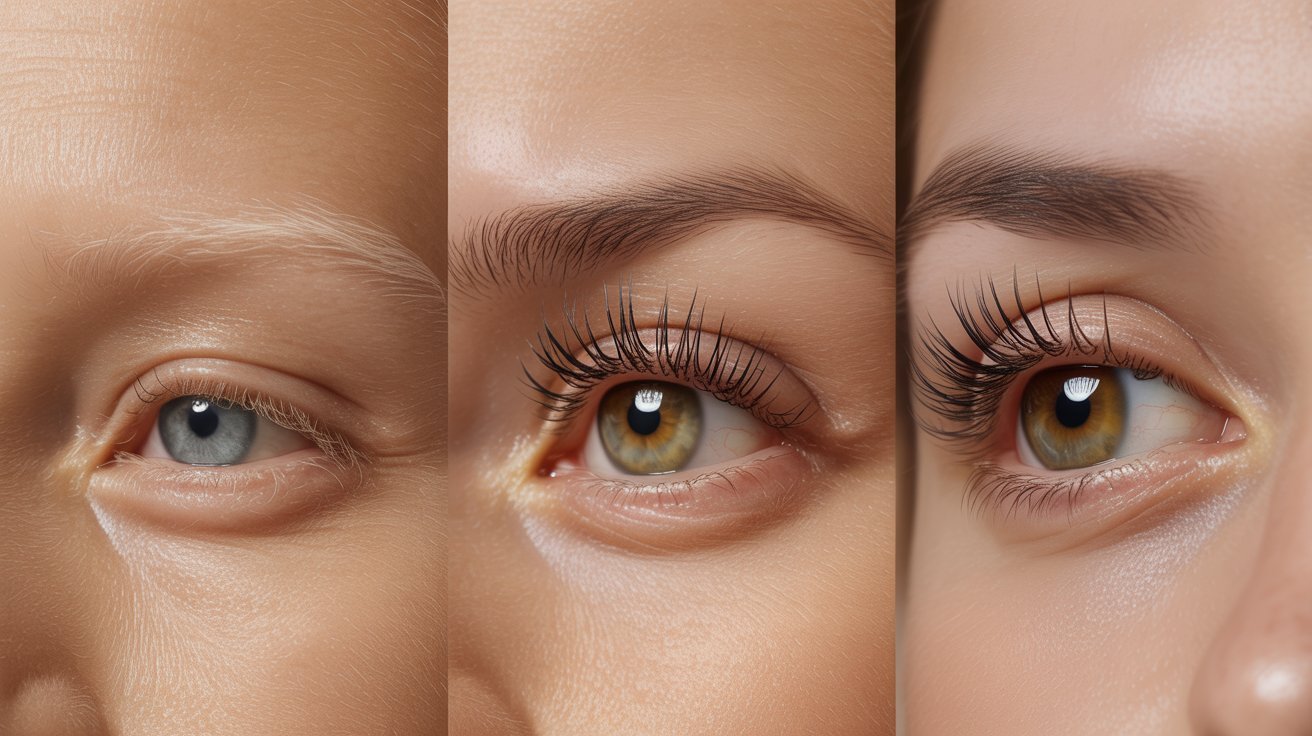
Most eyelashes grow back within 6 weeks to 3 months. Your timeline depends on why you lost them and your personal health factors.
Natural shedding replaces itself quickly since the follicle is already cycling. Cut or trimmed lashes return faster because the root stays intact.
Pulled or rubbed lashes take longer since the follicle needs recovery time. Damage from lash extensions can delay regrowth by several weeks.
Medical treatments or conditions may slow the process even more, sometimes requiring extra care to support healthy regrowth.
Common Causes of Eyelash Loss
Losing 1 to 5 lashes daily is normal. Excessive loss means more fall out than your body replaces.
Here are common reasons:
- Medical conditions: Alopecia areata, thyroid problems, or autoimmune disorders disrupt your lash growth cycle. Chemotherapy targets rapidly growing cells, including hair follicles. Infections like blepharitis cause inflammation that weakens lash roots.
- Burns or physical accidents: These can damage follicles permanently if they scar the lash line. Even minor burns from curling irons or chemical exposure affect regrowth. The severity determines whether your lashes will fully return.
- Heavy mascara use and aggressive lash curlers: These put daily stress on your lashes. I learned this after using waterproof mascara for months. The tugging during removal caused more loss than I realized.
- Lash extensions and harsh adhesives: These weigh down your natural lashes and can pull them out when removed. The glue sometimes causes allergic reactions that inflame follicles. Taking breaks between applications helps your lashes recover.
- Poor makeup removal habits: These leave residue that clogs follicles and weakens lashes overnight. Rubbing your eyes too hard or using rough cotton pads damages the delicate structure. Always be gentle when cleaning around your eyes.
- Chronic stress and poor nutrition: These affect your whole body, including lash health. Low iron, vitamin deficiencies, and high cortisol levels slow down hair growth. Your lashes need proper nutrients to stay strong.
Factors That Affect Eyelash Regrowth
Not everyone’s lashes grow back at the same speed. Several factors control how quickly and fully your lashes return after falling out.
- Follicle health: Your lash follicles need to be in good shape to produce new hair. Damage from repeated trauma, scarring, or infections can slow down or stop regrowth. If the follicle is destroyed completely, that lash won’t come back.
- Age and genetics: Younger people typically see faster regrowth than older adults. Your genes also determine your natural lash thickness, length, and growth rate. Some people are just born with faster-growing lashes than others.
- Overall health and hormones: Hormonal imbalances from thyroid issues, pregnancy, or menopause can affect your lash cycle. Medical conditions that impact your immune system or circulation also slow down regrowth. Your body prioritizes vital functions over hair growth when it’s under stress.
- Nutrition and stress levels: Your lashes need protein, biotin, iron, and vitamins to grow properly. Poor diet means slower, weaker regrowth. Chronic stress raises cortisol levels, which disrupts the normal hair growth cycle and can cause more shedding than usual.
How to Promote Eyelash Regrowth
You can support healthy lash regrowth with proper nutrition and gentle care. Eat foods rich in biotin, vitamins A, C, and E, iron, and omega-3 fatty acids.
These nutrients fuel hair growth from the inside. Stop rubbing your eyes and remove makeup gently every night. Limit mascara and take breaks from extensions.
Eyelash growth serums like prescription Latisse or over-the-counter options can help, but talk to your doctor first.
Some serums work better than others, and you want to avoid products that irritate your eyes or damage follicles further.
Conclusion
Your eyelashes will grow back, and I hope this guide gave you some peace of mind. I’ve dealt with lash loss myself, and patience really is key.
Focus on treating your lashes gently, eating well, and giving your body time to heal. The regrowth process usually takes a few weeks to a few months.
If you notice bald patches that aren’t filling in or you’re worried about slow regrowth, see a doctor to rule out underlying issues.
Take care of those lashes!
Frequently Asked Questions
How many eyelashes do you lose per day?
Most people lose 1 to 5 eyelashes daily as part of the natural growth cycle. This is completely normal and nothing to worry about as long as you’re not seeing bald patches.
Can eyelashes grow back if pulled out from the root?
Yes, eyelashes can grow back even when pulled from the root, as long as the follicle isn’t damaged. The regrowth may take longer than normal shedding, usually around 6 to 8 weeks.
Do eyelashes stop growing as you age?
Eyelash growth does slow down with age, but they don’t stop growing completely. Older adults may notice thinner or shorter lashes due to hormonal changes and slower cell regeneration.
Will castor oil help my eyelashes grow faster?
Castor oil may condition and moisturize your lashes, but there’s limited scientific proof it speeds up growth. It can help prevent breakage, which makes lashes appear fuller over time.
When should I see a doctor about eyelash loss?
See a doctor if you’re losing lashes in clumps, notice bald patches, or if regrowth doesn’t happen after 3 months. Sudden or excessive loss could signal an underlying medical condition that needs treatment.