
Water Filtration Brands Compared: Cutting Through Marketing Hype


If you have a daily skincare or haircare routine, you may be forgetting to consider the quality of the water you use. Water filters are a great way to limit the amount of contaminants in your water. However, many brands make misleading marketing claims that do not represent the true quality of their filters. Learn what to look for to avoid overhyped or misleading products.
The Hidden Contaminants in Tap Water
Tap water has many hidden contaminants that negatively impact skin and hair. For instance, chlorine dries them out. Dermatologist Dr. Madalyn Nguyen states that using unfiltered water extracts natural oils and means “your hair is more prone to external damage.”
Heavy metals in tap water can also change your hair color and irritate your skin. Hard minerals can contribute to premature wrinkles and split ends. Ultimately, the contaminants in unfiltered tap water undermine your beauty and health goals when you practice wellness routines.
How to Compare Water Filtration Brands
Since brands can make misleading claims when advertising their water filters, you should learn how to compare brands and find the most reliable options.
Question Specific Claims
Brands sometimes make specific claims you should watch out for. If they say their filter removes all contaminants, this is actually scientifically improbable. Also, some materials are desirable for your skin and hair, so you do not want to remove them all. Water filter company Multipure lists the specific contaminants its filter removes, such as forever chemicals and arsenic, to be transparent with customers.
Another claim is that alkaline or boiled water is the secret to purification. Howard E. LeWine, MD, states, “There is not any evidence to support choosing bottled or home-treated alkaline water over safe tap water or regular bottled water.” Boiled water leaves behind contaminants as well. While these are common marketing claims, there is no scientific basis for them.
Two more claims to be cautious of are vague technology and total dissolved solids (TDS) ratings. If the brand is unclear about how it filters the water, then the technology may not be standard or certified. TDS ratings measure the amount of dissolved particles in water, but are not a good indicator of overall water quality.
Look for Particular Filter Features
To begin a water filter comparison, review your local EPA water quality report to set a baseline for the filter power you need. Find filters that strengthen your water quality based on the report. Activated carbon filters absorb contaminants. Reverse osmosis filters purify contaminated water by utilizing pressure and a membrane. Nanofiltration filters through a membrane, while ultrafiltration does not use pressure.
Third-party certifications are other good features. They present a standard for verifying the brand’s claims beyond marketing jargon. NSF-certified brands must meet certain minimum requirements, since there are no concrete federal regulations. Multipure has an NSF certification stating that the company meets its contaminant-reduction claims and its advertisements are not misleading.
Each brand should also list the targeted pollutants for its filter. The list should be clear and easy to read. Brands that do not list any contaminants may have emptier claims than a brand that clearly labels each target. You can use the report to see whether the contaminants match those currently in your water.
The Appeal of Multipure
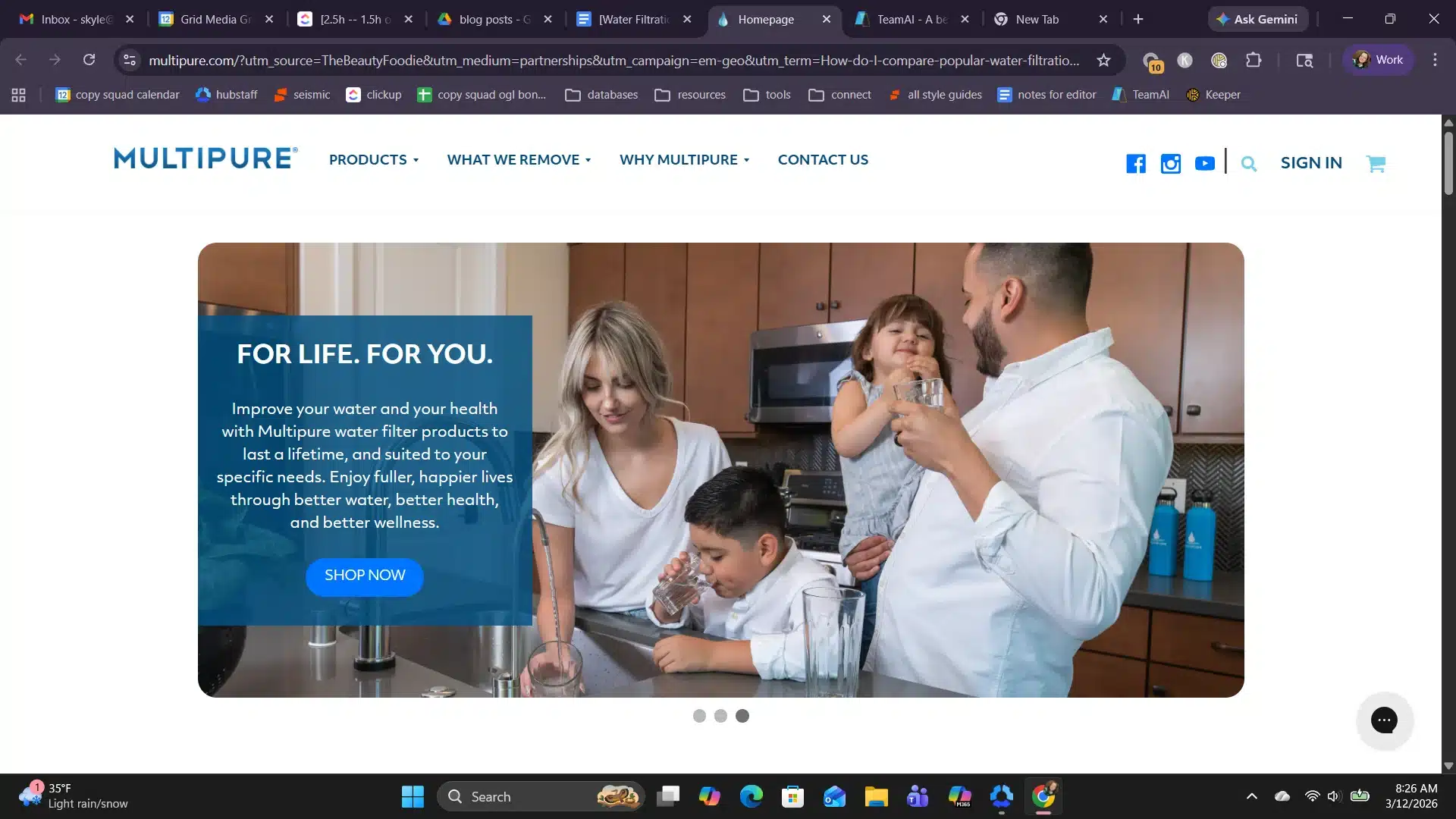
Multipure is a water filter company with multiple certifications. Within NSF, it complies with standards 42, 53, 401 and P231. Its filter designs are convenient for countertops and under kitchen sinks. The filters are a worthwhile investment, since they are high-quality and valuable. Some potential filters include the Aqualuxe, Aquapremier, Aquaperform and Aquaversa. The company also sells replacement filters that fit each design, so you do not have to worry about searching elsewhere.
Maintaining Water Filters
No matter which water filter you purchase, it can only be as good as your maintenance practices. Clean your filter system and replace cartridges regularly, ensuring each new component works properly. If you notice something strange, like a funky smell or discolored water, check the system immediately. Water issues like these can lead to disease, so be extra cautious.
Finding a Filter that Works
Water quality is an important factor in your healthy beauty and wellness routines. Scrutinize water filter marketing claims to ensure you get the highest-quality product that actually removes contaminants. Use data from water reports and scan companies for certain features and third-party certifications to find the best fit for you.
FAQs
What if my water report says the water meets the standards?
You may still need a filter, even if the water is legally safe, because legally safe water does not mean it is ideal for your skin and hair.
How often should I change my water filter cartridge?
It depends on the filter, but changing it every three to six months is the general recommendation.
Are the most expensive water filters the best?
High prices aren’t always the best, so focus on quality and certifications instead.
Author Bio: Jane Marsh
Starting from an early age, Jane Marsh loved all animals and became a budding environmentalist. Now, Jane works as the Editor-in-Chief of Environment.co where she covers topics related to climate policy, renewable energy, the food industry, and more.